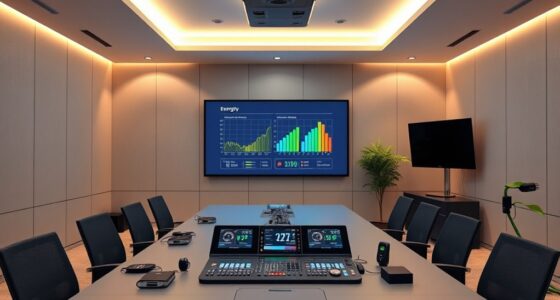

To choose eco-friendly streaming options, start by lowering video quality to standard definition and disable auto-play to prevent unnecessary data use. Use data saver modes and optimize your device and software regularly for efficient streaming. Connecting via wired internet can reduce energy consumption compared to wireless. Supporting platforms that use renewable energy and offline options like downloading content also helps. Keep exploring for more tips that can further cut your digital footprint.
Key Takeaways
- Lower streaming quality to standard definition or lower to reduce data transfer and energy consumption.
- Enable data saver modes and disable auto-play to limit unnecessary bandwidth use.
- Download content for offline viewing instead of streaming repeatedly from data centers.
- Use wired internet connections for more efficient streaming and reduced energy waste.
- Support platforms committed to renewable energy and sustainable practices to promote greener streaming options.
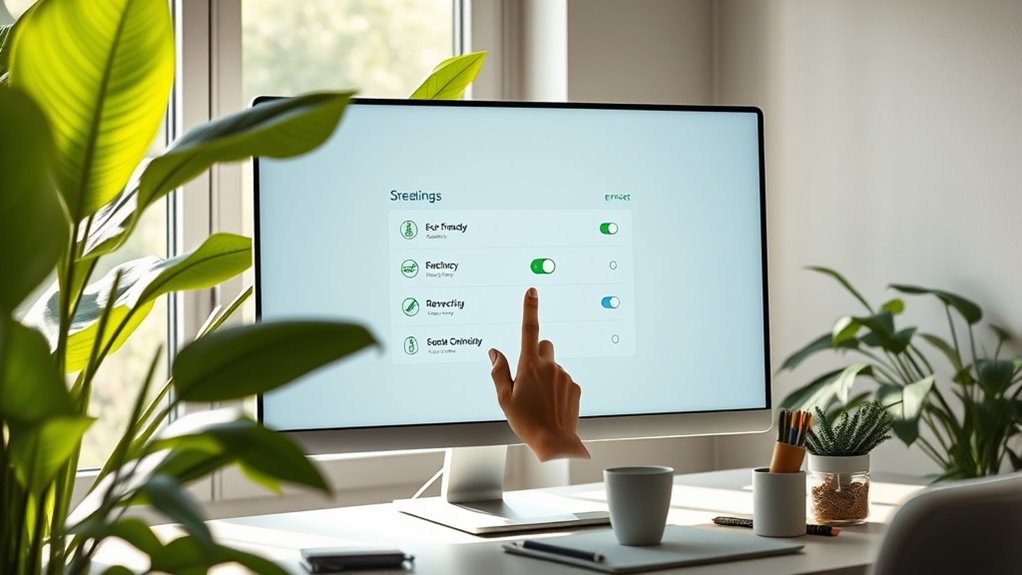
Have you ever considered how your streaming habits impact the environment? Every time you press play on a show or a movie, data is transmitted through a complex network that relies heavily on data centers. These massive facilities house countless servers that process, store, and deliver your content. While essential for streaming, data centers consume enormous amounts of energy, much of which still comes from non-renewable sources. That’s why understanding how your choices can influence this process is vital. One effective way to reduce your environmental footprint is by focusing on bandwidth optimization. When you stream videos at unnecessarily high resolutions or with auto-play enabled, you increase the data traffic flowing through these data centers, leading to higher energy consumption. By lowering your streaming quality to a standard definition or choosing settings that prioritize data efficiency, you help cut down on the amount of data transferred, easing the strain on the infrastructure. This doesn’t mean sacrificing quality entirely; many platforms now offer optimized streaming options that balance clarity with lower data use. Additionally, enabling features like data saver modes or reducing background app activity can further minimize unnecessary bandwidth consumption. These small adjustments can have a significant impact when multiplied across millions of users, collectively decreasing demand on energy-intensive data centers. Beyond just adjusting settings, it’s worth being mindful of the content you consume and how often. Opting for shorter videos or downloading content for offline viewing reduces real-time streaming, which in turn lessens ongoing data traffic. Another aspect worth examining is the choice of streaming platforms. Some services are more committed to sustainability, utilizing data centers powered by renewable energy sources or investing in greener technologies. Supporting these platforms encourages industry-wide shifts toward eco-friendly practices. Additionally, your internet connection‘s efficiency plays a role; a wired connection often provides more stable and bandwidth-friendly streaming compared to wireless networks. Regularly updating your device and software can also optimize streaming performance, reducing unnecessary data use caused by outdated technology. Being aware of energy consumption in data centers and how your streaming habits contribute can further motivate eco-friendly choices. Ultimately, your role in fostering eco-friendly streaming habits involves making conscious choices that prioritize bandwidth optimization and support sustainable infrastructure. By adjusting your settings, being selective with your content, and choosing responsible platforms, you contribute to a more sustainable digital environment. Small changes in your streaming behavior can collectively lead to substantial reductions in energy consumption, helping to combat climate change while still enjoying your favorite entertainment. Remember, every little bit counts, and your mindful approach can make a real difference in reducing the environmental impact of digital media consumption.

2000 ANSI 4K Decoding Projector with WiFi and Bluetooth, HAPPRUN Movie Home Theater with Auto Focus, 300'' Display for Indoor/Outdoor, Smart Proyector Compatible with Phone/TV Stick/PC/PS5
[EASIER OPERATION: AI Smart Screen Adjustment] HAPPRUN projector comes with auto focus and 6D auto-keystone technology, enjoy a...
As an affiliate, we earn on qualifying purchases.
Frequently Asked Questions
How Can I Track My Streaming Carbon Footprint?
You can track your streaming carbon footprint by monitoring your streaming metrics, such as viewing hours and data usage, and then estimating the energy consumption involved. Look for platforms that provide transparency about their use of renewable energy. Some eco-friendly services offer tools or reports that help you see how much carbon your streaming habits generate, encouraging more sustainable choices and reducing your overall environmental impact.
Are There Specific Devices That Consume Less Energy?
Yes, you can choose energy-efficient devices for low power streaming. Look for devices labeled as energy-efficient or with low power consumption ratings, like certain smart TVs, streaming sticks, or laptops. These devices use less energy, helping reduce your carbon footprint. By selecting energy-efficient devices, you guarantee your streaming habits are more sustainable without sacrificing quality, making your streaming experience eco-friendly and cost-effective.
How Does Video Quality Impact Energy Consumption?
Higher video resolution demands more energy because it requires increased bandwidth optimization and processing power. When you stream in 4K instead of 720p, your device works harder, consuming more energy. Conversely, lowering the video quality reduces power use, making streaming more eco-friendly. So, by selecting lower resolutions or optimizing bandwidth, you can enjoy your content while minimizing your environmental impact.
Can Streaming During Off-Peak Hours Save Energy?
Yes, streaming during off-peak hours can save energy because it takes advantage of higher streaming efficiencies and increased renewable energy availability. When demand is lower, energy providers often use cleaner, renewable sources, reducing your carbon footprint. By timing your streaming sessions strategically, you help promote a more sustainable energy grid and decrease overall energy consumption, making your viewing habits more eco-friendly.
What Are the Best Practices for Reducing Data Usage?
To reduce your data usage, focus on bandwidth optimization and data compression. Lower your streaming quality settings to save data without sacrificing too much quality. Use apps and devices that support data compression, which reduces the amount of data needed to stream content. Additionally, avoid auto-play features and download videos for offline viewing. These steps help you stay within your data limits while enjoying your favorite shows.

Epson Home Cinema 980 3-Chip 3LCD 1080p Projector 4,000 Lumens Color and White Brightness, Streaming/Gaming/ Media Room, Built-In Speaker, Auto Picture Skew, 16000:1 Contrast, 2 HDMI Ports
Exceptional Picture Quality — Provides stunning, detailed 1080p images and fast data processing that’s optimized for fast-action sports,...
As an affiliate, we earn on qualifying purchases.
Conclusion
By choosing eco-friendly streaming options and adjusting your settings, you become a guardian of the planet’s future, much like Prometheus bringing fire to humanity. Every mindful click and playback moment sends ripples toward sustainability, turning your habits into a steady, conscious march. Remember, small actions—like the steady beat of a drum—can create a powerful rhythm for change. Together, we can make a difference, one stream at a time, forging a greener, brighter world.
![[Official Google TV]Smart Projector 4K Supported with WiFi & Bluetooth, Built-in Official Apps, GoogIe Voice, Outdoor Movie Projector with DoIby Audio, Auto Focus, Home Theater Proyector WIMIUS G1](https://m.media-amazon.com/images/I/515NcMYy-FL._SL500_.jpg)
[Official Google TV]Smart Projector 4K Supported with WiFi & Bluetooth, Built-in Official Apps, GoogIe Voice, Outdoor Movie Projector with DoIby Audio, Auto Focus, Home Theater Proyector WIMIUS G1
[All-in-One Google TV Built-In] G1 Smart projector comes fully integrated Google TV—no website version, no stripped-down system. Access...
As an affiliate, we earn on qualifying purchases.

4K Projector with Built-in Apps, 1500ANSI Auto Focus&6D Keystone Dolby Audio Kogata Smart Projector with WiFi 6 Bluetooth Outdoor Movie Proyector for Home Theater HDR10+ UPGRADE
【UPGRADE Version】Unlimited Streaming –Compatible with Netflix & Dolby Audio& DTS Audio: The Kogata GC357 home projector comes with...
As an affiliate, we earn on qualifying purchases.