TL;DR

Get business pricing on your home office setup
- Business-only prices and quantity discounts
- Tax-exempt purchasing
- Multiple users, one account, clear invoices
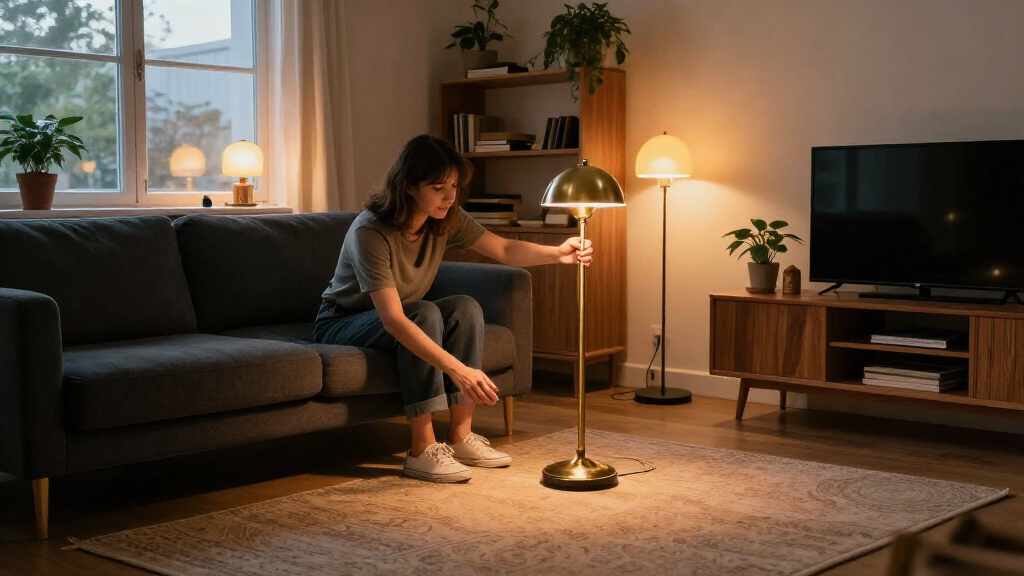
A Livingetc report highlights designers’ advice to include more light sources near the floor as part of a layered home lighting scheme. The designers say low-level lighting can soften a room, draw attention to materials and architectural details, and complement overhead and task lighting.
Livingetc has published advice from interior and lighting designers urging homeowners to give low-level lighting a larger role in layered room schemes. The report describes fittings placed in the lower half of a space as an often-overlooked complement to ceiling and wall lights, saying they can add atmosphere, draw attention to architectural features and serve practical purposes.
The report defines low-level lighting by where a fitting sits—toward the bottom half of a room—rather than by how dim it is. Examples described include small fittings set into floors, as well as light sources closer to the ground. The approach differs from relying mainly on ceiling fixtures, such as downlights or decorative pendants, while still forming part of a broader scheme.
Julee Ireland, founder of Home Renovation School, says designers can focus too heavily on decorative fixtures and overlook lighting “from the ground up.” In her view, lower light sources can bring out materials, textures and architectural details, while adding warmth and atmosphere. Vanessa Macedo, an associate designer at John Cullen Lighting, similarly says light near the floor can create depth and shape how people experience a space.
Macedo says lower sources can be useful in rooms with low ceilings, where extensive downlighting may make the ceiling feel cluttered or oppressive. She also describes low-level lighting as a way to highlight wall finishes, joinery and other features. Danielle Domingues of Collins & Co. Interiors cautions against treating it only as mood lighting: the source excerpt says it can also have a practical role, though it ends before giving her full explanation.
How Lower Light Changes a Room
The designers’ argument is that a room does not need to rely on one dominant layer of illumination. Overhead lighting, task lighting and lower sources can serve different needs: general illumination makes a room usable, task lights focus on activities, and low-level fittings can supply softer light or bring attention to particular details. The report presents these layers as a way to adjust the atmosphere rather than treating a single ceiling fixture as the entire plan.
For readers planning a renovation or updating a room, the advice offers a design option that may not require a statement chandelier or a major decorative change. Lower fittings can be considered when planning how a space feels and functions, particularly where ceiling lighting seems visually dominant. The source does not provide cost estimates, product recommendations or evidence from a comparative study, so the claimed effects are professional design guidance, not quantified results.
Products Worth Considering

Philips Hue Festavia 130-Foot Indoor/Outdoor Smart String Lights, 500 Mini Color-Changing LEDs

Hisense 43-Inch E6SR Series Hi-QLED 4K UHD Smart Roku TV (2026 Model)

Bose SoundLink Plus Portable Bluetooth Speaker, Black
As an affiliate, we earn on qualifying purchases.
Beyond the Ceiling Fixture
The Livingetc report places the advice alongside recent interest in oversized, sculptural and brightly coloured fixtures, which it says have been prominent in 2026 interiors. It argues that homeowners need not adopt every trend and frames lower-level lighting as a subtler element that can be added to a layered scheme.
The article’s focus is residential design advice, not a new building standard or a formal industry announcement. Its designers describe low-level lighting as a commonly missed part of planning, even when homeowners already use a mix of ceiling, wall, table and floor lights. The cited practitioners bring experience in residential and other design sectors, but the report does not compare their recommendations with survey data or technical performance tests.
“Too often, designers focus on beautiful decorative fixtures but overlook the importance of layering light from the ground up, not just from the ceiling down.”
— Julee Ireland, founder of Home Renovation School
What the Report Does Not Establish
The source is a design-advice article and does not establish that low-level lighting will produce the same result in every room. It provides no controlled measurements, costs, energy comparisons or survey showing how commonly homeowners use these fittings. The effects described—such as making a room feel softer or more spacious—are attributed to designers and should be understood as professional judgments.
The supplied excerpt cuts off during Domingues’s comments, after saying low-level lighting can play a practical role. It does not include her full explanation, nor does it give a complete list of recommended fixture types or placement guidance. The source also does not specify a publication date, despite referring to lighting trends in 2026.
Planning a Layered Lighting Scheme
The report gives no announced follow-up, product launch or policy change. For homeowners applying its advice, the next step described by the designers is to consider lower light sources alongside general and task lighting when planning a room, rather than selecting only the most visible ceiling fixture. Placement and fixture choices would depend on the room’s layout, features and intended use; the article excerpt does not prescribe a standard solution.
Further details from Domingues or additional examples of practical low-level lighting are not available in the supplied material. Any assessment of specific products, installation needs or costs would require information beyond the report excerpt.
Key Questions
What does low-level lighting mean in the report?
It means light fittings positioned in the lower half of a space, rather than a particular brightness level. The report mentions small fittings set into floors as one example.
Why do the designers recommend using it?
The designers say lower light sources can add depth and atmosphere, highlight materials and architectural details, and complement overhead and task lighting.
Can low-level lighting help in a room with a low ceiling?
Vanessa Macedo says it can be useful in such rooms because shifting some illumination lower may reduce reliance on downlights and help the scheme feel softer. This is her design guidance, not a guaranteed result.
Is low-level lighting only for mood?
No. Danielle Domingues says it can also have a practical role, but the supplied article excerpt ends before her full explanation of that point.
Source: livingetc.com