
To project in 8K, you’ll need a high bandwidth connection capable of handling enormous data rates, often exceeding several gigabits per second. This high resolution produces massive raw data, so efficient compression with codecs like HEVC or AV1 is vital. You’ll also need compatible hardware and standards like HDMI 2.1 or DisplayPort 1.4 to guarantee smooth, high-quality display. If you explore further, you’ll discover how to optimize your setup for the best 8K experience.

Get business pricing on your home office setup
- Business-only prices and quantity discounts
- Tax-exempt purchasing
- Multiple users, one account, clear invoices
Key Takeaways
- Uncompressed 8K video data can exceed hundreds of gigabits per second, requiring significant bandwidth for transmission.
- Advanced compression codecs like HEVC and AV1 reduce data rates while maintaining image quality, easing bandwidth demands.
- High-speed interfaces such as HDMI 2.1 and DisplayPort 1.4 support the necessary gigabit-per-second transfer rates for 8K content.
- Efficient bandwidth management ensures smooth, real-time streaming and prevents network congestion during 8K projection.
- Ongoing improvements in codecs and interface standards will enhance bandwidth efficiency for future 8K display needs.
As 8K projection becomes more prevalent, understanding its bandwidth requirements is essential for ensuring smooth, high-quality displays. The massive resolution of 7680 x 4320 pixels means that the amount of data needed to produce sharp, detailed images is enormous. To handle this, advanced compression techniques are pivotal. These methods reduce the size of the raw video data without sacrificing too much image quality, making it feasible to transmit and process 8K content efficiently. Without effective compression, the data transfer rates required would be prohibitively high, leading to lag, buffering, or degraded visual experiences.
Your devices must support high data transfer rates to accommodate the large volume of information involved in 8K projection. The raw uncompressed data for a single second of 8K video can easily reach hundreds of gigabits, which is far beyond what typical consumer hardware can handle. That’s where compression techniques come into play—they cut down the data size substantially, often by a factor of 20 or more, allowing the data to travel through existing connection standards like HDMI, DisplayPort, or high-speed Ethernet. These standards need to support the necessary bandwidth to transmit compressed 8K streams smoothly and without interruption.
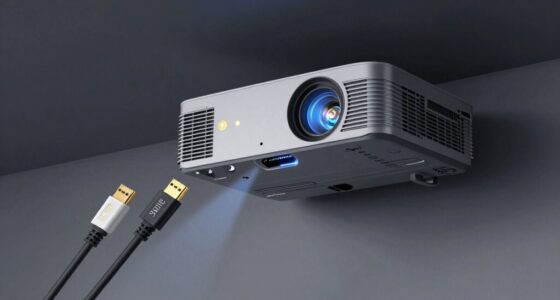
Additionally, bandwidth management is critical to prevent network congestion and ensure consistent streaming quality, especially in multi-device environments. When you’re setting up an 8K system, you must consider both the compression efficiency and the data transfer rates of your hardware. For example, modern codecs like HEVC (H.265) and AV1 are designed specifically to optimize compression while maintaining high visual fidelity. They enable you to stream or display 8K content without overwhelming your connection. However, even with these codecs, your hardware needs to support bandwidths of at least several gigabits per second to handle real-time decoding and display. This means premium cables and interfaces—like HDMI 2.1 or DisplayPort 1.4—are essential, as they provide the high data transfer rates necessary for seamless viewing.
In essence, managing the bandwidth needs for 8K projection involves a delicate balance. You want the most efficient compression techniques to keep data transfer rates within manageable levels, but you also want to preserve as much image quality as possible. As technology advances, both compression algorithms and interface standards will improve, making 8K projection more accessible and reliable. For now, understanding these core concepts helps you choose the right equipment and setup to enjoy stunning, high-resolution images without technical hiccups.
Frequently Asked Questions
How Does Compression Affect 8K Streaming Quality?
Compression markedly impacts 8K streaming quality by reducing file size and optimizing bandwidth, but it can introduce compression artifacts like blurriness or blockiness. When you use effective compression techniques, you preserve more detail and minimize quality loss. However, overly aggressive compression may cause visible artifacts, degrading your viewing experience. Balancing compression and bandwidth optimization ensures smoother streaming with high-quality 8K visuals, keeping your content crisp and immersive.
What Types of Internet Connections Support 8K Projection?
Think of your internet connection as a highway; fiber optics is like a superhighway, offering blazing-fast, reliable lanes perfect for 8K projection. Satellite internet acts as a satellite orbiting the Earth, providing coverage where cables can’t reach. For seamless 8K streaming, fiber optics is ideal, but satellite internet can work in remote areas. Choose wisely to keep your visual experience smooth and immersive, no matter where you are.
Can Existing Home Networks Handle 8K Bandwidth Demands?
Your home network might struggle with 8K bandwidth demands if it doesn’t have sufficient bandwidth capacity. Most standard Wi-Fi connections, like older routers, likely can’t handle the high data transfer rates needed for smooth 8K projection. To guarantee seamless streaming, you should upgrade to a high-speed internet plan and use a modern, high-capacity router. This way, your home network can support the massive data flow 8K content requires.
What Are the Cost Implications of Upgrading Bandwidth for 8K?
Upgrading your bandwidth for 8K projection involves significant costs. You should do a thorough cost analysis to understand expenses like higher-tier internet plans and infrastructure investment in better routers or switches. These upgrades can be expensive upfront but are necessary for smooth 8K streaming. Expect ongoing costs as well, so weigh the benefits against the investment to confirm it’s a worthwhile upgrade for your needs.
How Does Latency Impact 8K Streaming Performance?
Latency acts like a sluggish river, causing buffering delays and jitter issues that disrupt your 8K streaming experience. When latency is high, data takes longer to arrive, leading to choppy visuals and lag. To enjoy smooth, high-quality 8K content, you need low latency connections that keep the stream flowing seamlessly, preventing interruptions and ensuring your viewing remains crisp and immersive without frustrating delays.
Conclusion
In conclusion, streaming 8K content requires a massive 50 Mbps minimum bandwidth, highlighting how demanding high-resolution projection is. Did you know that just a single 8K video frame contains over 33 million pixels? This staggering amount of data means you’ll need a robust connection to enjoy seamless playback. So, if you’re aiming for crisp, high-quality 8K projections, make sure your internet speed can keep up — otherwise, you risk buffering and quality loss.
Fall Picks
fall essentials
As an affiliate, we earn on qualifying purchases.