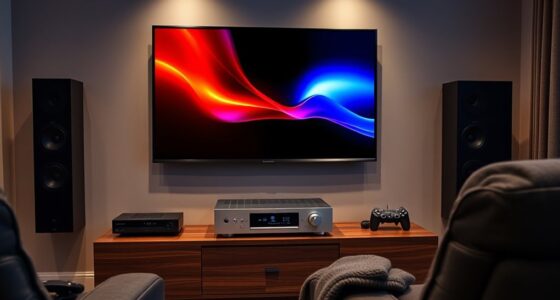
When choosing speakers, you’ll find towers are large, floor-standing units that deliver powerful sound, ideal for big rooms. Bookshelf speakers are compact and versatile, perfect for smaller spaces or surround sound setups. Center speakers anchor dialogue and vocals, so they should be placed near your TV for clarity. Subwoofers handle deep bass, adding richness to audio. Understanding these types helps you optimize your setup—keep exploring to get the most out of your audio system.

Get business pricing on your home office setup
- Business-only prices and quantity discounts
- Tax-exempt purchasing
- Multiple users, one account, clear invoices
Key Takeaways
- Towers are large, floor-standing speakers that deliver powerful, immersive sound suitable for big rooms.
- Bookshelf speakers are compact and versatile, ideal for small spaces or as part of surround sound systems.
- Center speakers improve dialogue clarity and should be positioned aligned with the main speakers, usually near the TV.
- Subwoofers handle low-frequency sounds, adding depth and bass, with placement near walls or corners for best effect.
- Each speaker type serves specific roles, and their placement impacts overall audio quality and system performance.
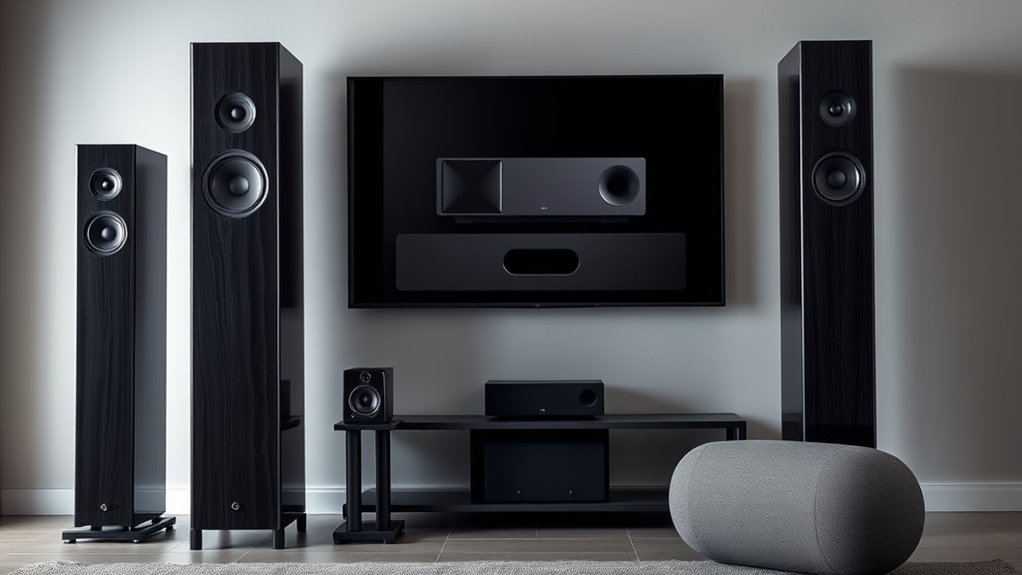
Are you wondering which speaker type best suits your audio needs? Choosing between towers, bookshelf speakers, center channels, and subwoofers can seem overwhelming, but understanding their differences helps you make an informed decision. When considering wireless vs wired options, think about your setup’s flexibility and potential clutter. Wireless speakers offer greater placement freedom and easier integration, but wired systems often deliver more reliable sound quality and lower latency. If you’re setting up a home theater or multi-room system, weigh these factors carefully. Proper speaker placement tips are vital regardless of the type you choose. For towers and bookshelf speakers, positioning them at ear level and avoiding obstructions ensures clear sound. Subwoofers should be placed near walls or corners to maximize bass response, but avoid positioning them directly against walls to prevent muddiness. Center speakers, typically part of a surround sound setup, should be directly above or below your TV for ideal dialogue clarity, ideally aligned with the main speakers. Additionally, selecting the right testing tools and following best practices ensures optimal audio performance and speaker longevity.
Towers are floor-standing speakers, often the largest and most powerful option. They fill larger rooms with robust sound and are ideal if you’re looking for an immersive listening experience. They tend to be wired, but wireless versions are becoming more common, providing easier placement without running long cables across your space. Bookshelf speakers are compact and versatile, fitting comfortably on shelves or stands. They work well in smaller rooms or as part of a surround sound system. Speaker placement tips for these include keeping them at ear level and ensuring they are not too close to walls to avoid exaggerated bass or echo. When comparing wireless vs wired bookshelf speakers, wireless models eliminate cable clutter and allow flexible placement, but wired versions can deliver superior sound fidelity and stability, especially in high-performance setups.
Center speakers are designed to anchor dialogue and vocals in a home theater system. Position them directly above or below your TV, aiming them at ear level when seated. For ideal sound, ensure they are centered and aligned with your main speakers. Subwoofers, which handle low-frequency sounds, add depth to your audio. Placement tips suggest placing them near walls or corners to boost bass, but experiment with different spots to find the smoothest, most balanced sound. If you prefer a wireless subwoofer, it offers the same placement flexibility as wireless speakers, making it easier to fine-tune your sound environment. Ultimately, your choice of speaker type depends on your room size, listening preferences, and setup flexibility, but paying close attention to placement tips will enhance your overall experience.
Frequently Asked Questions
How Do I Choose the Right Speaker for My Room Size?
To choose the right speaker for your room size, consider room acoustics and speaker placement. For smaller rooms, bookshelf speakers work well because they don’t overwhelm the space and are easier to position for ideal sound. In larger rooms, towers or multiple speakers may be needed to fill the space. Always experiment with placement, keeping speakers away from walls, to improve sound quality and avoid muddiness.
What Are the Best Speaker Types for Home Theater Setups?
For your home theater setup, surround sound speakers are essential to create an immersive experience. Use a mix of bookshelf or tower speakers for front and rear channels, placing them strategically for ideal speaker placement. A dedicated center channel speaker ensures clear dialogue. Subwoofers add depth to bass, so position them carefully for even sound distribution. This combination delivers balanced, dynamic audio perfect for movies and gaming.
Can I Mix Different Speaker Types in One System?
Like assembling a band, mixing different speaker types in one system is possible, but requires careful attention to speaker compatibility and placement. You can combine towers, bookshelf, and center speakers to create a richer soundstage, but guarantee they match in tone and power handling. Proper speaker placement ensures seamless integration, avoiding muddiness or imbalance. Think of it as tuning an orchestra—balance and coordination make all the difference for a harmonious home theater experience.
How Do Speaker Materials Affect Sound Quality?
Speaker materials directly impact sound quality by influencing clarity, durability, and resonance. For example, wood cones produce warm, natural tones, while metal cones offer sharper, more precise sound. You’ll notice that the choice of speaker material can affect bass response, treble clarity, and overall tonal balance. By selecting high-quality materials suited to your listening preferences, you enhance sound quality and enjoy richer, more immersive audio experiences.
What Maintenance Do Different Speaker Types Require?
Ever wonder how to keep your speakers sounding their best? Regularly clean your speakers to remove dust and debris, which can affect sound quality. Check and adjust speaker placement to prevent distortion and guarantee ideal performance. For all types, avoid exposure to moisture and extreme temperatures. Periodic inspection of cables and connections also helps prevent issues. Proper maintenance keeps your speakers performing like new, so enjoy clear, immersive sound every time.
Conclusion
Understanding the different speaker types helps you create a balanced, immersive sound system. While some believe tower speakers deliver the best bass, others find bookshelf speakers offer clearer mids and highs. Center speakers and subwoofers fill in the gaps for a full home theater experience. Ultimately, mixing and matching these types lets you tailor your setup to your space and preferences, proving that the right combination truly makes your audio experience richer and more satisfying.
Halloween Picks
halloween
As an affiliate, we earn on qualifying purchases.