
Home theater projectors let you enjoy big, crisp images right in your living room, giving you a cinematic feel at home. They rely on two key factors: resolution, which determines how sharp and detailed the image looks, and brightness, measured in lumens, that affects visibility in different lighting. Picking the right combination of these features guarantees vivid, clear visuals suited to your space. Keep exploring to discover how to choose the best projector for your home setup.

Get your home office setup delivered free — and shop member deals
- Fast, free delivery on millions of items
- Access to Prime Big Deal Days deals on October 6–7
- Prime Video, Amazon Music and more included
Key Takeaways
- Home theater projectors enhance movie experiences by projecting large, high-quality images onto screens or walls.
- Resolution, such as 1080p or 4K, determines image sharpness and detail clarity.
- Brightness, measured in lumens, affects image visibility in various lighting conditions.
- Balancing resolution and brightness is key to achieving vivid, sharp visuals suited to room lighting.
- Choosing the right projector depends on budget, room size, and desired image quality for an immersive experience.

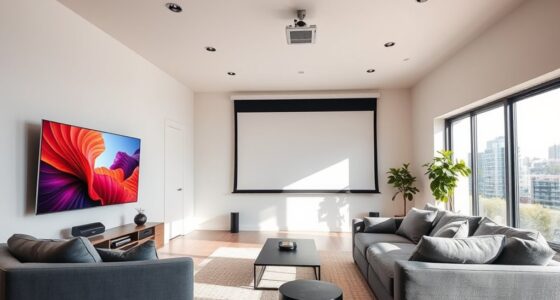
Are you looking to transform your living room into a cinematic escape? If so, choosing the right home theater projector is essential. One of the first things to consider is the screen resolution. This determines how sharp and detailed your image will be. A higher resolution, like 1080p or 4K, provides crisp visuals that bring movies, sports, and games to life. If you settle for a lower resolution, your picture might look pixelated or blurry, especially on larger screens. So, think about the size of your projected image and how much detail you want in your viewing experience. The right screen resolution makes all the difference in creating a theater-like atmosphere at home.
Another crucial factor is projector brightness, measured in lumens. Brightness influences how well your image appears in different lighting conditions. If your room has windows or ambient light, you’ll need a projector with higher brightness, typically 2,500 lumens or more, to keep images vibrant and visible. In darker rooms, you can get away with a lower lumen count, saving money while still enjoying excellent picture quality. Remember, if your projector isn’t bright enough, even a high-resolution image can look washed out or dull. Conversely, a projector with excessive brightness in a dark room can cause eye strain and wash out colors. Balancing projector brightness with your room’s lighting conditions ensures clear, vivid images that make your viewing sessions truly immersive.
When selecting a home theater projector, consider how these two factors—screen resolution and projector brightness—work together. High resolution provides detailed images, but without sufficient brightness, that detail can be lost in less-than-ideal lighting. Conversely, a bright projector in a dark room might give you excellent images, but if the resolution is low, your viewing experience won’t match up to your expectations. It’s about finding the right combination for your space and preferences. Also, keep in mind that higher resolution models tend to be more expensive, so weigh your budget against your desired image quality. Projector specifications play a crucial role in determining overall performance and compatibility with your home theater setup.
Ultimately, understanding how screen resolution and projector brightness impact your viewing experience helps you make smarter choices. Whether you’re watching a blockbuster in 4K or enjoying a quiet movie night, the right projector will deliver sharp, vibrant images that rival the cinema. Take the time to research and select a model that offers a good balance of resolution and brightness suited to your room, so your home theater setup becomes your favorite place to relax and unwind.
Frequently Asked Questions
What Is the Optimal Room Size for a Home Theater Projector?
The ideal room size for a home theater projector depends on your space and preferences, but generally, a room around 12×15 feet works well. You should consider room acoustics to reduce echo and improve sound quality, and arrange seating so viewers are at an appropriate distance from the screen. This setup ensures an immersive experience without overwhelming the space or causing discomfort.
How Long Do Projector Lamps Typically Last?
Projector lamps typically last between 1,500 to 3,000 hours, depending on usage and lamp quality. You should follow the recommended replacement schedule in your projector’s manual, usually after about 2,000 hours of use. Keep an eye on brightness and color quality; if they decline, it’s time to substitute the lamp. Proper maintenance ensures your home theater experience stays bright and sharp.
Can Projectors Be Used Outdoors Effectively?
Yes, you can use projectors outdoors effectively, but it requires careful outdoor setup and weather considerations. Make certain you choose a projector with high brightness (lumens) to combat ambient light. Set up in a shaded area to prevent weather damage and protect it from moisture and wind. Use a sturdy screen and secure the projector to avoid movement. Proper planning guarantees a great outdoor viewing experience, even with unpredictable weather.
What Are the Differences Between 4K and 1080P Projectors?
A 4K projector offers a higher resolution comparison to 1080p, meaning it displays more detailed images. You’ll notice sharper, crisper picture quality with 4K, especially on larger screens. While 1080p projectors provide good image quality and are more budget-friendly, 4K is ideal if you want stunning clarity and enhanced immersion. Your choice depends on your budget and how much you value the extra detail in your home theater setup.
How Do I Maintain and Clean My Projector?
Think of your projector as a delicate eye that needs gentle care. To maintain it, regularly clean the lens with a soft, lint-free cloth and avoid touching the glass directly. Check and replace filters as needed to prevent dust buildup. Keep the vents clear of debris and ensure proper ventilation. These small acts keep your projector shining brightly, preserving its clarity and extending its lifespan.
Conclusion
Now that you understand the basics, selecting the right home theater projector becomes easier. You can choose based on resolution, brightness, and features that suit your space. You can enjoy movies, games, and sports with vibrant clarity. You can transform your room into a cinematic escape. You can create an entertainment haven that fits your style. With the right projector, you turn your home into a perfect theater, making every viewing experience unforgettable.
Halloween Picks
halloween
As an affiliate, we earn on qualifying purchases.