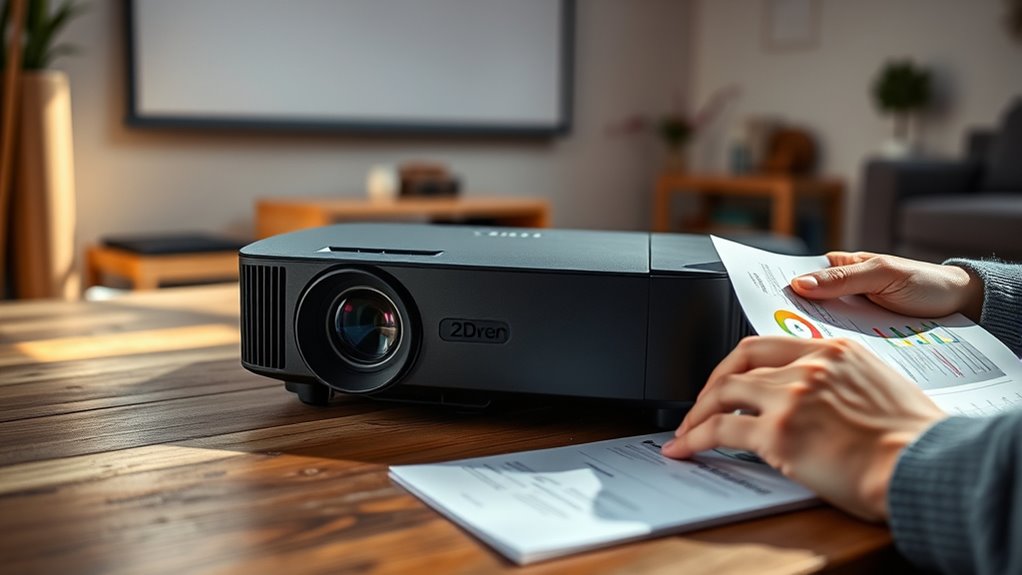
To choose your first projector, first assess your space and how big you want the screen to be, ensuring the projector can handle that size clearly. Consider your room’s ambient light; brighter projectors are better for lit rooms, while darker spaces need less brightness. Decide on the technology type—DLP or LCD—based on your needs for sharpness or color richness. Set a budget and prioritize resolution, like 1080p or 4K, that fits your viewing habits. Keep these factors in mind, and you’ll find a model suited for your space—more helpful tips await if you continue exploring.

Get your home office setup delivered free — and shop member deals
- Fast, free delivery on millions of items
- Access to Prime Big Deal Days deals on October 6–7
- Prime Video, Amazon Music and more included
Key Takeaways
- Determine your room size, lighting conditions, and preferred screen size to match projector brightness and resolution needs.
- Choose between DLP and LCD technology based on image sharpness, color brightness, and ambient light levels.
- Set a realistic budget, prioritizing resolution, brightness, and features that suit your primary viewing environment.
- Measure available space and viewing distance to select a projector capable of projecting a clear, appropriately sized image.
- Research models with good reviews, compare specifications, and consider future upgrade options for long-term satisfaction.

Selecting your first projector can feel overwhelming with so many options available, but understanding your needs and budget can make the process much easier. One of the most important factors to contemplate is the screen size you want to achieve. Think about where you’ll be using the projector—whether it’s a dedicated home theater room or a living room with a large wall. Larger screen sizes create a more immersive experience, but they also require brighter projectors and higher-quality projection technology to deliver clear images at greater distances. Measure your space carefully, and decide on a comfortable viewing distance that aligns with your desired screen size. This will help you narrow down options that can project a large, crisp picture without sacrificing image quality. Additionally, consider the family background of the projector’s user, as some features may be more suitable for certain environments or preferences. Projection technology is another key aspect to examine, as it affects image brightness, color accuracy, and overall picture quality. The two main types are DLP (Digital Light Processing) and LCD (Liquid Crystal Display). DLP projectors tend to produce sharper images with smoother motion, making them ideal for fast-paced movies or gaming. LCD projectors, on the other hand, often provide brighter images with richer colors, which can be better suited for brightly lit rooms or presentations. Some newer projectors even combine both technologies, offering a balance of performance. When choosing based on projection technology, think about your environment—if you have ambient light, you’ll want a projector with higher lumens, which indicates brightness. This is essential to guarantee your images remain vivid and visible, regardless of lighting conditions.
Budget is also a critical element in your decision. While it’s tempting to go for the highest resolution and most advanced features, prioritize what aligns with your primary use and space constraints. For instance, a projector with 1080p resolution might be enough for casual movie nights, whereas 4K projectors can provide a more detailed picture but come at a higher cost. Also, factor in the cost of replacement bulbs or maintenance, as some technologies require more frequent upkeep. If you’re just starting out, look for a projector that offers a good balance between features and affordability. Many entry-level models provide decent screen size options and solid projection technology, making them perfect for learning your preferences before investing in more expensive models.
Frequently Asked Questions
What Is the Ideal Throw Distance for Small Rooms?
For small rooms, aim for a throw distance that allows you to project a screen size of 100-120 inches comfortably. Typically, this means placing your projector about 8-10 feet away from the screen. Keep in mind that ambient light affects image quality; darker rooms enhance brightness and contrast. Adjust the throw distance to optimize your screen size while minimizing ambient light interference for the best viewing experience.
How Important Is 4K Resolution for Beginners?
For beginners, 4K resolution isn’t vital but can enhance your viewing experience, especially if you prioritize sharper images and detail. Resolution importance varies based on your needs; if you’re just starting, a full HD projector often suffices. However, if you plan to enjoy movies or gaming with higher image clarity, investing in 4K may be worth it. Ultimately, consider your budget and how much you value picture quality for your initial setup.
Can I Use a Projector Outdoors Effectively?
Yes, you can use a projector outdoors effectively. Just make certain it’s weather-resistant or protected from outdoor weather conditions like rain and humidity. Look for models with good brightness to combat ambient light and use a reliable power source nearby or portable options with batteries. Position your projector on a stable surface and shield it from wind and moisture to enjoy a clear, outdoor viewing experience without interruptions.
What Maintenance Does a Projector Require?
You need to regularly clean your projector’s filters and lens to keep it running smoothly. Keep an eye on the lamp lifespan; replace the lamp when it nears the end to avoid image dimming. Dust and debris can cause overheating and damage, so schedule routine maintenance. Also, check for firmware updates and keep the vents clear to guarantee peak performance. Proper maintenance extends your projector’s life and maintains image quality.
Are There Portable Projectors Suitable for Travel?
You’ll find plenty of portable options perfect for travel, offering compact sizes and lightweight designs that slip easily into your bag. These travel-friendly projectors often feature built-in batteries, versatile connectivity, and easy setup, making them ideal for on-the-go presentations or movie nights. With these travel-friendly features, you can enjoy high-quality visuals anywhere, turning any space into a mini theater or meeting spot without hassle.
Conclusion
Now that you know the key steps, picking your first projector becomes easier. Remember, over 70% of home entertainment enthusiasts say a good projector transformed their viewing experience. So, take your time, consider your space and needs, and choose wisely. Your perfect projector awaits—ready to bring larger-than-life movies, games, and presentations right into your home. With the right choice, you’ll enjoy countless unforgettable moments. Happy projecting!
Fall Picks
fall essentials
As an affiliate, we earn on qualifying purchases.