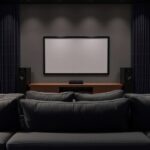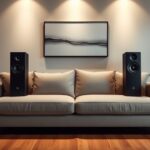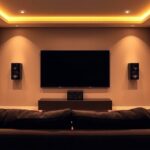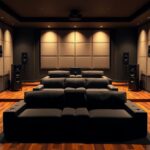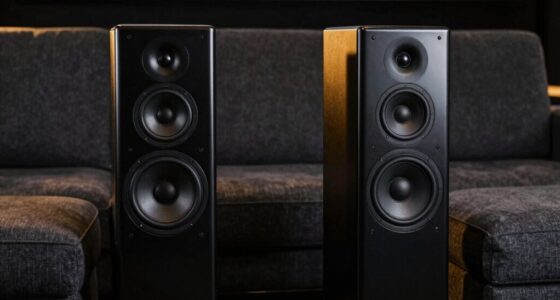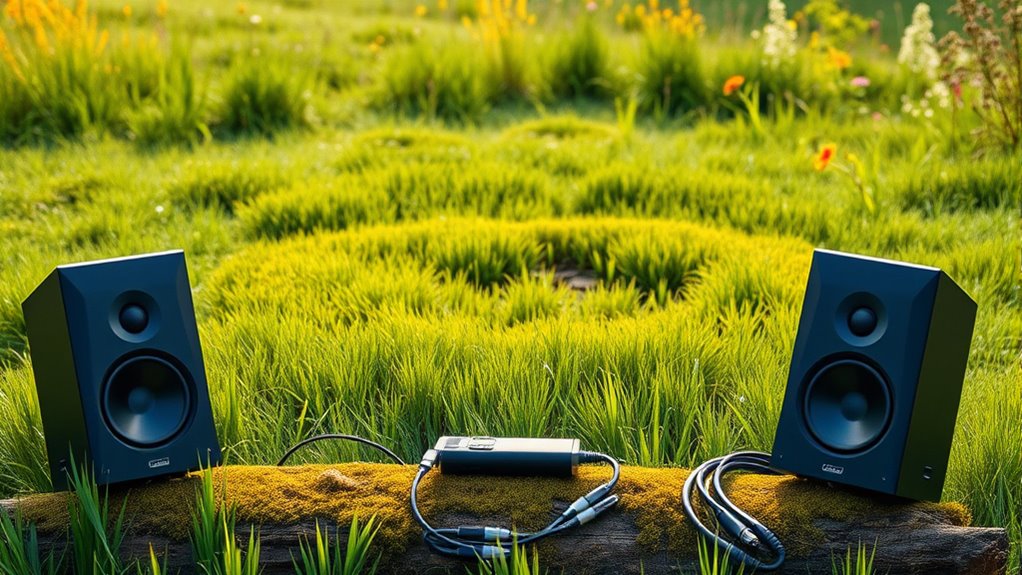

To set up your speakers effectively, start by understanding your room’s acoustics, managing reflections with treatments like foam panels. Position speakers at ear level, forming an equilateral triangle with your seating area, and keep them symmetrical for balanced sound. Adjust angles inward and experiment with distance for clarity and bass. Focus on creating a seamless soundstage while controlling echoes. If you continue exploring, you’ll find practical tips to optimize your sound experience even further.
Key Takeaways
- Optimize speaker placement by forming an equilateral triangle with the listening position for balanced sound.
- Manage room acoustics with strategic acoustic treatments to reduce reflections and improve clarity.
- Position speakers at ear level and angle them inward for better stereo imaging and soundstage.
- Use symmetry in speaker and treatment placement to ensure even sound distribution.
- Fine-tune placement and angles patiently to enhance clarity, bass response, and overall sound quality.

Official Licensed Google TV Smart Projector, HAPPRUN 4K UHD Home Theater with Dolby Sound, Wi-Fi & Bluetooth, Built-in Streaming Apps, Compatible with Games Consoles & Smartphone, Indoor & Outdoor Use
[ Built-in Official Licensed Google TV ] - Without additional equipment, the smart projector can directly access Netflix,...
As an affiliate, we earn on qualifying purchases.
Understanding Your Space and Its Acoustics
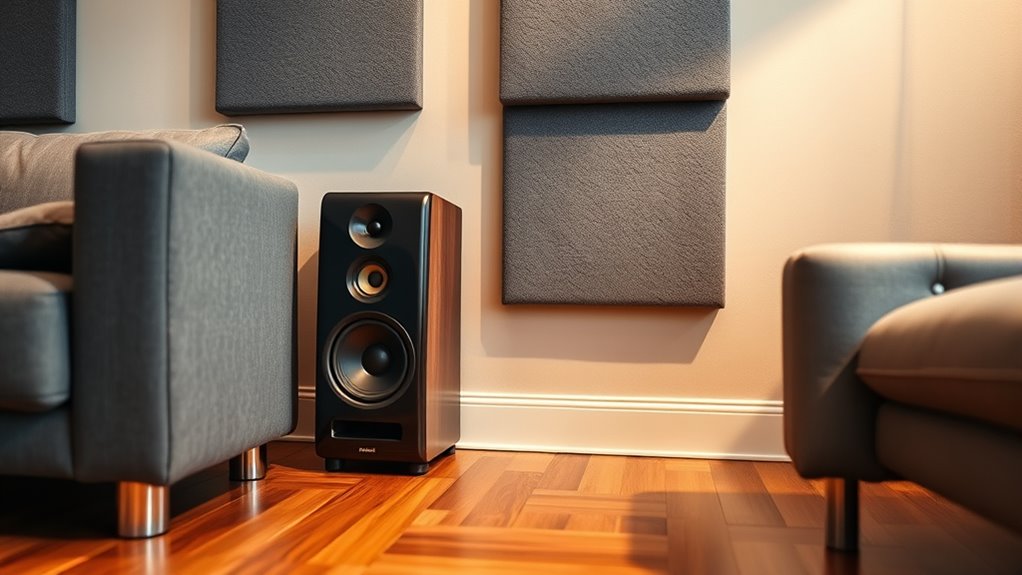
Understanding your space and its acoustics is essential for ideal speaker placement. Your room’s size, shape, and materials directly influence how sound travels and reflects. Hard surfaces like glass or tile can create echoes, while soft furnishings such as curtains and carpets absorb sound, affecting room acoustics. Before positioning your speakers, assess the space for potential problem areas where sound might bounce or be muffled. Consider the overall layout, including furniture and room dimensions, to optimize sound quality. Proper speaker placement depends on understanding these acoustic characteristics, ensuring sound waves reach you clearly without excessive reflection or absorption. Analyzing your room’s acoustics first can help identify problematic areas and make informed decisions that notably improve your listening experience. Additionally, understanding room acoustics is crucial for achieving balanced sound and avoiding issues like muddiness or harshness. Recognizing how different surface materials impact sound reflection can further refine your speaker placement strategy, especially when considering the use of recycled products in room decor and furnishings. Considering how surface textures influence sound reflection can also help optimize your setup for clearer audio.

Aurzen Roku TV Smart Projector with Wifi and Bluetooth, Roku Streaming Experience Built-in, 1080P FHD, Dolby Audio, Auto Focus & Keystone, Zoom, Movie Portable Outdoor Mini Projector, White
A Roku account and internet connection are required for activation (Creating an account is free)
As an affiliate, we earn on qualifying purchases.
Optimal Distance Between Speakers and Listeners
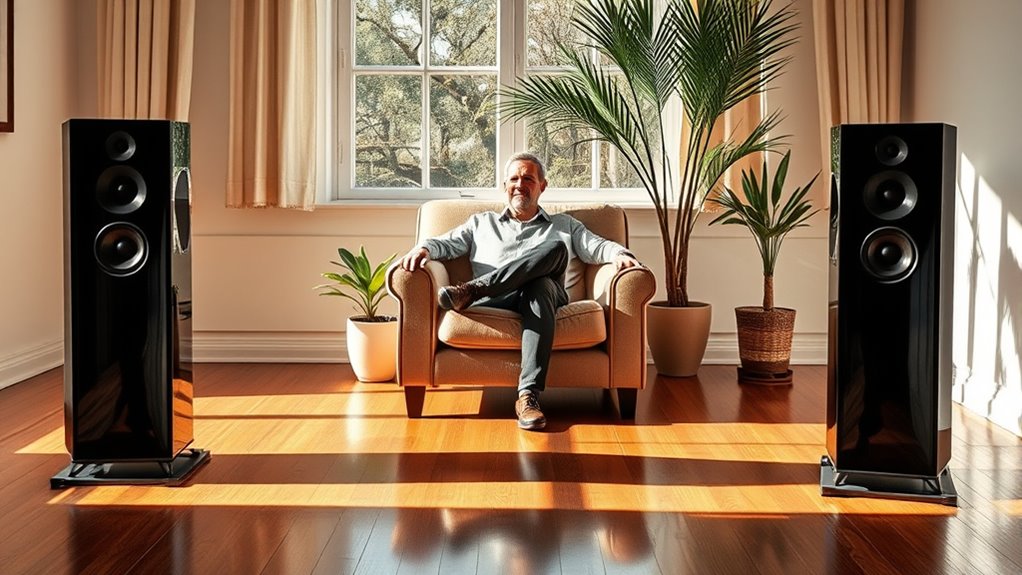
To get the best sound, you should position yourself within the ideal listening range from your speakers. Sitting too close or too far can cause sound overlap or gaps that make certain sounds less distinct. Finding the right distance ensures clear, balanced audio without distortion. Understanding your personal preferences and the acoustic environment can further optimize your listening experience by aligning with your personality traits. Additionally, being aware of the acoustic environment can help in adjusting your position for optimal sound clarity. Adjusting your placement based on the sound quality and how it interacts with the listening environment can significantly enhance your overall listening experience. Being mindful of how self watering plant pots work can also serve as a metaphor for understanding how sound propagates in a space, helping you find the perfect spot for the best audio.
Ideal Listening Range
Finding the ideal listening range means positioning your speakers at a distance that delivers clear, balanced sound without distortion or dead spots. Typically, this distance allows you to experience the full bass response without overwhelming the room or creating muddy sound. To achieve this, place your speakers at an equal distance from your listening position, forming an equilateral triangle. Proper speaker orientation enhances sound clarity and ensures the bass response remains tight and controlled. If speakers are too close, bass may become boomy; too far, and you risk weak sound and uneven coverage. Experiment with the distance until you find a spot where sound feels natural and immersive. Remember, the right listening range maximizes both clarity and bass performance, creating a balanced listening environment. Additionally, understanding sound dynamics can help optimize your setup for the best audio experience. Paying attention to speaker placement can significantly improve overall sound quality and listener enjoyment. Adjusting your setup based on room acoustics can further enhance audio quality and ensure a more consistent listening experience, especially as advancements in AI technology continue to influence audio processing and tuning.
Avoid Sound Overlap
Ensuring the right distance between your speakers and listening position helps prevent sound overlap, which can muddy audio clarity. Proper spacing depends on room dimensions and maintaining speaker symmetry. To visualize:
- Imagine your room as a box; position speakers equidistant from the listening spot.
- Keep speakers at least as far apart as the room’s width allows.
- Ensure they form an equilateral triangle with your listening position.
- Adjust so sound waves arrive simultaneously, avoiding overlap that causes muddiness.
- Using a balanced speaker setup can further optimize sound distribution and clarity. Additionally, considering room acoustics can greatly improve overall sound quality and reduce unwanted echoes or reverberations. Proper placement also involves understanding speaker placement techniques to achieve optimal sound staging and imaging. Achieving sound clarity depends on precise positioning and understanding how sound interacts within your specific space. Proper placement also includes adjusting for headphone use to personalize the listening experience and ensure optimal sound quality. This setup minimizes interference and enhances stereo imaging. Larger rooms may require wider speaker placement, while smaller spaces benefit from closer positioning. Consistent distance and symmetry ensure clear, balanced sound without overlap. Proper placement optimizes your listening experience by respecting room dimensions and speaker alignment.

【Built-in APPS & Electric Focusing & 210° Rotation】Mini Projector With Wifi And Bluetooth, 1080P Portable Projector, Movie Projector for Bedroom, Supports Smartphones/TV Stick/iPad/PS5/Laptop/HDMI/USB
【The Latest WIFI 6 Technology And Bluetooth 5.3】This projector with Wi-Fi and Bluetooth is equipped with the latest...
As an affiliate, we earn on qualifying purchases.
The Importance of Speaker Height and Angle
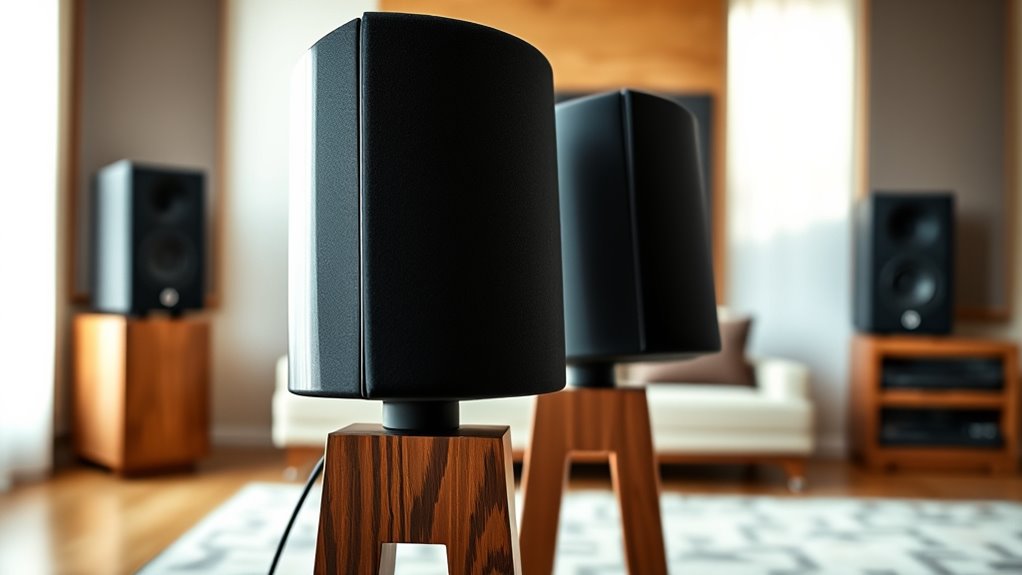
The height and angle of your speakers can considerably impact your listening experience because they determine how sound waves reach your ears. Proper speaker height guarantees the tweeters are roughly at ear level when you’re seated, which helps deliver clear, detailed sound. If speakers are too high or low, you might miss out on some high frequencies or experience imbalance. Adjusting the speaker angle is equally important; angling them toward your listening position creates a direct sound path, improving clarity and stereo imaging. A slight tilt inward, toward your ears, enhances focus and consistency across your listening area. Small changes in speaker height and angle can make a significant difference, helping you enjoy a more accurate, immersive sound experience. Additionally, understanding the importance of sound quality can guide you in optimizing your setup further. Being aware of speaker positioning principles can also prevent common issues like sound distortion or fatigue during long listening sessions. Proper speaker placement not only enhances audio clarity but also contributes to a more balanced and enjoyable listening environment.

HAPPRUN 2500 ANSI Lumens Outdoor Projector with Built-in Streaming Apps, 4K Decoding Resolution, Dolby Audio, WiFi 6 and Bluetooth 5.2 for Indoor and Outdoor Home Theater
[ Built-in Streaming System ] – No extra equipment needed. This smart projector gives you direct access to...
As an affiliate, we earn on qualifying purchases.
Creating a Balanced Soundstage
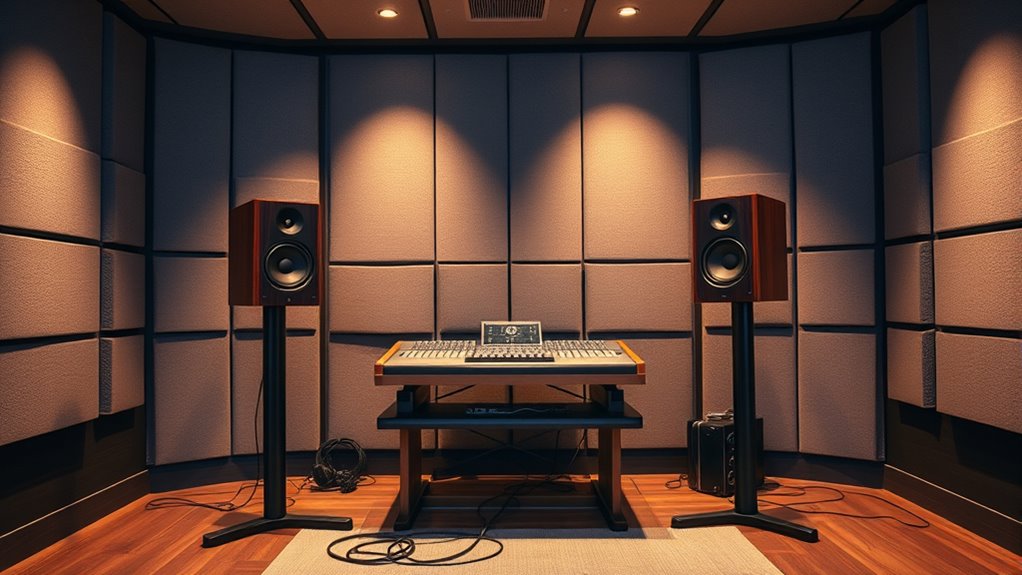
Creating a balanced soundstage involves carefully positioning your speakers so that sound appears evenly distributed across your listening area. To achieve this, focus on these key points:
- Ensure speaker symmetry by placing both speakers at equal distances from the room’s center, creating a mirror image.
- Adjust the distance from each speaker to your listening position to balance bass response, avoiding boomy or weak spots.
- Keep the speakers at the same height and angle for consistent imaging and clarity.
- Position speakers so that their drivers are at ear level when seated, ensuring even sound dispersion.
Managing Reflections and Echoes
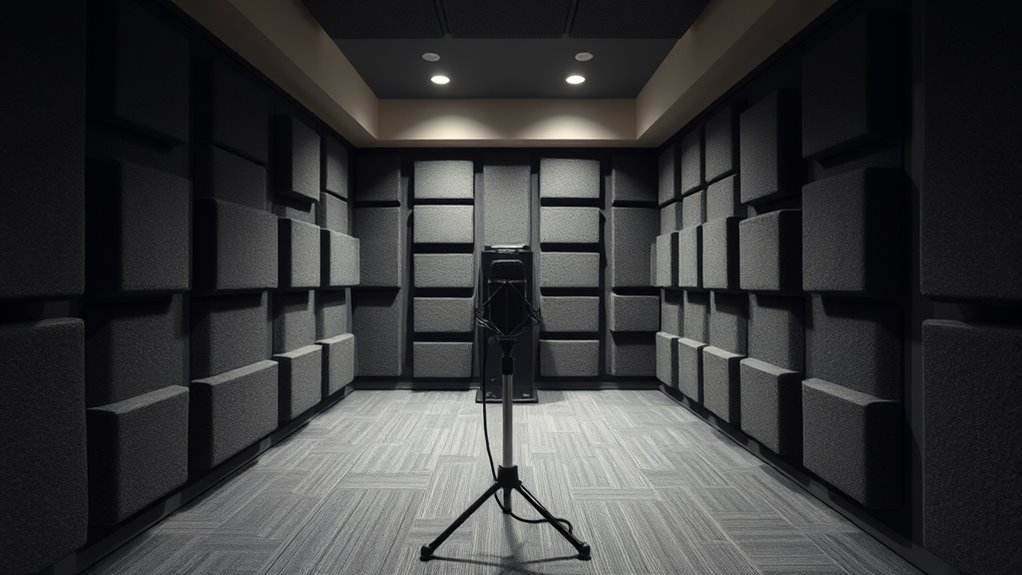
To improve sound clarity, you should carefully position your speakers to minimize unwanted reflections. Using acoustic treatments like panels or diffusers can help absorb echoes and keep the sound focused. By combining proper placement with effective treatments, you’ll create a cleaner, more accurate listening environment.
Positioning for Clarity
When positioning your speakers for clarity, managing reflections and echoes becomes essential to achieving a clean sound. To do this effectively, focus on creating proper speaker symmetry and optimizing sound dispersion. Imagine these steps:
- Arrange speakers at equal distances from the listening position to ensure balanced sound.
- Angle speakers inward slightly, aligning their dispersion toward the center for even coverage.
- Keep speakers away from reflective surfaces like walls or glass to reduce unwanted echoes.
- Use furniture or soft materials nearby to absorb stray reflections and minimize reverberation.
Using Acoustic Treatments
Acoustic treatments play a crucial role in managing reflections and echoes that can muddy your sound. To achieve this, focus on speaker symmetry, ensuring your speakers are evenly positioned and aligned to minimize uneven reflections. Acoustic absorption materials, like foam panels or bass traps, help reduce unwanted sound bouncing around your space. Place these treatments strategically on walls, especially behind and beside your speakers, to dampen reflections without deadening the room. Properly managing early reflections improves clarity and stereo imaging. Keep in mind that symmetrical placement of acoustic treatments enhances sound consistency across the room. By combining speaker symmetry with targeted acoustic absorption, you create a balanced environment that minimizes echoes and guarantees your audio remains clear and accurate.
Practical Tips for Fine-Tuning Your Setup

Fine-tuning your speaker setup can markedly improve sound quality, so it’s worth taking the time to make small adjustments. Start by adjusting the subwoofer placement—try moving it closer to a wall or corner to boost bass. Next, focus on cable management: neatly route cables behind furniture or along walls to prevent interference and clutter. Third, listen carefully and tweak speaker angles slightly inward or outward until the sound feels balanced and immersive. Fourth, check the height and alignment of your speakers so they’re ear level when seated. These small tweaks can drastically enhance clarity and bass response. Remember, the goal is a seamless, balanced soundstage—so be patient and methodical as you fine-tune each element.
Frequently Asked Questions
How Do I Choose the Right Speaker Type for My Room?
To select the right speaker type for your room, consider your space and audio needs. Opt for a subwoofer with proper integration to enhance bass without overwhelming. Adjust the speaker height to optimize sound clarity and coverage. Larger rooms may need powerful floor-standing speakers, while smaller spaces benefit from bookshelf models. Always test different setups, focusing on subwoofer integration and speaker height adjustment, to guarantee the best sound experience tailored to your room.
What Tools Are Best for Measuring Speaker Placement Accurately?
You should use calibration microphones and laser distance meters for accurate speaker placement. Calibration microphones help measure sound levels precisely, guaranteeing ideal positioning, while laser distance meters provide exact measurements of distances from walls and seating areas. Together, these tools let you fine-tune your setup for the best sound quality, making adjustments based on accurate data rather than guesswork. This approach ensures your speakers are placed perfectly for maximum performance.
How Often Should I Adjust My Speaker Setup?
You should adjust your speaker setup whenever you notice changes in room acoustics or audio quality, ideally every few months. Studies show that even minor shifts can impact sound clarity. Regular speaker calibration ensures peak performance, especially if you move furniture or change room decor. Keep an ear out for muffled sounds or imbalanced audio, and fine-tune your speakers to maintain the best listening experience.
Can Furniture Placement Affect My Speaker Sound Quality?
Yes, furniture placement can definitely affect your speaker sound quality. It impacts room acoustics by creating reflections or absorbing sound, which messes with clarity. Additionally, furniture can hinder speaker isolation, causing vibrations and muddled audio. To improve sound, arrange furniture to minimize reflections and give your speakers space to breathe. Experiment with different setups, and listen closely to find the ideal balance for clear, accurate sound.
What Are Common Mistakes to Avoid When Setting up Speakers?
Avoid the classic mistake of ignoring speaker positioning; your ears aren’t a free for all. Don’t place speakers too close to walls or corners—they’ll boomerang sound and ruin your vibe. Overlooking room acoustics? Big mistake. Instead, tweak angles and distances to optimize sound. Remember, a wise speaker setup considers both placement and room acoustics, or you’ll end up with a soundscape so bad, even your furniture will complain.
Conclusion
By applying these basics, you can transform your listening space into a true sound sanctuary. Think of your setup like tuning a musical instrument—you’ll notice that small adjustments in speaker placement, height, and angle create a richer, more immersive experience. Just as a perfectly tuned guitar produces clear notes, a well-placed speaker setup guarantees your music or movies sound balanced and vibrant, making every listening session feel like a front-row concert.