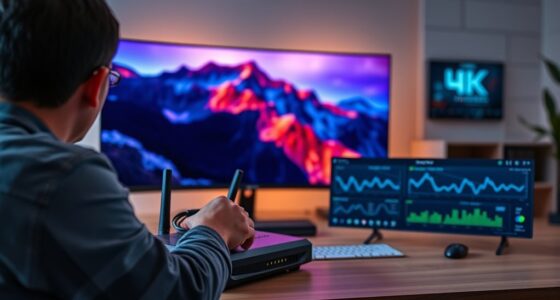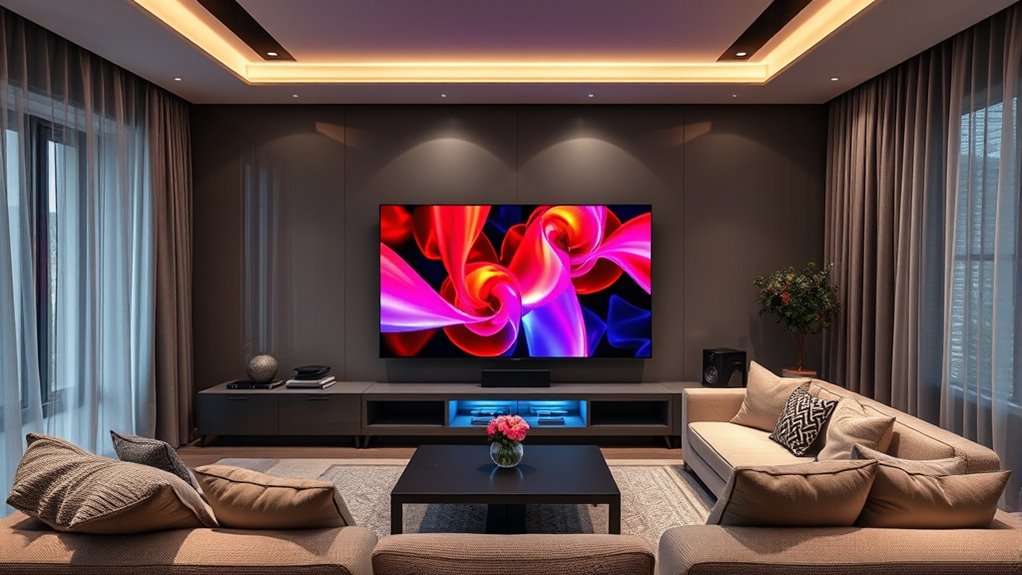

HDR enhances streaming quality by providing richer colors, brighter highlights, and deeper shadows, making scenes look more lifelike and immersive. However, it also demands more bandwidth and a stable internet connection to deliver these visuals smoothly. Not all devices support HDR, so calibration is key to seeing the full benefits. As platform support grows and technology improves, your streaming experience will become even more vibrant—stick around to discover how to get the most out of HDR.

Get business pricing on your home office setup
- Business-only prices and quantity discounts
- Tax-exempt purchasing
- Multiple users, one account, clear invoices
Key Takeaways
- HDR enhances streaming quality by providing richer colors, brighter highlights, and deeper shadows for a more lifelike image.
- It requires higher bandwidth and stable internet connections to handle increased data demands without buffering.
- Device compatibility and proper calibration are essential to fully experience HDR’s visual improvements.
- Content availability in HDR varies across platforms, affecting the overall viewing quality and experience.
- Future advancements will make HDR content more accessible, further elevating streaming quality and viewer engagement.
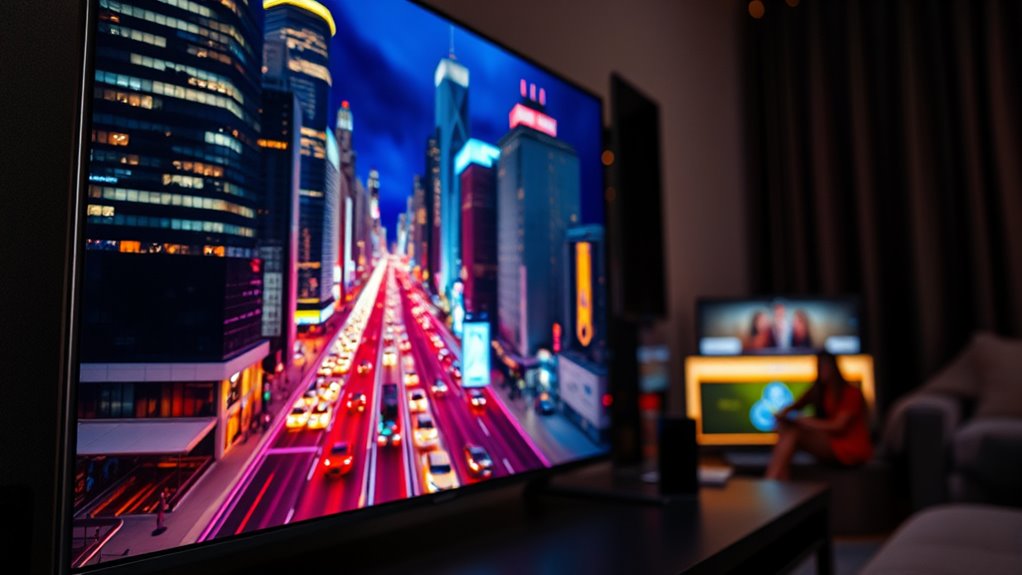
Have you ever wondered how High Dynamic Range (HDR) impacts your streaming experience? When you stream content with HDR, you’re stepping into a world of richer colors, brighter highlights, and deeper shadows. This enhancement dramatically improves color accuracy, making scenes appear more lifelike and visually stunning. Instead of washed-out or dull visuals, HDR delivers a broader spectrum of colors, allowing you to see details that would otherwise be hidden in standard dynamic range content. Whether you’re watching a sunset, a vibrant cityscape, or a detailed character costume, HDR ensures the colors you see are closer to what the creator intended, elevating your overall viewing experience.
HDR enriches colors, highlights, and shadows, making your streaming visuals more lifelike and stunning.
However, this improvement in picture quality isn’t free from challenges. One of the key considerations with HDR streaming is its bandwidth impact. Since HDR videos carry more data to accommodate the wider color gamut and higher dynamic range, streaming them requires a faster and more stable internet connection. If your bandwidth isn’t sufficient, you might encounter buffering, reduced resolution, or lower frame rates, which can detract from the benefits HDR offers. It’s vital to have a robust internet plan if you want to enjoy HDR content without interruptions, as the enhanced visual benefits come with increased data demands.
Another aspect to keep in mind is that not all devices handle HDR equally. For maximum color accuracy, your screen must support HDR standards and have proper calibration. If your device isn’t HDR-compatible or isn’t calibrated correctly, you might not see the full benefits of HDR content. Instead, the colors may appear oversaturated or washed out, undermining the improvements HDR promises. Thus, to truly enjoy the vivid, accurate visuals, ensure your device supports HDR and is calibrated to display the expanded color palette correctly. Additionally, understanding content compatibility can help you select the best media to take full advantage of HDR capabilities.
Despite the bandwidth impact, many streaming platforms now prioritize HDR content because of its ability to deliver a superior viewing experience. As internet speeds continue to improve and devices become more capable of handling HDR, you’ll likely notice more content available in this format, making it easier to enjoy visually stunning streams. Just remember that to get the most out of HDR—whether it’s the enhanced color accuracy or the immersive brightness—you need a combination of a compatible device, a strong internet connection, and properly calibrated settings. When all these elements align, HDR transforms your streaming sessions into more vibrant, detailed, and true-to-life experiences.
Products Worth Considering

Hisense 85 U6 Pro Series Mini-LED ULED 4K UHD HDR Gaming AI Smart Fire TV (85U6SF Pro)

Ring Alarm 14-Piece Wireless Security System Kit

iRobot Roomba 105 Vac Robot Vacuum
As an affiliate, we earn on qualifying purchases.
Frequently Asked Questions
Does HDR Impact Streaming Latency or Buffering Times?
Yes, HDR can impact streaming latency and buffering times because it increases bandwidth consumption due to higher quality visuals. When you stream HDR content, your device needs more data to deliver the enhanced visual clarity, which can cause buffering or delays if your internet connection isn’t fast enough. To minimize this, make certain you have sufficient bandwidth, so your streaming remains smooth without sacrificing the benefits of HDR’s improved visual clarity.
Can HDR Cause Compatibility Issues With Older Devices?
Yes, HDR can cause compatibility issues with older devices due to device limitations. If your device doesn’t support HDR, you might experience no picture or reduced quality when streaming HDR content. To avoid this, check your device’s HDR compatibility before streaming. Upgrading older hardware or updating firmware can help, but some devices simply lack the necessary technology, which might limit your HDR streaming experience.
How Does HDR Affect Data Usage During Streaming?
Think HDR is just pretty pictures? Think again! It markedly increases bandwidth consumption because of richer color and higher dynamic range. Streaming HDR content requires more data, which means you’ll use up your data plan faster. Data compression helps, but it can’t fully tame HDR’s appetite. So, unless you love watching your data evaporate, be prepared for a noticeable spike in data usage when streaming HDR videos.
Is HDR Available on All Streaming Platforms?
HDR isn’t available on all streaming platforms. To access HDR content, your device needs HDR compatibility and support for streaming device requirements. Check if your streaming device, like a smart TV, console, or app, supports HDR. Platforms like Netflix, Disney+, and Amazon Prime Video offer HDR, but you must confirm your device and app are compatible. If not, you’ll miss out on the richer, more vibrant visuals HDR provides.
What Are the Best Settings for HDR Streaming Quality?
To get the best HDR streaming quality, you should start with proper HDR calibration on your device. Adjust brightness, contrast, and gamma settings for ideal color accuracy, ensuring vivid images without losing detail. Use a high-quality HDMI cable that supports HDR and set your streaming app to HDR mode if available. Keeping your device firmware updated also helps maintain consistent HDR performance, giving you vibrant visuals and smooth viewing.
Conclusion
Just as a master painter brings life to a blank canvas, HDR transforms your streaming experience with vivid colors and sharper contrasts. By embracing HDR, you access a world where every scene feels more real and immersive, much like stepping into a vivid dream. Don’t settle for dull visuals—let HDR be your guiding light, turning ordinary moments into extraordinary memories. Remember, in the domain of quality, HDR is your brushstroke toward excellence.