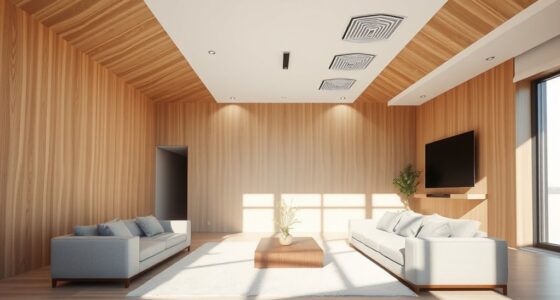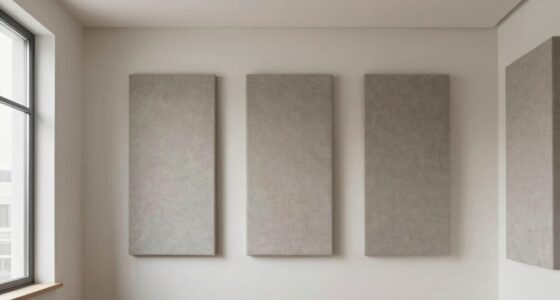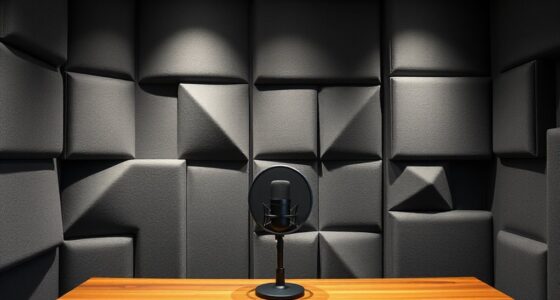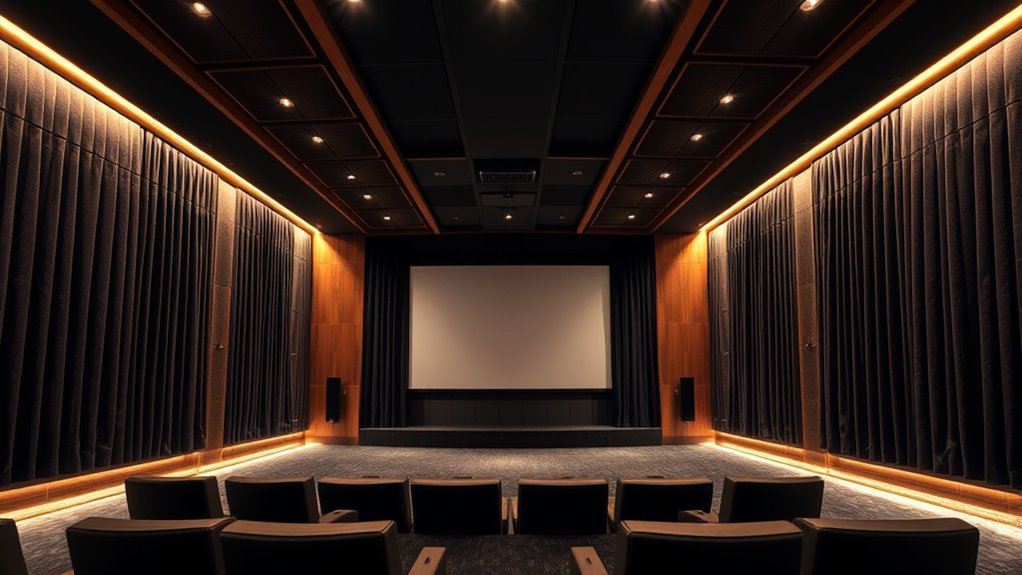

When designing acoustic ceilings and floors for your home theater, choose sound-absorbing materials like acoustic tiles, suspended ceiling systems, and thick rugs or carpeting. Install these panels strategically at reflection points and beneath flooring to minimize echoes and sound transfer. Consider layering materials for better soundproofing and look for options that blend with your decor. If you continue exploring, you’ll discover how to create a balanced, immersive sound environment tailored to your space.

Get business pricing on your home office setup
- Business-only prices and quantity discounts
- Tax-exempt purchasing
- Multiple users, one account, clear invoices
Key Takeaways
- Incorporate acoustic ceiling tiles or suspended ceiling systems to absorb sound and reduce echo in the theater space.
- Use dense insulation and mass-loaded vinyl beneath ceilings and floors to block external noise and minimize sound leakage.
- Install thick carpets or rugs with underlayment on floors to dampen footsteps and improve sound isolation.
- Place acoustic panels strategically on ceiling reflection points and walls to control sound reflections and enhance audio clarity.
- Design the room layout to balance soundproofing with acoustic treatments, ensuring an immersive and acoustically balanced home theater.
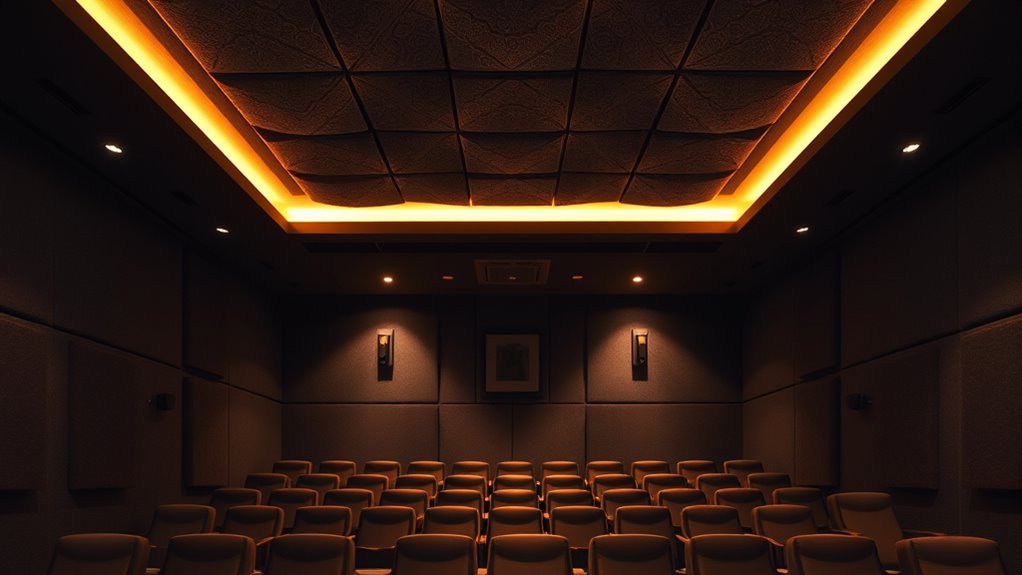
Are you looking to enhance your home theater’s sound quality? The foundation for great audio begins with properly designed ceilings and floors. One of the most effective ways to achieve this is by incorporating soundproofing materials and acoustic paneling into your design. These elements work together to minimize sound leakage and control echoes, creating an immersive listening experience. When choosing soundproofing materials, look for dense, resilient options like mass-loaded vinyl or specialized insulation that absorb and block sound waves from traveling between rooms. These materials can be installed beneath your ceiling or within your flooring structure to prevent external noise from infiltrating your theater space and to keep your audio contained.
Enhance your home theater with soundproofing and acoustic panels for immersive audio quality.
Acoustic paneling is another essential component. It not only helps in controlling sound reflections but also improves the overall clarity of your audio. Install acoustic panels strategically across your ceiling to absorb sound waves that bounce around the room, reducing echo and reverberation. Position panels at reflection points—typically the walls opposite your speakers—and consider adding them directly to the ceiling to create a more even sound distribution. The key is to choose panels that match your room’s aesthetic while providing ideal acoustic performance. Many options come with attractive fabric coverings and sleek designs, making them easy to blend into your home decor.
When designing your ceiling, consider incorporating acoustic tiles or suspended ceiling systems that integrate soundproofing and acoustic treatments. These systems are effective at dampening sound transmission and can be customized to suit your space. For floors, materials like carpeting or thick rugs can considerably dampen footsteps and sound transfer, especially if you have a basement or a multi-story setup. Underlayment layers beneath flooring can further enhance sound insulation, preventing noise from traveling to other parts of your home. Additionally, consulting with a soundproofing expert can help you achieve optimal results tailored to your space.
Balancing the use of soundproofing materials and acoustic paneling is essential. You want to create a room that’s sound-tight but also acoustically tuned for clarity and richness. Always measure your room and plan your layout carefully, ensuring that panels and materials are placed where they’re most needed. By thoughtfully integrating these elements, you’ll drastically improve your home theater’s sound experience, making every movie, game, or music session more engaging and immersive.
Frequently Asked Questions
How Do Acoustic Ceilings Impact Overall Room Temperature?
Acoustic ceilings can influence your room temperature by affecting thermal regulation and insulation efficiency. When you install a properly insulated acoustic ceiling, it helps retain heat during winter and keeps the room cooler in summer. This improves energy efficiency and maintains a comfortable environment. However, if not designed well, it might create gaps that reduce insulation effectiveness, leading to temperature fluctuations. So, choose materials that balance soundproofing with thermal performance.
Can I Install Acoustic Floors Myself or Need Professional Help?
Did you know that about 60% of DIY projects face challenges? Installing acoustic floors can be tricky, so while you can attempt DIY installation, it’s wise to take into account professional assistance for best results. Proper installation guarantees effective soundproofing and durability. If you’re handy with tools and follow instructions carefully, you might manage it yourself. However, consulting a professional ensures ideal performance and saves you time and effort.
What Are the Maintenance Requirements for Acoustic Ceiling Materials?
You should clean your acoustic ceiling materials regularly, about once every few months, to prevent dust buildup that can affect sound quality. Use a soft, damp cloth or gentle vacuuming for maintenance. Check the material’s durability, as some may require special cleaning methods or professional upkeep to prevent damage. Proper maintenance keeps your acoustic ceilings looking good and functioning effectively, ensuring long-lasting soundproofing and aesthetic appeal.
Are There Eco-Friendly Options for Acoustic Flooring and Ceiling Solutions?
Yes, you can choose eco-friendly acoustic flooring and ceiling options. Look for solutions made from recyclable materials or biodegradable options, which help diminish environmental impact. These materials are often sustainably sourced and can be reused or broken down naturally. By selecting eco-conscious products, you guarantee your home theater remains environmentally friendly while maintaining excellent sound absorption and quality. Always check product labels for certifications like FSC or Green Guard to confirm their eco-credentials.
How Do Acoustic Treatments Affect Room Aesthetics and Interior Design?
Acoustic treatments can enhance your room’s aesthetics by creating visual harmony when you choose the right materials. You might opt for stylish panels or decorative diffusers that blend seamlessly with your interior design. Material selection is key; eco-friendly, textured, or colorful options can add character while improving sound quality. With thoughtful integration, acoustic treatments become both functional and visually appealing, elevating your home theater’s overall design.
Conclusion
So, after all this talk about acoustic ceilings and floors, you might think you’re set for perfect sound. Ironically, the real victory isn’t just in the materials or design, but in realizing no home theater is truly soundproof—just better. You’ll spend hours choosing, installing, and obsessing over every detail, only to find the best sound depends on a bit of compromise. But hey, at least you’ll enjoy a pretty room while you’re at it.
Fall Picks
fall essentials
As an affiliate, we earn on qualifying purchases.