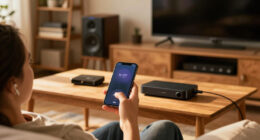
Choosing a surge protector that safeguards both your power and data lines is essential for any connected setup. Top picks like the WattBox Power Conditioner excel in comprehensive protection for multiple devices, while the Eaton Tripp Lite TLP118DBNET offers excellent value with data line protection. Meanwhile, the Coaxial Surge Lightning Protector provides specialized coax surge defense for TV and antenna systems. Each has unique strengths and tradeoffs, so understanding their differences will help you pick the best fit for your needs.

Get business pricing on your home office setup
- Business-only prices and quantity discounts
- Tax-exempt purchasing
- Multiple users, one account, clear invoices
Complete the kit


Key Takeaways
- The WattBox offers the most extensive power and line protection, ideal for complex home or office setups.
- The Eaton Tripp Lite TLP118DBNET balances surge protection with data line safeguarding, suited for multi-device home theaters.
- The coax-only protector is best for coaxial systems but doesn’t support Ethernet or broadband routers.
- Bulkier models provide high joule ratings but may be less flexible for small or crowded spaces.
- Choosing the right surge protector depends on whether your priority is power protection, data line safeguarding, or both.
| Coaxial Surge Lightning Protector for Cable TV, Satellite, and Antennas |  | Specialized coax surge protection for coaxial systems | Impedance: 75 ohms | Frequency Range: 5-2400MHz | Surge Discharge Current: 100A | VIEW ON AMAZON | See Our Full Breakdown |
| Eaton Tripp Lite TLP808TELTV Flat Plug 8 Outlet Home TV Surge Protector |  | Robust power and coax protection for home entertainment | Number of outlets: 8 | Joule rating: 2160 joules | Cable length: 6 ft | VIEW ON AMAZON | See Our Full Breakdown |
| Eaton Tripp Lite TLP118DBNET Home Theater Surge Protector 11 Outlets |  | Comprehensive surge and data line protection for home theaters | Number of Outlets: 11 | Joule Rating: 4200 | Extension Cord Length: 8 ft | VIEW ON AMAZON | See Our Full Breakdown |
| WattBox Power Conditioner 12 Outlets with Safe Voltage, Coax and Ethernet Protection WB-400-VCE-12 |  | All-in-one power and line protection for demanding setups | Number of Outlets: 12 | Voltage: 120 volts | Maximum Current: 15 A | VIEW ON AMAZON | See Our Full Breakdown |
| surge protectors with coax and ethernet protection | Number of outlets | Joule rating | Plug type |
|---|---|---|---|
| Coaxial Surge Lightning Protec | — | — | — |
| Eaton Tripp Lite TLP808TELTV F | 8 | 2160 joules | Right-angle NEMA 5-15P |
| Eaton Tripp Lite TLP118DBNET H | 11 | 4200 | Flat plug |
| WattBox Power Conditioner 12 O | 12 | — | — |
More Details on Our Top Picks
Coaxial Surge Lightning Protector for Cable TV, Satellite, and Antennas
This model stands out for its dedicated coax surge defense, making it ideal for protecting cable, satellite, and antenna equipment. It offers low loss, ensuring minimal impact on signal quality, and is easy to install inline. Compared to multi-outlet protectors, it focuses solely on coaxial lines, so it’s not suitable for broadband or Ethernet networks. Its main limitation is that it cannot safeguard data or internet lines, which means it’s best paired with other protection for comprehensive coverage.
Pros:- Effective lightning and voltage surge protection for coaxial lines
- Low signal loss preserves connection quality
- Simple inline installation
Cons:- Limited to coaxial systems, not suitable for Ethernet or network devices
- No protection for broadband or data lines
- Does not include multiple outlets or power filtering
Best for: Homeowners with outdoor or satellite coax systems needing dedicated surge protection
Not ideal for: Users seeking protection for Ethernet or broadband routers
- Impedance:75 ohms
- Frequency Range:5-2400MHz
- Surge Discharge Current:100A
- Return Loss:13dB
- Video Frequency:1500 MHz
- Installation Type:F type male to female
Our verdict“Excellent for protecting coaxial signals but requires pairing with other protections for complete home network safety.”
Eaton Tripp Lite TLP808TELTV Flat Plug 8 Outlet Home TV Surge Protector
This surge protector provides a solid balance between power and data line safeguarding, featuring eight outlets, built-in coax and RJ11 jacks, and a high 2160 joule rating. It’s well-suited for protecting multiple home theater or office devices at once. Compared with specialized coax-only protectors, this model adds Ethernet and phone line protection, making it more versatile. However, its bulkiness and reliance on proper grounding are tradeoffs. It’s ideal for users wanting comprehensive device protection but may be less convenient in tight spaces.
Pros:- High joule rating offers strong surge defense
- Built-in coax and RJ11 jacks safeguard data and phone lines
- Includes mounting options and a long 6-foot cord
Cons:- Bulkiness may limit placement options
- Requires proper grounding for full effectiveness
- Limited to 8 outlets, could be insufficient for larger setups
Best for: Home theater setups or offices with multiple power and data lines
Not ideal for: Small spaces or users who need a compact surge protector
- Number of outlets:8
- Joule rating:2160 joules
- Cable length:6 ft
- Plug type:Right-angle NEMA 5-15P
- Protection standards:UL 1449 3rd Edition
Our verdict“Best suited for protecting multiple power, coax, and phone lines simultaneously in home or office environments.”
Eaton Tripp Lite TLP118DBNET Home Theater Surge Protector 11 Outlets
This model offers extensive protection with 11 outlets, an 8-foot braided extension cord, and a 4200 joule rating. It excels at shielding home theater systems, including Ethernet, coax, and phone lines, from surges. Its mounting options—wall or under-desk—add convenience. Compared to smaller models, this protector supplies more outlets and higher joule capacity, but it is bulkier and lacks smart features. It makes the most sense for users with multiple devices and a need for robust, all-in-one surge protection.
Pros:- High joule rating ensures maximum surge protection
- Includes Ethernet, coax, and phone line protection
- Multiple outlets and mounting options for flexibility
Cons:- No energy-saving or smart features
- Potentially bulky for limited spaces
- Limited Ethernet pass-through speed (100 Mbps)
Best for: Home theater enthusiasts or users with numerous connected devices
Not ideal for: Small setups or users requiring compact units
- Number of Outlets:11
- Joule Rating:4200
- Extension Cord Length:8 ft
- Plug Type:Flat plug
- Protection Types:Surge, EMI/RFI filtering, Ethernet, Phone, Coax
Our verdict“Ideal for safeguarding complex home theater or multi-device setups with extensive surge and data line protection.”
WattBox Power Conditioner 12 Outlets with Safe Voltage, Coax and Ethernet Protection WB-400-VCE-12
This power conditioner is designed for users seeking maximum protection for sensitive electronics, offering 12 outlets, safe voltage technology, and integrated coax and Ethernet safeguards. Its 2850 joule rating covers most surge scenarios, making it suitable for home theater, office, or gaming setups. Compared to smaller units, it provides organized cable management and a high level of overall protection, but it’s limited to 120V applications and may be bulky for small spaces. It’s a strong choice for those prioritizing total system safety.
Pros:- Provides extensive surge and line protection
- Includes coaxial and Ethernet line safeguards
- Organized 12 outlets with cable management
Cons:- Limited to 120V applications
- No remote or smart features
- Potentially bulky for compact setups
Best for: Power-intensive setups requiring organized, comprehensive surge protection
Not ideal for: Small spaces or users needing smart or remote features
- Number of Outlets:12
- Voltage:120 volts
- Maximum Current:15 A
- Surge Protection Rating:2850 Joules
- Power Plug Type:Type B – 3 pin
Our verdict“Best for users who need a robust, all-in-one solution for protecting multiple devices and data lines in a home or office environment.”

How We Picked
I evaluated surge protectors based on their ability to safeguard coax and Ethernet lines, considering surge ratings, ease of installation, device compatibility, and overall value. I prioritized products that explicitly include coax and Ethernet protection while balancing features such as joule ratings, additional outlets, and mounting options. Tradeoffs like size, price, and compatibility were also key factors to ensure the recommended options serve different user needs effectively.| surge protectors with coax and ethernet protection | Plug type |
|---|---|
| Coaxial Surge Lightning Protec | — |
| Eaton Tripp Lite TLP808TELTV F | Right-angle NEMA 5-15P |
| Eaton Tripp Lite TLP118DBNET H | Flat plug |
| WattBox Power Conditioner 12 O | — |
Factors to Consider When Choosing Surge Protectors With Coax And Ethernet Protection
Selecting the right surge protector with coax and Ethernet protection involves understanding your specific needs for power, data, and signal safety. It’s important to consider whether your setup requires dedicated coax surge protection, comprehensive device safeguarding, or a mix of both. Factors like surge ratings, device capacity, and installation flexibility will influence your choice, whether you prioritize simplicity, high capacity, or specialized protection.
Understanding Your Needs
Begin by assessing what devices you need to protect. If your setup relies heavily on coaxial connections for TV or satellite signals, a dedicated coax protector like the first option may be sufficient. For broader home or office protection, especially with multiple devices and data lines, models offering Ethernet and phone line safeguards provide extra security. Matching the protector’s capabilities to your equipment ensures you don’t overspend on unnecessary features or under-protect critical devices.
Key Features to Consider
Focus on surge ratings, measured in joules, which indicate how much energy a protector can absorb. Higher ratings generally mean better protection. Look for models with multiple data line protections—Ethernet, coax, and phone—to safeguard all your connections. Installation options like mounting flexibility, size, and cable length also matter, especially in tight spaces. Keep in mind that dedicated coax protectors do not cover Ethernet or broadband, so consider combining products if comprehensive coverage is needed.
Tradeoffs and Limitations
While high joule ratings provide more protection, they often come with increased size and cost. Conversely, compact models might lack sufficient capacity or data line safeguards. Be aware that some units may require proper grounding or specific installation conditions to function optimally. Finally, consider whether you need smart features or remote control, which are often absent in basic surge protectors but can add convenience for complex setups.
Frequently Asked Questions
Can a single surge protector cover both coax and Ethernet lines?
While some surge protectors include both coax and Ethernet protection, most specialized units focus on one. Dedicated coax protectors are effective for lightning strikes on TV or satellite signals but do not safeguard Ethernet or broadband lines. Conversely, multi-line protectors like the WattBox or Tripp Lite models combine Ethernet, coax, and power protection, offering more comprehensive coverage, but may be bulkier and more expensive.
What surge rating should I look for in a protector with coax and Ethernet protection?
Look for a joule rating of at least 2000-3000 joules for typical home use, with higher ratings providing greater safety margins. For critical or high-value equipment, a protector rated above 4000 joules offers added assurance. Keep in mind that surge ratings are one factor—installation quality, grounding, and device capacity also influence overall effectiveness.
Are all surge protectors with coax and Ethernet equally easy to install?
Installation difficulty varies. Some models, like inline coax protectors, are straightforward and simply connect inline with existing cables. Others, especially multi-line protectors, may require mounting, proper grounding, and potentially more complex wiring. Reading installation instructions carefully will help ensure optimal performance and safety.
Should I choose a surge protector with a high joule rating or more outlets?
This depends on your priorities. A high joule rating provides better surge absorption capacity, ideal for protecting sensitive or expensive equipment. More outlets are useful if you have multiple devices, but they may come with lower surge ratings. Balance your needs—if your setup involves many devices, opt for a model that combines ample outlets with a high surge capacity.
Is it necessary to have a surge protector for Ethernet and coax lines?
Yes, especially if your environment is susceptible to lightning strikes or power surges that can travel through data lines, potentially damaging equipment or compromising data integrity. Protecting Ethernet and coax lines prevents costly repairs and data loss, making it a wise investment for homes and offices with sensitive electronics or high-speed internet setups.
Conclusion
For users with outdoor coax systems or antenna setups, a dedicated coax surge protector offers targeted, effective defense. Home theater enthusiasts or those with multiple data and power lines should consider multi-line protectors like the WattBox or Tripp Lite models for comprehensive safety. Small setups or casual users may find a basic coax-only protector sufficient, but for maximum peace of mind, investing in a multi-line surge protector with high joule ratings provides the broadest coverage and best value.