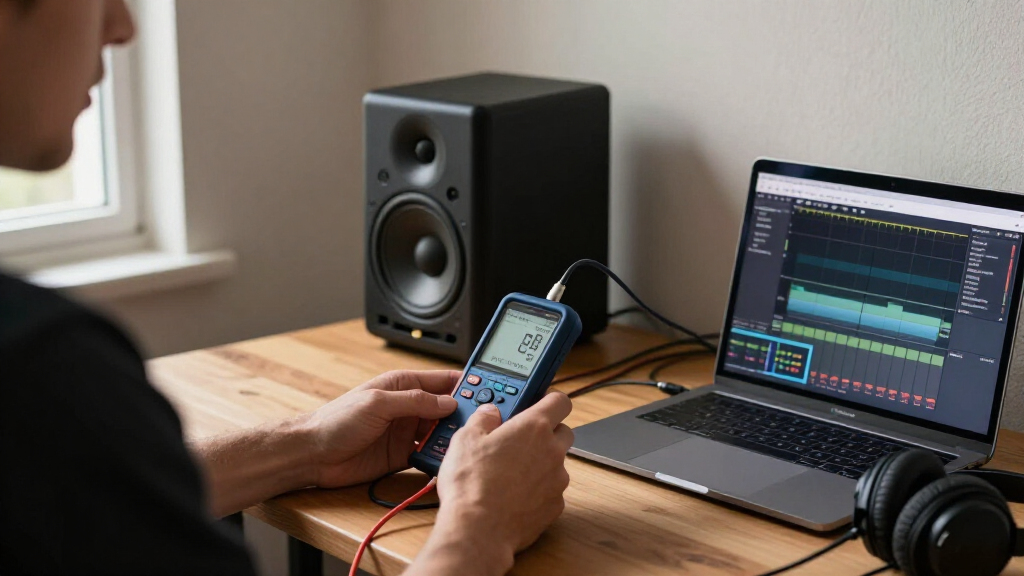
When calibrating speakers, choosing the right SPL (Sound Pressure Level) meter is essential for achieving accurate audio measurements. The best overall pick is the Triplett SLM400-KIT, thanks to its NIST certification and comprehensive kit, making it ideal for precise calibration. The Triplett 3550 SoniChek PRO stands out for professional-grade accuracy, while budget-conscious users may prefer the Neoteck 30-130dB Digital Sound Level Meter for its affordability. These options highlight the main tradeoffs: precision versus simplicity, and cost versus professional features. Continue reading for a detailed comparison to find the best fit for your needs.

Get business pricing on your home office setup
- Business-only prices and quantity discounts
- Tax-exempt purchasing
- Multiple users, one account, clear invoices
Complete the kit


Key Takeaways
- Calibration accuracy is highest with NIST-certified meters like the Triplett SLM400-KIT and IEC 61672-1:2013 Class 2 units.
- Professional-grade options tend to be more reliable but come at a higher price, suitable for serious audio engineers.
- Budget-friendly meters such as Neoteck still provide decent measurements but may lack calibration certification and advanced features.
- Ease of use varies significantly; models with backlit displays and simple interfaces are better for beginners.
- Many meters double as noise monitors, making them versatile but potentially less specialized for speaker calibration tasks.
| Triplett SLM400-KIT Decibel Sound Level Meter Kit, NIST Certified |  | Best for Professional and Industrial Accuracy | Measurement Range: 35 to 130dB | Accuracy: +/-1.5dB | Weighting: A and C | VIEW ON AMAZON | See Our Full Breakdown |
| Triplett 3550 SoniChek PRO Professional Decibel Sound Level Meter |  | Best for Versatile Professional Use | Measurement Accuracy: +/- 1.5dB | Measuring Range: 30 – 130dB | Frequency Range: 31.5Hz to 8kHz | VIEW ON AMAZON | See Our Full Breakdown |
| Decibel Meter Calibrator with 94dB, 104dB, 114dB Levels, 1/2 Inch Microphone Slot, 1000Hz Output |  | Best for Calibration Precision in Lab and Field | Calibration Levels: 94dB, 104dB, 114dB | Frequency: 1000Hz | Microphone Size: 1/2 inch | VIEW ON AMAZON | See Our Full Breakdown |
| Professional Sound Level Calibrator for Decibel Meters with Three Calibration Levels (94dB, 104dB, 114dB) |  | Best for Field and Benchtop Calibration | Calibration Levels: 94dB, 104dB, 114dB | Calibration Frequency: 1kHz | Cavity Diameter: 13.2mm | VIEW ON AMAZON | See Our Full Breakdown |
| IEC 61672-1:2013 Sound Level Meter Class 2 with Calibration Certificate |  | Best for Professional, Extended-Range Measurements | Measurement Range: 29dB to 138dB | Frequency Response: 20Hz-12.5kHz | Weighting Modes: A, C, Z | VIEW ON AMAZON | See Our Full Breakdown |
| Decibel Meter TS-501B Sound Level Meter with Backlit LCD, Portable SPL Tester, 30-130dB Range |  | Best Overall for Versatile and User-Friendly Noise Monitoring | Display: 2.25-inch LCD with backlight | Measurement Range: 30-130 dB | Frequency Range: 30-8000 Hz | VIEW ON AMAZON | See Our Full Breakdown |
| FNIRSI FDM-02 Decibel Meter, Real-Time Noise Monitoring for Home & Work |  | Best for Real-Time Monitoring with Customizable Response and Curve Analysis | Display: 2-inch IPS screen | Measurement Range: 30–130 dB | Microphone: Built-in condenser | VIEW ON AMAZON | See Our Full Breakdown |
| Sound Level Calibrator for Noise Measurement – 94dB & 114dB Output Levels for Microphones |  | Best for Precise Microphone Calibration in Professional Settings | Output Levels: 94dB and 114dB | Microphone Compatibility: 1/2 inch and 1 inch | Battery Life: Approximately 100 hours | VIEW ON AMAZON | See Our Full Breakdown |
| Neoteck 30-130dB Digital Sound Level Meter with A/C Weighting |  | Best for High-Resolution Measurements with Versatile Environmental Analysis | Measurement Range: 30 to 130 dB | Display: 4-digit LCD with 0.1 dB resolution | Weighting Modes: A and C | VIEW ON AMAZON | See Our Full Breakdown |
| Galaxy Audio CM-170 Check Mate Handheld SPL Sound Pressure Level Meter |  | Best for Data Logging and Computer Integration in Budget-Friendly Design | Frequency Range: 20Hz – 8kHz | Data Logging: Yes | Time Weighting: Fast/Slow | VIEW ON AMAZON | See Our Full Breakdown |
| spl meters for speaker calibration | Measurement Range |
|---|---|
| Triplett SLM400-KIT Decibel So | 35 to 130dB |
| Triplett 3550 SoniChek PRO Pro | — |
| Decibel Meter Calibrator with | — |
| Professional Sound Level Calib | — |
| IEC 61672-1:2013 Sound Level M | 29dB to 138dB |
| Decibel Meter TS-501B Sound Le | 30-130 dB |
| FNIRSI FDM-02 Decibel Meter | 30–130 dB |
| Sound Level Calibrator for Noi | — |
| Neoteck 30-130dB Digital Sound | 30 to 130 dB |
| Galaxy Audio CM-170 Check Mate | — |
More Details on Our Top Picks
Triplett SLM400-KIT Decibel Sound Level Meter Kit, NIST Certified
This kit stands out for its high precision, NIST certification, and inclusion of calibration tools, making it ideal for environments where measurement integrity is critical. Compared with the Triplett 3550 SoniChek PRO, it offers superior accuracy and calibration capabilities, but it is more complex and less suited for casual users. Its adjustable weighting and response times allow tailored measurements, ensuring reliable results in safety and compliance testing. However, its focus on professional use means it’s overkill for simple speaker calibration needs, and it requires periodic calibration for ongoing accuracy.
Pros:- High accuracy with NIST certification ensures reliable results
- Includes calibration tools for maintaining measurement precision
- Multiple weighting and response time options for tailored measurements
Cons:- Limited to professional or industrial environments, less portable for casual use
- Requires calibration to sustain accuracy over time
Best for: Professionals needing certified, highly accurate noise measurements for safety or compliance testing.
Not ideal for: Casual hobbyists or home users who prioritize ease and quick setup over certified precision.
- Measurement Range:35 to 130dB
- Accuracy:+/-1.5dB
- Weighting:A and C
- Response Time:Fast/Slow
- Includes:Calibrator with 94dB and 114dB outputs at 1kHz
- Calibration Frequency:+/-4%@1kHz
Our verdict“This kit is best suited for professionals who need certified, precise measurements and are comfortable with calibration routines.”
Triplett 3550 SoniChek PRO Professional Decibel Sound Level Meter
The Triplett 3550 SoniChek PRO offers a broad measurement range and good accuracy, making it a flexible choice for various environments like home theaters, HVAC, and safety monitoring. Its compact, lightweight design enhances portability, but the reliance on analog output limits digital integration, which could be a drawback compared to digital models like the IEC 61672-1:2013 meter. This model provides quick, reliable readings and includes accessories such as a windscreen, but it lacks advanced calibration features or app connectivity, making it less suitable for high-precision laboratory environments.
Pros:- Wide measurement range (30-130dB) suitable for many settings
- Good accuracy (+/-1.5dB) for professional tasks
- Lightweight and compact for easy field use
- Includes useful accessories like windscreen and cables
Cons:- Limited to analog output, lacking digital data options
- No built-in calibration or app integration
Best for: Audio technicians, contractors, or facility managers needing a reliable, portable sound level meter for diverse applications.
Not ideal for: Users seeking digital data logging or advanced calibration features for precise speaker calibration.
- Measurement Accuracy:+/- 1.5dB
- Measuring Range:30 – 130dB
- Frequency Range:31.5Hz to 8kHz
- Output Type:Analog
- Item Dimensions:10 x 4 x 2 inches
- Item Weight:8 ounces
Our verdict“This meter provides versatile, portable measurement with good accuracy, ideal for professionals who prefer simple, reliable readings without digital complexity.”
Decibel Meter Calibrator with 94dB, 104dB, 114dB Levels, 1/2 Inch Microphone Slot, 1000Hz Output
This calibrator excels with its support for multiple calibration levels—94, 104, and 114dB—making it versatile for various testing environments. Its IEC 60942:2018 compliance assures high standards, and the 1/2 inch microphone compatibility makes it suitable for professional microphones used in speaker calibration. Compared to simpler calibrators, this unit offers broader applicability but requires specific microphones, which could limit its use with some equipment. Its straightforward LED indicators make operation easy, but it lacks features like Bluetooth or digital connectivity, which are less critical for calibration but might be desired.
Pros:- Supports multiple calibration levels for flexible testing
- IEC 60942:2018 compliance ensures high accuracy standards
- Easy to operate with LED indicators
- Sturdy, weather-resistant design
Cons:- Limited to 1/2 inch microphones, restricting compatibility
- No digital features or connectivity options
Best for: Audio calibration technicians and lab operators needing reliable, multi-level calibration tools.
Not ideal for: Home users or hobbyists who lack compatible microphones or do not need IEC-certified calibration levels.
- Calibration Levels:94dB, 104dB, 114dB
- Frequency:1000Hz
- Microphone Size:1/2 inch
- Standards:IEC 60942:2018
- Temperature Range:0–40°C
- Humidity Range:25–90% RH
Our verdict“This calibrator provides dependable, multi-level calibration suited for professional environments that require IEC compliance and robust performance.”
Professional Sound Level Calibrator for Decibel Meters with Three Calibration Levels (94dB, 104dB, 114dB)
This portable calibrator offers three precise levels—94, 104, and 114dB—at a standard 1kHz frequency, making it a practical choice for on-the-go calibration tasks. Its compact size and battery operation support fieldwork, but aligning microphones carefully is necessary to prevent damage, and the device’s single frequency limits its flexibility for some testing scenarios. Compared to the IEC-compliant calibrator, it is more accessible but may lack the strict certification for certain professional applications. Its simplicity and portability make it ideal for quick calibrations but less suited for detailed laboratory use.
Pros:- Provides three calibration levels for versatile use
- Compact and lightweight for portability
- Easy operation with LED status indicators
Cons:- Requires careful microphone alignment to prevent damage
- Limited to 1kHz calibration frequency
- Battery life might be limited with frequent use
Best for: Field engineers, audio technicians, or sound professionals needing a portable, easy-to-use calibrator for routine calibration tasks.
Not ideal for: Users requiring multi-frequency calibration or IEC standards compliance for formal testing environments.
- Calibration Levels:94dB, 104dB, 114dB
- Calibration Frequency:1kHz
- Cavity Diameter:13.2mm
- Power Source:2 AA batteries
- Dimensions:60 x 130 x 37.5mm
- Weight:approximately 400g
Our verdict“This calibrator is well-suited for field calibration needs where portability and simplicity are priorities over multi-frequency calibration standards.”
IEC 61672-1:2013 Sound Level Meter Class 2 with Calibration Certificate
The CRYSOUND 2831 meets IEC standards with a measurement range extending from 29dB to 138dB, making it suitable for demanding industrial or environmental applications. Its broad frequency response up to 12.5kHz captures a wider spectrum of sounds than typical consumer models, while its IP54 rating ensures durability in outdoor or harsh conditions. While its advanced features like multiple weighting modes and high accuracy (+/-1.5dB) suit professional use, the device’s complexity and weight make it less appealing for casual or quick speaker calibration tasks. Its robust build and detailed specs reflect a focus on precision and reliability.
Pros:- High accuracy and wide measurement range for professional needs
- Extended frequency response up to 12.5kHz captures complex sounds
- IP54 rated enclosure for outdoor and demanding environments
- Multiple weighting and time modes enhance measurement versatility
Cons:- Complex features may require training for effective use
- Higher cost compared to basic models
- Heavier and bulkier for handheld use
Best for: Industrial, environmental, and workplace noise assessment professionals needing a durable, accurate, and feature-rich sound level meter.
Not ideal for: Home or hobbyist users who prefer lightweight, simple meters for basic speaker calibration tasks.
- Measurement Range:29dB to 138dB
- Frequency Response:20Hz-12.5kHz
- Weighting Modes:A, C, Z
- Time Weighting:Fast, Slow
- Microphone:Self-developed 1/2” condenser
- Enclosure Rating:IP54
Our verdict“This meter is ideal for professionals requiring durable, precise measurements across a broad spectrum in challenging environments.”
Decibel Meter TS-501B Sound Level Meter with Backlit LCD, Portable SPL Tester, 30-130dB Range
This decibel meter stands out for its straightforward design and reliable measurements, making it ideal for casual users and those needing quick, accurate readings. Its 2.25-inch backlit LCD ensures easy visibility in various lighting conditions, and the device’s factory calibration guarantees consistent results. Compared with the Neoteck model, the TS-501B offers a slightly broader measurement range and includes essential features like MAX/MIN readings and data hold, but it doesn’t support advanced data logging. The main tradeoff is its limited maximum of 130 dB, which may exclude use in very loud environments. Nonetheless, its portability and ease of operation make it a strong choice for non-professional calibration tasks.
Pros:- Easy-to-read backlit LCD display for quick readings
- Reliable factory calibration ensures accuracy
- Portable, lightweight, and battery-operated for on-the-go use
- Includes batteries and a carry case for convenience
Cons:- Maximum measurement limit of 130 dB may not suit loud environments
- Basic feature set may not satisfy professional users seeking advanced analysis
Best for: Hobbyists, DIY audio enthusiasts, and small-scale sound engineers needing reliable, portable measurements without complex features
Not ideal for: Professional sound engineers working in extremely loud environments or requiring detailed data logging and analysis
- Display:2.25-inch LCD with backlight
- Measurement Range:30-130 dB
- Frequency Range:30-8000 Hz
- Weighting:A/C weighting
- Accuracy:1.5 dB
- Power:3 AAA batteries
Our verdict“This pick suits users who need a straightforward, accurate SPL meter for general noise measurement in moderate environments.”
FNIRSI FDM-02 Decibel Meter, Real-Time Noise Monitoring for Home & Work
The FNIRSI FDM-02 is distinguished by its versatile 2-inch IPS display and real-time noise analysis capabilities, making it ideal for users needing detailed environmental or occupational noise data. Its adjustable response times and built-in features like noise thresholds and curve mode provide deeper insights compared to basic meters like the TS-501B. While it offers a broader set of functionalities, it lacks advanced audio analysis or calibration features found in professional-grade tools, and battery life details are sparse, which could be a concern for extended outdoor use. This model is especially suited for those who want more than just basic SPL readings, such as hobbyists or safety officers.
Pros:- Clear 2-inch IPS display with light/dark themes for visibility
- Adjustable response times for different environments
- Includes noise recording, thresholds, and curve analysis features
- Compact and lightweight for portability
Cons:- Limited to basic sound level measurement without advanced audio analysis
- Battery life details are not specified, which may affect prolonged outdoor use
Best for: Home inspectors, safety personnel, or audio hobbyists who need detailed noise data and customizable settings
Not ideal for: Professional audio engineers requiring calibration tools or high-precision data logging for critical measurements
- Display:2-inch IPS screen
- Measurement Range:30–130 dB
- Microphone:Built-in condenser
- Response Time:Fast and Slow
- Accuracy:±1.5 dB
- Battery:1500mAh rechargeable
Our verdict“Ideal for users needing customizable, real-time noise monitoring with detailed data capabilities in non-professional settings.”
Sound Level Calibrator for Noise Measurement – 94dB & 114dB Output Levels for Microphones
This calibrator excels in providing highly accurate, IEC942 Class 1 compliant calibration signals, making it a top choice for professional sound engineers. Its adjustable output levels of 94dB and 114dB ensure compatibility with a range of microphones, including ½ inch and 1-inch sizes, unlike simpler calibration devices. The long battery life of around 100 hours supports extensive calibration sessions, but the device’s setup process is more complex and might be daunting for beginners. Compared with general SPL meters like the Neoteck, this calibrator is a dedicated tool for calibration rather than measurement, emphasizing precision over convenience.
Pros:- Provides precise calibration with adjustable output levels
- Compatible with multiple microphone sizes
- Long-lasting battery life supports extended use
- Meets IEC942 Class 1 standards for high accuracy
Cons:- Lacks included accessories or calibration certificates in the package
- Setup process can be complex for less experienced users
Best for: Professional audio technicians, sound engineers, or calibration labs needing reliable, standards-compliant calibration signals
Not ideal for: Casual users or hobbyists looking for a simple noise level meter, as setup and calibration procedures may be complex
- Output Levels:94dB and 114dB
- Microphone Compatibility:1/2 inch and 1 inch
- Battery Life:Approximately 100 hours
- Standards:IEC942 Class 1
Our verdict“This calibrator is best suited for professionals who need exact, standards-compliant microphone calibration rather than general noise measurement.”
Neoteck 30-130dB Digital Sound Level Meter with A/C Weighting
The Neoteck meter offers detailed readings up to 130 dB, with high-resolution 0.1 dB display and A/C weighting modes, making it a solid choice for detailed environmental noise assessments. Its 4-digit LCD and max/min tracking give users clear visibility of fluctuations, surpassing the basic features of the TS-501B. However, requiring six AAA batteries and operating within the same 130 dB maximum range as the other models, it might be less practical for very loud environments or long-term outdoor measurements. The slightly more complex operation might also challenge first-time users, but its high resolution benefits those needing precise data.
Pros:- High-resolution 0.1 dB display for precise readings
- Includes A and C weighting modes for versatile analysis
- Max/min tracking and data hold for monitoring fluctuations
- Backlit LCD for readability in low light
Cons:- Requires 6 AAA batteries which need replacement
- Limited to 130 dB maximum, unsuitable for very loud environments
Best for: Environmental researchers, safety inspectors, or audio technicians requiring high-resolution, detailed SPL data
Not ideal for: Users needing measurements above 130 dB or those seeking a simple, battery-free device
- Measurement Range:30 to 130 dB
- Display:4-digit LCD with 0.1 dB resolution
- Weighting Modes:A and C
- Response Modes:Fast and Slow
- Additional Features:Max/Min, data hold, temperature display
- Power:6 AAA batteries
Our verdict“This device suits users demanding high-resolution, detailed SPL data in varied environments, with some compromise on battery convenience.”
Galaxy Audio CM-170 Check Mate Handheld SPL Sound Pressure Level Meter
The Galaxy CM-170 offers a practical solution for measuring SPL in diverse environments, especially with its data logging capabilities and included software, which distinguishes it from simpler handheld meters. Its IEC 61672-1 Type II classification suits general measurement needs but falls short of Type I precision, making it suitable for routine testing rather than critical calibration. The device’s compact design and accessories like the carry case and windscreen increase its portability, but some users report that the interface can be complex initially. Compared to the FNIRSI model, the CM-170 emphasizes data management and external analysis, though its battery life and calibration process might be less straightforward for novices.
Pros:- Affordable and reliable for general SPL measurement
- Includes data logging, calibration, and software for detailed analysis
- Compact with a protective carry case and windscreen
- Three-year warranty adds confidence
Cons:- Limited to IEC 61672-1 Type II standards, not Type I
- Interface may be complex for beginners or casual users
- Battery life details are not specified
Best for: Sound technicians and field engineers who need reliable SPL measurements combined with data logging and software analysis
Not ideal for: Users requiring Type I measurement standards or simple, plug-and-play devices for casual use
- Frequency Range:20Hz – 8kHz
- Data Logging:Yes
- Time Weighting:Fast/Slow
- Calibration:Electronic
- Includes:Carry case, windscreen, USB cable, software
- Warranty:3 years
Our verdict“This meter fits budget-conscious professionals needing portable SPL measurement with data logging and computer integration capabilities.”
How We Picked
Products were selected based on their measurement accuracy, calibration capabilities, build quality, ease of use, and value for money. Priority was given to meters with certified standards, such as IEC or NIST calibration, since precise calibration is vital for speaker setup. We also considered user-friendly features like backlit displays, portability, and additional functionalities that simplify operation. Comparing professional versus consumer-grade options helped identify which models suit different user needs, from casual hobbyists to audio professionals. The ranking reflects a balance between performance, reliability, and affordability, ensuring readers find options tailored to their calibration requirements.Factors to Consider When Choosing Spl Meters For Speaker Calibration
Choosing the right SPL meter for speaker calibration involves more than just price. It’s crucial to evaluate calibration standards, measurement range, user interface, and additional features. Making an informed decision helps ensure accurate speaker tuning and long-term reliability. Here are key factors to consider before buying:Calibration Certification and Accuracy
Calibration certification from standards like IEC 61672-1:2013 or NIST ensures the meter provides reliable, industry-standard measurements. For precise speaker calibration, accuracy is non-negotiable, especially in professional settings. Cheaper meters might lack certification, leading to potential inaccuracies that can skew your audio setup. Investing in a certified device reduces calibration errors, making your speaker tuning more consistent and dependable.
Measurement Range and Sensitivity
The measurement range should comfortably cover typical SPL levels for speaker calibration, usually from 30dB to 130dB. A wider range allows for versatility, especially when working with high-powered systems. Sensitivity matters because it affects how well the meter detects subtle differences in sound levels. Choosing a device with appropriate range and sensitivity ensures you capture accurate readings across different environments and speaker types.
Ease of Use and Display
Intuitive interfaces and clear displays make a significant difference, especially if you’re new to SPL meters. Features like backlit screens, simple controls, and real-time feedback can streamline your calibration process. Avoid overly complex devices if you prefer straightforward operation, but don’t sacrifice essential features like hold functions or adjustable weighting settings. A user-friendly design leads to more consistent measurements and less frustration during setup.
Additional Features and Versatility
Some meters include features like built-in calibration signals, noise monitoring, or Bluetooth connectivity. These extras can enhance your calibration accuracy and workflow. However, they often come with higher costs and complexity that might not be necessary for casual users. Assess whether these features align with your specific needs—extra capabilities can add value but may also complicate operation for beginners.
Price and Long-Term Value
While budget options can perform adequately for casual use, investing in a certified, professional-grade meter pays off in the long run through increased reliability and precision. Avoid choosing solely based on price; instead, weigh the cost against calibration standards and durability. A well-made meter with proper certification offers consistency and peace of mind, especially if you frequently calibrate multiple systems or work professionally.
Frequently Asked Questions
Do I need a certified SPL meter for speaker calibration?
Yes, a certified SPL meter ensures your measurements are accurate and consistent, which is vital for proper speaker calibration. Certification from standards like IEC 61672-1:2013 or NIST indicates the device has been tested and meets strict accuracy criteria. Using a non-certified meter can lead to measurement errors, resulting in improperly calibrated speakers and suboptimal sound quality. For professional or critical calibration work, certification is highly recommended to guarantee reliable results.
Can I use a regular decibel meter for speaker calibration?
While a regular decibel meter can measure sound levels, it may lack the precision and calibration standards necessary for speaker calibration. Many general-purpose meters do not have IEC or NIST certification, which can lead to inaccuracies when fine-tuning audio systems. For accurate calibration, especially in professional settings, a specialized SPL meter with proper certification and calibration features is preferable. Nonetheless, budget models can suffice for casual or hobbyist use where absolute accuracy is less critical.
How important is the measurement range in an SPL meter?
The measurement range directly impacts the versatility of your SPL meter. For speaker calibration, a range from around 30dB to 130dB covers most typical environments and speaker outputs. A narrower range might limit your ability to measure very quiet or loud sounds accurately, leading to potential miscalibration. Choosing a meter with a suitable range ensures you can handle a variety of setups without sacrificing measurement fidelity.
Should I prioritize a meter with extra features like Bluetooth or calibration signals?
Extra features can add convenience and versatility, but their importance depends on your specific needs. Bluetooth connectivity allows for remote monitoring or data logging, which is useful in professional environments. Built-in calibration signals can simplify setup, but they often come at a higher cost. For casual use, basic models without these extras are sufficient and more straightforward. Evaluate whether these features genuinely add value to your calibration process before investing.
Is it worth paying more for a professional-grade SPL meter?
Investing in a professional-grade SPL meter offers increased accuracy, durability, and certification, which can be vital for critical calibration tasks. While more expensive, these meters reduce the risk of measurement errors that could compromise your audio setup. If you’re a serious audiophile, sound engineer, or work in professional audio, paying more ensures consistent, reliable results. For casual users, a less costly, certified meter may suffice, but the tradeoff is in long-term precision and dependability.
Conclusion
For most users, the Triplett SLM400-KIT stands out as the best overall choice, offering reliable calibration certification and comprehensive features. Budget-conscious hobbyists will find the Neoteck 30-130dB to be a practical entry point, providing decent accuracy at a lower price. Professionals or those needing utmost precision should consider the IEC 61672-1:2013 Class 2 meters or the Triplett 3550 SoniChek PRO for their superior standards. Beginners will benefit from models with simple interfaces and clear displays, while experienced users should prioritize certification and calibration capabilities for precise speaker setup. Matching your needs with the right features ensures optimal calibration results and long-term satisfaction.
Halloween Picks
halloween
As an affiliate, we earn on qualifying purchases.