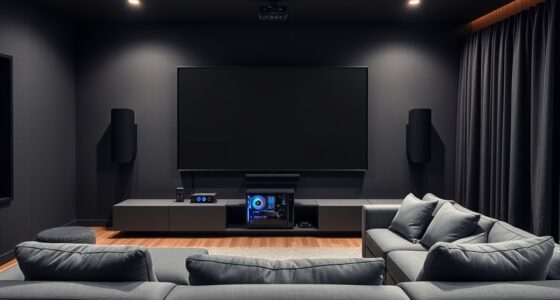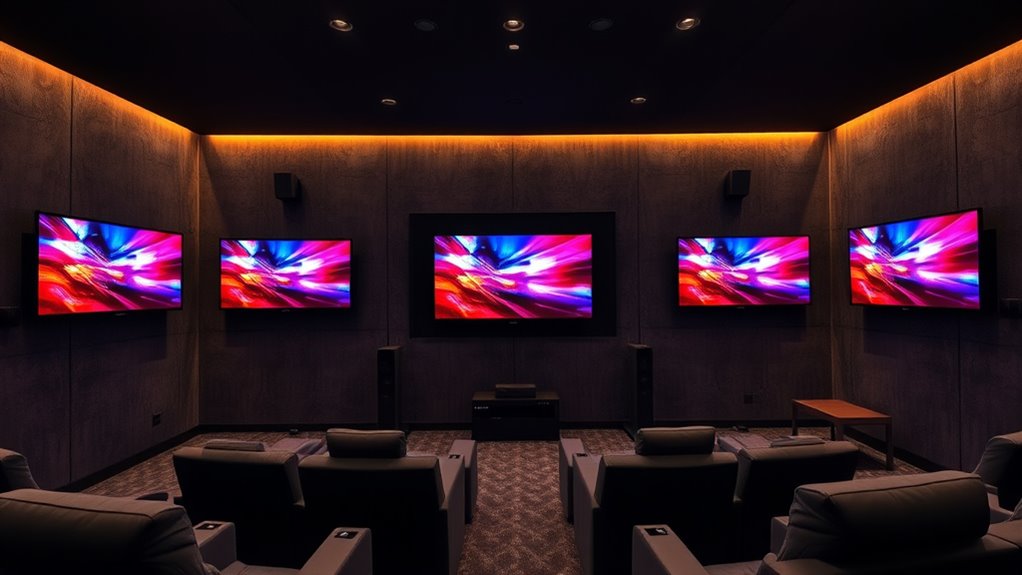

Choosing a Sony ALR screen starts with projector compatibility: an ambient-light-rejecting surface designed for standard or long throw is not automatically right for every Sony model, especially an ultra-short-throw projector. For a large fixed installation, I’d start with the IN&VI 120-inch Fresnel, which pairs a broad viewing angle with a stated 90% ALR figure. The Paihao 80-inch Fresnel is the more room-friendly choice for a smaller wall, while SilverMagic’s 160-inch material favors a wide cinema format and DIY flexibility over a ready-built frame.

Get your home office setup delivered free — and shop member deals
- Fast, free delivery on millions of items
- Access to Prime Big Deal Days deals on October 6–7
- Prime Video, Amazon Music and more included
The main tradeoffs are screen size, light rejection, and installation effort. The specifications here describe the products, not verified performance with every Sony projector; confirm throw type, screen dimensions, and mounting requirements for your specific setup before choosing.
Complete the kit


Key Takeaways
- IN&VI is the large fixed-frame pick: its 120-inch, 16:9 Fresnel design and stated 90% ALR target buyers who want a sizeable standard- or long-throw setup.
- Paihao fits compact rooms: its 80-inch surface is easier to place than the 120- and 160-inch options, but its wall installation relies on adhesive tape.
- SilverMagic is the wide-format DIY option: its 160-inch, 2.35:1 material suits a cinematic layout, but it is not a pre-built screen and is not compatible with UST projectors.
- ALR claims are not directly comparable: the listed figures range from 30% to 90%, but the products differ in design and the figures do not establish equal test conditions.
- Check Sony projector throw type first: these listings describe long-throw, standard-throw, or standard-throw compatibility; none is presented here as a UST-specific screen.
| IN&VI 120-Inch Fresnel Fixed-Frame Projector Screen |  | Best Overall for a Large Standard- or Long-Throw Sony Setup | Screen size: 120 inches | Aspect ratio: 16:9 | Screen gain: 2.0 | VIEW ON AMAZON | See Our Full Breakdown |
| Paihao 80-Inch Fresnel Projector Screen, 16:9, Wall-Mounted |  | Best for Smaller Rooms and Compact Setups | Screen size: 80 inches | Aspect ratio: 16:9 | Dimensions: 69.72 × 39.22 inches | VIEW ON AMAZON | See Our Full Breakdown |
| SilverMagic ALR Projector Screen Material, 160-inch 2.35:1 Gray, 2.7X Gain, Ambient Light Rejecting for Standard Throw Projectors |  | Best for Wide-Format DIY Home Theaters | Screen size: 160 inches | Aspect ratio: 2.35:1 | Color: Gray | VIEW ON AMAZON | See Our Full Breakdown |
| sony alr screen | Screen size | Aspect ratio | Stated ALR | Viewing angle |
|---|---|---|---|---|
| IN&VI 120-Inch Fresnel Fixed-F | 120 inches | 16:9 | 90% | 178 degrees |
| Paihao 80-Inch Fresnel Project | 80 inches | 16:9 | 85% | 160 degrees |
| SilverMagic ALR Projector Scre | 160 inches | 2.35:1 | 30% | — |
More Details on Our Top Picks
IN&VI 120-Inch Fresnel Fixed-Frame Projector Screen
The IN&VI 120-inch Fresnel takes the top spot because it combines a conventional 16:9 layout, a fixed-frame format, and stated compatibility with both long-throw and standard-throw projectors. That makes it the most straightforward large-screen match in this group for a Sony owner who has already confirmed their projector is not UST. Its listed 90% ALR and 2.0 gain point toward a design intended to preserve a bright-looking image when some room light remains, though I would not treat those figures as directly comparable to the other products’ claims.
Compared with the 80-inch Paihao, IN&VI gives a much larger viewing area and a wider stated viewing angle, but asks for more wall space and a more involved frame installation. Against SilverMagic, it arrives as a fixed-frame screen rather than material for a DIY build, and its standard 16:9 shape suits more conventional TV and film content. The tradeoff is that buyers must assemble and mount it, and the listing notes variation in tension-bar quantity by screen size. I’d choose it for a dedicated or semi-dedicated room with a large clear wall, not for a renter seeking a quick, low-impact install.
Pros:- 120-inch 16:9 format offers a broad image for a larger room.
- Listed compatibility covers long-throw and standard-throw projectors.
- Stated 178-degree viewing angle suits seating spread across a wide room.
- Fixed-frame Fresnel surface is designed for brighter viewing in ambient light.
Cons:- Requires assembly and installation rather than arriving as a ready-mounted screen.
- Tension-bar quantity may vary by screen size, so buyers should confirm package details.
- The listing does not identify it as compatible with UST projectors.
Best for: Sony standard- or long-throw projector owners who want a large 16:9 fixed-frame screen and have room for a 120-inch installation.
Not ideal for: Buyers with UST projectors, limited wall space, or no appetite for frame assembly and wall mounting.
- Screen size:120 inches
- Aspect ratio:16:9
- Screen gain:2.0
- Stated ALR:90%
- Viewing angle:178 degrees
- Dimensions:105.6 in W × 59.8 in H
- Projector compatibility:Long-throw and standard-throw
- Mounting and operation:Wall mount; fixed frame
Our verdict“I’d pick IN&VI for a large, conventional Sony projection setup where a fixed 16:9 frame matters more than easy installation.”
Paihao 80-Inch Fresnel Projector Screen, 16:9, Wall-Mounted
The Paihao 80-inch Fresnel is the most space-conscious framed option here. Its 16:9 shape and 69.72-by-39.22-inch dimensions are easier to fit into a smaller room than IN&VI’s 120-inch screen, while its listed 160-degree viewing angle leaves room for viewers seated away from the center. The dark-grey resin fabric has an anti-glare finish, and the listing claims 85% ambient light rejection with 2.2 gain. Those figures suggest an emphasis on brightness and contrast, but they should be read as product claims, not a direct performance comparison with IN&VI.
For a Sony setup, the central question is less about its stated support for 4K, 8K, and active 3D and more about whether the surface suits the projector’s throw and the room’s layout. Unlike the IN&VI listing, Paihao does not specify long-throw or standard-throw compatibility in the supplied information, so I’d verify fit before ordering. Its main practical compromise is mounting: the screen is attached with adhesive tape, rather than the assembled fixed-frame approach offered by IN&VI. It may work for buyers seeking a compact wall screen, but I would skip it for a textured, dusty, or rental wall where a tape-based installation is undesirable.
Pros:- Compact 80-inch size is easier to place than the larger IN&VI and SilverMagic options.
- 16:9 format fits common TV and film content.
- Listed 160-degree viewing angle supports off-center seating.
- Specifications list 4K, 8K, and active 3D support.
Cons:- Wall installation relies on adhesive tape, which may not suit every wall or household.
- The supplied specifications do not identify supported projector throw types.
- The listing provides less evidence for comparing performance across Sony projector models.
Best for: Sony projector owners with a smaller viewing room who want an 80-inch 16:9 surface and can use the specified tape-based wall installation.
Not ideal for: Buyers who need clearly stated throw compatibility, a large cinema image, or a mechanical frame-based mounting system.
- Screen size:80 inches
- Aspect ratio:16:9
- Dimensions:69.72 × 39.22 inches
- Gain:2.2
- Stated ALR:85%
- Viewing angle:160 degrees
- Material and finish:Resin fabric; dark grey; anti-glare
- Mounting and operation:Wall-mounted with adhesive tape; manual
Our verdict“I’d choose Paihao when room size favors an 80-inch screen and the buyer accepts tape-based mounting after checking projector compatibility.”
SilverMagic ALR Projector Screen Material, 160-inch 2.35:1 Gray, 2.7X Gain, Ambient Light Rejecting for Standard Throw Projectors
SilverMagic’s 160-inch gray material serves a different buyer from the two framed Fresnel screens. Its 2.35:1 aspect ratio is a wide cinema format, so it makes the most sense for someone planning a dedicated movie setup rather than a general-purpose 16:9 screen. The listed 2.7X gain and 30% ambient light rejection are presented as ways to lift image brightness and retain contrast, but the much lower stated rejection figure than IN&VI or Paihao cannot be read as a simple performance ranking: the design, format, and measurement basis may differ.
Compared with IN&VI’s fixed 120-inch frame and Paihao’s compact framed screen, SilverMagic provides more size and format flexibility but shifts construction work to the buyer. The material can be installed on a wall or a DIY frame, and the listing describes it as wrinkle-free and trimmable. That adaptability is useful if a standard frame does not match the room, but it is not a plug-in replacement for a pre-built screen. Most important for Sony owners, the product is specified for standard-throw projectors and explicitly not UST. I’d avoid it for an ultra-short-throw Sony model or a buyer who wants a conventional 16:9 image with minimal setup.
Pros:- 160-inch material offers the largest stated screen size in this comparison.
- 2.35:1 format supports a wide cinema-style layout.
- Trimming and DIY-frame installation allow customization around the room.
- Listed 2.7X gain targets a brighter image than a standard white screen.
Cons:- Not compatible with UST projectors.
- Requires DIY assembly or wall installation rather than arriving as a complete framed unit.
- Stated ambient light rejection is 30%, below the figures listed for the Fresnel options.
Best for: DIY home-theater builders with a standard-throw Sony projector who want a very large, wide 2.35:1 screen surface.
Not ideal for: UST projector owners, buyers wanting a ready-built frame, or households that mostly watch 16:9 content on a standard-format screen.
- Screen size:160 inches
- Aspect ratio:2.35:1
- Color:Gray
- Gain:2.7X
- Stated ALR:30%
- Projector compatibility:Standard throw; not UST
- Installation:Wall mount or DIY frame; customizable trimming
- Warranty:1 year
Our verdict“I’d choose SilverMagic for a custom wide-format build with a standard-throw Sony projector, not for a ready-to-use everyday 16:9 setup.”

How We Picked
I ranked these options by how clearly their stated features answer the needs behind a Sony ALR screen search: fit with the projector’s throw, useful screen format, light-control claims, and practical installation. An ALR label by itself does not confirm compatibility with a particular Sony model. I gave more weight to listings that state a projector type and screen format, because those details help narrow a real purchase decision.
I also compared what each listing asks the buyer to take on. IN&VI is a fixed-frame, 120-inch screen that needs assembly; Paihao offers a smaller framed format but uses adhesive tape for wall mounting; SilverMagic is a material-only choice that calls for a DIY frame or wall installation. Those differences matter as much as the advertised gain or rejection percentage when planning a room.
Finally, I treated listed specifications as manufacturer-provided claims rather than independent measurements. The products report different ALR percentages, gains, aspect ratios, and viewing angles, so I do not treat those numbers as an apples-to-apples lab comparison. My ordering favors the clearest all-around fit for a large standard- or long-throw home theater, followed by a compact framed alternative and then a specialized wide-format material. Before buying, I’d verify the exact Sony projector’s throw category and mounting geometry.
| sony alr screen | Projector compatibility | Mounting and operation |
|---|---|---|
| IN&VI 120-Inch Fresnel Fixed-F | Long-throw and standard-throw | Wall mount; fixed frame |
| Paihao 80-Inch Fresnel Project | — | Wall-mounted with adhesive tape; manual |
| SilverMagic ALR Projector Scre | Standard throw; not UST | — |
Factors to Consider When Choosing Sony Alr Screen
For a Sony projector, screen choice is a match between throw geometry, image format, and room conditions. I’d use the following checks to narrow the options before comparing ALR claims.
Match the screen to Sony projector throw
Start with the exact projector model’s manual or specifications and identify its throw type. The IN&VI listing names long-throw and standard-throw compatibility, and SilverMagic names standard throw while excluding UST. Paihao’s supplied details do not name a throw category, so its 4K or 8K support should not be mistaken for confirmation that it suits every Sony projector. If your Sony is ultra-short-throw, do not assume a screen designed for a conventional projector will work correctly; seek an explicitly UST-compatible surface.
Choose 16:9 or 2.35:1 for what you watch
IN&VI and Paihao use 16:9, a familiar shape for TV, games, and much streaming content. SilverMagic’s 2.35:1 surface favors a wide cinema presentation, but the shape may leave unused screen area with other content unless the projector and installation support the viewing format you want. Measure the wall and seating distance as well as the projected image; the biggest listed size is not automatically the most comfortable fit.
Read ALR and gain figures carefully
The listings state 90% ALR for IN&VI, 85% for Paihao, and 30% for SilverMagic, alongside different gain figures. I treat those as manufacturer-provided specifications, not a controlled head-to-head result. Screen construction and projector placement influence the image, and the supplied product information does not establish common testing conditions. These numbers can help identify what each listing emphasizes, but they cannot replace checking compatibility or planning the room’s light sources.
Plan the installation before choosing
IN&VI needs frame assembly and wall installation, Paihao attaches with adhesive tape, and SilverMagic requires a DIY frame or wall mounting. Each approach has a different level of permanence and precision. Check wall material, available clearance, desired screen height, and whether you can keep the surface flat. For a rental or a wall that cannot accept tape or mounting hardware, all three may require a different installation plan.
Decide whether you need a frame or material
A framed screen provides a defined finished format, while SilverMagic is screen material that leaves frame construction to the buyer. That DIY route can suit a custom-width installation, but it adds work and puts more responsibility on achieving a flat, well-aligned surface. If you want a conventional fixed screen without building a frame, compare IN&VI and Paihao; if customization matters more than a ready-built unit, SilverMagic has the distinct advantage.
Frequently Asked Questions
Will these screens work with every Sony projector?
No. Compatibility depends on throw type, screen placement, and the projector’s image geometry. IN&VI lists long-throw and standard-throw support, while SilverMagic lists standard throw and excludes UST. Paihao’s supplied details do not specify a throw category. I’d check the manual for the exact Sony model and confirm the screen’s compatibility before ordering.
Which option is best for a Sony UST projector?
None of these listings is presented as a UST-specific screen. SilverMagic explicitly says it is not compatible with UST, and the supplied IN&VI and Paihao information does not confirm UST support. For an ultra-short-throw Sony projector, I’d look for a screen that names UST compatibility rather than relying on a general ALR label.
Does a higher stated ALR percentage mean a better screen?
Not by itself. The listed percentages are product claims, and the supplied information does not show that the three screens were measured using the same method. Construction, projector throw, room lighting, and screen placement also affect the result. I’d use the figures as one point of comparison, then prioritize projector compatibility and installation fit.
Should I choose 80 inches, 120 inches, or 160 inches?
Choose based on wall width, seating distance, and the kind of content you watch. Paihao’s 80-inch format suits a more compact room, IN&VI’s 120-inch 16:9 screen targets a larger conventional setup, and SilverMagic’s 160-inch 2.35:1 material is aimed at a wide-format DIY theater. Measure the usable wall and projected image rather than choosing by screen size alone.
Which screen is easiest to install?
None is completely effortless, but the work differs. Paihao uses adhesive tape, IN&VI requires fixed-frame assembly and wall installation, and SilverMagic needs a DIY frame or wall mounting. The easiest option depends on your wall and whether you prefer tape, a pre-defined frame, or custom material. Check the supplied mounting instructions and prepare the surface before committing.
Conclusion
For buyers who want a large, conventional 16:9 fixed screen for a confirmed standard- or long-throw Sony projector, I’d start with IN&VI. For a smaller room, Paihao’s 80-inch format is the more manageable fit, provided tape-based mounting works for the wall and projector compatibility checks out. For a custom cinema build with a standard-throw Sony projector, SilverMagic offers the widest format and most DIY flexibility, but it is the least ready-to-install choice. I would rule out any option whose throw compatibility or screen format conflicts with the exact projector and viewing plan.
Fall Picks
fall essentials
As an affiliate, we earn on qualifying purchases.