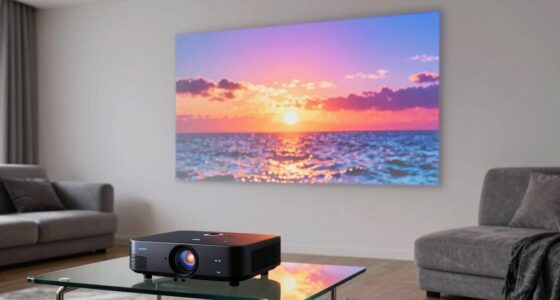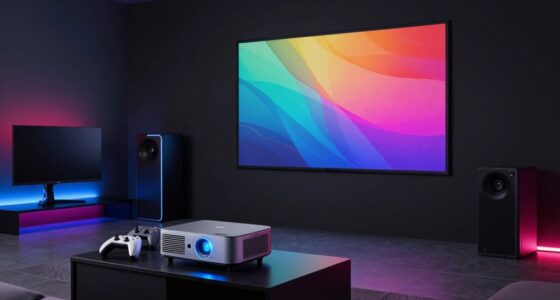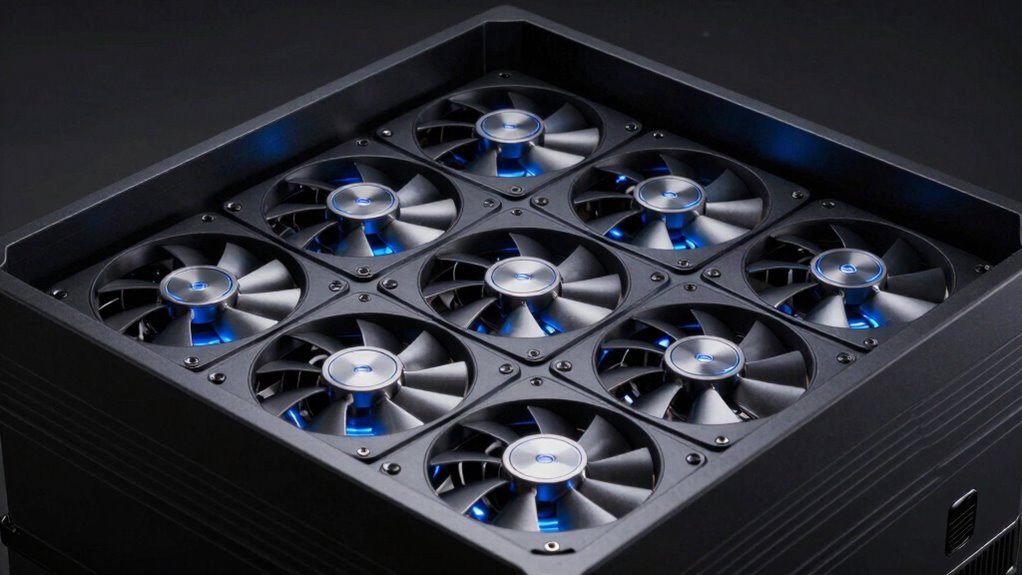

Choosing the right projector ventilation fan for a hush box comes down to one central tension: moving enough air to keep your projector cool while staying quiet enough that the fan doesn’t defeat the whole purpose of a soundproof enclosure. After comparing airflow specs, noise output, bearing types, and mounting options, the AC Infinity AXIAL LS1238 stands out as the best overall pick thanks to its thick 38mm frame that moves serious air at low RPM. The 120mm EC Cooling Fan with dual ball bearings is the strongest premium alternative if you want variable speed control and long service life, and the no-drill 120mm cabinet cooling fan makes the most sense for anyone who can’t cut holes in their enclosure. Below, I break down each fan’s real tradeoffs so you can match one to your hush box size, projector heat output, and noise tolerance.

Get business pricing on your home office setup
- Business-only prices and quantity discounts
- Tax-exempt purchasing
- Multiple users, one account, clear invoices
Complete the kit


Key Takeaways
- Fan thickness mattered more than diameter in this comparison: the 38mm-thick AC Infinity LS1238 and DEWENWILS models moved noticeably more air at lower RPMs than standard 25mm fans, which directly translates to quieter hush box operation.
- Speed control is the single biggest noise lever. Fans bundled with controllers (the Zirsso 80mm AC, ELUTENG USB models, and the EC fan) let you dial down to near-silent airflow, while fixed-speed AC fans force you to accept their factory noise level.
- USB-powered fans like the ELUTENG models are the easiest entry point but cap out on static pressure, making them fine for small hush boxes with low-wattage projectors and underpowered for laser projectors generating heavy heat.
- The 802 Ventilation Filter Kit was the only option that addressed dust management out of the box, a real advantage since hush boxes recirculate air in a closed AV space and projector filters clog fast without one.
- Mounting constraints decided several rankings: the no-drill cabinet fan and the 40mm dual-fan kit solve problems the bigger fans can’t, but both make airflow sacrifices that buyers with cuttable enclosures don’t need to make.


| projector ventilation fans for hush boxe | Voltage | Bearing Type | Dimensions | Noise Level |
|---|---|---|---|---|
| AC Infinity AXIAL LS1238 Quiet | 100-120 V AC | Dual-ball bearings, 67,000-hour rated | — | 32 dBA |
| 120mm EC Cooling Fan with Dual | — | Dual ball bearing, up to 50,000 hours | 120 x 120 x 25 mm | — |
| ELUTENG 120mm USB Computer Fan | 5V USB | — | — | — |
| ELUTENG Dual 40mm USB Cooling | — | Hydraulic | — | — |
| Zirsso 80mm AC Cooling Fan wit | 110V / 120V / 220V / 240V | — | 80 x 25 mm | 43 dB |
| Cabinet Cooling Fan | 5V | — | 7.7"L x 2.18"W x 8.9"H | 35.2 dB |
| DEWENWILS 120V AC Waterproof E | — | Dual ball bearings | 120mm x 38mm | 47 dB |
| 802 Ventilation Filter Kit | 115V/230V AC | Dual Ball Bearing | 116 x 116 x 52 mm | — |
More Details on Our Top Picks
AC Infinity AXIAL LS1238 Quiet Muffin Fan, 5-Inch, 120V AC
When the entire point of a hush box is silence, the fan inside it matters more than almost anything else, and this is where the AC Infinity LS1238 pulls ahead. Its 32 dBA low-speed operation is the quietest rating in this batch, and the 67,000-hour dual-ball bearing rating means you won’t be opening a sealed, soundproofed enclosure every year to swap a dead fan — a genuine hassle that cheaper sleeve-bearing options create. Compared with the 120mm EC Cooling Fan, you trade about 26 CFM of airflow for a meaningfully lower noise floor, which is the right tradeoff when the fan sits inches from a projector. The included two fan guards, power cord, and mounting hardware make it a true drop-in solution rather than a parts-gathering project. The main compromise is that 62 CFM limits it to moderately hot projectors, and the 38mm depth demands a hush box with some interior room.
Pros:- Quietest operation in the lineup at 32 dBA
- 67,000-hour dual-ball bearings mean years of maintenance-free sealed operation
- Complete kit with guards, power cord, and mounting screws
- Mounts in any direction for flexible hush box layouts
Cons:- 62 CFM may not clear heat from high-output projectors
- 38mm frame depth won’t fit slim enclosures
- Requires AC outlet access rather than USB power
Best for: Home theater builders with mid-heat projectors who need the quietest possible fan inside a sealed hush box
Not ideal for: Owners of hot-running lamp projectors in tight enclosures — the 62 CFM airflow and 38mm thickness both work against you
- Fan Size:120 x 120 x 38 mm (5 in)
- Voltage:100-120 V AC
- Airflow:62 CFM
- Noise Level:32 dBA
- Speed:1800 RPM
- Bearing Type:Dual-ball bearings, 67,000-hour rated
- Certification:UL
- Included:Fan, power cord, two guards, mounting screws
Our verdict“The safest pick for most hush boxes: quiet, durable, and complete, provided your projector’s heat output is moderate.”
120mm EC Cooling Fan with Dual Ball Bearings
If your projector runs hot and the AC Infinity LS1238‘s 62 CFM leaves you nervous, this 120mm EC fan delivers roughly 88 CFM from a frame only 25mm thick — a genuine advantage when hush box walls, acoustic lining, and projector clearance eat every millimeter. The EC motor is the differentiator here: it holds a steadier speed under voltage fluctuation and pushes more air per watt than the standard AC alternatives in this roundup. The built-in on/off switch and 4.9-foot cord also make it friendlier for quick installs than fans needing separate controllers. The tradeoff is acoustic: at 35 dBA it’s audible in a quiet room through thin hush box walls, and unlike the Zirsso 80mm, there’s no speed dial to dial the noise down. Its 50,000-hour bearing life is solid but falls short of the LS1238’s rating.
Pros:- Highest airflow in this batch at roughly 88 CFM
- Slim 25mm frame fits tight hush box builds
- Built-in power switch simplifies operation
- EC motor runs efficiently with stable speed
Cons:- 35 dBA noise floor is audible in a quiet theater room
- No speed control to reduce noise when full airflow isn’t needed
- Better suited to small-to-medium enclosures than large ventilated racks
Best for: Builders with hot-running projectors or shallow enclosures who prioritize heat removal over absolute silence
Not ideal for: Reference-level silent theaters — 35 dBA at full speed will be audible during quiet scenes
- Dimensions:120 x 120 x 25 mm
- Airflow:88.2 ±10% CFM
- Power:3.0 W
- Speed:2700 RPM
- Noise:35 dBA
- Bearing Type:Dual ball bearing, up to 50,000 hours
- Motor Type:EC
- Power Cord:4.9 ft with AC plug
Our verdict“The pick when heat is your enemy and you have limited depth — just plan some acoustic mitigation for its audible output.”
ELUTENG 120mm USB Computer Fan, 5V with 3 Adjustable Speeds
The ELUTENG USB fan earns its place by solving the problem the fixed-speed fans in this roundup can’t: it lets you tune speed across three settings, dropping to 1000 RPM and 50 CFM when you want the room dead quiet, or stepping up to 56 CFM during long viewing sessions. Compared with the Zirsso 80mm, which offers infinitely variable control but runs up to 43 dB, this one’s low setting operates far quieter, and USB power means you can run it off a smart plug or the projector’s own USB service port for automatic on/off with the projector — a clever trick AC-powered fans can’t match. Hydraulic bearings are quieter than ball bearings but won’t last as long as the AC Infinity LS1238‘s 67,000-hour rating. The external speed-controller dongle adds a cable you’ll need to route and hide.
Pros:- Three speed settings let you balance noise and cooling per session
- USB power enables smart-plug or projector-triggered automation
- Metal grills on both sides protect cables and fingers
- Two DC-to-USB adapters included for flexible hookup
Cons:- USB power limits maximum airflow to 56 CFM
- Speed controller adds an external dongle and cable clutter
- Hydraulic bearings have a shorter service life than dual-ball designs
Best for: DIYers who want to run the fan off the projector’s USB port so cooling starts and stops automatically with the projector
Not ideal for: High-heat projectors — 5V USB power caps airflow well below what the AC options deliver
- Size:120 x 120 x 25 mm
- Voltage:5V USB
- Air Volume:50 / 53 / 56 CFM
- Speed Settings:3 (Low/Medium/High)
- Rotating Speed:1000 / 1250 / 1500 RPM
- Bearings:Hydraulic
- Included:2 DC-to-USB female adapters, metal grills
Our verdict“The most flexible choice for tinkerers who value speed control and USB automation over raw airflow and bearing longevity.”
ELUTENG Dual 40mm USB Cooling Fans with 3 Adjustable Speeds
Sometimes a hush box simply has no room for a 120mm fan — think compact projector enclosures, shelf-mounted boxes, or retrofit builds where a full-size frame won’t clear the lens or vents. That’s the niche this dual 40mm USB pair fills. Each fan measures just 4 x 4 x 1 cm and can lie flat or stand upright, so you can position airflow exactly at a hot spot rather than moving air through the whole box. The included heat sinks are a nice touch for spot-cooling a specific component. Against the ELUTENG 120mm USB fan, you give up a large volume of airflow for placement flexibility — two small fans simply can’t match one large fan’s CFM or pressure. Also note both fans run together on one controller, so you can’t independently direct low and high speed. They also spin fast (up to 6500 RPM), which can produce a whine at top speed.
Pros:- Extremely compact fans fit where 120mm frames can’t
- Flexible flat or upright orientation for targeted cooling
- Three shared speed settings
- Included metal and silicone heat sinks aid spot cooling
Cons:- Both fans run together — no independent speed control
- High 6500 RPM top speed can create an audible whine
- USB power and small blades limit total airflow
Best for: Builders with very small or oddly shaped hush boxes who need targeted airflow at specific hot spots
Not ideal for: Full-size projector enclosures — tiny 40mm fans can’t move enough air for whole-box ventilation
- Fan Size:40 x 40 x 10 mm each
- Number of Fans:2
- Speed Settings:3
- Fan Speeds:4500 / 5500 / 6500 RPM
- Power:USB
- Bearing Type:Hydraulic
- Included:Metal guards, metal heat sink, silicone heat sink
Our verdict“A niche problem-solver for cramped enclosures and targeted hot-spot cooling rather than whole-box ventilation.”
Zirsso 80mm AC Cooling Fan with Adjustable Speed Controller
The Zirsso 80mm splits the difference between the big 120mm units and the tiny ELUTENG 40mm pair. Its adjustable speed controller is the headline: unlike the fixed-speed 120mm EC fan, you can throttle it back to tame noise when the room is quiet, then push toward its 60 CFM ceiling and 4500 RPM max when the projector is working hard. The flame-retardant PBT housing is a safety plus inside a sealed wooden box containing hot electronics — something standard ABS fans don’t offer. Its wide voltage acceptance (110V through 240V) also makes it usable internationally. The catch is its ceiling: 43 dB at full speed is the loudest in this lineup, so you’ll rely on the controller constantly, and 60 CFM from an 80mm frame comes with more air-noise character per CFM than the larger, slower AC Infinity.
Pros:- Adjustable speed controller balances noise against cooling demand
- Flame-retardant PBT housing adds safety inside sealed enclosures
- Wide 110V-240V voltage support for international use
- Plug-and-play with standard US plug
Cons:- 43 dB maximum is the loudest in the roundup
- Small 80mm frame must spin fast to reach 60 CFM, adding air noise
- Requires a nearby outlet — no USB option
Best for: Builders who want variable airflow control and fire-resistant housing in a compact AC-powered fan
Not ideal for: Silence-first home theaters — even throttled down, an 80mm fan at speed works harder and louder than a 120mm equivalent
- Dimensions:80 x 25 mm
- Voltage:110V / 120V / 220V / 240V
- Maximum Speed:4500 RPM
- Airflow:60 CFM
- Noise Level:43 dB
- Bearings:Dual ball bearings
- Housing:Flame-retardant PBT plastic
- Speed Control:Adjustable dial
Our verdict“A flexible, safety-minded middle ground for builders who want dial-in control from a compact AC fan, provided they accept its noisier top end.”
Cabinet Cooling Fan – No Drill Required, Quiet Slim 120mm Fan for AV Cabinets, Electronics Enclosures, and Server Racks
If your hush box lives inside a finished cabinet you’d rather not drill into, this option stands out for its non-destructive bracket mounting — it clamps onto door edges or existing ventilation slots in under a minute. That’s a genuine advantage over the DEWENWILS 120V AC Exhaust Fan, which assumes you’re willing to cut or drill a proper intake path. At 35.2 dB it’s one of the quietest picks here, which matters when the whole point of a hush box is silence. The catch: 77 CFM is modest airflow, so a hot-running lamp projector in a sealed enclosure may overwhelm it. Compared with the ELUTENG 120mm USB fan, this model trades adjustable speeds for faster, cleaner installation, so decide which matters more in your build.
Pros:- No drilling required — non-destructive brackets protect finished cabinetry
- Tool-free installation in under 60 seconds
- Quiet 35.2 dB operation suits noise-sensitive home theaters
- USB power works with projector-adjacent outlets and smart plugs
Cons:- Cooling depends on existing door gaps or slots — sealed boxes get little benefit
- 77 CFM airflow is low for high-heat projector or server setups
Best for: Renters and home theater owners with finished AV cabinets who need quiet exhaust without modifying the enclosure
Not ideal for: Sealed hush boxes housing high-heat lamp projectors — 77 CFM won’t move enough air for that thermal load
- Fan Size:120mm
- Power Connector:USB
- Voltage:5V
- Wattage:1.75W
- Noise Level:35.2 dB
- Max Rotational Speed:2100 RPM
- Air Flow Capacity:77.12 CFM
- Dimensions:7.7″L x 2.18″W x 8.9″H
Our verdict“This is the pick for anyone who needs quiet cabinet exhaust without permanently modifying a hush box or AV cabinet.”
DEWENWILS 120V AC Waterproof Exhaust Fan, 120mm x 38mm
Where the No-Drill Cabinet Cooling Fan prioritizes convenience, this DEWENWILS model is built for permanence: aluminum construction, a 30-mesh metal filter, and dual ball bearings rated for up to 50,000 hours. That filter is the differentiator for hush boxes — dust accumulation on projector intakes is a real longevity killer, and few competitors here include any filtration at all. The 120V AC power means it runs off mains wiring rather than USB, which suits a fixed installation but complicates plug-and-play setups. The honest tradeoff is 47 dB of noise, noticeably louder than the 35.2 dB no-drill option and roughly on par with the AC Infinity AXIAL LS1238 — fine for a closet-adjacent hush box, risky for one beside your seating.
Pros:- 30-mesh metal filter blocks hair, lint, and large dust particles
- Water-resistant and rust-resistant aluminum housing
- Dual ball bearings with up to 50,000-hour service life
- 90 CFM airflow handles higher thermal loads than USB options
Cons:- 47 dB noise level is loud for a silence-focused enclosure
- 120V AC wiring requires more installation effort than USB-powered picks
Best for: Permanent hush box installations in dusty environments where filtered, long-life mains-powered exhaust is worth extra noise
Not ideal for: Hush boxes located near seating positions — 47 dB will be audible during quiet movie passages
- Power Connector:3-pin
- Wattage:18W
- Dimensions:120mm x 38mm
- Noise Level:47 dB
- Max Rotational Speed:2850 RPM
- Airflow Capacity:90 CFM
- Bearing Type:Dual ball bearings
- Filter:30-mesh metal
- Service Life:Up to 50,000 hours
Our verdict“Choose this if your hush box lives in a garage or equipment closet and you want filtered, set-and-forget cooling over whisper-quiet operation.”
802 Ventilation Filter Kit, 116 x 116 x 52 mm EC Cooling Fan, 115V/230V, IP44 Waterproof and Dustproof for Enclosures and Cabinets
This kit takes the protection philosophy of the DEWENWILS exhaust fan one step further with an IP44 waterproof and dustproof rating, making it the right call for hush boxes in basements, garages, or humid rooms where moisture and dust both threaten electronics. The 115V/230V dual-voltage EC motor also makes it one of the few picks here that works internationally, and EC efficiency generally means better airflow-per-watt than the fixed-speed AC alternatives. The frustration is transparency: unlike the DEWENWILS with its published 90 CFM and 47 dB figures, this kit omits airflow and noise specs entirely, so you’re planning your ventilation blind. It also demands precise enclosure sizing and a real cutout, putting it closer to industrial gear than a home-theater accessory.
Pros:- IP44 waterproof and dustproof protection for harsh environments
- Dual 115V/230V AC input supports international installations
- EC motor design for efficient long-term operation
- Dual ball bearing construction supports continuous duty
Cons:- Airflow and noise specifications are not published
- Requires compatible enclosure sizing and a proper cutout installation
Best for: Installers building hush boxes or equipment enclosures in damp, dusty, or dual-voltage environments who prioritize protection ratings
Not ideal for: Home theater hobbyists who want predictable performance — the missing airflow and noise figures make quiet-operation planning guesswork
- Model:802
- Product Type:Ventilation Filter Kit
- Dimensions:116 x 116 x 52 mm
- Fan Type:EC Cooling Fan
- Voltage:115V/230V AC
- Bearing Type:Dual Ball Bearing
Our verdict“This is a protection-first choice for demanding environments, not for buyers who need to verify quiet performance before cutting into their hush box.”

How We Picked
I evaluated every fan through the specific demands of hush box duty, because a fan that works fine in a server rack can be a disaster behind a projector. The first criterion was noise at useful airflow: a fan needs to move enough CFM to offset projector heat (typically 40–150 watts of thermal output) while staying below roughly 20–25 dB to stay invisible in a theater room. Thicker fan frames generally won here because they can push the same air at lower rotational speed. The second criterion was reliability over continuous duty: dual ball bearings and EC motors last far longer than sleeve bearings in an enclosure that runs for hours at a time and is annoying to open for a fan swap.
From there I weighed speed control flexibility, since the ability to throttle a fan down is the cheapest soundproofing you can buy; mounting and power compatibility, including whether a fan needs mains voltage, USB power, or a cutout in the enclosure; and dust protection, which matters more in a hush box than in most cooling applications. Products that solved a unique problem — like no-drill mounting or integrated filtration — earned a spot even when their raw airflow lagged. The final order reflects the best balance of quiet operation, cooling capacity, and long-term practicality for a dedicated theater setup.
| projector ventilation fans for hush boxe | Bearing Type |
|---|---|
| AC Infinity AXIAL LS1238 Quiet | Dual-ball bearings, 67,000-hour rated |
| 120mm EC Cooling Fan with Dual | Dual ball bearing, up to 50,000 hours |
| ELUTENG 120mm USB Computer Fan | — |
| ELUTENG Dual 40mm USB Cooling | Hydraulic |
| Zirsso 80mm AC Cooling Fan wit | — |
| Cabinet Cooling Fan | — |
| DEWENWILS 120V AC Waterproof E | Dual ball bearings |
| 802 Ventilation Filter Kit | Dual Ball Bearing |
Factors to Consider When Choosing Projector Ventilation Fans For Hush Boxes
A hush box is a sealed acoustic enclosure, which means the fan you install is the only thing standing between your projector and overheating — and the only mechanical noise source in an otherwise silent box. These are the factors that separate a fan you’ll forget about from one you’ll curse every movie night.Match Airflow to Your Projector’s Heat, Not the Box Size
The most common mistake I see is sizing a fan to the hush box volume instead of the projector’s thermal output. A compact 1500-lumen DLP projector might dump 200 watts of heat into a small box, which can raise internal temperatures 15–20°C above ambient within an hour if airflow is inadequate. As a working target, you want enough airflow to fully exchange the box’s air every few seconds, which usually means somewhere between 20 and 60 CFM depending on the projector. A small USB fan that seems adequate on paper can fall short once you account for static pressure losses through filters, ducting, and restrictive vents. Check your projector’s power consumption and assume nearly all of it becomes heat — that number, not the fan’s peak rating, should drive your choice. Also remember that manufacturers list CFM at free-air flow, which is always optimistic for a pressurized enclosure.
Understand How Noise Ratings Actually Work
Fan noise is measured in decibels, but the number on the spec sheet tells only part of the story. A fan rated at 26 dB running at full speed might drop to 18 dB at reduced voltage, which is why variable speed control is so valuable in a hush box: you can run the fan at the lowest speed that still holds temperature, and shave 8–10 dB off the noise floor. Thickness matters too — a 38mm fan moves the same air as a 25mm fan at lower RPM, which shifts its noise to a lower, less noticeable frequency. Tonality plays a role as well; sleeve-bearing fans tend to develop a whine or rattle as they age, while ball-bearing and EC motors stay tonally consistent over thousands of hours. Finally, remember that mounting method transmits vibration: a hard-mounted fan can be audible through the box walls even when the motor itself is quiet, so rubber grommets or soft mounts multiply the benefit of a quiet fan.
Power Source Compatibility and Wiring Reality
Hush box fans come in three power flavors, and picking the wrong one creates headaches. 120V AC fans connect to mains power, which means they can run off a switched outlet or projector trigger relay — elegant, but they require safe wiring inside the enclosure and offer no speed adjustment unless bundled with a controller. USB 5V fans are plug-and-play and can run off a TV USB port or wall adapter, making them ideal for beginners, but they’re limited in airflow and their wiring is usually not designed for in-wall or permanent installation. EC and dual-voltage fans sit in between, offering efficient motors, wide speed ranges, and industrial-grade connectors. Consider how the fan will switch on and off with the projector: a fan that runs 24/7 wastes life and makes noise when the room should be silent, while a trigger-activated setup matches cooling to actual use. Think through this before buying, because retrofitting power inside a soundproofed box is miserable work.
Bearing Type and Continuous-Duty Lifespan
A projector hush box fan might run three to five hours per showing, several nights a week, for years — and replacing it means opening your carefully sealed and soundproofed enclosure. That makes bearing quality a bigger deal here than in a desktop PC. Dual ball bearings typically last 50,000+ hours and handle heat well, though they cost a little in noise. Sleeve bearings are quieter when new but degrade with heat and orientation sensitivity, often developing noise within a year or two of heavy use. EC motors combine efficiency with long life and precise speed control, which is why they dominate the premium pick. Also check the operating temperature rating: a cheap fan rated to 40°C may struggle in a hush box interior that regularly exceeds that near the projector’s exhaust. Spending a little more on the bearing type up front is cheaper than re-soundproofing a box seam you had to break open.
Dust, Filters, and Airflow Direction
Hush boxes live in dark, static-prone rooms where dust accumulates on projector panels and mirrors quickly, and every ventilation opening is an entry point. The right approach is to make your intake the filtered path and the exhaust unfiltered, so dust is captured before it enters the box rather than after it has coated your projector. Kits that include washable filter media simplify this, but any fan setup can be paired with aftermarket filter sheets — just know that every layer of filtration increases static pressure load, which cuts effective airflow, sometimes by 20 percent or more. Plan airflow direction deliberately: cool air should enter low, pass across the projector’s intake, and exit high near its exhaust, creating a directed channel rather than a short-circuiting loop. Positioning intake and exhaust vents on opposite sides of the box multiplies the cooling you get from the same fan. Ignoring dust management doesn’t just mean cleaning — it means degraded projector cooling as filters on the projector itself clog faster.
Mounting: Cutouts, No-Drill Options, and Vibration Isolation
Before falling in love with a fan’s specs, confirm how it will physically attach to your enclosure. Most 120mm fans expect a circular cutout with standard corner screw holes, which is easy in a plywood or MDF hush box but impossible in a glass-fronted or pre-fabricated enclosure. No-drill designs that clamp or adhere to flat panels solve this, though they typically sacrifice some airflow for their slim profile. Small 40mm or 80mm fans fit where larger ones can’t, which is exactly why they earn a place in this roundup despite lower CFM. Whatever you mount, isolate it: rubber grommets, silicone mounts, or even a foam gasket between fan and panel break the vibration path that turns a quiet fan into a buzzing box. And leave yourself service access — a fan screwed permanently behind glued acoustic foam is a future repair you’ll regret.
Frequently Asked Questions
How do I know if a fan is quiet enough for my hush box without hearing it first?
Use the published dB rating as a starting point, but treat it as the ceiling rather than the floor — most fans run quieter than their spec at reduced voltage, which is why a fan with speed control rated at 26 dB can realistically operate near 18 dB. Anything under 20 dB will disappear behind typical room noise in a home theater, while 25 dB and above will be audible during quiet dialogue scenes. Also consider the frequency of the noise: a large fan running slowly produces a low hum that’s much less distracting than a small fan’s higher-pitched whir at the same measured volume. Mounting method is the wildcard — a spec-compliant fan hard-screwed to a thin panel can transmit vibration that reads louder than the motor itself. If you’re sensitive to noise, prioritize thick-frame fans running at partial speed over thin fans at full tilt.
Can I use a regular PC case fan in a hush box, or do I need something specialized?
A standard PC fan can work if your projector is modest and the box is reasonably ventilated, but hush boxes punish the weaknesses of general-purpose fans. PC fans are typically rated for 12V DC operation, so you’ll need a power supply or USB adapter, and their connectors aren’t built for permanent installations. More importantly, many budget PC fans use sleeve bearings that degrade in the sustained warm environment inside a hush box, eventually producing exactly the rattle you built the box to avoid. Industrial fans with dual ball bearings or EC motors, like the AC Infinity and EC options in this roundup, are rated for tens of thousands of continuous hours and handle elevated ambient temperatures. The specialized options also come in mains-voltage versions that can be switched with your projector’s trigger, which a bare PC fan cannot. So yes, a PC fan can cool your projector — but whether it stays quiet for years is a different question.
Should the fan blow air into the box or pull air out?
Exhaust (pulling air out) is the better default for a hush box, and here’s why: an exhaust fan creates slight negative pressure inside the box, which means air leaks into the box through your intake vent and filter rather than pushing dusty air out through every imperfect seam. Pulling air out also means the fan handles already-warmed air leaving the projector, creating a clean directional path from low intake to high exhaust. The exception is if your intake path is highly restrictive — a strong intake fan paired with a passive exhaust can sometimes overcome filter resistance better. Ideally, use one fan on exhaust sized generously for your heat load, with a filtered passive intake on the opposite side of the box. Avoid placing intake and exhaust vents next to each other, which lets cool air shortcut out without passing over the projector.
Do I need a filtered fan, and how much airflow does the filter cost me?
In a hush box, filtration is worth the trouble because the enclosure concentrates whatever dust enters, and projector optics and intake filters clog far faster than they would in open air. A filtered intake captures dust before it enters the sealed environment, extending the interval between projector cleanings and keeping thermal performance stable. The cost is real, though: even a modest filter mat can reduce effective airflow by 15 to 30 percent, which means you may need to step up a fan size or run a more capable fan at a higher speed to compensate. The practical approach is to buy a fan with 25–50 percent more airflow headroom than your unfiltered calculation requires, then accept the filter loss. Washable filter media, like what the 802 filter kit includes, keeps long-term maintenance cheap. If you skip filtration entirely, plan on cleaning your projector’s own filters monthly rather than yearly.
What happens if my hush box fan fails while the projector is running?
Without airflow, a sealed hush box can heat up fast enough to trigger your projector’s thermal shutdown within 15 to 45 minutes, and repeated overheating shortens lamp and panel life even when the shutdown protects the electronics. The projector’s own protection circuitry makes catastrophic failure unlikely, but thermal cycling is still hard on any projector. This is why bearing quality matters so much in this roundup’s rankings — a fan that dies two years in means opening your sealed, soundproofed enclosure and possibly disturbing acoustic treatments to swap it. Some builders add a cheap thermal sensor or smart plug to alert them if box temperature climbs abnormally, which turns a silent failure into a fixable inconvenience rather than a ruined movie night. If your projector is expensive, consider running two smaller fans in parallel so a single failure leaves you with reduced but sufficient cooling rather than none at all.
Conclusion
The right pick depends on your hush box, your projector, and how much noise you’ll tolerate. For best overall, the AC Infinity AXIAL LS1238 hits the sweet spot of high airflow at low RPM, thick-frame efficiency, and a track record of quiet continuous duty — it’s the fan I’d put in a typical dedicated theater hush box. For best value, the Zirsso 80mm AC fan with speed controller delivers adjustable, mains-powered cooling for less than most purpose-built AV fans. For best premium, the 120mm EC fan with dual ball bearings justifies its cost with precision speed control, long motor life, and efficiency that keeps heat and noise down simultaneously.
For beginners, the ELUTENG 120mm USB fan is the easiest possible entry: plug it in, dial the speed, and learn what your box needs before committing to permanent wiring. The no-drill 120mm cabinet fan is the pick for specific needs — enclosures you can’t or won’t cut into — while the ELUTENG dual 40mm kit covers tiny boxes and the DEWENWILS waterproof model suits humid or dusty installation environments. If dust is your main concern, the 802 Ventilation Filter Kit bundles cooling and filtration in one package. Whatever you choose, prioritize headroom: a fan running at 60 percent speed will always be quieter and last longer than a small fan running flat out.
Halloween Picks

12.2 ft Halloween Inflatable Outdoor Decoration – Giant Pumpkin

27FT Giant Inflatable Pumpkin Lighted Outdoor Halloween Decor

Jenaai 5.3-Foot Motion-Activated Halloween Animatronic Skeleton
As an affiliate, we earn on qualifying purchases.