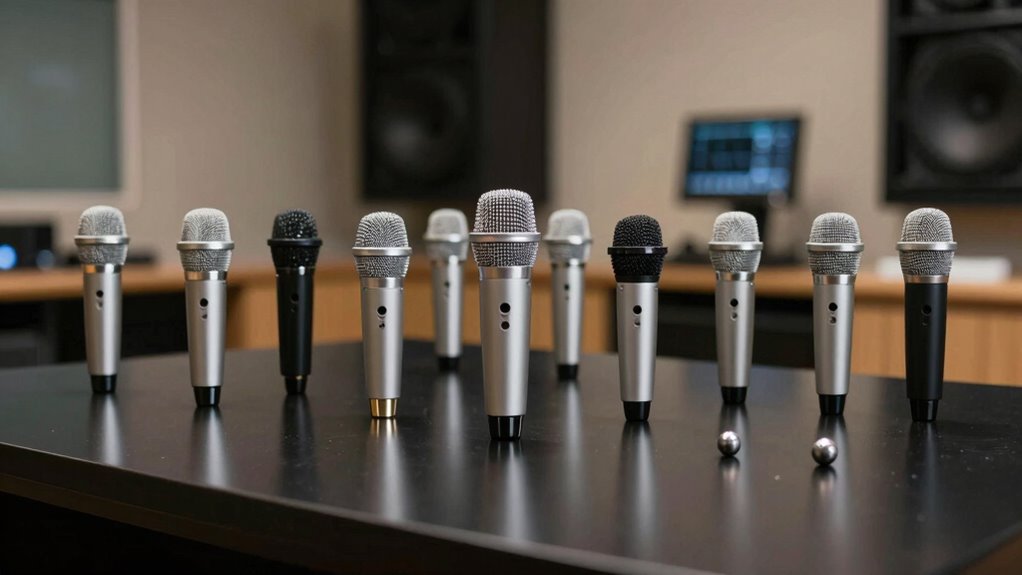
When it comes to room correction, choosing the right measurement microphone is essential for precise calibration. The best overall pick is the Dayton Audio UMM-6 USB Measurement Microphone, renowned for its accuracy and ease of use. The Earthworks M30 stands out for high-frequency response, ideal for detailed room analysis, while the miniDSP UMIK-1 offers excellent calibration features at a budget-friendly price. Buyers face tradeoffs between microphone quality, calibration support, and affordability. Continue reading for a detailed breakdown to help you pick the right measurement microphone for your needs.

Get business pricing on your home office setup
- Business-only prices and quantity discounts
- Tax-exempt purchasing
- Multiple users, one account, clear invoices
Complete the kit


Key Takeaways
- Top-performing microphones combine high accuracy with reliable calibration support.
- USB microphones like the UMIK-1 offer ease of use and quick setup for most users.
- Higher-end options such as Earthworks M30 excel in capturing detailed frequency responses, crucial for professional calibration.
- Budget-friendly models can be effective but may lack advanced features like detailed calibration files.
- The choice depends heavily on your calibration needs and whether you prioritize simplicity or precision.
| Dayton Audio EMM-6 Precision Omnidirectional Electret Condenser Measurement Microphone |  | Best Overall for Accurate Room Analysis | Model: EMM-6 | Type: Electret condenser measurement microphone | Polar Pattern: Omnidirectional | VIEW ON AMAZON | See Our Full Breakdown |
| Apex Apex220 Omnidirectional Condenser Microphone with Clip |  | Best Value for Basic Room Correction Tasks | Element: Back Electret Condenser | Polar Pattern: Omnidirectional | Frequency Response: 20Hz – 20kHz | VIEW ON AMAZON | See Our Full Breakdown |
| Earthworks M30 30kHz Omnidirectional Measurement Microphone |  | Best for High-Precision Professional Measurements | Connectivity Technology: XLR | Polar Pattern: Omnidirectional | Frequency Response: 9Hz – 30kHz | VIEW ON AMAZON | See Our Full Breakdown |
| Sony ECM-AC2 Calibration Microphone for Audio/Video Receivers |  | Best for Sony Home Theater Auto Calibration | Part Number: 154277421, 154271011, 154267021 | Compatibility: Most Sony receivers (about 150 models) | VIEW ON AMAZON | See Our Full Breakdown | |
| USB-C Measurement Microphone with Individual Calibration File |  | Best for Professional-Grade, Plug-and-Play Room Correction | Connectivity Technology: USB-C | Polar Pattern: Omnidirectional | Frequency Response: 20 KHz | VIEW ON AMAZON | See Our Full Breakdown |
| Dayton Audio OmniMic 40k Precision Measurement Microphone System |  | Best Overall for Versatile Room and Speaker Calibration | Frequency Response: 5 to 40,000 Hz | Dynamic Range: 145 dB | Harmonic Distortion Measurement: up to 13,333 Hz | VIEW ON AMAZON | See Our Full Breakdown |
| Superlux ECM999 Omnidirectional XLR Measurement Microphone |  | Best for Traditional XLR Setup and Precise Room Calibration | Polar Pattern: Omnidirectional | Frequency Response: 20 Hz – 20 kHz (±2 dB) | Max SPL: 132 dB | VIEW ON AMAZON | See Our Full Breakdown |
| miniDSP UMIK-1 USB Calibrated Measurement Microphone |  | Best for Plug-and-Play Room Tuning with Software Compatibility | Type: USB calibrated measurement microphone | Compatibility: Windows, Mac, Linux, iOS | Calibration: Unique calibration file with sensitivity data | VIEW ON AMAZON | See Our Full Breakdown |
| Dayton Audio iMM-6 Calibrated Measurement Microphone for iPhone, iPad, Tablet, and Android |  | Best for Mobile and On-the-Go Measurement Tasks | Connectivity: 3.5mm TRRS | Polar Pattern: Omnidirectional | Frequency Response: 18 KHz | VIEW ON AMAZON | See Our Full Breakdown |
| Dayton Audio UMM-6 USB Measurement Microphone |  | Best Budget USB Microphone for Accurate Room Measurements | Connection: USB | Pattern: Omnidirectional | Frequency Response: Flat, typical range | VIEW ON AMAZON | See Our Full Breakdown |
| Dayton Audio UMM-6 USB Measurement Microphone |  | Best Overall for Versatile Room Calibration | Connection: USB | Pattern: Omnidirectional | Application: Measurement and recording | VIEW ON AMAZON | See Our Full Breakdown |
| Dayton Audio iMM-6C Calibrated Measurement USB-C Microphone | 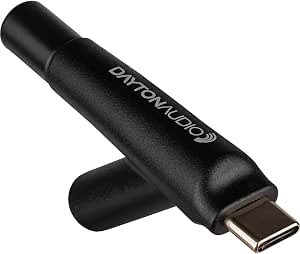 | Best for Smartphone and Tablet Room Correction | Connection: USB-C | Pattern: Omnidirectional | Frequency Response: Calibrated flat | VIEW ON AMAZON | See Our Full Breakdown |
| Audix TM1 Condenser Room Measurement Microphone – Nickel |  | Best for Professional Acoustic Calibration | Connectivity Technology: XLR | Pattern: Omnidirectional | Frequency Response: 20Hz–20kHz | VIEW ON AMAZON | See Our Full Breakdown |
| EVERSOLO EM-01 Omnidirectional Calibrated Measurement Microphone |  | Best for Ecosystem Integration and Versatile Use | Model: EM-01 | Microphone Type: Omnidirectional electret | Capsule Size: 6mm | VIEW ON AMAZON | See Our Full Breakdown |
| measurement microphones for room correction | Frequency Response |
|---|---|
| Dayton Audio EMM-6 Precision O | — |
| Apex Apex220 Omnidirectional C | 20Hz – 20kHz |
| Earthworks M30 30kHz Omnidirec | 9Hz – 30kHz |
| Sony ECM-AC2 Calibration Micro | — |
| USB-C Measurement Microphone w | 20 KHz |
| Dayton Audio OmniMic 40k Preci | 5 to 40,000 Hz |
| Superlux ECM999 Omnidirectiona | 20 Hz – 20 kHz (±2 dB) |
| miniDSP UMIK-1 USB Calibrated | — |
| Dayton Audio iMM-6 Calibrated | 18 KHz |
| Dayton Audio UMM-6 USB Measure | Flat, typical range |
| Dayton Audio UMM-6 USB Measure | — |
| Dayton Audio iMM-6C Calibrated | Calibrated flat |
| Audix TM1 Condenser Room Measu | 20Hz–20kHz |
| EVERSOLO EM-01 Omnidirectional | — |
More Details on Our Top Picks
Dayton Audio EMM-6 Precision Omnidirectional Electret Condenser Measurement Microphone
The Dayton Audio EMM-6 stands out for its detailed calibration data file, which includes a response graph, making it ideal for precise room correction tasks. Compared with the Earthworks M30, the EMM-6 offers excellent accuracy at a more accessible price point, though it requires external measurement software and phantom power. Its low-noise FET input helps reduce low-frequency distortion, a key advantage for high-fidelity room tuning. The included accessories—stand mount, foam windscreen, and transport case—add to its value for dedicated audio setups. However, its dependence on compatible measurement software and phantom power means it’s less suited for casual users or those without equipment. This microphone is best for audiophiles or professionals seeking high accuracy with flexible setup options.
Pros:- Includes detailed calibration data with response graph
- Low-noise FET input reduces low-frequency distortion
- Comes with stand mount, foam windscreen, and transport case
- High-quality construction for durability
Cons:- Requires phantom power and compatible measurement software
- Not a standalone measurement solution
Best for: Audio engineers, room tuning enthusiasts, or professionals needing detailed room analysis.
Not ideal for: Casual listeners or users without measurement software and phantom power supplies.
- Model:EMM-6
- Type:Electret condenser measurement microphone
- Polar Pattern:Omnidirectional
- Input:Low noise FET
- Calibration:Unique calibration data file with response graph
- Included Accessories:Stand mount, foam windscreen, transport case
Our verdict“This pick makes the most sense for serious audiophiles and professionals demanding high-precision room correction.”
Apex Apex220 Omnidirectional Condenser Microphone with Clip
The Apex Apex220 offers a broad frequency response of 20Hz to 20kHz, making it suitable for general audio measurement and room correction. Compared to the Dayton EMM-6, it lacks detailed calibration data but provides straightforward omnidirectional pickup, which captures sound from all directions effectively. Its sensitivity of -63dB +/- 3dB is acceptable for less critical measurements, though background noise can be an issue. The included clip simplifies mounting, making it convenient for quick setups. However, its higher sensitivity to ambient noise and impedance of less than 250 Ohms could limit its effectiveness in noisy environments or with certain audio interfaces. This microphone works well for beginners or hobbyists who need a simple, budget-friendly solution.
Pros:- Omnidirectional pattern captures sound uniformly from all directions
- Wide frequency response suitable for basic measurements
- Includes a clip for easy mounting
- Affordable price point
Cons:- Sensitivity may pick up unwanted background noise
- Higher impedance may limit compatibility with some interfaces
Best for: Home theater calibrators or entry-level room tuning hobbyists.
Not ideal for: Professional studio engineers or those requiring detailed calibration data for precise measurements.
- Element:Back Electret Condenser
- Polar Pattern:Omnidirectional
- Frequency Response:20Hz – 20kHz
- Sensitivity:-63dB +/- 3dB
- Impedance:<250 Ohms
Our verdict“Ideal for beginners or casual users seeking an easy-to-use and affordable measurement microphone.”
Earthworks M30 30kHz Omnidirectional Measurement Microphone
The Earthworks M30 excels in delivering highly accurate measurements across a broad frequency range of 9Hz to 30kHz, making it ideal for system calibration and detailed room correction. Unlike the Dayton EMM-6, which relies on calibration files, the M30 includes electronic calibration for extreme precision. Its omnidirectional pattern ensures consistent sound capture from all directions, but its need for +48V phantom power and the specialized nature of its electronics make it less accessible for casual setups. Its high price reflects its professional-grade performance, but this also means it’s overkill for casual or hobbyist use. This microphone is best suited for professionals or serious audiophiles focusing on meticulous system calibration.
Pros:- Extremely accurate frequency response from 9Hz to 30kHz
- Includes electronic calibration files for precise measurement
- Omnidirectional pickup captures sound uniformly
- Designed for professional audio system calibration
Cons:- Requires +48V phantom power and specialized equipment
- Higher cost and complexity compared to consumer options
- Primarily for measurement, not general recording
Best for: Audio professionals, system calibration specialists, or high-end room correction setups.
Not ideal for: Casual users or those seeking a budget-friendly measurement solution.
- Connectivity Technology:XLR
- Polar Pattern:Omnidirectional
- Frequency Response:9Hz – 30kHz
- Impedance:200 ohm
- Signal-to-Noise Ratio:60 dB
Our verdict“Best for those who need meticulous accuracy and are equipped for professional-grade calibration procedures.”
Sony ECM-AC2 Calibration Microphone for Audio/Video Receivers
The Sony ECM-AC2 is tailored for use with Sony receivers, providing an easy way to calibrate home theater systems. Unlike dedicated measurement microphones like the Earthworks M30 or Dayton EMM-6, the ECM-AC2 is designed specifically for auto calibration features in compatible Sony models. Its main advantage is seamless integration, but this also limits its versatility outside Sony systems. Proper connection and setup are critical; failure to connect your speakers or microphone correctly can cause calibration errors. While convenient for Sony owners, it doesn’t offer the detailed measurement flexibility that more specialized microphones provide. This microphone is best for Sony home theater owners seeking hassle-free calibration.
Pros:- Ensures accurate speaker calibration for Sony receivers
- Genuine Sony product with reliable build quality
- Widely compatible with around 150 Sony receiver models
Cons:- Calibration can fail if setup isn’t correct
- Limited to Sony systems, not for general measurement use
- Offers less flexibility for detailed room correction
Best for: Owners of Sony audio/video receivers who want quick, automated speaker calibration.
Not ideal for: Users needing high-precision measurements beyond Sony’s auto calibration system.
- Part Number:154277421, 154271011, 154267021
- Compatibility:Most Sony receivers (about 150 models)
Our verdict“Perfect for Sony system owners seeking straightforward auto calibration without additional measurement complexity.”
USB-C Measurement Microphone with Individual Calibration File
This USB-C measurement microphone offers high-precision calibration, making it suitable for detailed room correction and speaker tuning. Its plug-and-play design across Windows, Mac, and Linux simplifies setup, unlike the Dayton UMM-6, which often requires drivers or additional software. The included calibration file ensures accurate frequency response, critical for professional or audiophile use. Its robust zinc enclosure and complete accessory kit add durability and convenience for portable setups. However, its dependence on a USB-C port can be limiting for users with older devices, and it’s geared more toward serious measurement tasks rather than casual listening. This microphone is ideal for users needing reliable, professional-grade measurements with easy connectivity.
Pros:- High-precision calibration for accurate measurements
- Plug-and-play compatibility across operating systems
- Includes comprehensive accessories for easy use
- Robust metal enclosure for durability
Cons:- Requires USB-C port, may need adapters
- Not suitable for casual or consumer-grade setups
- Dependent on external power source
Best for: Audio professionals, room correction enthusiasts, and speaker designers needing high accuracy with straightforward operation.
Not ideal for: Casual listeners or users with incompatible hardware lacking USB-C ports.
- Connectivity Technology:USB-C
- Polar Pattern:Omnidirectional
- Frequency Response:20 KHz
- Impedance:200 ohm
- Signal-to-Noise Ratio:65 dB
Our verdict“Best suited for professionals or dedicated hobbyists demanding precise measurements and seamless connectivity.”
Dayton Audio OmniMic 40k Precision Measurement Microphone System
The Dayton Audio OmniMic 40k stands out for its wide frequency response of 5 to 40,000 Hz, making it highly suitable for detailed room correction and speaker measurement alike. Compared with the miniDSP UMIK-1, it offers a higher dynamic range of 145 dB, reducing the risk of distortion during high SPL measurements. Its multi-functionality, including phase and distortion assessment, makes it a comprehensive tool for both DIY enthusiasts and professionals. However, its setup can be complex for users unfamiliar with audio measurement procedures, and it requires specific calibration files for optimal accuracy. Best for users who need a flexible, high-precision system, but less ideal for those seeking plug-and-play simplicity.
Pros:- Extremely wide frequency response up to 40 kHz for detailed analysis
- High dynamic range of 145 dB minimizes measurement distortion
- Multiple measurement capabilities including phase and SPL
- Built-in calibration for accurate, repeatable results
Cons:- Complex setup may be daunting for newcomers
- Requires specific calibration files for peak accuracy
Best for: Audio engineers and advanced home theater enthusiasts seeking detailed, multi-parameter measurements
Not ideal for: Beginners or casual users who prefer straightforward, single-purpose microphones with minimal setup
- Frequency Response:5 to 40,000 Hz
- Dynamic Range:145 dB
- Harmonic Distortion Measurement:up to 13,333 Hz
- Calibration:Built-in calibration files
- Measurement Capabilities:Frequency response, phase, distortion, SPL, loudspeaker compression
Our verdict“Ideal for experienced users needing comprehensive measurement features and high accuracy, but less suited for those seeking ease of use.”
Superlux ECM999 Omnidirectional XLR Measurement Microphone
The Superlux ECM999 offers a flat frequency response of 20 Hz to 20 kHz, making it suitable for accurate room and acoustic testing. Compared to the Dayton iMM-6, it’s a more traditional XLR-based solution, providing professional-grade audio quality with handling up to 132 dB SPL. Its omnidirectional polar pattern ensures consistent results regardless of microphone orientation, ideal for multi-position room analysis. However, it requires phantom power (12V–52V), and the XLR cable is not included, adding extra setup steps. This microphone is best suited for users with existing audio interfaces or mixers that supply phantom power. It’s a great choice for those needing a reliable, high-quality measurement mic in a professional setup, but less so for casual users with only consumer-grade equipment.
Pros:- Flat frequency response ensures accurate room measurements
- Handles high SPL levels up to 132 dB for loudspeaker testing
- Omnidirectional pattern provides consistent results from all angles
- Includes a sturdy carrying case, mic clip, and windscreen
Cons:- Requires phantom power source and XLR cable (not included)
- Less convenient for portable or quick setup needs
Best for: Studio-based audio professionals and serious room calibration enthusiasts with XLR interfaces
Not ideal for: Users without phantom power sources or those seeking a plug-and-play USB experience
- Polar Pattern:Omnidirectional
- Frequency Response:20 Hz – 20 kHz (±2 dB)
- Max SPL:132 dB
- Phantom Power:12V–52V
- Connector:XLR
Our verdict“Best suited for professional setups with XLR interfaces requiring high-fidelity, calibrated measurements.”
miniDSP UMIK-1 USB Calibrated Measurement Microphone
The miniDSP UMIK-1 excels at straightforward, accurate measurements thanks to its dedicated calibration file and USB connectivity. It pairs seamlessly with popular acoustic software like REW, Dirac Live, and Smaart, making it ideal for users who want reliable results without complex setup. Unlike the Dayton Audio OmniMic 40k, it has a more limited frequency range but offers excellent SPL accuracy within typical room correction bounds. Its plug-and-play nature suits beginners and hobbyists, although users must download calibration files separately for optimal accuracy, and its USB-only connection might limit flexibility for those preferring analog inputs. This makes it a perfect choice for users focused on ease of use and software integration, but less ideal for those needing ultra-wide frequency responses or multi-parameter measurements.
Pros:- Calibrated with a unique file for high measurement accuracy
- Plug-and-play setup on multiple OS platforms
- Compatible with major acoustic measurement software
- Includes useful accessories like tripod and windscreen
Cons:- Requires manual download of calibration files
- Limited to USB connection, no analog output
Best for: Home theater enthusiasts and audio hobbyists seeking easy setup and reliable calibration
Not ideal for: Professionals requiring advanced measurement capabilities or wide frequency response
- Type:USB calibrated measurement microphone
- Compatibility:Windows, Mac, Linux, iOS
- Calibration:Unique calibration file with sensitivity data
- Included Accessories:Mini tripod, USB cable, windscreen
Our verdict“Best for users who want quick, reliable measurements with minimal fuss and software flexibility.”
Dayton Audio iMM-6 Calibrated Measurement Microphone for iPhone, iPad, Tablet, and Android
The Dayton Audio iMM-6 provides a convenient, portable measurement solution compatible with smartphones, tablets, and PCs via a 3.5mm TRRS connection. Its omnidirectional polar pattern and calibration make it suitable for quick room and speaker tests, especially for users who need a compact, cable-based mic. Compared to USB options like the UMIK-1, it’s more limited in software flexibility but excels in mobile environments. Its headphone pass-through allows real-time monitoring, which is useful for on-site adjustments. However, the reliance on 3.5mm TRRS connectors can be limiting on newer devices without adapters, and the omnidirectional pattern may pick up ambient noise more easily. This mic is a good fit for mobile users and field measurements, but less so for detailed lab setups.
Pros:- Compact, lightweight, and highly portable
- Compatible with multiple devices including smartphones and tablets
- Includes pass-through jack for monitoring and testing
- Calibrated for accurate measurements
Cons:- Dependent on 3.5mm TRRS jack availability (may need adapters)
- Limited to wired connection and omnidirectional pattern
Best for: Mobile audiophiles and on-site installers needing quick, calibrated measurements
Not ideal for: Users with newer smartphones lacking 3.5mm jacks or those requiring high-precision laboratory measurements
- Connectivity:3.5mm TRRS
- Polar Pattern:Omnidirectional
- Frequency Response:18 KHz
- Special Features:Headphone pass-through
Our verdict“Best suited for mobile measurement needs and quick testing in the field, but less ideal for detailed or professional setups.”
Dayton Audio UMM-6 USB Measurement Microphone
The Dayton Audio UMM-6 offers a straightforward USB solution for accurate room and speaker measurements, with a solid omnidirectional pattern and a flat frequency response. Compared to the miniDSP UMIK-1, it provides a similar design but often at a lower cost. Its rugged build and included carrying case make it suitable for portable measurements, and its compatibility with most PCs and Macs simplifies setup. However, it might require calibration for professional-grade accuracy, and being USB-only limits its flexibility in more complex audio environments. This microphone is well-suited for hobbyists and casual professionals who want reliable, easy-to-use measurement tools without extra complexity, but may fall short for demanding professional applications requiring broader frequency ranges or advanced features.
Pros:- Accurate measurements with solid omnidirectional response
- USB connectivity for simple plug-and-play operation
- Rugged construction with included carrying case
- Suitable for both measurement and recording tasks
Cons:- May require calibration for maximum accuracy
- Limited to USB connection, less flexible in complex setups
Best for: Hobbyists and casual users seeking reliable, portable measurement microphones
Not ideal for: Professional studios or users needing extensive calibration and ultra-wide frequency response
- Connection:USB
- Pattern:Omnidirectional
- Frequency Response:Flat, typical range
- Included Accessories:Carrying case
Our verdict“Ideal for budget-conscious users needing reliable USB measurement for room tuning and recording, but less suited for professional work demanding broader specs.”
Dayton Audio UMM-6 USB Measurement Microphone
The Dayton Audio UMM-6 stands out for its combination of accuracy and ease of use, making it a top choice for room measurement tasks. Its USB connection simplifies setup compared to XLR-based options like the Audix TM1, which require additional audio interfaces. Although it’s limited to measurement and recording, its portable size and rugged build make it ideal for quick, reliable tests. Unlike the EVERSOLO EM-01, which also offers plug-and-play convenience, the UMM-6’s compatibility with standard PC and Mac software broadens its applicability. The main tradeoff is that it doesn’t support higher sampling rates or professional calibration features, but for most room correction needs, its performance suffices. This makes it suitable for hobbyists and professionals alike seeking straightforward, accurate measurements without complex setup.
Pros:- Easy USB connection to computers for quick setup
- Compact, portable, and rugged design for field use
- High-quality, accurate measurement capabilities
Cons:- Limited to measurement and recording; no multi-channel or advanced calibration features
- Requires compatible software for full functionality
Best for: Home theater enthusiasts and audio hobbyists seeking a simple, accurate measurement microphone with plug-and-play USB connectivity.
Not ideal for: Professionals requiring XLR outputs for integrated calibration systems or high-rate data acquisition; those needing ultra-high sampling rates will find this limiting.
- Connection:USB
- Pattern:Omnidirectional
- Application:Measurement and recording
- Construction:Rugged
Our verdict“Ideal for hobbyists and professionals seeking a straightforward, reliable USB measurement microphone for room correction.”
Dayton Audio iMM-6C Calibrated Measurement USB-C Microphone
The Dayton Audio iMM-6C is designed specifically for users who need accurate room measurements on mobile devices via USB-C. Its calibrated flat frequency response ensures measurement consistency, comparable to the EVERSOLO EM-01 but with the added benefit of direct smartphone compatibility. The integrated headphone/line out pass-through offers monitoring during calibration, a feature not present in the Audix TM1, which is XLR-based and better suited for professional environments. However, the iMM-6C’s reliance on USB-C limits its use to newer devices, excluding those with Lightning or USB-A ports. Its rugged build and portability make it ideal for on-the-go calibration, but it’s less suited for studio-level precision when compared with high-end measurement microphones.
Pros:- Calibrated flat frequency response for measurement accuracy
- Compatible with a wide range of USB-C smartphones and tablets
- Includes headphone/line out pass-through for monitoring
Cons:- Limited to USB-C devices; no support for Lightning or standard USB-A
- Designed primarily for measurement, not recording or general audio use
Best for: Mobile audiophiles and sound engineers needing portable, calibrated measurement solutions for smartphones and tablets.
Not ideal for: Professional sound engineers requiring XLR connectivity or higher sampling rates; casual users without USB-C devices may find it incompatible.
- Connection:USB-C
- Pattern:Omnidirectional
- Frequency Response:Calibrated flat
- Additional Features:Headphone/Line Out pass-through
Our verdict“Best suited for mobile users needing quick, calibrated room measurements directly from their smartphones or tablets.”
Audix TM1 Condenser Room Measurement Microphone – Nickel
The Audix TM1 excels in professional environments where precision is paramount. Its XLR connection and brass construction reflect its focus on durability and accuracy, making it a step above USB-based options like the Dayton UMM-6 for studio-level calibration. Its linear frequency response and omnidirectional pattern capture the full sound spectrum, crucial for detailed room analysis. However, the need for an audio interface or mixer adds complexity and cost, which can be a barrier for casual users. Unlike the EVERSOLO EM-01, which integrates directly via USB, the TM1’s setup is more involved, but it offers superior reliability and higher-quality components. This microphone suits professional sound engineers and acousticians focused on precise, repeatable measurements.
Pros:- Highly accurate, linear frequency response for detailed analysis
- Durable brass construction ensures long-term reliability
- Omnidirectional pickup captures sound from all directions
Cons:- Requires XLR connection and external interface, increasing complexity and cost
- No included stand or accessories, requiring additional setup
Best for: Professional audio engineers and acousticians requiring XLR connectivity for accurate room calibration in studio or concert environments.
Not ideal for: Home users and hobbyists who prefer plug-and-play solutions; those without XLR interfaces will need additional equipment.
- Connectivity Technology:XLR
- Pattern:Omnidirectional
- Frequency Response:20Hz–20kHz
- Enclosure Material:Brass
Our verdict“Best suited for professionals seeking the highest accuracy and durability in room calibration microphones.”
EVERSOLO EM-01 Omnidirectional Calibrated Measurement Microphone
The EVERSOLO EM-01 offers a well-rounded, USB-C measurement solution with broad device compatibility. Its wide 20Hz–20kHz frequency response and high SPL tolerance allow accurate room calibration across various environments. Compared with the Dayton UMM-6, the EM-01’s plug-and-play design and lightweight aluminum body make it particularly convenient for portable calibration tasks. However, it’s primarily optimized for use within the Eversolo ecosystem, which might limit its flexibility outside that environment. Its 24bit/48kHz sampling rate is sufficient for most room correction software but falls short of the higher rates some professionals prefer. Still, for streamlined setup and versatile device support, this microphone provides reliable calibration for a range of users, especially those integrated into Eversolo products.
Pros:- Wide 20Hz–20kHz frequency response with calibrated accuracy
- USB Type-C plug-and-play compatibility across Windows, Mac, iOS, and Android
- High SPL tolerance of 130dBSPL for loud environments
Cons:- Optimized mainly for Eversolo devices, limiting broader customization
- Limited to 24bit/48kHz sampling, lower than some high-end measurement microphones
Best for: Users within the Eversolo ecosystem or those needing a portable, calibrated measurement microphone compatible with multiple OS platforms.
Not ideal for: Professionals requiring XLR outputs, higher sampling rates, or specialized calibration workflows outside the Eversolo environment.
- Model:EM-01
- Microphone Type:Omnidirectional electret
- Capsule Size:6mm
- Max SPL:130dBSPL
Our verdict“A versatile, portable choice for users needing calibrated measurements across multiple platforms with easy setup within the Eversolo ecosystem.”
How We Picked
The products were evaluated based on their measurement accuracy, calibration support, build quality, ease of use, and value for the price. Priority was given to microphones that provide reliable frequency response and straightforward setup, especially for room correction tasks. We also considered the availability of calibration files and compatibility with common room correction software. The ranking reflects a balance between professional-grade performance and affordability, ensuring options for different user levels—from hobbyists to audiophiles and professionals.Factors to Consider When Choosing Measurement Microphones For Room Correction
Selecting the right measurement microphone involves understanding several key factors that impact your ability to accurately calibrate your audio environment. Beyond basic specs, buyers should consider compatibility, calibration support, and intended use to make the most effective choice for room correction.Measurement Accuracy and Frequency Response
Accuracy is paramount in room correction, as your microphone’s ability to faithfully capture sound influences calibration quality. Look for microphones with a flat, wide frequency response—ideally from 20Hz to 20kHz—to ensure you capture all relevant audio details. High-quality microphones often have a lower self-noise floor and better off-axis response, which helps in creating a true representation of your room’s acoustics. Investing in a microphone with proven measurement fidelity typically results in more precise correction results.
Calibration Support and Files
Calibration files are critical for achieving accurate measurements, especially when fine-tuning sophisticated room correction systems. Many microphones come with calibration data that compensate for their inherent frequency response deviations. Devices like the UMIK-1 offer readily available calibration files, simplifying setup and improving consistency. Skipping proper calibration support can lead to inaccurate room correction, causing more harm than good to your audio quality.
Ease of Use and Compatibility
Ease of use varies significantly among measurement microphones. USB microphones tend to be plug-and-play, making them suitable for most hobbyists and DIY setups. XLR microphones often require additional audio interfaces but can offer higher fidelity at a higher complexity level. Compatibility with room correction software like REW or ARTA is also essential—ensure your chosen microphone supports your software environment. A simple, intuitive setup process minimizes errors and speeds up your calibration workflow.
Build Quality and Durability
While not always the primary concern, a well-built microphone ensures longevity and consistent performance over time. Look for models with sturdy construction, good shock mounting, and reliable connectors. Budget models may sacrifice durability, which can lead to calibration issues or damage with repeated use. Investing in a robust microphone can save money and effort in the long run, especially if you calibrate frequently.
Price and Value
Price varies widely in this category, from affordable consumer models to professional-grade equipment. While high-end microphones like Earthworks offer superior precision, they come at a premium. Conversely, budget options like the Dayton Audio iMM-6 provide decent accuracy for casual use but may lack advanced features. Consider your calibration needs and budget constraints carefully—sometimes spending a bit more yields significantly better results.
Frequently Asked Questions
Do I need a calibrated measurement microphone for room correction?
Yes, a calibrated measurement microphone is highly recommended for room correction because it ensures the measurements reflect the true sound in your space. Calibration files compensate for the microphone’s inherent frequency response deviations, which can otherwise distort your measurements. Using an uncalibrated microphone might lead to inaccurate room correction, resulting in less effective or even detrimental adjustments to your audio setup. For professional or critical listening environments, calibration is essential to achieve reliable results.
Can I use a regular microphone for room correction measurements?
While technically possible, using a regular microphone is generally not advisable for room correction. Most consumer microphones lack the flat frequency response and calibration support required for precise measurements. They may introduce inaccuracies that compromise the effectiveness of your calibration process. Investing in a dedicated measurement microphone with proper calibration support ensures your room correction adjustments are based on accurate data, leading to better sound quality.
Is a USB measurement microphone better than an XLR model for beginners?
For beginners, USB measurement microphones like the UMIK-1 are often a better choice due to their simplicity and plug-and-play nature. They do not require additional audio interfaces or complex setup, making them more accessible. XLR microphones can deliver higher fidelity but involve more equipment, setup complexity, and technical knowledge. If you’re just starting out or want a straightforward setup, a quality USB model provides excellent value and ease of use.
How important is frequency response range in a measurement microphone?
The frequency response range directly impacts the microphone’s ability to accurately capture all relevant sound details. A wider range, from around 20Hz to 20kHz, ensures the microphone can measure bass and treble accurately, which is vital for effective room correction. Narrower ranges or microphones with peaks and dips in their response may introduce measurement errors, leading to less precise calibration. Prioritizing a broad, flat response helps ensure your room correction results are trustworthy.
Should I choose a microphone with built-in calibration or get one separately calibrated?
Microphones with built-in calibration are convenient and suitable for most home or semi-professional setups, as they come with preloaded calibration files. However, if you require the highest accuracy, you might prefer to get a microphone that can be individually calibrated or use calibration services. Custom calibration can be especially beneficial in professional environments where pinpoint accuracy is critical. For most users, a calibrated microphone with factory calibration offers a good balance of convenience and precision.
Conclusion
For casual users or those new to room correction, the Dayton Audio UMIK-1 offers a straightforward, reliable solution. Audiophiles seeking detailed measurement data will find the Earthworks M30 worth the investment, thanks to its high-frequency response. Budget-conscious buyers can opt for the Dayton Audio iMM-6, which provides decent performance at a lower cost. Professionals or those needing maximum accuracy should consider premium options like the Earthworks M30 or similar high-end microphones. Ultimately, your choice should align with your calibration needs, technical comfort, and budget constraints.
As an affiliate, we earn on qualifying purchases.Halloween Picks
halloween