Choosing the right high performance Wi Fi access points for theaters requires balancing speed, coverage, and ease of deployment. The Omada 7 Pro X BE11000 stands out as the overall best thanks to its 10G port and WiFi 7 support, delivering exceptional throughput for large venues. The Cisco CW9176I offers robust tri-band performance ideal for high-density environments, while the Ubiquiti U6+ provides solid dual-band reliability at a more accessible price. These options highlight the key tradeoffs: higher-end models often deliver faster speeds and more features but come with increased complexity and cost. Continue reading for a detailed breakdown of each product’s strengths and limitations.

Get business pricing on your home office setup
- Business-only prices and quantity discounts
- Tax-exempt purchasing
- Multiple users, one account, clear invoices
Complete the kit


Key Takeaways
- The top-ranked models combine WiFi 7 support with multi-gigabit speeds, essential for large theaters with many simultaneous users.
- Coverage and deployment flexibility vary; wall-mounted and compact options can simplify installation in complex spaces.
- Price points range significantly; investing in higher-end models yields better performance but may require more setup expertise.
- MIMO and tri-band capabilities are critical for managing high-density environments without lag or drops.
- Compatibility with existing network infrastructure influences the choice—newer models favor WiFi 6/7, but older setups may need more adaptable options.
| Omada 7 Pro X BE11000 WiFi Access Point (EAP773) – 10G Port, WiFi 7, without DC Adapter |  | Best Overall for Future-Proof High-Performance Theater Networks | Model: BE11000 | WiFi Technology: WiFi 7 | Speed: Up to 5.0 Gbps | VIEW ON AMAZON | See Our Full Breakdown |
| Cisco CW9176I Tri-Band Wi-Fi 7 Wireless Access Point – Indoor, 23 Gbps, IEEE 802.11a/b/g/n/ac/ax/be/d/h/i, MIMO, Bluetooth 5.3 |  | Best for High-Density, High-Speed Environments | Wireless LAN Standard: IEEE 802.11a/b/g/n/ac/ax | Bluetooth Standard: Bluetooth 5.3 | Network Band: Tri Band | VIEW ON AMAZON | See Our Full Breakdown |
| Omada 7 Pro Wall Wireless Access Point BE11000 (EAP775-Wall) |  | Best Aesthetic and Flexible Wall-Mount Wi-Fi 7 Solution | Wi-Fi Standard: Wi-Fi 7 | Speed: 5765 Mbps on 6 GHz, 4324 Mbps on 5 GHz, 688 Mbps on 2.4 GHz | Mounting: Paintable cover, versatile mounting | VIEW ON AMAZON | See Our Full Breakdown |
| Omada AX5400 6-Stream WiFi Access Point (EAP670) |  | Best for Centralized Management and Wi-Fi 6 Performance | Wireless Technology: Wi-Fi 6 | Max Wi-Fi Speed: 5400 Mbps | Number of Streams: 6 | VIEW ON AMAZON | See Our Full Breakdown |
| Alta Labs AP6-PRO WiFi 6 Access Point | 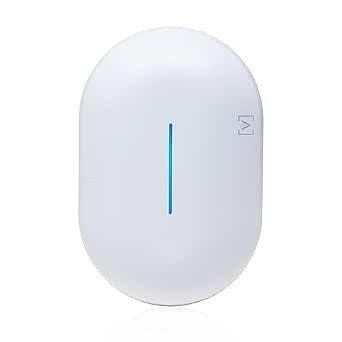 | Best for Dense Environments and Rugged Durability | Wireless Speed: 6.3 Gbps | Technology: WiFi 6, MU-MIMO, 4096 QAM | Antennas: 4×4 MU-MIMO | VIEW ON AMAZON | See Our Full Breakdown |
| Omada AX3000 Wireless Access Point (EAP650) with DC Adapter |  | Best Overall for Versatile High-Performance Theater Environments | Model: EAP650 | Wireless Standard: Wi-Fi 6 | Maximum Wireless Speed: 2976 Mbps | VIEW ON AMAZON | See Our Full Breakdown |
| Ubiquiti U6+ Dual Band IEEE 802.11 a/b/g/n/ac/ax Wireless Access Point |  | Best for High-Speed, Compatibility-Focused Installations | Wireless Standards: a/b/g/n/ac/ax | Maximum Speed: 3 Gbit/s | Ethernet Port: Gigabit Ethernet | VIEW ON AMAZON | See Our Full Breakdown |
| Ubiquiti UniFi nanoHD Compact 802.11ac Wave2 MU-MIMO Enterprise Access Point |  | Best for High User Density with Discreet Installation | Technology: 802.11ac Wave2 | Concurrent Users: 200+ | PoE Compatibility: Yes | VIEW ON AMAZON | See Our Full Breakdown |
| Ubiquiti Networks UniFi 7 Pro WiFi 7 Access Point (US Model) |  | Best for Cutting-Edge Large-Scale Performance | Model: U7-Pro-US | Connectivity: WiFi 7 | Streams: 6 spatial streams | VIEW ON AMAZON | See Our Full Breakdown |
More Details on Our Top Picks
Omada 7 Pro X BE11000 WiFi Access Point (EAP773) – 10G Port, WiFi 7, without DC Adapter
This model stands out for its cutting-edge WiFi 7 technology, delivering dual-band speeds up to 5.0 Gbps and a 10G port that future-proofs large-scale theater deployments. Compared with the Omada AX5400, the BE11000 offers higher speeds and more advanced network management, but the lack of a power adapter might complicate installation. Its seamless roaming and mesh capabilities make it ideal for complex setups requiring reliable, high-capacity connectivity. However, its sophisticated features can be overwhelming for less technical staff, and the need for additional hardware adds to the initial cost.
Pros:- Supports WiFi 7 with speeds up to 5.0 Gbps for demanding applications
- Future-proof 10G port enables scalable network expansion
- Seamless roaming and mesh support for flexible deployment
Cons:- Power adapter not included, requiring extra purchase
- Features may demand technical knowledge to fully leverage
Best for: Large theaters or production venues seeking scalable, high-speed, future-ready wireless infrastructure.
Not ideal for: Small venues or spaces with limited technical expertise, due to the complexity and additional hardware requirements.
- Model:BE11000
- WiFi Technology:WiFi 7
- Speed:Up to 5.0 Gbps
- Ports:1 x 10G port
- Frequency Bands:2.4 GHz and 5 GHz
- Power Supply:Supports PoE (802.3at) and DC (adapter not included)
Our verdict“This pick makes the most sense for large, tech-savvy theaters that need cutting-edge, high-capacity connectivity.”
Cisco CW9176I Tri-Band Wi-Fi 7 Wireless Access Point – Indoor, 23 Gbps, IEEE 802.11a/b/g/n/ac/ax/be/d/h/i, MIMO, Bluetooth 5.3
The Cisco CW9176I offers remarkable speeds up to 23 Gbps across tri-band frequencies, making it suitable for densely populated theaters with many simultaneous users. Its multi-user MIMO and beamforming technologies outperform the Omada 7 Pro X in raw throughput, but the setup process is more complex, often requiring enterprise expertise. The device’s support for Bluetooth 5.3 also opens possibilities for integrated auxiliary applications, yet its enterprise focus and lack of consumer-friendly features mean it may be overkill for smaller venues or less technical teams.
Pros:- Massive throughput up to 23 Gbps across tri-band frequencies
- Multi-user MIMO and beamforming for reliable, high-density connections
- Includes Bluetooth 5.3 for auxiliary device integration
Cons:- Complex installation may require professional setup
- Higher price point with enterprise-focused features
Best for: High-capacity theaters or venues with heavy user loads requiring ultra-fast, reliable Wi-Fi connectivity.
Not ideal for: Small or simple venues with limited technical resources, due to its complexity and high cost.
- Wireless LAN Standard:IEEE 802.11a/b/g/n/ac/ax
- Bluetooth Standard:Bluetooth 5.3
- Network Band:Tri Band
- Wireless Transmission Speed:23 Gbps
- MIMO Technology:Multi User MIMO
- Indoor/Outdoor:Indoor
Our verdict“This device is best suited for venues with intense Wi-Fi demands and dedicated IT support teams.”
Omada 7 Pro Wall Wireless Access Point BE11000 (EAP775-Wall)
The Omada 7 Pro Wall offers a sleek, paintable design that integrates well into theater environments demanding aesthetic discretion, with multi-band speeds up to 5765 Mbps. Its multiple ports and PoE options provide flexible deployment, especially for wall-mounted setups aiming for clean, unobtrusive connectivity. Compared to the Omada 7 Pro X, it sacrifices some raw throughput for a more discreet form factor and aesthetic versatility, but its setup complexity might challenge less experienced installers. Its cloud management and roaming features remain strong, making it suitable for professional venues prioritizing aesthetics.
Pros:- Supports WiFi 7 with multi-band speeds up to 5765 Mbps
- Paintable, versatile mounting for aesthetic integration
- Multiple ports with PoE flexibility for adaptable network setup
Cons:- Setup may require technical expertise
- Higher cost due to advanced features and design
Best for: Theaters seeking a high-performance, discreet wall-mounted access point that blends into the environment.
Not ideal for: venues that need maximum throughput or have limited technical support for complex installations.
- Wi-Fi Standard:Wi-Fi 7
- Speed:5765 Mbps on 6 GHz, 4324 Mbps on 5 GHz, 688 Mbps on 2.4 GHz
- Mounting:Paintable cover, versatile mounting
- Ports:2× 2.5G PoE+/PoE++, 3× Gigabit
- Features:Multi-Link Operation, cloud management
Our verdict“This is ideal for venues prioritizing aesthetics without sacrificing substantial wireless performance.”
Omada AX5400 6-Stream WiFi Access Point (EAP670)
The Omada EAP670 delivers solid Wi-Fi 6 performance with speeds up to 5400 Mbps across dual bands, offering a reliable choice for modern theaters with existing Omada SDN infrastructure. Its compact design and support for cloud management make it suitable for venues needing scalable, manageable Wi-Fi. Compared with the Alta Labs AP6-PRO, the EAP670’s Wi-Fi 6 technology may be less cutting-edge but offers proven stability and ease of integration. Its reliance on Omada SDN for advanced features means it may be less flexible for venues without this infrastructure.
Pros:- High-speed Wi-Fi 6 with 5400 Mbps throughput
- Easy cloud management integrated with Omada SDN
- Compact design suitable for various environments
Cons:- Requires Omada SDN setup for advanced features
- Limited compatibility info for mesh or roaming without specific controllers
Best for: Theaters seeking reliable Wi-Fi 6 performance with centralized cloud management, especially those already using Omada SDN.
Not ideal for: Venues seeking Wi-Fi 7 or with no existing SDN infrastructure, as features are tied to specific management platforms.
- Wireless Technology:Wi-Fi 6
- Max Wi-Fi Speed:5400 Mbps
- Number of Streams:6
- Ethernet Port:2.5G
- Power Supply:DC Adapter, PoE Plus
- Management:Cloud, Omada SDN
Our verdict“This is a practical choice for venues prioritizing stable Wi-Fi 6 and centralized management over cutting-edge speeds.”
Alta Labs AP6-PRO WiFi 6 Access Point
The Alta Labs AP6-PRO offers WiFi 6 speeds up to 6.3 Gbps, with a rugged IP54 rating making it suitable for theaters that require reliable, high-capacity Wi-Fi in challenging environments. Its 4×4 MU-MIMO antennas enhance coverage and capacity, outperforming some indoor models in dense device settings. Compared to the Omada AX5400, it provides similar throughput but adds durability and advanced mesh support for flexible deployment. Setup may be complex for non-technical users, but its robust design and seamless roaming make it a strong contender for professional venues needing dependable performance.
Pros:- High-speed WiFi 6 with 6.3 Gbps throughput
- Durable IP54-rated design for rugged environments
- Supports seamless roaming and mesh networking
Cons:- Requires PoE+ switch or injector for power
- Setup can be challenging for users without technical support
Best for: Large, high-density theaters or venues with environmental challenges requiring durable, high-performance Wi-Fi.
Not ideal for: Small venues or those preferring simple plug-and-play solutions, due to setup complexity.
- Wireless Speed:6.3 Gbps
- Technology:WiFi 6, MU-MIMO, 4096 QAM
- Antennas:4×4 MU-MIMO
- Protection Rating:IP54
- PoE+:Yes
- Management:Cloud-based via Alta Labs platform
Our verdict“This device is best for venues needing durable, high-capacity Wi-Fi in demanding physical environments.”
Omada AX3000 Wireless Access Point (EAP650) with DC Adapter
The Omada EAP650 stands out for its combination of high-speed Wi-Fi 6 performance and flexible management options, making it ideal for theaters seeking reliable, scalable coverage. Unlike the Ubiquiti UniFi nanoHD, which excels in dense user environments, the EAP650 offers advanced roaming and load balancing features that support seamless transitions between access points in large spaces. Its support for Omada cloud and SDN management provides a centralized control plane, though mesh and roaming features require Omada SDN controllers, adding setup complexity. The inclusion of a dedicated DC adapter and multiple power options enhances installation flexibility. While passive PoE may require an additional purchase, this model balances performance with manageable setup for mid-sized theater applications. This pick makes the most sense for venues needing robust Wi-Fi with flexible management and installation options.
Pros:- Fast dual-band Wi-Fi 6 speeds up to 2976 Mbps
- Supports Omada cloud, SDN, or standalone management
- Flexible power options including PoE+ and DC adapter
- Compact design suitable for various installation environments
Cons:- Mesh and seamless roaming features need Omada SDN controllers
- Passive PoE adapter sold separately, adding to cost
Best for: Theaters or large entertainment venues requiring high throughput, seamless roaming, and flexible management options
Not ideal for: Small, single-room theaters with simple Wi-Fi needs, where the advanced features and higher cost may be unnecessary
- Model:EAP650
- Wireless Standard:Wi-Fi 6
- Maximum Wireless Speed:2976 Mbps
- Bands:Dual-Band
- Management:Omada Cloud, SDN, Standalone
- Security:WPA3
- Power Options:802.3at PoE+, 48V/0.5A Passive PoE, 12V/1.5A DC
- Included Power Adapter:12V/1.5A DC
Our verdict“This is a well-rounded choice for theaters that need high performance, flexible management, and future scalability.”
Ubiquiti U6+ Dual Band IEEE 802.11 a/b/g/n/ac/ax Wireless Access Point
The Ubiquiti U6+ offers impressive data transfer speeds up to 3 Gbit/s, making it suitable for theaters demanding rapid, reliable wireless connectivity. Compared with the Omada EAP650, which supports Wi-Fi 6, the U6+ supports all Wi-Fi standards from a/b/g/n/ac/ax, ensuring broad compatibility across devices. Its Gigabit Ethernet port and PoE+ support simplify deployment, especially in environments where cabling flexibility is key. However, the need to purchase a separate power supply and the lack of included mounting accessories may complicate quick installation. The U6+ is best suited for tech-savvy setups where maximum speed and compatibility are prioritized over plug-and-play simplicity. This model is ideal for venues with existing PoE infrastructure and users demanding ultra-fast Wi-Fi.
Pros:- Supports Wi-Fi standards from a/b/g/n/ac/ax for maximum compatibility
- High throughput up to 3 Gbit/s
- Gigabit Ethernet port with PoE+ support simplifies wiring
- Flexible mounting options for versatile deployment
Cons:- No included power supply, requiring additional purchase
- Setup can be complex for non-technical users
Best for: Large theaters with advanced network infrastructure seeking high-speed, multi-standard Wi-Fi support
Not ideal for: Smaller venues or less experienced installers who prefer turnkey solutions, due to the need for technical setup and separate power supply
- Wireless Standards:a/b/g/n/ac/ax
- Maximum Speed:3 Gbit/s
- Ethernet Port:Gigabit Ethernet
- PoE Support:Yes
- Power Delivery:Up to 25.5W
- Form Factor:Wall Mountable
Our verdict“This access point is best for high-performance, compatibility-focused environments where speed and flexibility outweigh ease of installation.”
Ubiquiti UniFi nanoHD Compact 802.11ac Wave2 MU-MIMO Enterprise Access Point
The UniFi nanoHD specializes in supporting over 200 concurrent users, making it ideal for busy theaters with many devices. Its compact, discreet design allows integration into aesthetic spaces, unlike bulkier models such as the U6+ that may stand out. While its MU-MIMO technology enhances simultaneous connections, coverage range details are limited, which could be a concern for larger venues. The need for PoE infrastructure and optional covers sold separately require planning ahead, especially in venues without existing PoE setups. Compared to the U6+, the nanoHD prioritizes user capacity and discreetness but sacrifices some speed and simplicity. This pick suits venues with dense user environments and existing PoE infrastructure that value subtle installation.
Pros:- Supports over 200 concurrent users
- Compact and discreet design for aesthetic integration
- PoE compatible for easy installation
- Supports MU-MIMO technology for efficient connections
Cons:- Covers sold separately, adding to total cost
- Limited info on coverage range, potentially requiring multiple units
Best for: Theaters with high user density needing discreet, reliable Wi-Fi coverage
Not ideal for: Venues lacking PoE infrastructure or requiring extensive coverage range, where larger models might perform better
- Technology:802.11ac Wave2
- Concurrent Users:200+
- PoE Compatibility:Yes
- Supports Optional Covers:Yes
Our verdict“This access point is best for high-density environments that need unobtrusive, high-capacity Wi-Fi within existing PoE setups.”
Ubiquiti Networks UniFi 7 Pro WiFi 7 Access Point (US Model)
The UniFi 7 Pro leverages WiFi 7 technology to deliver exceptional speeds and interference resilience, especially suited for expansive theaters or large-scale venues. Its support for 6 spatial streams and 6 GHz operation surpasses Wi-Fi 6 and 6E models, providing future-proof performance, but the PoE+ adapter is not included, requiring additional investment. Its ceiling-mounted design ensures optimal coverage, but the limited details on coverage range mean planning is essential for large spaces. Compared with the U6+, the U7 Pro offers a leap in speed and capacity at the expense of more complex setup and higher cost. This makes it ideal for venues pushing the limits of wireless performance. This model is perfect for cutting-edge theaters aiming for the highest throughput and minimal interference.
Pros:- Supports WiFi 7 with 6 streams and 6 GHz band
- High-speed, interference-free connectivity
- Ceiling-mounted for coverage efficiency
- Future-proof design with advanced technology
Cons:- PoE+ adapter sold separately, increasing initial costs
- Limited coverage details; planning needed for large spaces
Best for: Large, high-demand theaters or venues requiring WiFi 7 with maximum speed and interference mitigation
Not ideal for: Smaller venues or operators on a tight budget, due to higher cost and setup complexity
- Model:U7-Pro-US
- Connectivity:WiFi 7
- Streams:6 spatial streams
- Frequency:6 GHz
- Mounting:Ceiling-mounted
- PoE+ Adapter:Not included
Our verdict“This access point is suited for large, high-performance theaters aiming to maximize speed and future scalability with WiFi 7 technology.”
How We Picked
To evaluate these access points, I prioritized performance in high-density environments typical of theaters, focusing on throughput, latency, and scalability. Usability and ease of deployment were also key, especially for venues without dedicated IT staff. Build quality and future-proofing, like WiFi 7 support, helped distinguish premium models from entry-level options. Cost was a factor, but not at the expense of core functionality needed for large-scale, reliable WiFi coverage. The ranking reflects a balance between cutting-edge features and practical deployment considerations relevant to theater environments.Factors to Consider When Choosing High Performance Wi Fi Access Points For Theaters
When selecting a high performance Wi Fi access point for a theater, several critical factors should influence your decision. Understanding these will help you avoid common pitfalls such as overspending on unnecessary features or choosing a model incompatible with your existing network. Focus on speed, coverage, scalability, and ease of installation to ensure your investment meets current needs while allowing room for future growth.Network Capacity and Speed
High-performance environments demand access points capable of handling many users simultaneously without lag. Look for models supporting WiFi 6 or WiFi 7, as these standards significantly boost throughput and reduce latency. Multi-gigabit ports are also valuable for connecting to wired backbone networks, ensuring your wireless performance isn’t bottlenecked at the switch level. However, high speeds are only beneficial if your network infrastructure can support them, so assess your existing setup.
Coverage and Placement Flexibility
Ensuring comprehensive coverage across a theater’s large, often complex spaces is essential. Consider whether the access point can be mounted in optimal locations or if it offers features like beamforming and MIMO to enhance signal reach. Compact or wall-mounted designs can simplify installation and reduce clutter, but may have limitations in range compared to larger, more powerful units. Proper placement is key to avoiding dead zones and maintaining consistent performance.
Density Management and MIMO Support
High-density environments require access points that can handle numerous simultaneous connections without degradation. Look for models with multiple MIMO streams and tri-band support, which distribute traffic more effectively and reduce interference. This is particularly important for theaters hosting large audiences or events with many devices. Investing in these features prevents performance drops during peak usage times.
Ease of Deployment and Management
Simplicity in setup and ongoing management can save significant time and reduce operational costs. Features like cloud management, intuitive interfaces, and remote monitoring make it easier to keep your network running smoothly. If your venue lacks dedicated IT staff, prioritize models with plug-and-play installation and automated updates. Complex enterprise-grade units offer advanced controls but may be overkill for smaller theaters with limited technical resources.
Cost and Future-Proofing
While premium models come with a higher price tag, they often deliver better performance and longer relevance. Assess your current needs against future growth—investing in WiFi 7 or scalable systems can extend your infrastructure’s lifespan. Conversely, if your theater is smaller or has limited technical support, more affordable WiFi 6 options might provide sufficient performance at a better value. Balance your budget with the potential for expansion and technological advancements.
Frequently Asked Questions
Will a WiFi 7 access point improve performance in my existing WiFi 6 network?
Upgrading to a WiFi 7 access point can enhance overall performance, especially in high-density scenarios like theaters, by offering higher speeds and better handling of multiple simultaneous devices. However, to realize these benefits fully, your existing wired infrastructure and client devices should support WiFi 7. If not, the improvements may be limited, but the new access point can still provide better performance than older models, especially when paired with compatible hardware.How many access points do I need for a large theater?
The number of access points depends on the size and layout of your theater, as well as the density of users expected. Generally, covering a large space with overlapping signals ensures consistent coverage, but over-coverage can cause interference. A professional site survey can help determine optimal placement and quantity. For most large theaters, multiple high-capacity units strategically distributed will provide the best experience, avoiding dead zones and managing high traffic efficiently.Are wall-mounted access points less effective than ceiling-mounted ones?
Wall-mounted access points can be effective and easier to install in certain environments, but ceiling-mounted units often provide better coverage due to their elevated position. Ceiling mounts reduce obstructions and interference from other fixtures, which is advantageous in a theater setting. However, the final choice should consider the specific venue layout, aesthetic preferences, and ease of access for maintenance.Is it worth investing in tri-band access points for my theater?
Tri-band access points are especially valuable in high-density environments, as they help distribute traffic more evenly across multiple frequency bands. This reduces congestion and improves overall performance during peak usage. While they tend to be more expensive, the investment pays off in scenarios where many devices connect simultaneously, ensuring smoother streaming, browsing, and interactive experiences for audiences.How important is future-proofing when choosing a WiFi access point?
Future-proofing is vital to protect your investment against rapid technological changes. Selecting a WiFi 6 or WiFi 7 model ensures compatibility with upcoming devices and standards, extending the lifespan of your infrastructure. It can also simplify upgrades, as newer standards often retain backward compatibility. For large venues planning long-term use, prioritizing scalable and advanced features minimizes the need for frequent replacements or costly retrofits.Conclusion
For large, high-traffic theaters, the Omada 7 Pro X BE11000 offers the best overall performance, thanks to its WiFi 7 support and multi-gigabit ports. Smaller venues or those with limited technical support might find the Ubiquiti U6+ to be a reliable, cost-effective choice. For those seeking premium features and scalability, the Cisco CW9176I delivers tri-band performance suitable for demanding environments. Beginners or smaller theaters should consider simpler, more manageable options like the Ubiquiti UniFi nanoHD. Ultimately, your selection should align with your venue size, user density, and future expansion plans.”
Halloween Picks
halloween
As an affiliate, we earn on qualifying purchases.