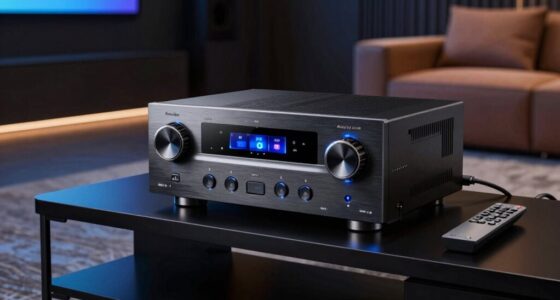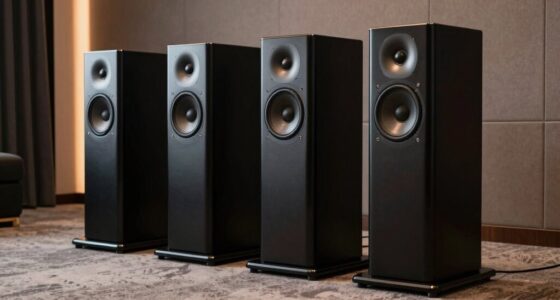
The best home theater surround sound system overall in this roundup is the ULTIMEA Poseidon M80, which pairs a 5.1-channel layout with Dolby Atmos and a wireless subwoofer. For a more traditional receiver-and-speaker setup, the Yamaha YHT-5960U stands out for its 8K HDMI support and MusicCast, while the Sony BRAVIA Theater System 6 offers a soundbar-based route with rear speakers. The main tradeoff is between the simpler setup and compact footprint of soundbars and the greater flexibility of separate speakers and an AV receiver. Channel count, room layout, connection needs, and willingness to run speaker wire all affect which system makes sense. Read on for the full breakdown, buying advice, and answers to common setup questions.

Get business pricing on your home office setup
- Business-only prices and quantity discounts
- Tax-exempt purchasing
- Multiple users, one account, clear invoices
Complete the kit


Key Takeaways
- System type shapes the ownership experience: Soundbar packages such as the ULTIMEA and Sony options bundle the main components into an easier setup, while Yamaha receiver systems offer more component-level control at the cost of more wiring and setup.
- Channel labels do not tell the whole story: The 7.1-channel ULTIMEA Aura A40 Pro and Poseidon D70 prioritize broader surround layouts, while the 5.1.2 ULTIMEA and Skywave X40 add height-channel designs aimed at Atmos effects.
- Receiver features matter most for changing setups: Yamaha’s YHT-5960U adds 8K HDMI and MusicCast, making it a stronger fit for buyers who care about connectivity and system flexibility than a straightforward soundbar buyer.
- Rear speakers involve different compromises: Some soundbar packages include rear speakers but still require planning for power or placement; wireless audio links do not always mean every speaker is free of cables.
- Room fit can outweigh headline specs: Compact systems such as the Saiyin soundbar package suit modest TV or PC spaces better than a larger separate-speaker layout, while bigger rooms benefit from careful speaker placement and more flexible component choices.
| ULTIMEA Poseidon M60 5.1-Channel Dolby Atmos Soundbar System |  | Best for a Simple, Speaker-Free Setup | Channels: 5.1 | Peak power: 300W | Drivers: 6 total: five built-in speakers and one subwoofer | VIEW LATEST PRICE | See Our Full Breakdown |
| ULTIMEA 5.1.2-Channel Dolby Atmos Soundbar System |  | Best for Height Effects | Channel configuration: 5.1.2 | Audio format: Dolby Atmos | Surround speakers: 2 | VIEW LATEST PRICE | See Our Full Breakdown |
| ULTIMEA Poseidon M80 5.1-Channel Dolby Atmos Soundbar System with Wireless Subwoofer |  | Best for Flexible Subwoofer Placement | Audio channels: 5.1 | Peak power: 312W | Subwoofer: 5.25-inch, wireless connection to soundbar; requires separate power | VIEW LATEST PRICE | See Our Full Breakdown |
| Sony BRAVIA Theater System 6 5.1-Channel Soundbar with Subwoofer and Rear Speakers |  | Best for Dolby and DTS:X Compatibility | Model: HTS60.UC2 | Channels: 5.1 | Maximum output power: 1000 watts | VIEW LATEST PRICE | See Our Full Breakdown |
| TCL S65K 5.1-Channel Soundbar System with Dolby Atmos and Wireless Surround Speakers |  | Best for a Wireless, Format-Flexible Setup | Audio channels: 5.1 | Maximum output power: 630 watts | Audio technologies: Dolby Atmos, DTS:X, DTS Virtual:X | VIEW LATEST PRICE | See Our Full Breakdown |
| Yamaha YHT-4970U 5.1-Channel Home Theater System with Dolby Atmos AV Receiver |  | Best for Gaming and Format Flexibility | Audio channels: 5.1 | Receiver: RX300A | Video support: 4K/120 and 8K/60 | VIEW LATEST PRICE | See Our Full Breakdown |
| ULTIMEA Aura A40 Pro 7.1-Channel Surround Soundbar System with Subwoofer |  | Best for Adjustable Multi-Speaker Surround | Channels: 7.1 | Speaker configuration: 3 main channels and 4 surround speakers | Subwoofer: 18 mm driver; 6.1 L cabinet; response down to 45 Hz | VIEW LATEST PRICE | See Our Full Breakdown |
| Saiyin Sound Bar with Subwoofer – Home Theater Surround System for TV & PC |  | Best Entry-Level TV and PC Upgrade | Audio output: Stereo | Speaker type: Soundbar with subwoofer | Subwoofer diameter: 5 in | VIEW LATEST PRICE | See Our Full Breakdown |
| Sony HT-S40R 5.1ch Home Theater Soundbar System (Black) |  | Best for Straightforward 5.1 Setup | Audio channels: 5.1 | Total power output: 600 W | System components: Soundbar, subwoofer, and rear speakers | VIEW LATEST PRICE | See Our Full Breakdown |
| Yamaha YHT-4950U 5.1-Channel 4K Ultra HD Home Theater System with Bluetooth |  | Best Traditional Receiver-Based Value | Audio configuration: 5.1 channels | Included components: AV receiver, five speakers, subwoofer, and speaker wire | HDMI ports: 4 | VIEW LATEST PRICE | See Our Full Breakdown |
| ULTIMEA Poseidon D70 7.1-Channel Surround Sound System with Subwoofer |  | Best for Wired Speaker Coverage | Channel configuration: 7.1 virtual surround | Peak power: 410 W | Surround speakers: 4 wired speakers | VIEW LATEST PRICE | See Our Full Breakdown |
| Yamaha YHT-5960U 5.1-Channel Home Theater System with 8K HDMI and MusicCast |  | Best for Gaming and AV Receiver Flexibility | Channel configuration: 5.1 | Total power: 80 W | HDMI: HDMI 2.1, 4 inputs / 1 output | VIEW LATEST PRICE | See Our Full Breakdown |
| LG S40TR 4.1-Channel Home Theater Soundbar with Wireless Subwoofer and Rear Speakers |  | Best for LG TV Owners | Channel configuration: 4.1 | Audio compatibility: Dolby Digital, DTS Digital | Rear speakers: Wireless signal connection; require AC power and a wired link between speakers | VIEW LATEST PRICE | See Our Full Breakdown |
| ULTIMEA Skywave X40 5.1.2-Channel Soundbar System |  | Best for Height-Effect Soundbar Audio | Channel configuration: 5.1.2 | Peak power: 530 W | Subwoofer: 6.5-inch diameter | VIEW LATEST PRICE | See Our Full Breakdown |
| Klipsch Reference Theater Pack 5.1 Surround Sound System |  | Best Compact System for Receiver Owners | System configuration: 5.1 | Maximum output power: 650 W | Included units: 6 | VIEW LATEST PRICE | See Our Full Breakdown |
| home theater surround sound system | Subwoofer |
|---|---|
| ULTIMEA Poseidon M60 5.1-Chann | Wired wooden cabinet, 5.3 L |
| ULTIMEA 5.1.2-Channel Dolby At | 5.25-inch, wired |
| ULTIMEA Poseidon M80 5.1-Chann | 5.25-inch, wireless connection to soundbar; requires separate power |
| Sony BRAVIA Theater System 6 5 | — |
| TCL S65K 5.1-Channel Soundbar | — |
| Yamaha YHT-4970U 5.1-Channel H | — |
| ULTIMEA Aura A40 Pro 7.1-Chann | 18 mm driver; 6.1 L cabinet; response down to 45 Hz |
| Saiyin Sound Bar with Subwoofe | — |
| Sony HT-S40R 5.1ch Home Theate | — |
| Yamaha YHT-4950U 5.1-Channel 4 | — |
| ULTIMEA Poseidon D70 7.1-Chann | Wireless connection; 6.5-inch diameter |
| Yamaha YHT-5960U 5.1-Channel H | — |
| LG S40TR 4.1-Channel Home Thea | Wireless |
| ULTIMEA Skywave X40 5.1.2-Chan | 6.5-inch diameter |
| Klipsch Reference Theater Pack | Wireless, down-firing; 2.4 GHz connection |
More Details on Our Top Picks
ULTIMEA Poseidon M60 5.1-Channel Dolby Atmos Soundbar System
The Poseidon M60 is the straightforward pick for buyers who want a 5.1-style presentation without separate rear speakers. Its five built-in speakers and side-firing drivers create a wider effect from a single soundbar, while the wired wooden subwoofer adds bass without adding wireless-pairing steps. VoiceMX dialogue enhancement and the app’s EQ and surround controls give you room to tune speech and effects for your space. Compared with the ULTIMEA 5.1.2 system, the M60 asks less of your room and setup, but it lacks up-firing drivers and physical rear speakers for more convincing height and behind-the-listener effects. The subwoofer still needs a cable, and virtualized surround can be less enveloping when seating is off-center. Choose it for convenience, not the most precise surround placement.
Pros:- Five built-in speakers and side-firing drivers provide a broad soundstage without separate rear speakers
- VoiceMX dialogue enhancement can make speech easier to follow
- App includes a 10-band EQ, 121 presets, and 13 surround levels for sound adjustment
- HDMI eARC and CEC support straightforward TV integration
Cons:- Side-firing drivers do not place surround effects as distinctly as physical rear speakers
- The subwoofer connects by wire, limiting placement flexibility
- Its 5.1 layout lacks the up-firing height channels found in the ULTIMEA 5.1.2 system
Best for: TV owners who want Dolby Atmos support, clearer dialogue, and a wider soundstage without placing rear speakers around the room.
Not ideal for: Movie fans who want distinct sound from behind and above their seats, or anyone unwilling to place a wired subwoofer near the soundbar.
- Channels:5.1
- Peak power:300W
- Drivers:6 total: five built-in speakers and one subwoofer
- Frequency response:45 Hz–18 kHz
- Maximum SPL:99 dB
- Subwoofer:Wired wooden cabinet, 5.3 L
- Connectivity:HDMI eARC, Bluetooth 5.4
- App controls:10-band graphic EQ, 121 presets, 13 surround levels
Our verdict“Choose the Poseidon M60 if you want adjustable Dolby Atmos sound without separate rear speakers and can accept less precisely placed surround effects.”
ULTIMEA 5.1.2-Channel Dolby Atmos Soundbar System
Among these soundbars, this ULTIMEA is the clearest choice for listeners who want physical rear speakers plus up-firing Dolby Atmos drivers. Its 5.1.2 arrangement can give overhead effects more presence than the Poseidon M60’s side-firing, speaker-free approach, and two rear speakers help anchor effects behind the seating area. HDMI eARC supports lossless audio transmission, while the app’s 10-band EQ and 13-step surround adjustment offer meaningful tuning options. That added immersion comes with more setup: the rear speakers and wired subwoofer need practical cable routes, and the listed system does not support DTS. Compared with the Sony BRAVIA Theater System 6, this model emphasizes a 5.1.2 layout, while Sony adds DTS:X compatibility. It suits Dolby Atmos-focused rooms, but is a weaker fit for mixed-format libraries.
Pros:- 5.1.2 configuration combines two rear speakers with up-firing drivers for more layered Atmos effects
- HDMI eARC supports lossless audio transmission
- App offers a 10-band EQ, 121 presets, and 13-step surround adjustment
- Can be placed on a tabletop or wall-mounted
Cons:- Does not support DTS audio
- Wired subwoofer and rear speakers add cable-routing demands
- More involved to position than the ULTIMEA Poseidon M60, which uses built-in side-firing speakers
Best for: Dolby Atmos movie watchers who can place two rear speakers and want height effects from a soundbar-based system.
Not ideal for: Households with DTS-heavy movie collections or rooms where cables to the rear speakers and subwoofer would be difficult to manage.
- Channel configuration:5.1.2
- Audio format:Dolby Atmos
- Surround speakers:2
- Subwoofer:5.25-inch, wired
- Connectivity:HDMI eARC, Bluetooth 5.4
- App controls:13-step surround adjustment, 10-band EQ, 121 preset sound settings
- Mounting:Tabletop or wall mount
- Dimensions:31.5 × 1.81 × 3.54 inches
- DTS compatibility:Not compatible
Our verdict“Pick this ULTIMEA if overhead Atmos effects and physical rear channels matter more to you than DTS support or a low-cable setup.”
ULTIMEA Poseidon M80 5.1-Channel Dolby Atmos Soundbar System with Wireless Subwoofer
The Poseidon M80 strikes a useful middle ground: it includes two physical surround speakers for effects behind the listener, but its subwoofer connects wirelessly to the soundbar, giving you more freedom to place it than the wired-subwoofer M60 or ULTIMEA 5.1.2. The 5.1 setup supports Dolby Atmos decoding through HDMI eARC, and Bluetooth 6.0, optical, and USB offer more connection choices than the M60’s listed inputs. Six EQ modes and app or remote control keep routine adjustments accessible. The wireless link does not make the subwoofer cable-free: it still needs its own power, and the surround speakers are wired to the subwoofer. It also lacks DTS decoding and up-firing channels, so the ULTIMEA 5.1.2 is a stronger pick for height effects. The M80 favors practical placement over a full 5.1.2 presentation.
Pros:- Two wired surround speakers deliver physical rear-channel effects
- Wireless subwoofer connection allows more flexible placement than a wired link to the soundbar
- HDMI eARC, optical, USB, and Bluetooth 6.0 provide several source options
- Six EQ modes plus app and remote controls support straightforward sound adjustments
Cons:- Subwoofer requires its own power connection, and surround speakers wire to it
- No DTS decoding
- Unlike the ULTIMEA 5.1.2 system, it has no listed up-firing height channels
Best for: Viewers who want rear surround speakers and more freedom to position the subwoofer, with a nearby power outlet available.
Not ideal for: Buyers who need DTS decoding, height-channel hardware, or rear speakers that can be placed without running wires to the subwoofer.
- Audio channels:5.1
- Peak power:312W
- Subwoofer:5.25-inch, wireless connection to soundbar; requires separate power
- Surround speakers:2 wired speakers
- Audio formats:Dolby Atmos decoding; no DTS decoding
- Connectivity:HDMI eARC, optical, USB, Bluetooth 6.0
- EQ modes:Movie, Music, Voice, Sport, Game, Night
- Control:App and remote
Our verdict“Choose the Poseidon M80 if you want physical rear speakers and flexible subwoofer placement but can live with wired surrounds and no DTS.”
Sony BRAVIA Theater System 6 5.1-Channel Soundbar with Subwoofer and Rear Speakers
The Sony BRAVIA Theater System 6 is the most format-flexible pick here for buyers who want physical rear speakers and support for both Dolby Atmos and DTS:X. A dedicated center channel is a practical advantage for dialogue-heavy shows, while the included subwoofer and rear speakers form a conventional 5.1 layout rather than relying on side-firing virtualization. Compared with the ULTIMEA 5.1.2, Sony trades listed up-firing channels and extensive app EQ controls for DTS:X support and a simpler feature set. Its Bluetooth handles wireless music streaming, but the supplied details list no HDMI eARC or optical input, so check that its connection options suit your TV and sources before buying. Voice Zoom 3 also depends on a compatible BRAVIA TV. This is a better fit for Sony-centered setups and mixed Dolby/DTS libraries than for buyers seeking detailed app-based tuning.
Pros:- Includes a subwoofer and two rear speakers for physical 5.1 surround
- Supports both Dolby Atmos and DTS:X
- Dedicated center channel is intended to keep dialogue distinct
- Includes a wireless rear amplifier, HDMI cable, remote, and mounting options
Cons:- Voice Zoom 3 features require a compatible BRAVIA TV
- The listed connectivity is limited to Bluetooth, so confirm TV and source connections before purchase
- Requires corded power and more component placement than the single-bar Poseidon M60
Best for: Sony TV owners and movie watchers with Dolby Atmos and DTS:X content who want a conventional rear-speaker 5.1 arrangement.
Not ideal for: Buyers who need listed HDMI eARC connectivity, extensive sound customization, or Voice Zoom features without a compatible BRAVIA TV.
- Model:HTS60.UC2
- Channels:5.1
- Maximum output power:1000 watts
- Audio formats:Dolby Atmos, DTS:X
- Connectivity:Bluetooth
- Dimensions:3.6 × 35.7 × 2.6 inches
- Included components:Soundbar, subwoofer, two rear speakers, wireless rear amplifier, remote, HDMI cable, AC cord, remote batteries
- Mounting:Tabletop or wall mount
Our verdict“Choose Sony’s Theater System 6 if DTS:X support and real rear speakers suit your setup, and its connection options match your TV.”
TCL S65K 5.1-Channel Soundbar System with Dolby Atmos and Wireless Surround Speakers
The TCL S65K combines wireless surround speakers and a wireless subwoofer with both Dolby Atmos and DTS:X support, making it a compelling match for rooms where long speaker cables are unwelcome. Its center channel and tweeter are aimed at preserving dialogue and detail, while AI Sonic room calibration adjusts the sound to the listening space. That gives it a different emphasis from the Sony BRAVIA Theater System 6: both support Dolby and DTS:X, but TCL highlights wireless speaker connections and room calibration, while Sony includes a wireless rear amplifier and a dedicated center channel. The S65K still needs corded power, and its ChoruSound feature requires a compatible TCL TV. It is a 5.1 system, not the 5.1.2 layout offered by the ULTIMEA 5.1.2, so buyers prioritizing overhead effects should look there instead.
Pros:- Wireless subwoofer and surround speakers reduce audio-cable runs around the room
- Supports Dolby Atmos, DTS:X, and DTS Virtual:X
- Center channel and tweeter are designed to retain dialogue clarity and audio detail
- AI Sonic room calibration adapts sound to the listening space
Cons:- Still requires corded power despite wireless audio connections
- ChoruSound requires a compatible TCL TV
- Its 5.1 layout lacks the up-firing height channels listed for the ULTIMEA 5.1.2
Best for: Viewers who want wireless-linked surround speakers, Dolby and DTS:X support, and room calibration without a TCL TV being mandatory for basic system use.
Not ideal for: Atmos enthusiasts seeking a 5.1.2 height-channel layout, or buyers who want ChoruSound without a compatible TCL TV.
- Audio channels:5.1
- Maximum output power:630 watts
- Audio technologies:Dolby Atmos, DTS:X, DTS Virtual:X
- Connectivity:Bluetooth, USB, Wi-Fi, HDMI, wireless
- Subwoofer driver:6.5 inches
- Surround and subwoofer connections:Wireless
- Room calibration:AI Sonic
- Power source:Corded electric
Our verdict“Pick the TCL S65K if you want wireless-linked surrounds, room calibration, and broad format support more than dedicated height channels.”
Yamaha YHT-4970U 5.1-Channel Home Theater System with Dolby Atmos AV Receiver
I’d put the Yamaha YHT-4970U on the shortlist for buyers who want a receiver-based surround setup that can handle newer gaming displays as well as movie sound. Its included RX300A receiver, five-channel speaker package, and powered subwoofer mean you get a complete 5.1 system, while 4K/120, 8K/60, VRR, and ALLM support suit compatible consoles and TVs. Automatic Room Correction can help tune playback to the room, a useful advantage over simpler soundbar packages such as the Sony HT-S40R, which prioritizes straightforward setup over the same listed video features. The tradeoff is the receiver-and-speaker installation: at 50.4 pounds, the package is substantial, and manual speaker wiring takes more effort than a soundbar. I’d also check which Dolby Atmos playback modes the speaker layout supports before buying for height effects.
Pros:- Includes receiver, five speakers, and a powered subwoofer for a complete 5.1 setup.
- HDMI 2.1 features include 4K/120, 8K/60, VRR, and ALLM support.
- Automatic Room Correction can tailor playback to room acoustics.
- Bluetooth Multipoint supports switching between two audio sources.
Cons:- Manual speaker-wire connections make installation more involved than a soundbar system.
- The 50.4-pound package is cumbersome to move and position.
- A 5.1 speaker layout may not provide the overhead effects buyers expect from dedicated height speakers.
Best for: Console gamers and home theater buyers who want a complete wired 5.1 package with modern HDMI video features and room correction.
Not ideal for: Renters or beginners who want a quick, low-clutter setup, since the speakers need manual wiring and the system is heavy.
- Audio channels:5.1
- Receiver:RX300A
- Video support:4K/120 and 8K/60
- HDMI:HDMI 2.1; 4 inputs and 1 output; eARC
- Audio formats:Dolby Atmos, DTS Virtual:X, Dolby Vision, HDR10+
- Wireless connectivity:Bluetooth Multipoint
- Room setup:Automatic Room Correction with setup microphone
- Weight:50.4 lb
Our verdict“Choose the YHT-4970U if gaming-friendly HDMI features and a full wired speaker package matter more than fast, simple setup.”
ULTIMEA Aura A40 Pro 7.1-Channel Surround Soundbar System with Subwoofer
The ULTIMEA Aura A40 Pro is the lineup’s pick for listeners who want more surround speakers and more sound-shaping control than a basic bar provides. Its 7.1-channel layout pairs three main channels with four surround speakers and a subwoofer; the app’s 10-band equalizer and 13 surround-level adjustments let owners tune the presentation for dialogue, games, or movie effects. That makes it more configurable than the Saiyin sound bar, which offers three EQ presets but not the same listed surround controls. The compromise is that this is not a fully cable-free system: front speakers are wired, and the rear setup uses a hybrid wireless-and-wired connection. Buyers wanting receiver-based HDMI flexibility should look at the Yamaha YHT-4970U instead. I’d choose the Aura for app-driven tuning and distributed effects, not for the simplest installation.
Pros:- Four surround speakers support a more distributed effect than a basic soundbar package.
- App provides a 10-band equalizer, 121 presets, and adjustable surround levels.
- Voice enhancement is designed to make dialogue easier to hear.
- Subwoofer is specified to reach down to 45 Hz.
Cons:- Rear speakers still require some wired connections, so placement involves cable planning.
- The listed specifications do not identify HDMI inputs or advanced video passthrough features.
- App-based setup and numerous adjustments may be more involved than a simpler system such as the Sony HT-S40R.
Best for: Movie and gaming listeners who want multiple surround speakers and enjoy adjusting EQ and surround levels from an app.
Not ideal for: Buyers seeking a cable-free install or a receiver-centered system with detailed HDMI gaming specifications.
- Channels:7.1
- Speaker configuration:3 main channels and 4 surround speakers
- Subwoofer:18 mm driver; 6.1 L cabinet; response down to 45 Hz
- Rear speaker connection:Hybrid wireless and wired
- App controls:10-band equalizer, 121 presets, 13 adjustable surround levels
- Bluetooth:Version 6.0
- Dimensions:15.75 × 2.76 × 3.54 in
- Mounting:Tabletop or wall mount
Our verdict“Pick the Aura A40 Pro if adjustable 7.1-style surround matters more to you than a completely wireless or receiver-based setup.”
Saiyin Sound Bar with Subwoofer – Home Theater Surround System for TV & PC
I see the Saiyin as a modest step up from built-in TV or monitor speakers, rather than a full surround system for a dedicated theater. Its separate 5-inch subwoofer adds bass weight, while Bluetooth, optical, and AUX inputs make it adaptable to TVs, computers, and mobile devices. The LED indicators also make the current connection mode easier to identify than on systems that rely entirely on an app. Compared with the Sony HT-S40R, though, Saiyin is a stereo soundbar setup and does not include rear speakers for discrete 5.1 playback. It also lacks Dolby and DTS format compatibility, so buyers building around surround movie sound should step up to the Sony or a receiver package such as the Yamaha YHT-4950U. I’d choose Saiyin for a compact, simple audio upgrade, not for convincing room-filling surround effects.
Pros:- Dedicated 5-inch subwoofer adds bass beyond what a bar alone can provide.
- Bluetooth, optical, and AUX inputs suit several TV and computer setups.
- Three EQ presets offer quick sound adjustments for different content.
- LED indicators show connection mode and volume level.
Cons:- Stereo output and no rear speakers do not deliver discrete 5.1 surround sound.
- Does not support Dolby or DTS audio formats.
- Subwoofer must connect to the designated SUB OUT port, which can complicate setup.
Best for: TV and PC owners who want a simple stereo soundbar with a dedicated subwoofer and flexible wired or Bluetooth connections.
Not ideal for: Home theater buyers who want discrete rear-channel surround, Dolby or DTS support, or a system built around an AV receiver.
- Audio output:Stereo
- Speaker type:Soundbar with subwoofer
- Subwoofer diameter:5 in
- Inputs:Bluetooth, optical, and AUX
- Bluetooth range:Up to 10 m
- Sound modes:3 EQ presets
- Soundbar size:16.9 in
- Mounting:Wall mount
Our verdict“Choose Saiyin for an uncomplicated TV or PC sound upgrade, but skip it if true surround channels are the main goal.”
Sony HT-S40R 5.1ch Home Theater Soundbar System (Black)
The Sony HT-S40R is the most approachable route here to a soundbar-style system with actual rear speakers. Color-coded connections reduce guesswork during setup, and HDMI, optical, analog, Bluetooth, and USB inputs provide several ways to connect a TV or playback device. That makes it a more direct fit for buyers who want 5.1 movie sound without assembling an AV receiver and separate speaker set, as required by the Yamaha YHT-4950U. Sony also lists 600 W total output and remote adjustments for dialogue and bass, giving listeners basic control without an elaborate app workflow. The tradeoff is that it does not offer the newer gaming video features listed for the Yamaha YHT-4970U, and the rear-speaker connections still need planning. I’d favor it for accessible surround, not for extensive format or HDMI customization.
Pros:- Rear speakers provide a 5.1 surround arrangement rather than virtual surround alone.
- Color-coded connections make setup easier to follow.
- HDMI, optical, analog, Bluetooth, and USB connections accommodate varied sources.
- Remote offers dialogue and bass adjustments.
Cons:- Rear-speaker placement and cabling still require room planning.
- The listed specifications do not include newer 4K/120 or 8K video features.
- The supplied remote requires two AAA batteries.
Best for: TV owners who want a conventional soundbar package with rear speakers, multiple connection options, and simpler setup than a receiver system.
Not ideal for: Gamers seeking HDMI 2.1 video features or enthusiasts who want receiver-level upgrade and format flexibility.
- Audio channels:5.1
- Total power output:600 W
- System components:Soundbar, subwoofer, and rear speakers
- Connections:HDMI, optical, analog, Bluetooth, and USB
- Bluetooth range:Up to 10 m
- Dimensions:13.66 × 33.22 × 9.76 in
- Warranty:1-year limited
- Remote batteries:2 AAA
Our verdict“Choose the HT-S40R for accessible 5.1 sound with rear speakers, unless advanced gaming passthrough or receiver flexibility is a priority.”
Yamaha YHT-4950U 5.1-Channel 4K Ultra HD Home Theater System with Bluetooth
The Yamaha YHT-4950U makes sense for buyers who prefer a traditional receiver-and-speaker system but do not need the newer gaming video features of the YHT-4970U. It includes the receiver, five speakers, subwoofer, and speaker wire, so there is no need to source the core 5.1 components separately. YPAO room optimization can help adjust the sound to the listening space, while 4K/60 passthrough and support for HDR, Dolby Vision, and Hybrid Log-Gamma cover common home theater video needs. Bluetooth is useful for music streaming, but it does not make the speakers wireless: every speaker connection still needs wiring. Compared with the Sony HT-S40R, this Yamaha asks more of the installer but offers the receiver-centered format. I’d pick it for a wired living-room setup, not for quick placement or high-frame-rate gaming.
Pros:- Includes receiver, five speakers, subwoofer, and speaker wire for a complete system.
- YPAO room optimization can tailor sound to the listening area.
- Supports 4K/60 passthrough, HDR, Dolby Vision, and Hybrid Log-Gamma.
- Bluetooth supports wireless music streaming.
Cons:- Speakers are wired; Bluetooth does not remove speaker-cable requirements.
- 4K/60 support lacks the higher-frame-rate gaming features listed for the YHT-4970U.
- At 51.8 lb, the package takes effort to move and install.
Best for: Home theater buyers who want a complete wired 5.1 receiver package, room optimization, and 4K/60 video support.
Not ideal for: People who need wireless speakers, a quick soundbar installation, or 4K/120 gaming passthrough.
- Audio configuration:5.1 channels
- Included components:AV receiver, five speakers, subwoofer, and speaker wire
- HDMI ports:4
- Video support:4K Ultra HD at 60 fps; HDR, Dolby Vision, Hybrid Log-Gamma
- Room optimization:Yamaha YPAO
- Bluetooth:Supported for music streaming
- Frequency response:28 Hz–25 kHz
- Weight:51.8 lb
Our verdict“Choose the YHT-4950U for a complete, wired 5.1 receiver system with room optimization, but pick the YHT-4970U for newer gaming video support.”
ULTIMEA Poseidon D70 7.1-Channel Surround Sound System with Subwoofer
I’d pick the Poseidon D70 for buyers who want several physical surround speakers without assembling an AV receiver system. Its four wired surround speakers create more placement points than the LG S40TR, while the wireless subwoofer avoids running an audio cable from the bass unit to the soundbar. App-based EQ gives more room to tailor the sound than a basic plug-and-play setup.
The tradeoff is format support: it handles PCM 2.0 stereo but does not decode Dolby Atmos or DTS, so it is a weaker fit for buyers prioritizing modern movie soundtracks. The surrounds also need speaker wiring, and the subwoofer still needs an outlet. Compared with the ULTIMEA Skywave X40, this is the more straightforward choice for a 7.1-style speaker layout, not the pick for height effects or advanced audio formats.
Pros:- Four wired surround speakers provide multiple physical sound positions
- Wireless subwoofer connection avoids an audio cable running to the soundbar
- HDMI ARC, optical, AUX, USB, and Bluetooth cover varied source setups
- App and remote controls provide EQ modes and sound adjustments
Cons:- Does not decode Dolby Atmos or DTS audio
- Surround speakers require speaker wiring, and the subwoofer still needs power
- The 7.1 presentation is virtual surround rather than discrete 7.1-channel decoding
Best for: Viewers who want four surround speakers, app-based tuning, and multiple connection options without buying a separate AV receiver
Not ideal for: Movie and gaming enthusiasts who need Dolby Atmos or DTS decoding, or anyone who wants to avoid wires to rear speakers
- Channel configuration:7.1 virtual surround
- Peak power:410 W
- Surround speakers:4 wired speakers
- Subwoofer:Wireless connection; 6.5-inch diameter
- Connectivity:HDMI ARC, optical, AUX, USB, Bluetooth
- Audio formats:PCM 2.0 stereo; no Dolby Atmos or DTS decoding
- Control:App and remote control
- Dimensions:15.75 × 3.54 × 2.76 in (D × W × H)
Our verdict“Choose the Poseidon D70 for broad surround-speaker coverage and flexible connections, but skip it if modern Atmos or DTS decoding is a priority.”
Yamaha YHT-5960U 5.1-Channel Home Theater System with 8K HDMI and MusicCast
The Yamaha YHT-5960U suits buyers who want a receiver-based system that can serve both a home theater and a newer gaming setup. Its HDMI 2.1 connections support 4K120 and 8K60, while VRR and ALLM are useful for compatible consoles and displays. Unlike the soundbar-led LG S40TR, this package centers on an AV receiver, with Dolby TrueHD and DTS-HD Master Audio support and YPAO room calibration to adjust playback for the room.
That flexibility comes with more setup and a much heavier package; the listed system weight is 54 pounds. Its stated 80-watt total output may also be modest beside systems advertising much higher peak figures, such as the ULTIMEA Skywave X40. I’d favor Yamaha for input options, gaming features, and receiver-based expansion, not for the simplest installation or a compact footprint.
Pros:- HDMI 2.1 supports 4K120, 8K60, VRR, and ALLM
- YPAO automatic calibration adjusts sound for the listening room
- Dolby TrueHD and DTS-HD Master Audio support
- MusicCast, Wi-Fi, Bluetooth, and eARC provide flexible streaming and TV connections
Cons:- The listed 54-pound weight makes placement and moving more demanding
- Receiver-based setup takes more space and configuration than a soundbar system
- Stated total power is 80 watts, below the peak-power claims of some soundbar packages
Best for: Console gamers and movie watchers who want an AV receiver, current HDMI gaming features, and automatic room calibration
Not ideal for: Buyers seeking a lightweight, quick-install soundbar system or those unwilling to place and configure a separate receiver
- Channel configuration:5.1
- Total power:80 W
- HDMI:HDMI 2.1, 4 inputs / 1 output
- Video support:8K60B, 4K120AB, Dolby Vision, HDR10+, HLG
- Audio formats:Dolby TrueHD, DTS-HD Master Audio
- Room calibration:YPAO
- Wireless features:Wi-Fi, Bluetooth, MusicCast
- Weight:54 lb
Our verdict“Pick the YHT-5960U if HDMI gaming support and receiver flexibility matter more than a small footprint and simple setup.”
LG S40TR 4.1-Channel Home Theater Soundbar with Wireless Subwoofer and Rear Speakers
The LG S40TR is a practical match for viewers who want rear speakers and a subwoofer without moving to the receiver-centered setup of the Yamaha YHT-5960U. Its 4.1-channel layout supports Dolby Digital and DTS Digital, and the WOW Interface lets compatible LG TV owners adjust sound with their television remote. Voice clarity enhancement and sound up-mixing add useful listening options for dialogue-heavy shows and mixed content.
It gives up some placement freedom: the rear speakers connect wirelessly for signal, but still need AC power and a wired link between them. Its listed inputs are optical and USB, rather than the broader HDMI and streaming connectivity found on the ULTIMEA Poseidon D70. WOW Orchestra also works only with select LG TVs and soundbars, so I’d treat that integration as a bonus for matching LG setups, not a universal feature.
Pros:- Includes rear speakers and a wireless subwoofer
- Supports Dolby Digital and DTS Digital
- WOW Interface supports TV-remote sound control with compatible LG TVs
- Voice clarity enhancement and app-based EQ provide listening adjustments
Cons:- Rear speakers need AC power and a wired connection between them
- Listed inputs are limited to optical and USB
- WOW Orchestra is limited to select LG TV and soundbar models
Best for: LG TV owners who want a soundbar, rear speakers, and subwoofer with convenient TV-remote sound control
Not ideal for: Buyers who need HDMI inputs, widely compatible multi-brand integration, or rear speakers that need no power and inter-speaker wiring
- Channel configuration:4.1
- Audio compatibility:Dolby Digital, DTS Digital
- Rear speakers:Wireless signal connection; require AC power and a wired link between speakers
- Subwoofer:Wireless
- Inputs:Optical, USB
- Soundbar dimensions:28.4 × 2.5 × 3.4 in (W × H × D)
- Subwoofer dimensions:6.7 × 12.6 × 9.9 in (W × H × D)
- Mounting type:Tabletop
Our verdict“Choose the S40TR for a straightforward surround upgrade alongside a compatible LG TV, but look elsewhere for broader inputs or easier rear-speaker placement.”
ULTIMEA Skywave X40 5.1.2-Channel Soundbar System
For buyers drawn to overhead-style effects but not a full receiver-and-speaker installation, the Skywave X40 offers the most clearly immersive soundbar configuration in this group: 5.1.2 channels, a wireless subwoofer, and surround speakers. HDMI eARC and 4K HDR pass-through make it a stronger match for a modern TV setup than the Poseidon D70, which lacks Dolby Atmos and DTS decoding. Its 530-watt peak rating and bass tuning down to 35 Hz also point toward a system built for a forceful movie presentation.
The tradeoff is that peak power alone does not establish real-world loudness or room coverage, and the long 43.31-inch bar needs suitable furniture or wall space. Compared with the receiver-based Yamaha YHT-5960U, this is a simpler soundbar route, but it does not offer the same receiver-centered input and speaker-system flexibility. I’d shortlist it for immersive formats and a cleaner installation.
Pros:- 5.1.2-channel configuration supports surround and height audio
- Includes a wireless subwoofer and surround speakers
- HDMI eARC and 4K HDR pass-through suit current TV setups
- 530 W peak power and bass tuning down to 35 Hz target impactful playback
Cons:- The 43.31-inch soundbar may not fit smaller TV stands
- The subwoofer and system still require corded power
- Peak power does not by itself indicate sustained output or performance in a particular room
Best for: Movie viewers seeking a 5.1.2 soundbar setup with height audio, eARC, and 4K HDR pass-through
Not ideal for: Buyers who need a compact bar, a receiver-based expandable system, or documented support for specific audio formats beyond the supplied details
- Channel configuration:5.1.2
- Peak power:530 W
- Subwoofer:6.5-inch diameter
- Connectivity:Dual 5 GHz wireless transmission, HDMI eARC, Bluetooth
- Video pass-through:4K HDR
- Audio processing:24-bit/192 kHz
- Bass tuning:Down to 35 Hz
- Dimensions:43.31 × 2.76 × 3.94 in
Our verdict“Choose the Skywave X40 if you want height-effect sound from a soundbar package and have room for its long bar and powered components.”
Klipsch Reference Theater Pack 5.1 Surround Sound System
The Klipsch Reference Theater Pack is the pick I’d make when a buyer already owns an AV receiver and wants discrete satellite speakers without filling the room with full-size cabinets. Its compact 5.1 package uses Tractrix horn technology, aluminum tweeters, and IMG woofers, while keyhole mounts and threaded inserts give the satellites more placement options than the bundled surrounds in soundbar kits such as the LG S40TR. A wireless, down-firing subwoofer also eases cable placement across the room.
This is not an all-in-one purchase: it requires a separate receiver, adding setup, space, and component matching. That makes it less convenient than the ULTIMEA Skywave X40, which combines soundbar processing and speakers in one package. The listed 650-watt maximum output should not be read as a direct comparison with other systems’ power figures, since those specifications may be measured differently. I’d choose Klipsch for compact, mountable speakers and receiver-based control.
Pros:- Compact satellite speakers can be mounted with keyholes or threaded inserts
- Wireless, down-firing subwoofer offers flexible placement
- Horn-loaded tweeters and IMG woofers are designed for detailed playback
- 5.1 speaker layout pairs with an existing AV receiver
Cons:- Requires a separately purchased AV receiver
- Receiver and speaker matching add setup decisions and equipment footprint
- The 650-watt maximum output figure may not be directly comparable with other systems’ power ratings
Best for: AV receiver owners who want compact, mountable 5.1 satellites and flexible speaker placement
Not ideal for: First-time home theater buyers seeking a complete system with a receiver, or anyone who wants a one-piece soundbar setup
- System configuration:5.1
- Maximum output power:650 W
- Included units:6
- Subwoofer:Wireless, down-firing; 2.4 GHz connection
- Speaker technologies:Tractrix horn, aluminum tweeters, IMG woofers, LTS tweeter
- Mounting options:Floor standing or wall mount
- Speaker mounting features:Keyhole mounts and 1/4-inch × 20 threaded inserts
- Weight:32 lb
Our verdict“Pick the Klipsch pack if you already have a receiver and want compact, mountable 5.1 speakers; skip it if you need a complete plug-and-play system.”
How We Picked
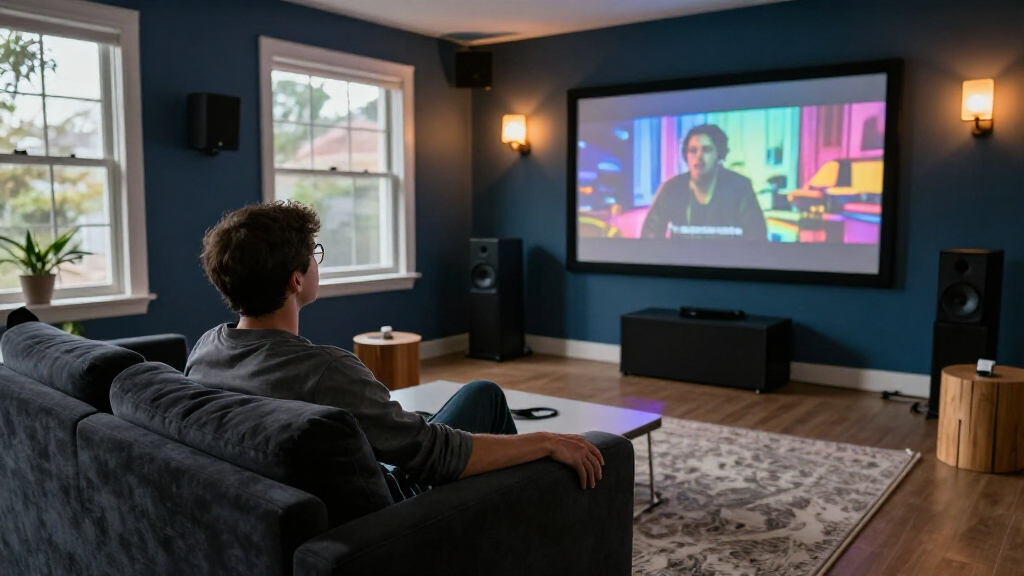
I ranked these home theater surround sound systems by how well their design serves common living-room needs, not by channel count alone. I weighed surround format and speaker layout, subwoofer and rear-speaker inclusion, connection and format support, setup demands, and the amount of room control each system gives its owner. I also considered whether a system’s features solve a real buyer problem: for example, receiver flexibility for future changes, wireless components for simpler placement, or a compact bar for a tight space.
The order favors systems that balance convincing surround potential with practical setup and useful features for a broad range of TV rooms. Receiver-based Yamaha packages rank well for flexibility, while soundbar bundles earn their place through simpler installation and integrated components. More specialized, entry-level, or space-conscious options sit lower when their narrower fit makes them less suitable as an all-purpose recommendation. A higher channel count alone does not move a product up the list if the buyer must accept more complexity or a less suitable room fit.
Factors to Consider When Choosing Home Theater Surround Sound Systems
Before choosing a system, match its layout and setup demands to your room, sources, and willingness to adjust speaker placement. The best fit is not automatically the one with the most channels or the longest feature list.
Choose a Soundbar Bundle or an AV Receiver
A soundbar package combines several components into a more contained system, which can reduce the number of separate boxes and simplify connections. An AV receiver paired with speakers takes more setup and usually needs more space, but it gives you greater freedom to change speakers or connect different sources over time. A common mistake is buying a receiver system for flexibility without checking whether there is room for the receiver, speakers, and wire runs. The reverse mistake is choosing a soundbar when you already want to replace or expand individual components. Decide whether ease of setup or long-term configurability matters more before comparing channel counts. If you expect your system needs to change, receiver-based designs deserve closer attention.
Match Speaker Layout to the Room
Room shape, seating position, and speaker placement affect surround performance as much as the number printed on the box. Rear speakers need a useful position relative to the main seat; placing them beside the TV may make a multi-channel system behave more like a front soundbar. Height-channel designs also depend on the system and room to create overhead effects, so a 5.1.2 label is not a guarantee of the same result in every space. Measure the distance behind and beside the seating area before choosing a package. In an open-plan room, the lack of a rear wall can complicate placement and make a compact soundbar bundle easier to live with. Prioritize a layout you can actually install over a channel count you cannot use well.
Check What “Wireless” Means for Each Speaker
Wireless subwoofers and rear speakers can reduce audio cable runs, but they still need power and a suitable location. Some systems use a wireless signal for sound while requiring a separate power connection at the rear of the room. That distinction matters if your seating area has no convenient outlet or if you want to avoid visible cords entirely. Before buying, check whether the subwoofer and surround speakers connect to the main unit by wire, wireless audio, or both. Also plan for the signal path from the TV and other sources; a tidy speaker setup can still involve several connections at the cabinet. Treat “wireless” as a specific connection detail, not a promise of a cable-free room.
Prioritize the Connections You Will Use
List your actual sources—TV apps, game consoles, streaming devices, and disc players—and check how each system connects to them. HDMI features can affect compatibility with newer TVs and source devices, while optical or other inputs may suit a simpler setup but limit how you route equipment. Do not pay extra for a connectivity feature you will not use, but avoid assuming that every HDMI port supports every format or passthrough function. Check the manufacturer’s connection details for the exact model and how it handles audio return from the TV. Buyers who plan to add devices later may value a receiver with more routing options. If you only need TV audio, a simpler connection path can be a better fit than extra inputs.
Decide How Much Setup and Tuning You Want
Surround systems can need more than plugging in the TV: speaker placement, pairing, receiver configuration, and level adjustments all affect the result. A bundled soundbar generally reduces the number of components, while a receiver system may ask you to manage more settings and wires. Check whether setup instructions, room calibration, and controls match your comfort level before choosing a feature-rich system. A common misstep is choosing a complex package for its flexibility and then leaving its speakers poorly placed or its settings untouched. If you are new to home theater, prioritize a clear setup path and a layout you can manage. Experienced buyers may prefer the added control of a receiver when they are willing to spend time configuring it.
Spend for the Feature That Solves Your Problem
Extra channels, Atmos support, wireless links, and advanced HDMI features are useful only when they match your room and equipment. Paying more for height effects makes little sense if your room cannot support their placement or you mainly watch content that does not use them. A receiver’s newer connections can be a better long-term spend if you plan to upgrade your TV or add sources, while a compact soundbar may be more sensible for a secondary room. Compare the whole setup, including any wiring, stands, and space needed, rather than focusing on the main unit. Choose the feature that removes a real limitation in your current setup. That approach avoids paying for capability that stays unused.
Frequently Asked Questions
Should I choose a soundbar system or a Yamaha receiver package?
Choose a soundbar package if you want a more contained setup with fewer separate components and less receiver configuration. A Yamaha receiver package is a stronger match if you want more control over sources and the option to change parts of the system later. The tradeoff is that receiver systems need more space, wiring, and setup time. Check your TV stand or cabinet dimensions and whether you can route speaker wire before deciding. If you are unsure, start with the setup you can place and connect properly rather than the one with more potential features.
Does a 5.1.2 system always give better surround sound than a 5.1 system?
No. The extra height channels are intended to add a vertical dimension, but the effect depends on speaker design, room conditions, placement, and compatible content. A well-positioned 5.1 system can be a better fit than a 5.1.2 package in a room where the height effect is difficult to reproduce. Consider whether you can follow the system’s placement guidance and whether your viewing habits include content with immersive audio. Compare the whole layout and its setup requirements, not just the channel number. The format label describes a design goal, not a guaranteed result in every room.
Can I place rear speakers beside the TV if my sofa is against a wall?
You can place them there if necessary, but they may not create the sense of sound coming from behind the seating position. Check the manufacturer’s guidance for rear-speaker placement and try to position the speakers slightly behind or to the side of the main listening seat where possible. A sofa against a wall can limit that arrangement, so measure before choosing a package with separate rears. Systems with simpler front-focused placement may be easier to accommodate in a constrained room. Do not assume that included rear speakers will perform as intended regardless of where they sit.
What should I check before buying a system for gaming and a newer TV?
Confirm how the system connects to the TV and consoles, which HDMI functions it supports, and whether the TV can return audio to the sound system through the connection you plan to use. Check the exact model’s specifications rather than relying on a general claim such as 4K or 8K support. Also count the number of devices you want connected and see whether they will plug into the TV or the audio system. A receiver may suit a setup with several sources, while a soundbar can work well when the TV handles device switching. Match the connection path to your equipment before buying to avoid a system that forces extra adapters or inconvenient cable changes.
Do wireless rear speakers eliminate the need for cables?
Not necessarily. Wireless usually describes how audio reaches a speaker, not how the speaker gets power, so rear units may still need nearby outlets or power cables. The subwoofer may also need its own power connection even when it receives audio wirelessly. Look for the connection details for each component, not just the system’s wireless label. Measure outlet access around your seating area and plan how to hide any remaining cables. If you need a completely cable-free rear area, verify that exact requirement with the manufacturer before choosing a system.
Conclusion
For the best overall balance, I’d start with the ULTIMEA Poseidon M80 for its 5.1-channel soundbar format, Dolby Atmos, and wireless subwoofer. The best value-style fit depends on your room and connection needs, but the ULTIMEA Poseidon M60 is a sensible place to compare if you want a 5.1-channel Atmos soundbar package without moving to a receiver system. For a premium, flexible setup, consider the Yamaha YHT-5960U if its 8K HDMI and MusicCast features suit your equipment and you are comfortable with receiver installation. Beginners who want a bundled soundbar arrangement can focus on the Sony BRAVIA Theater System 6, while buyers who need a compact TV or PC solution should look at the Saiyin system. If your priority is broader channel layouts, compare the ULTIMEA Aura A40 Pro and Poseidon D70; if you prefer separate speakers and a receiver, review the Yamaha packages and Klipsch Reference Theater Pack. Choose the system whose placement, connections, and setup demands fit your actual room—not just the most ambitious feature list.
Columbus Day / Indigenous Peoples' Day Picks
long weekend sales
As an affiliate, we earn on qualifying purchases.