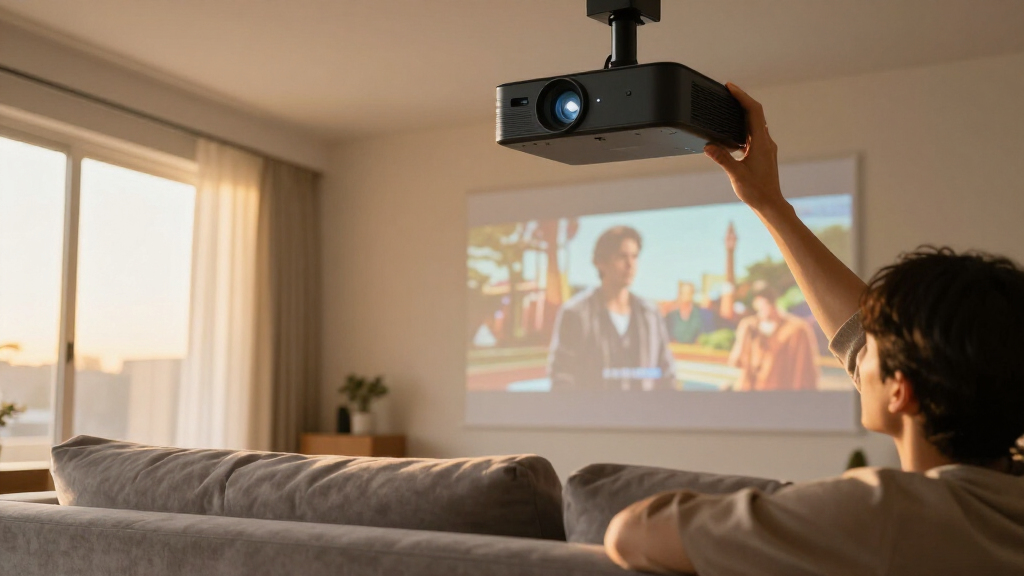

Among these 15 home theater projectors, I rank the Epson Home Cinema 980 as the best overall because its 3-chip 3LCD system and native 1080p resolution favor dependable movie performance over feature-heavy marketing. The ViewSonic PX700HDH is my best-value pick for buyers who want a bright, straightforward 1080p projector, while the HAPPRUN 3000 ANSI model stands out as the premium all-in-one choice with Google TV, automated setup, and Dolby Audio. The main choice is between stronger core image credentials and conveniences such as built-in streaming, autofocus, portable stands, and wireless connections. Buyers also need to separate native resolution from 4K input support and ANSI brightness from loosely defined lumen claims. Continue reading for the complete ranking logic, buying guide, and recommendations by buyer type.

Get business pricing on your home office setup
- Business-only prices and quantity discounts
- Tax-exempt purchasing
- Multiple users, one account, clear invoices
Complete the kit


Key Takeaways
- The Epson Home Cinema 980 leads this roundup because its native 1080p 3LCD design is more closely aligned with dedicated movie viewing than the portable models built around app access and flexible placement.
- The ViewSonic PX700HDH offers the strongest value balance for a fixed-room setup, pairing native 1080p playback with high stated brightness while avoiding the cost of smart features that an external streamer can replace.
- The HAPPRUN 3000 ANSI Google TV projector has the richest all-in-one specification, but its automated setup and streaming platform do not automatically give it better image fidelity than the Epson.
- 4K support is the most misleading pattern in the lineup: several models accept or decode 4K content while listing native 1080p resolution, so buyers should not treat them as native 4K projectors.
- Portability repeatedly trades against theater specialization; the rotating mini projectors, 1.81-inch model, and two Aurzen Roku options are easier to move, but the Epson and ViewSonic picks make more sense for permanent screens.
| ViewSonic PX700HDH |  | Best Overall for Dedicated Theater Rooms | Native Resolution: 1920 x 1080 | Brightness: 3,700 ANSI lumens | Contrast Ratio: 22,000:1 | VIEW LATEST PRICE | See Our Full Breakdown |
| Aurzen Roku TV D1R Cube |  | Best All-in-One Streaming Pick | Resolution: 1080p Full HD | Screen Size: 40–150 inches | Wi-Fi: Dual-band 2.4GHz and 5GHz | VIEW LATEST PRICE | See Our Full Breakdown |
| Mini Projector with WiFi and Bluetooth |  | Best for Angled and Ceiling Projection | Native Resolution: 1080p | Maximum Source Support: 4K | Wireless Connectivity: Wi-Fi and Bluetooth | VIEW LATEST PRICE | See Our Full Breakdown |
| HAPPRUN Native 1080P Outdoor Smart Projector |  | Best Big-Screen Value | Native Resolution: 1920 x 1080 | Maximum Screen Size: 200 inches | Bluetooth: 5.1 | VIEW LATEST PRICE | See Our Full Breakdown |
| XuanPad White Smart Mini Projector |  | Best Compact Projector with a Rotating Stand | Native Resolution: 1920 x 1080 | Maximum Source Resolution: 3840 x 2160 | Claimed Brightness: 40,000 lumens | VIEW LATEST PRICE | See Our Full Breakdown |
| HAPPRUN 3000 ANSI Lumens Outdoor Projector with Google TV |  | Best Overall Smart Home Theater Projector | Brightness: 3000 ANSI lumens | Resolution Support: 4K | Contrast Ratio: 20,000:1 | VIEW LATEST PRICE | See Our Full Breakdown |
| Aurzen EAZZE D1 Smart Portable Outdoor Projector | 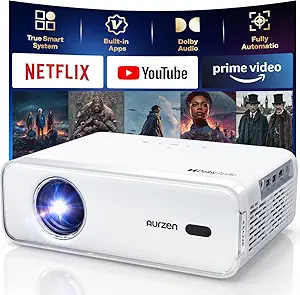 | Best Value Smart Projector | Native Resolution: 1080p Full HD | HDR: HDR10 | Audio: Dual 8W speakers with Dolby Audio and 3D stereo | VIEW LATEST PRICE | See Our Full Breakdown |
| Epson Home Cinema 980 3-Chip 3LCD 1080p Movie Projector |  | Best for Bright-Room Viewing | Native Resolution: 1080p Full HD | Brightness: 4,000 lumens color and white brightness | Display Technology: 3-chip 3LCD | VIEW LATEST PRICE | See Our Full Breakdown |
| X9 PRO Outdoor 4K Projector with VIDAA OS |  | Best Built-In Audio | Native Resolution: 1080p | 4K Capability: 4K decoding | Brightness: 920 ANSI lumens | VIEW LATEST PRICE | See Our Full Breakdown |
| Epson EX3290 3-Chip 3LCD WXGA Video Projector |  | Best Presentation-and-Sports Crossover | Resolution: WXGA | Brightness: 4,000 lumens | Display Technology: 3-chip 3LCD | VIEW LATEST PRICE | See Our Full Breakdown |
| Thinnest 1.81-Inch Smart Mini Projector |  | Best Compact Pick | Native Resolution: 1080p | Brightness: 320 ANSI lumens | WiFi: WiFi 6 | VIEW LATEST PRICE | See Our Full Breakdown |
| HAPPRUN Google TV Native 1080p Outdoor Smart Projector |  | Best for Backyard Streaming | Native Resolution: 1080p | Video Support: 4K decoding | Brightness: 400 ANSI lumens | VIEW LATEST PRICE | See Our Full Breakdown |
| ONOAYO ONO3Pro 2.0 Outdoor 4K Projector |  | Best Built-In Audio | Resolution: 4K | Brightness: 3000 lumens | Speakers: Dual 50W with Dolby Audio | VIEW LATEST PRICE | See Our Full Breakdown |
| Smart 4K-Supported Projector with Dolby Audio and Auto Focus |  | Best for Ambient-Light Rooms | Native Resolution: 1080p | Video Support: 4K decoding | Brightness: 3000 ANSI lumens | VIEW LATEST PRICE | See Our Full Breakdown |
| Aurzen Roku TV D1R Smart Portable Outdoor Projector |  | Best Roku Experience | Native Resolution: 1080p Full HD | Smart Platform: Built-in Roku TV | Projection Size: 60 to 150 inches | VIEW LATEST PRICE | See Our Full Breakdown |
| home theater projector | Native Resolution | Brightness |
|---|---|---|
| ViewSonic PX700HDH | 1920 x 1080 | 3,700 ANSI lumens |
| Aurzen Roku TV D1R Cube | — | — |
| Mini Projector with WiFi and B | 1080p | — |
| HAPPRUN Native 1080P Outdoor S | 1920 x 1080 | — |
| XuanPad White Smart Mini Proje | 1920 x 1080 | — |
| HAPPRUN 3000 ANSI Lumens Outdo | — | 3000 ANSI lumens |
| Aurzen EAZZE D1 Smart Portable | 1080p Full HD | — |
| Epson Home Cinema 980 3-Chip 3 | 1080p Full HD | 4,000 lumens color and white brightness |
| X9 PRO Outdoor 4K Projector wi | 1080p | 920 ANSI lumens |
| Epson EX3290 3-Chip 3LCD WXGA | — | 4,000 lumens |
| Thinnest 1.81-Inch Smart Mini | 1080p | 320 ANSI lumens |
| HAPPRUN Google TV Native 1080p | 1080p | 400 ANSI lumens |
| ONOAYO ONO3Pro 2.0 Outdoor 4K | — | 3000 lumens |
| Smart 4K-Supported Projector w | 1080p | 3000 ANSI lumens |
| Aurzen Roku TV D1R Smart Porta | 1080p Full HD | — |
More Details on Our Top Picks
ViewSonic PX700HDH
I rank the ViewSonic PX700HDH first for buyers who care more about a convincing home-cinema image than built-in streaming. Its 3,700 ANSI-lumen output is documented in a standard unit, making brightness easier to judge than the XuanPad’s unqualified 40,000-lumen claim. The 22,000:1 contrast ratio and native 1080p resolution also give movies more visual depth than the convenience-focused mini models. A 1.1x optical zoom and keystone correction provide some placement flexibility, though the 1.5–1.6 throw ratio still calls for a reasonably deep room. I would choose the Aurzen Roku TV D1R Cube for simpler streaming, while this model makes more sense with an external player and sound system. The lack of specified onboard audio is a real drawback, and controlled room lighting will produce its strongest cinematic image.
Pros:- Documented 3,700 ANSI-lumen brightness
- Native 1080p image with a 22,000:1 contrast ratio
- Optical zoom and keystone adjustment aid fixed installation
- Supports screens as large as 150 inches
Cons:- Throw ratio requires more room depth than many compact projectors
- No built-in speaker capability is specified
- Best black levels still depend on controlled ambient light
Best for: Movie fans building a fixed theater room with an external streaming player and separate speakers
Not ideal for: Apartment dwellers with shallow rooms or buyers seeking an all-in-one projector with integrated streaming and clearly specified audio
- Native Resolution:1920 x 1080
- Brightness:3,700 ANSI lumens
- Contrast Ratio:22,000:1
- Throw Ratio:1.5–1.6
- Screen Size:80–150 inches
- Projection Distance:8.7–16.2 feet
- Optical Zoom:1.1x
- Digital Zoom:0.8x–2.0x
Our verdict“I recommend this for a dedicated movie space where image fundamentals matter more than smart-TV convenience.”
Aurzen Roku TV D1R Cube
I give the Aurzen Roku TV D1R Cube the streaming-first spot because Roku TV is built in, reducing the need for a separate stick and another remote. That makes it easier to live with than the HAPPRUN Native 1080P Outdoor Smart Projector, which depends on an external TV stick for major streaming services. Automatic focus and keystone correction also shorten setup time when the projector moves between a living room and patio. Its sealed optical engine is a useful defense against dust, while the 10W Dolby-certified speaker system offers a tidier casual setup than the ViewSonic PX700HDH. I would not place it above the ViewSonic for a dedicated theater because no ANSI-brightness or contrast figure is supplied. Roku activation needs internet access and an account, and the absence of stated battery specifications means portable does not necessarily mean cordless.
Pros:- Integrated Roku TV removes the need for a separate streaming stick
- Auto focus and keystone correction simplify frequent repositioning
- Sealed optical engine helps limit internal dust
- 10W Dolby-certified speakers support an uncluttered setup
Cons:- Roku activation requires internet access and an account
- No ANSI-brightness or contrast specification is provided
- Battery capacity and cordless runtime are not stated
Best for: Streaming households wanting Roku apps, automatic image setup, and usable integrated sound in one movable unit
Not ideal for: Offline campers or theater enthusiasts who need verified ANSI brightness, contrast data, and dependable battery operation
- Resolution:1080p Full HD
- Screen Size:40–150 inches
- Wi-Fi:Dual-band 2.4GHz and 5GHz
- Bluetooth:5.2
- Speakers:10W Dolby-certified
- Smart Platform:Roku TV
- Optical Engine:Sealed
- Auto Focus:Yes
- Keystone Correction:Yes
Our verdict“I would pick this for easy app-based movie nights, provided internet access matters more than documented cinema-grade image performance.”
Mini Projector with WiFi and Bluetooth
I reserve this portable mini projector for rooms where placement freedom outweighs fully documented image performance. Its 180-degree rotating body, automatic focus, and keystone correction can point an image toward a wall or ceiling with less furniture rearrangement. The XuanPad goes farther with a 360-degree stand, but this model still covers the core inputs—HDMI, USB, Bluetooth, Wi-Fi, and a 3.5mm audio connection—while supplying YouTube and Prime Video apps. Native 1080p is the meaningful resolution figure; 4K support describes source compatibility, not a 4K display panel. I rank it below the ViewSonic PX700HDH for serious movie rooms because brightness, contrast, throw distance, and projection size are not documented. Those omissions make screen planning harder, while the built-in speaker is convenient but lacks a stated power rating.
Pros:- 180-degree rotation supports wall and ceiling projection
- Native 1080p resolution accepts 4K sources
- Auto focus and keystone correction reduce manual adjustment
- HDMI, USB, Wi-Fi, Bluetooth, and analog audio provide broad connectivity
Cons:- Brightness and contrast performance are not specified
- No throw-distance or screen-size data is supplied
- Speaker power and battery runtime are undisclosed
Best for: Renters and bedroom viewers who want ceiling projection, automatic alignment, and several wired and wireless connection choices
Not ideal for: Dedicated theater builders who need verified brightness, contrast, throw distance, and audio-output figures before planning a room
- Native Resolution:1080p
- Maximum Source Support:4K
- Wireless Connectivity:Wi-Fi and Bluetooth
- Wired Connections:HDMI, USB, and 3.5mm audio
- Rotation:180 degrees
- Auto Focus:Yes
- Keystone Correction:Yes
- Built-in Apps:YouTube, Prime Video, and App Center
- Speaker:Built in
Our verdict“I see this as a flexible bedroom projector for unconventional placement, not a predictable centerpiece for a planned theater.”
HAPPRUN Native 1080P Outdoor Smart Projector
I place the HAPPRUN Native 1080P Outdoor Smart Projector in the value role because it combines full-HD resolution, integrated stereo sound, and an unusually large claimed screen range without loading the package with premium smart features. Its up-to-200-inch image exceeds the Aurzen Roku TV D1R Cube’s 150-inch ceiling, making HAPPRUN the more appealing choice for backyard crowds or a large blank wall. Ceiling, desktop, and tripod installation choices also let it stay portable or become semi-permanent. The compromise is convenience: unlike the Aurzen, it has no stated integrated streaming platform, and a TV stick is compatible but not included. Smartphone connections may need separate HDMI adapters, while wireless setup can add friction. I also cannot rank its image predictability beside the ViewSonic PX700HDH because brightness, contrast, and throw measurements are absent. This is a low-cost scale play rather than a refined theater solution.
Pros:- Native 1080p resolution at a value-oriented feature level
- Projection size reaches a claimed 200 inches
- Built-in stereo speakers reduce extra equipment
- Supports ceiling, desktop, and tripod installation
Cons:- Compatible streaming sticks and phone adapters are sold separately
- Brightness, contrast, and throw specifications are missing
- Wireless connections may require more setup than an integrated smart platform
Best for: Budget-conscious families wanting a large indoor or backyard image with built-in sound and flexible mounting
Not ideal for: Buyers expecting integrated streaming apps, phone-ready cabling, or published brightness and throw data for a fixed theater
- Native Resolution:1920 x 1080
- Maximum Screen Size:200 inches
- Bluetooth:5.1
- Video Input:HDMI
- Streaming Device Support:Compatible with TV sticks
- Speakers:Built-in stereo
- Installation:Ceiling, desktop, or tripod
Our verdict“I recommend this when maximum screen size per dollar matters more than built-in apps or precisely documented image performance.”
XuanPad White Smart Mini Projector
I choose the XuanPad White Smart Mini Projector for buyers who repeatedly change where they watch. At 1.89 pounds, its detachable 360-degree rotating stand provides more aiming freedom than the unnamed mini projector’s 180-degree body, while auto focus and 6D keystone correction help restore a rectangular image after each move. Native 1080p resolution is appropriate for movies, and Wi-Fi 6, Bluetooth 5.2, smart-TV apps, HDMI, and USB offer several playback routes. The 40-to-200-inch range also suits bedrooms and casual outdoor screenings. I would treat the advertised 40,000-lumen figure cautiously because it is not given in ANSI lumens, so it cannot be compared directly with the ViewSonic PX700HDH’s verified 3,700 ANSI rating. There is no stated battery runtime either, and 4K support means signal acceptance rather than native 4K projection.
Pros:- Lightweight 1.89-pound body is easy to reposition
- Detachable 360-degree stand supports varied projection angles
- Auto focus and 6D keystone correction aid quick setup
- Wi-Fi 6, Bluetooth 5.2, smart apps, HDMI, and USB offer flexible playback
Cons:- The 40,000-lumen claim lacks an ANSI measurement for reliable comparison
- No battery capacity or cordless runtime is specified
- Native resolution remains 1080p despite accepting 4K sources
Best for: Small-space viewers who frequently move a projector between walls, ceilings, bedrooms, and sheltered outdoor areas
Not ideal for: Brightness-focused theater buyers or off-grid users who need an ANSI rating and confirmed battery runtime
- Native Resolution:1920 x 1080
- Maximum Source Resolution:3840 x 2160
- Claimed Brightness:40,000 lumens
- Projection Size:40–200 inches
- Weight:1.89 pounds
- Wireless Connectivity:Wi-Fi 6 and Bluetooth 5.2
- Wired Connections:HDMI, USB, and 3.5mm audio
- Keystone Correction:6D
- Stand:360-degree rotating and detachable
Our verdict“I would buy this for compact, angle-friendly movie nights, while choosing the ViewSonic for more credible brightness data and fixed-room performance.”
HAPPRUN 3000 ANSI Lumens Outdoor Projector with Google TV
I rank the HAPPRUN 3000 ANSI Lumens Projector highest in this group because it combines substantial brightness, flexible image correction, and a full streaming platform. Its built-in Google TV offers broader app access than the Aurzen EAZZE D1, while WiFi 6 should provide better headroom for high-bitrate streaming on compatible networks. The 3000-ANSI-lumen rating also makes it more adaptable to rooms with residual light, though the Epson Home Cinema 980 remains the more traditional choice for buyers who favor 3LCD color reproduction. HDR10+ and 4K input support can improve source compatibility, but the data does not establish native 4K resolution. Dual 10W speakers are useful for casual viewing, yet a dedicated sound system will suit serious movie rooms better. I see this as the most balanced theater package, provided there is enough projection distance for the desired screen size.
Pros:- 3000 ANSI lumens provide useful brightness for rooms with some ambient light
- Google TV supplies access to more than 1,000 streaming apps
- Automatic focus and keystone correction reduce setup work
- WiFi 6, HDR10+, and 4K input support suit modern streaming sources
Cons:- 4K support does not establish that the imaging panel has native 4K resolution
- Dual 10W speakers cannot match a dedicated surround or soundbar system
- A 300-inch image requires a large room and suitable projection distance
Best for: Movie fans who want a bright, app-rich projector that can move between a living room, media room, and backyard setup
Not ideal for: Buyers seeking confirmed native 4K projection or audiophile-grade sound without adding external speakers
- Brightness:3000 ANSI lumens
- Resolution Support:4K
- Contrast Ratio:20,000:1
- Color Gamut:95%
- HDR:HDR10+
- Speakers:Dual 10W with Dolby Audio
- WiFi:WiFi 6
- Bluetooth:Bluetooth 5.2
- Screen Size:40 to 300 inches
Our verdict“I recommend this HAPPRUN as the best all-round choice for buyers who value brightness, streaming freedom, and automated setup more than confirmed native 4K output.”
Aurzen EAZZE D1 Smart Portable Outdoor Projector
The Aurzen EAZZE D1 is my value pick for buyers who want native 1080p, streaming apps, and automated setup without moving into the brighter HAPPRUN 3000 ANSI model. Its autofocus, screen alignment, and obstacle avoidance are especially helpful when the projector regularly shifts between a bedroom, patio, and living room. Dual 8W speakers give it respectable self-contained audio, although the X9 PRO offers much greater 40W output for movie nights without external sound. The main compromise is its restricted smart platform: app downloads are limited, service copyright rules can interfere with phone-based streaming, and Bluetooth handles audio rather than video. Dual-band WiFi also trails the HAPPRUN model’s WiFi 6 connection. I still favor it for buyers seeking a straightforward portable theater with useful correction tools and Full HD detail.
Pros:- Native 1080p resolution delivers Full HD detail rather than relying only on input support
- Autofocus, keystone correction, screen alignment, and obstacle avoidance simplify repositioning
- Built-in Netflix, Prime Video, and YouTube access reduces dependence on a separate streaming stick
- Multiple mounting positions support temporary and permanent installations
Cons:- The smart platform does not allow the same breadth of app downloads as Google TV
- Copyright restrictions can limit some casting and streaming methods
- Bluetooth transmits audio only and cannot carry video
Best for: Apartment dwellers and families who regularly reposition their projector and want native 1080p streaming with minimal manual alignment
Not ideal for: Viewers who need a broad downloadable app library, WiFi 6, or powerful built-in sound for a large outdoor audience
- Native Resolution:1080p Full HD
- HDR:HDR10
- Audio:Dual 8W speakers with Dolby Audio and 3D stereo
- WiFi:Dual-band 5GHz and 2.4GHz
- Bluetooth:Bluetooth 5.1
- Connections:HDMI, USB, and 3.5mm headphone jack
- Mounting Options:Ceiling, tabletop, tripod, and wall
- Automatic Setup:Focus, keystone correction, obstacle avoidance, and screen alignment
Our verdict“I would choose the EAZZE D1 for an affordable, movable Full HD theater, but not for the broadest app access or the strongest room-filling audio.”
Epson Home Cinema 980 3-Chip 3LCD 1080p Movie Projector
I favor the Epson Home Cinema 980 for living rooms where lamps, windows, or daytime sports make light output a priority. Epson specifies 4,000 lumens for both color and white brightness, while its 3-chip 3LCD system is designed to deliver vivid color without depending on a single-chip color wheel. That makes it a more conventional bright-room theater choice than the app-led Aurzen EAZZE D1. It also supplies native 1080p detail and two HDMI inputs, so a streaming box and game console can remain connected together. The tradeoff is convenience: unlike the HAPPRUN 3000 ANSI projector, the Epson lacks listed autofocus, smart-TV apps, HDR, and 4K support. Its built-in speaker is better treated as a backup than a theater solution. I rank it as the strongest lights-on option, but buyers must add their own streaming and sound hardware.
Pros:- 4,000-lumen color and white brightness ratings suit rooms that are not fully dark
- 3-chip 3LCD technology supports vivid, accurate color reproduction
- Native 1080p resolution is well matched to movies, sports, and console gaming
- Two HDMI ports allow multiple source devices to stay attached
Cons:- No 4K resolution support or HDR capability is listed
- Streaming requires a separate source device rather than a built-in smart platform
- The basic onboard speaker is not a substitute for home theater audio
Best for: Sports viewers and families building a 1080p living-room theater where ambient light is difficult to control
Not ideal for: Buyers wanting an all-in-one streaming projector with 4K input support, HDR, automatic alignment, and substantial built-in audio
- Native Resolution:1080p Full HD
- Brightness:4,000 lumens color and white brightness
- Display Technology:3-chip 3LCD
- Maximum Projection Size:Up to 300 inches
- HDMI Inputs:2
- Other Connection:USB
- Built-In Speaker:Yes
Our verdict“I recommend the Home Cinema 980 when bright-room image visibility matters more than integrated apps, HDR, or automated setup.”
X9 PRO Outdoor 4K Projector with VIDAA OS
The X9 PRO earns its place through an unusually capable dual 20W Dolby Audio system, making it the strongest self-contained sound option among these five projectors. That extra output is valuable for backyard films or temporary rooms where carrying a soundbar is inconvenient; the HAPPRUN 3000 ANSI model provides only dual 10W speakers. VIDAA OS, AirPlay 2, HDMI ARC, and automatic focus and keystone correction also create a flexible entertainment hub. Yet its picture specifications require careful reading. The projector accepts or decodes 4K content but displays it at native 1080p, and its 920-ANSI-lumen brightness is far below the HAPPRUN’s stated 3000 ANSI lumens. Dark surroundings are needed for satisfying contrast, while the bulky build weakens its outdoor portability claim. I would pick it for sound-first movie nights, not for bright-room use or genuine 4K projection.
Pros:- Dual 20W Dolby Audio speakers provide the most powerful built-in sound in this batch
- Native 1080p imaging with HDR10 and 4K decoding supports common premium sources
- VIDAA OS, AirPlay 2, and HomeKit offer several streaming and casting routes
- Automatic focus, keystone correction, and obstacle avoidance speed up setup
Cons:- 4K sources are displayed at 1080p rather than native 4K resolution
- 920 ANSI lumens call for a dark room or nighttime outdoor use
- The heavy, bulky design is less portable than its outdoor positioning suggests
Best for: Backyard movie hosts and renters who want strong integrated speakers, native 1080p playback, and automatic image setup in a dark viewing area
Not ideal for: Daytime viewers, frequent travelers, and buyers expecting native 4K pixels from the 4K-compatible description
- Native Resolution:1080p
- 4K Capability:4K decoding
- Brightness:920 ANSI lumens
- HDR:HDR10
- Speakers:2 x 20W, Dolby Audio certified
- Smart Platform:VIDAA OS
- Connections:HDMI ARC and CEC, USB, Bluetooth 5.4, and 3.5mm audio
- Casting:AirPlay 2 and HomeKit
- Warranty:3 years
Our verdict“I would buy the X9 PRO for dark-room or nighttime viewing when powerful built-in audio matters more than high brightness or native 4K detail.”
Epson EX3290 3-Chip 3LCD WXGA Video Projector
I include the Epson EX3290 for buyers whose projector must handle daytime presentations during the week and casual sports or television on weekends. Its 4,000-lumen output and 3-chip 3LCD system favor visibility and color in lit multipurpose rooms, while two HDMI ports make switching between a laptop, streaming device, and console less disruptive. Compared with the Epson Home Cinema 980, however, its WXGA resolution is a clear home theater sacrifice: Full HD films lose detail, especially on very large screens. It also lacks the smart apps, wireless connections, HDR, and automatic alignment features listed for the Aurzen EAZZE D1. A built-in speaker helps with temporary setups but will not provide cinematic sound. I rank this as a special-purpose crossover rather than a primary movie-room pick, with brightness and business versatility taking precedence over image resolution.
Pros:- 4,000-lumen brightness supports viewing in lit classrooms and multipurpose rooms
- 3-chip 3LCD technology delivers vivid color for graphics, sports, and video
- Dual HDMI inputs accommodate multiple wired sources
- Projection sizes up to 300 inches work for large groups
Cons:- WXGA resolution is below Full HD and limits movie detail on large screens
- No wireless connectivity or built-in streaming platform is listed
- The onboard speaker is intended for convenience rather than cinematic audio
Best for: Teachers, small businesses, and community groups needing one bright projector for presentations, live sports, and occasional movie screenings
Not ideal for: Dedicated movie-room owners who expect Full HD or 4K detail, integrated streaming, wireless casting, or automated image correction
- Resolution:WXGA
- Brightness:4,000 lumens
- Display Technology:3-chip 3LCD
- HDMI Inputs:2
- Maximum Projection Size:Up to 300 inches
- Built-In Speaker:Yes
Our verdict“I recommend the EX3290 only when bright-room presentations and casual big-screen sports matter more than Full HD home theater quality.”
Thinnest 1.81-Inch Smart Mini Projector
I rank the 1.81-inch Smart Mini Projector as the compact choice because its slim body, 360-degree stand, auto focus, and 6D keystone system suit rooms where a projector cannot stay permanently installed. Its native 1080p image is appropriate for movies, but 320 ANSI lumens calls for a dark room; the HAPPRUN Google TV projector offers a little more brightness at 400 ANSI lumens. WiFi 6 and Bluetooth 5.2 reduce cable clutter, while the adjustable stand supports wall or ceiling projection without extra mounting gear. The largest catch is its app-only 4K playback: HDMI and USB sources do not receive that benefit. I would choose it for portability and fast placement, not for daytime viewing or a source-heavy home theater built around consoles and disc players.
Pros:- Very slim, portable body with a flexible 360-degree stand
- Native 1080p resolution rather than lower-resolution scaling
- Auto focus and 6D keystone correction simplify temporary placement
- WiFi 6 and Bluetooth 5.2 support cable-light setups
Cons:- 320 ANSI lumens restricts satisfying movie viewing to dark environments
- 4K playback works only inside the app, not through HDMI or USB
- App dependence limits flexibility with external source devices
Best for: I recommend it for apartment dwellers and occasional movie watchers who need a slim projector that can be stored between screenings.
Not ideal for: I would skip it for bright living rooms or theaters centered on HDMI-based 4K players and game consoles.
- Native Resolution:1080p
- Brightness:320 ANSI lumens
- WiFi:WiFi 6
- Bluetooth:Bluetooth 5.2
- Auto Focus:Yes
- Keystone Correction:6D all-around
- Stand:360-degree rotatable
- 4K Playback:Within app only; unavailable through HDMI or USB
Our verdict“I would pick this for space-saving convenience, provided dark-room use matters more than external 4K compatibility.”
HAPPRUN Google TV Native 1080p Outdoor Smart Projector
I place the HAPPRUN Google TV Projector ahead of basic portable models for backyard streaming because licensed Google TV provides direct access to major apps without a separate stick. Its 400 ANSI-lumen output is brighter than the 320 ANSI-lumen 1.81-inch mini projector, though both still work best after sunset or with strong light control. Native 1080p supplies the displayed detail, while 4K decoding means it can accept higher-resolution content rather than project a true 4K image. A screen size up to 300 inches gives it more scale than the Aurzen Roku TV D1R, which tops out at 150 inches. I like the flexible ceiling, desktop, and tripod installation choices, but the single 5W Dolby speaker is better for casual viewing than room-filling movie sound.
Pros:- Licensed Google TV provides direct access to popular streaming services
- Native 1080p imaging with 4K content decoding
- Up to 300-inch projection supports large outdoor movie setups
- Ceiling, desktop, and tripod installation options add flexibility
Cons:- 400 ANSI lumens remains limited for daylight or brightly lit patios
- The 5W built-in speaker may require external audio for movie impact
- 4K decoding does not produce native 4K projected resolution
Best for: I recommend it for families who want app-based movie nights on a large backyard screen without carrying an extra streaming device.
Not ideal for: I would skip it for daytime outdoor screenings or buyers expecting powerful theater audio from the built-in speaker.
- Native Resolution:1080p
- Video Support:4K decoding
- Brightness:400 ANSI lumens
- Maximum Screen Size:300 inches
- Smart Platform:Licensed Google TV
- Audio:5W built-in speaker with Dolby support
- Wireless Connectivity:WiFi 6 and Bluetooth 5.2
- Installation:Ceiling, desktop, or tripod
Our verdict“I would choose this for convenient after-dark streaming on a large screen, with an external speaker planned for stronger sound.”
ONOAYO ONO3Pro 2.0 Outdoor 4K Projector
I rank the ONOAYO ONO3Pro 2.0 as the sound-focused choice because its dual 50W Dolby speakers are far more ambitious than the HAPPRUN Google TV model’s single 5W speaker. That difference can spare buyers from arranging separate audio for casual movie nights. The listed 4K resolution, 3000-lumen brightness, built-in apps, and Chromecast also make this a more self-contained entertainment system. At 2.4 pounds, it remains portable despite that audio hardware, while AI auto focus reduces setup work when moving between rooms or outdoors. I am less confident recommending it to buyers who want fully documented hardware, since durability details are sparse and the stated lumens are not identified as ANSI lumens. The dual-fan cooling system may also be more noticeable than a quieter home-theater design during dialogue-heavy films.
Pros:- Dual 50W Dolby speakers provide unusually substantial integrated audio
- Listed 4K resolution and built-in apps create a self-contained movie setup
- AI auto focus supports fast repositioning
- Light 2.4-pound body is easy to move indoors or outside
Cons:- Brightness is stated in lumens rather than ANSI lumens, making comparison harder
- Product data offers limited detail about long-term durability
- Dual-fan cooling may add audible background noise
Best for: I recommend it for renters and backyard hosts who want strong integrated sound without transporting a soundbar or powered speakers.
Not ideal for: I would skip it for noise-sensitive theater rooms or buyers who require clearly standardized brightness and durability documentation.
- Resolution:4K
- Brightness:3000 lumens
- Speakers:Dual 50W with Dolby Audio
- Weight:2.4 lbs
- Smart Platform:Smart OS 2.0 with built-in apps
- Wireless Connectivity:WiFi 6, Bluetooth, and Chromecast
- Image Scaling:50% to 100%
- Cooling:Dual-fan system
- Optical Engine:Sealed
Our verdict“I would select this when built-in sound and portability outweigh the need for extensively documented theater-grade performance.”
Smart 4K-Supported Projector with Dolby Audio and Auto Focus
I give the Smart 4K-Supported Projector the ambient-light role because its listed 3000 ANSI-lumen output is far higher than the HAPPRUN Google TV projector’s 400 ANSI lumens. That extra light should preserve more contrast when a room cannot be fully darkened, while HDR10 and a claimed 99.8% color gamut target richer movie color. The important distinction is resolution: this is a native 1080p projector with 4K decoding, not a native 4K display like the ONOAYO listing claims. Auto focus, 6D keystone correction, and a 360-degree stand make placement forgiving, and the rated 30dB cooling is appealing for dialogue. I would still pair it with separate audio because speaker specifications are vague. External-device compatibility is also poorly detailed, so buyers with receivers, consoles, or disc players face more uncertainty than app-first viewers.
Pros:- Listed 3000 ANSI-lumen brightness suits rooms with some ambient light
- HDR10 and a claimed 99.8% color gamut support colorful movie presentation
- Auto focus and 6D keystone correction reduce setup effort
- Rated 30dB cooling is suited to dialogue-focused viewing
Cons:- Native resolution is 1080p despite the 4K-oriented product name
- Speaker capabilities and output power are not clearly documented
- External source compatibility lacks enough detail for complex theater systems
Best for: I recommend it for living-room viewers who need more brightness than compact projectors provide and mainly stream through built-in apps.
Not ideal for: I would skip it for buyers demanding native 4K imaging, documented speaker output, or clearly specified receiver and console support.
- Native Resolution:1080p
- Video Support:4K decoding
- Brightness:3000 ANSI lumens
- HDR:HDR10
- Color Gamut:99.8% wide color gamut
- Wireless Connectivity:WiFi 6 and Bluetooth 5.2
- Image Adjustment:Auto focus and 6D keystone correction
- Cooling Noise:30dB
- Lamp Life:Up to 100,000 hours
Our verdict“I would buy this for a brighter app-based living-room setup, but not as a substitute for a documented native 4K theater projector.”
Aurzen Roku TV D1R Smart Portable Outdoor Projector
I rank the Aurzen Roku TV D1R as the easiest choice for households already comfortable with Roku. Its built-in platform places familiar streaming apps and search in one interface, while Siri, Alexa, Google Assistant, and AirPlay support fit mixed-device homes better than many generic smart projectors. Compared with the HAPPRUN Google TV projector, Roku is the deciding difference rather than raw scale: the Aurzen projects from 60 to 150 inches, while the HAPPRUN can reach 300 inches. Native 1080p, auto focus, and keystone correction cover the basics for a portable movie setup, and dual 5W Dolby speakers should outperform a single small speaker without replacing dedicated audio. The main compromise is dependence on internet access and Roku activation. Its AC power requirement also means outdoor portability still depends on a nearby outlet or power station.
Pros:- Built-in Roku TV offers a familiar streaming interface
- Auto focus and keystone correction make portable placement easier
- AirPlay plus Siri, Alexa, and Google Assistant support mixed-device homes
- Dual 5W Dolby speakers provide useful integrated stereo sound
Cons:- Roku activation and internet access are required for the smart experience
- 150-inch maximum image is smaller than the HAPPRUN model’s 300-inch limit
- AC-only operation restricts outdoor placement without a power source
Best for: I recommend it for Roku households that want familiar streaming, voice-assistant support, and simple 1080p setup in a bedroom or backyard.
Not ideal for: I would skip it for off-grid viewing, screens larger than 150 inches, or anyone unwilling to create and activate a Roku account.
- Native Resolution:1080p Full HD
- Smart Platform:Built-in Roku TV
- Projection Size:60 to 150 inches
- Speakers:Dual 5W with Dolby Audio
- WiFi:Dual-band 2.4GHz and 5GHz
- Bluetooth:Bluetooth 5.2
- Compatibility:Apple TV, AirPlay, Android, and smart-home devices
- Power Supply:100-240V AC, 50/60Hz
Our verdict“I would choose this for a Roku-centered household seeking easy portable streaming, as long as internet and AC power are available.”
How We Picked
I ranked these projectors according to how well they serve a home theater rather than a casual presentation setup. My main criteria were native resolution, credible brightness labeling, imaging technology, contrast-related design, placement flexibility, streaming access, connection options, and the amount of setup required. I gave extra weight to native 1080p output and established projection platforms, since accepting a 4K signal does not create a 4K image. Automated focus, keystone correction, licensed smart systems, and portable stands added convenience points, but they could not compensate for a lower display resolution or unclear light-output claims.
The final order also reflects how much equipment each buyer still needs. A projector with no smart platform can rank highly when an inexpensive streaming stick fills that gap, while a built-in operating system earns more credit for beginners and portable use. I placed the Epson Home Cinema 980 ahead of the ViewSonic because its 3LCD architecture is particularly well suited to shared movie viewing, then ranked the ViewSonic highly for its brightness-to-simplicity balance. The HAPPRUN 3000 ANSI model leads the smart all-in-one group, while the WXGA Epson EX3290 sits lower because its presentation-oriented resolution gives movies less detail than the native 1080p choices.
Factors to Consider When Choosing Home Theater Projectors
I would choose a home theater projector by working backward from the room, screen, and viewing habits rather than starting with the longest feature list. The biggest dividing lines are native image resolution, measured light output, placement limits, streaming preferences, and long-term ownership costs. Those factors explain why a simpler Epson or ViewSonic can be a better theater purchase than a portable model advertising more automated features.
Separate Native Resolution From 4K Support
The phrase 4K support usually means a projector can receive and decode a 4K source, not that it places 3840 by 2160 distinct pixels on the screen. A native 1080p model will scale that source down to its own pixel grid. This can still produce an enjoyable image, but fine textures and small text will not match a native 4K display. I would check the listed native pixel dimensions rather than relying on the largest resolution printed in the product name. Native 1080p remains a sensible target for affordable movie viewing, especially on moderate screen sizes and from normal seating distances. Buyers seeking actual 4K detail should expect a higher price and should confirm the imaging panel or chip specification before ordering.
Match Brightness To The Room, Not The Biggest Number
ANSI lumens provide a more useful comparison than an unspecified lumen figure because the ANSI method measures light across multiple areas of the projected image. That means the HAPPRUN model labeled at 3000 ANSI lumens cannot be fairly compared with another projector merely advertising 3000 lumens without a stated method. A dark room needs less output and can favor richer blacks, while a family room with lamps or uncovered windows needs more light to keep the picture from appearing washed out. I would also distinguish white brightness from color brightness, especially when comparing different imaging systems. More output is not always better because excess brightness can make black scenes look gray in a small, dark theater. Room control, screen size, and screen material should shape the brightness target before the headline number does.
Measure Throw Distance Before Buying
A projector can advertise a 300-inch image and still be unsuitable for the available room. The more useful specification is throw ratio, which determines how far the lens must sit from a chosen screen width. I would measure the lens-to-screen distance, check whether people will cross the beam, and account for power and HDMI cable routes. Autofocus and automatic keystone correction make temporary placement easier, but heavy digital correction reduces the usable pixel area and can soften the image. Rotating stands are handy in bedrooms or outdoor spaces, yet they do not replace optical zoom or lens shift in a fixed installation. A ceiling-mounted projector should ideally line up with the screen using its native offset rather than relying on extreme software correction.
Decide Whether Built-In Streaming Is Worth Paying For
A licensed platform such as Google TV, Roku TV, or VIDAA can reduce setup time and provide a familiar app interface. Generic built-in app stores may offer fewer services, slower updates, or uncertain support for protected high-resolution streams. I would treat an external streaming stick as a practical fallback because it is inexpensive and easier to replace than the projector. A non-smart model with a better image can remain useful for years when its streaming device becomes outdated. Buyers using a receiver or soundbar should check HDMI audio routing and physical outputs rather than assuming Bluetooth is the best choice. Bluetooth may add audio delay, while a wired connection usually keeps dialogue and images more closely synchronized.
Calculate Ownership Cost And Support
The purchase price is only one part of projector value. I would check light-source life, filter maintenance, warranty coverage, firmware support, and replacement availability before treating a low-cost model as a bargain. Lamp-based projectors may eventually need a replacement lamp, while sealed LED designs can reduce routine maintenance but may be harder to repair. Established support channels can matter more for a permanently mounted projector than for an occasional outdoor unit. Frequent viewers should also budget for a suitable screen, mounting hardware, longer cables, and possibly an external sound system. The best value comes from the model that fits the planned use without requiring costly workarounds, making total setup cost more revealing than the projector price alone.
Frequently Asked Questions
Is A Projector With 4K Support Actually A 4K Projector?
No, not unless the manufacturer identifies a native 4K imaging system or 3840-by-2160 output. Many models in this roundup accept a 4K signal but display it through a native 1080p panel. That compatibility is useful because modern streaming devices can remain set to a high-resolution output, yet the projected detail is still limited by the panel. I would choose a strong native 1080p projector over a vaguely labeled 4K-compatible model when both cost about the same. Buyers who want genuine 4K should verify the native resolution rather than the supported input resolution.
How Many ANSI Lumens Do I Need For A Home Theater?
For a dark dedicated room, roughly 1,500 to 2,500 ANSI lumens can be sufficient for many common screen sizes, while rooms with ambient light often benefit from 2,500 ANSI lumens or more. Screen size changes the equation because spreading the same light across a larger area produces a dimmer image. I would avoid comparing ANSI ratings directly with generic lumen claims, since those numbers may come from different measurement methods. Brightness also cannot fix sunlight falling directly on the screen. Better curtains or evening viewing may improve the picture more than paying for the largest advertised output.
Should I Buy The Epson Home Cinema 980 Or ViewSonic PX700HDH?
I would choose the Epson Home Cinema 980 for a movie-first room where balanced color output, shared viewing, and 3LCD imaging matter most. The ViewSonic PX700HDH makes more sense when value, high stated brightness, and a straightforward native 1080p setup carry more weight. Neither model depends on a built-in smart platform, so both pair naturally with a streaming stick or receiver. The Epson earns the higher overall position because its design is more closely tied to home-cinema viewing. The ViewSonic remains the more appealing pick for buyers who want to reserve part of the budget for a screen or sound system.
Is A Smart Projector Better Than Using A Streaming Stick?
A smart projector is better for convenience, but it is not automatically better for picture quality. Models with licensed Google TV, Roku TV, or VIDAA software reduce the number of devices and remotes needed, which helps in portable setups. An external streamer often receives longer app support and can be upgraded without replacing the projector. I would prioritize the projector’s native image performance and treat smart software as a bonus unless frequent movement makes a single-box setup valuable. The best choice depends on whether simpler setup or easier long-term upgrades matters more.
Can A Portable Outdoor Projector Replace A Dedicated Home Theater Model?
It can replace one for casual viewing, especially when easy movement, autofocus, and built-in streaming matter more than permanent alignment. Portable models are less persuasive when the goal is consistent movie performance on a fixed screen. Their small chassis may leave less room for optical adjustment, cooling, speakers, and connection placement, while outdoor viewing still requires darkness for a satisfying image. I would choose the HAPPRUN 3000 ANSI model for a brighter, feature-rich outdoor setup and the Epson Home Cinema 980 for a dedicated indoor room. A rotating mini projector is the better fit only when placement freedom outweighs theater specialization.
Conclusion
For most movie-focused buyers, my best overall recommendation is the Epson Home Cinema 980 because its native 1080p 3LCD design places core image performance ahead of portable extras. The ViewSonic PX700HDH is my best-value choice for a bright, uncomplicated fixed-room setup, especially when an external streaming device is already available. Buyers seeking the fullest single-box package should choose the HAPPRUN 3000 ANSI Google TV model as the premium all-in-one pick, accepting that its longer feature list does not guarantee better cinematic image quality than the Epson.
For beginners, I favor the Aurzen Roku TV D1R Cube because its familiar streaming platform reduces setup friction. The 1.81-inch smart mini projector is the compact pick for buyers who store or move the projector regularly, while the HAPPRUN 3000 ANSI model also makes the most sense for brighter outdoor use. Buyers wanting a budget-friendly smart alternative can look to the Aurzen EAZZE D1, provided portability matters more than a permanent theater installation. I would reserve the Epson EX3290 for mixed presentation and video duties, since its WXGA resolution makes it less compelling for movie-first buyers than the native 1080p options.
Fall Picks
fall essentials
As an affiliate, we earn on qualifying purchases.