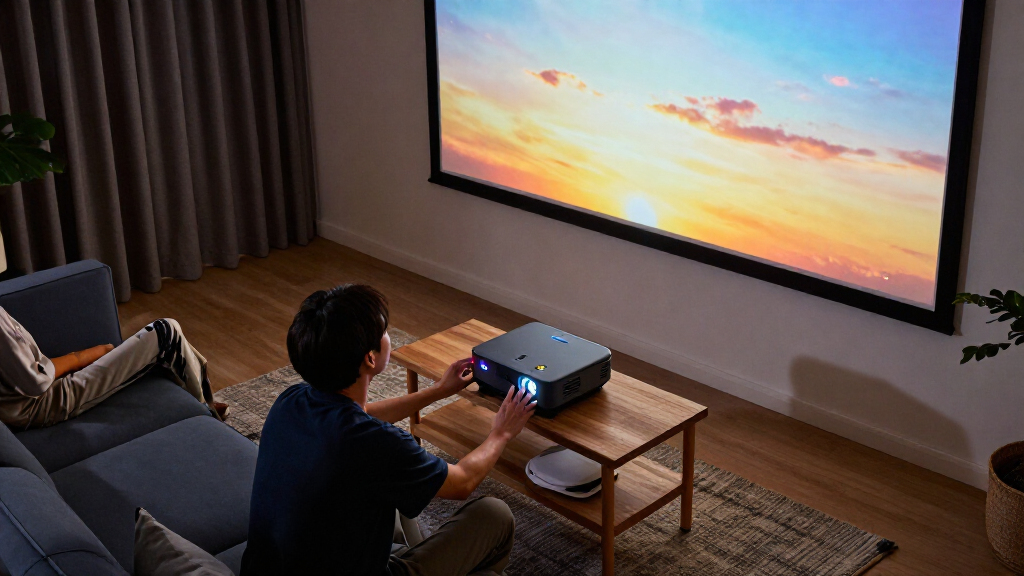

The best 4K home theater projector in this roundup is the XGIMI Horizon 20, a strong choice for viewers prioritizing its 4K RGB triple-laser design and 3,200-lumen output. The Epson Home Cinema 2350 stands out for a more traditional home theater setup, while the HAPPRUN 3000 ANSI Google TV Projector pairs high stated brightness with built-in streaming. The main tradeoffs are image quality and light control versus portability, easy setup, and outdoor-friendly features. Some models advertise 4K support or decoding, which is not the same as native 4K resolution, so buyers should check how each projector produces its image. Read on for the full comparison and a guide to choosing the right fit for your room.

Get business pricing on your home office setup
- Business-only prices and quantity discounts
- Tax-exempt purchasing
- Multiple users, one account, clear invoices
Complete the kit

Key Takeaways
- The XGIMI Horizon 20 separates itself on image hardware: its triple-laser light source and stated 3,200-lumen output make it the clearest premium-oriented pick in this lineup.
- The Epson Home Cinema 2350 is the home-theater-focused alternative: its established projector design and Android TV suit a living room setup better than models framed mainly around outdoor portability.
- Several listings say “4K support” or “4K decoding” rather than native 4K: treat those terms as compatibility claims, not proof that the projector displays a full native 4K image.
- Brightness claims are not directly interchangeable: ANSI-lumen figures are more useful for comparison than unspecified lumen counts, and a brighter projector still benefits from controlled room lighting.
- Smart features and automatic setup appear across much of the field: built-in apps, autofocus, and wireless connectivity can simplify use, but they do not replace strong image performance or a suitable screen and room.
| ONOAYO Outdoor 4K Projector with AI Auto Focus, Dolby Audio, Built-in Apps |  | Best for Lightweight, Flexible Setup | Resolution: 4K (native resolution not specified) | Brightness: Described as high; lumen figure not provided | Audio: 50W speakers with Dolby Audio | VIEW LATEST PRICE | See Our Full Breakdown |
| VIDAA 4K Projector with 65W Audio, Voice Control, and Short Throw |  | Best for Short-Throw Placement and Built-In Sound | Resolution: 4K (native resolution not specified) | Brightness: 5000 ANSI lumens | Contrast ratio: 50,000:1 | VIEW LATEST PRICE | See Our Full Breakdown |
| Smart Outdoor Projector with 4K Support, WiFi, Bluetooth, and Built-in Apps |  | Best Entry-Level 4K-Content Option | Native resolution: 1080p | 4K support: Supports 4K input | Brightness: 600 ANSI lumens | VIEW LATEST PRICE | See Our Full Breakdown |
| Epson Home Cinema 2350 4K PRO-UHD Smart Streaming Projector with Android TV | 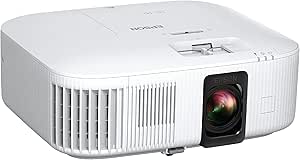 | Best for a Dedicated Home Theater | Resolution: 3840 × 2160 pixels, 4K PRO-UHD | Brightness: 2800 lumens | Display technology: LCD with 3LCD technology | VIEW LATEST PRICE | See Our Full Breakdown |
| VIDAA X9 PRO 4K Outdoor Projector with Smart TV Features, HDR10, Dolby Audio, WiFi6, Bluetooth, AI Auto Focus |  | Best Outdoor Smart-TV Feature Set | Native resolution: 1080p | 4K support: 4K decoding | Brightness: 920 ANSI lumens | VIEW LATEST PRICE | See Our Full Breakdown |
| HAPPRUN 3000 ANSI Google TV Projector, 4K HDR, Auto Focus |  | Best for Bright, Easy Streaming | Native resolution: 1920 × 1080 | Brightness: 3000 ANSI lumens | Maximum image size: 300 inches | VIEW LATEST PRICE | See Our Full Breakdown |
| HAPPRUN 2000 ANSI 4K Decoding Projector with WiFi and Bluetooth, Auto Focus |  | Best Entry-Level 4K-Signal Option | Native resolution: 1920 × 1080 | 4K support: 4K decoding | Brightness: 2000 ANSI lumens | VIEW LATEST PRICE | See Our Full Breakdown |
| XGIMI Elfin Flip 4K Portable Projector with Wi-Fi and Bluetooth, Google TV |  | Best Compact Native 4K Pick | Native resolution: 3840 × 2160 | Display type: DLP | Light source: RGB triple laser | VIEW LATEST PRICE | See Our Full Breakdown |
| XGIMI Horizon 20 4K RGB Triple Laser Home Projector, 3200 Lumens |  | Best Premium Home Theater Pick | Native resolution: 3840 × 2160 | Brightness: 3200 lumens | Contrast ratio: 100000:1 | VIEW LATEST PRICE | See Our Full Breakdown |
| AuKing 5100 ANSI Lumens 4K Outdoor Projector with Dolby Audio and Netflix |  | Best for Bright Outdoor Viewing | Native resolution: 1920 × 1080 | 4K support: Up to 3840 × 2160 input | Brightness: 5100 ANSI lumens | VIEW LATEST PRICE | See Our Full Breakdown |
| Smart 4K Projector with WiFi, Bluetooth, AI Auto Focus, HDR10, Dolby Audio, and Built-in Apps |  | Best for Built-In Streaming | Native resolution: 1920 x 1080 | Maximum resolution: 3840 x 2160 | Brightness: 550 lumens | VIEW LATEST PRICE | See Our Full Breakdown |
| Smart 4K Projector with Google TV Stick, WiFi, Bluetooth, 3000 ANSI Lumens, Auto Focus, Auto Lens Cover, Portable Outdoor Movie Projector |  | Best for Brighter Flexible Setups | Native resolution: 1920 x 1080 | Maximum display resolution: 1920 x 1080 | Brightness: 3000 ANSI lumens | VIEW LATEST PRICE | See Our Full Breakdown |
| 4K home theater projector | Brightness | Native resolution | Wireless connectivity | Maximum image size |
|---|---|---|---|---|
| ONOAYO Outdoor 4K Projector wi | Described as high; lumen figure not provided | — | Wi-Fi 6, Bluetooth, built-in Chromecast | — |
| VIDAA 4K Projector with 65W Au | 5000 ANSI lumens | — | — | — |
| Smart Outdoor Projector with 4 | 600 ANSI lumens | 1080p | Wi-Fi 6 and Bluetooth 5.2 | — |
| Epson Home Cinema 2350 4K PRO- | 2800 lumens | — | — | — |
| VIDAA X9 PRO 4K Outdoor Projec | 920 ANSI lumens | 1080p | Wi-Fi 6 and Bluetooth 5.4 | — |
| HAPPRUN 3000 ANSI Google TV Pr | 3000 ANSI lumens | 1920 × 1080 | Wi-Fi 6, Bluetooth 5.2 | 300 inches |
| HAPPRUN 2000 ANSI 4K Decoding | 2000 ANSI lumens | 1920 × 1080 | — | 300 inches |
| XGIMI Elfin Flip 4K Portable P | 1600 lumens | 3840 × 2160 | — | 200 inches |
| XGIMI Horizon 20 4K RGB Triple | 3200 lumens | 3840 × 2160 | — | 300 inches |
| AuKing 5100 ANSI Lumens 4K Out | 5100 ANSI lumens | 1920 × 1080 | Wi-Fi 6, Bluetooth 5.2 | 200 inches |
| Smart 4K Projector with WiFi | 550 lumens | 1920 x 1080 | — | 300 inches |
| Smart 4K Projector with Google | 3000 ANSI lumens | 1920 x 1080 | Wi-Fi 6, Bluetooth 5.2 | — |
More Details on Our Top Picks
ONOAYO Outdoor 4K Projector with AI Auto Focus, Dolby Audio, Built-in Apps
The ONOAYO is the easiest fit here for buyers who expect to move a projector between rooms or take it outside: at 2.4 pounds, it is far more portable than the Epson Home Cinema 2350. AI autofocus, keystone correction, and obstacle avoidance are designed to cut down on manual alignment, while built-in streaming apps and Chromecast support reduce the need for a separate playback device. Its 50W Dolby Audio is a notable convenience for casual viewing without external speakers. The key caveat is the 4K label: the supplied specifications do not state native resolution, so I would verify that detail before choosing it for a sharp, dedicated home theater. Brightness is also listed only as “high,” with no lumen figure, making it harder to judge how it will perform in a lit room. Compared with the more clearly specified Epson, this ONOAYO prioritizes portability and setup aids over documented picture performance.
Pros:- At 2.4 pounds, it is easy to move and transport.
- AI autofocus, keystone correction, and obstacle avoidance simplify positioning.
- Built-in streaming apps and Chromecast support reduce reliance on external devices.
- 50W Dolby Audio provides substantial built-in sound for casual viewing.
Cons:- Brightness is not quantified, so performance in rooms with ambient light is difficult to judge.
- The listed 4K resolution does not clarify whether it is native or supported decoding.
- Detailed durability information for regular outdoor use is not provided.
Best for: Viewers who want a lightweight projector with built-in streaming for flexible indoor use and occasional outdoor movie nights.
Not ideal for: Buyers building a dedicated theater or watching with ambient light who need a documented native resolution and brightness rating.
- Resolution:4K (native resolution not specified)
- Brightness:Described as high; lumen figure not provided
- Audio:50W speakers with Dolby Audio
- Smart platform:2026 Smart TV OS 2.0 with built-in apps
- Wireless connectivity:Wi-Fi 6, Bluetooth, built-in Chromecast
- Setup features:AI autofocus, keystone correction, obstacle avoidance
- Weight:2.4 lb
- Mounting:M4 screw port
Our verdict“Choose the ONOAYO for a portable, app-ready setup, but choose a projector with specified resolution and brightness if picture performance is your priority.”
VIDAA 4K Projector with 65W Audio, Voice Control, and Short Throw
The VIDAA stands apart for combining a 1:1 short throw ratio with unusually powerful 65W stereo audio. That pairing can suit a living room where the projector must sit relatively close to the wall and the owner would rather avoid a separate sound system. Its listed 5000 ANSI lumens also give it a stronger brightness claim than the ONOAYO or P62 Pro, though the product information still recommends a dark environment for best picture quality. The short-throw description and stated 4-to-25-foot distance are not enough to predict an exact screen size at a particular placement, so check the room layout before buying. Compared with the Epson Home Cinema 2350, this VIDAA emphasizes placement flexibility, smart controls, and built-in sound; the Epson is the more established choice for buyers focused on 3LCD color and documented 4K PRO-UHD imaging.
Pros:- A 1:1 short throw ratio supports large images from a closer placement.
- The stated 5000 ANSI lumens are the highest brightness figure among these five products.
- 65W stereo speakers can reduce the need for separate audio equipment.
- VIDAA apps, voice control, and smartphone control offer multiple ways to access content.
Cons:- The product data does not clarify whether 4K is native resolution or supported decoding.
- The suggested dark-room use limits its appeal for daytime viewing despite the brightness claim.
- A 500-inch maximum image size is highly dependent on room dimensions and setup.
Best for: Living-room viewers who need a projector close to the screen, want integrated streaming, and prefer strong onboard audio.
Not ideal for: Dedicated home theater buyers who prioritize verified native 4K detail or shoppers who need a projector proven to handle a brightly lit room.
- Resolution:4K (native resolution not specified)
- Brightness:5000 ANSI lumens
- Contrast ratio:50,000:1
- Audio:65W stereo speakers
- Throw ratio:1:1 short throw
- Projection size:50–500 inches
- Operating system:VIDAA with Netflix, YouTube, Disney+, HBO Max, and Apple TV+
- Ports:2× HDMI 2.1, 2× USB, AV, 3.5 mm headphone jack
- Control:Voice control and smartphone app
Our verdict“Pick this VIDAA for close placement, streaming, and strong built-in sound, but verify resolution details and room fit before making it a theater centerpiece.”
Smart Outdoor Projector with 4K Support, WiFi, Bluetooth, and Built-in Apps
The P62 Pro is a native 1080p projector that accepts 4K content, so it belongs in a roundup for buyers seeking 4K compatibility rather than true 4K pixel resolution. That distinction matters more here than its HDR10 label: fine detail will be limited by the native 1080p panel. Its 600 ANSI lumens also make a dark room or nighttime outdoor screening the sensible setting, unlike the brighter claims on the VIDAA short-throw model or Epson Home Cinema 2350. The P62 Pro does offer useful everyday conveniences, including built-in Prime Video and YouTube, Wi-Fi 6, Bluetooth 5.2, autofocus, and keystone correction. Those features reduce setup and streaming friction, but they do not compensate for the modest brightness or resolution ceiling. I would choose it for casual, dark-room viewing, not as the main display for a detail-focused 4K theater.
Pros:- Accepts 4K content while offering HDR10 support.
- Built-in Prime Video and YouTube reduce the need for an external streaming player.
- Autofocus and keystone correction make setup less hands-on.
- Wi-Fi 6, Bluetooth 5.2, and multiple HDMI and USB ports support varied devices.
Cons:- Native resolution is 1080p, so 4K sources do not display at native 4K detail.
- At 600 ANSI lumens, it is best suited to dark viewing conditions.
- No carrying case is included, and ceiling or wall installation requires separate mounting.
Best for: Casual movie viewers who want built-in streaming and automatic setup for a small, dark room or occasional nighttime outdoor use.
Not ideal for: Buyers seeking native 4K detail, a bright-room picture, or a ready-made ceiling-mount installation.
- Native resolution:1080p
- 4K support:Supports 4K input
- Brightness:600 ANSI lumens
- HDR:HDR10
- Speakers:Dual 10W speakers with Dolby audio
- Wireless connectivity:Wi-Fi 6 and Bluetooth 5.2
- Ports:2× HDMI and 2× USB
- Image setup:Autofocus, keystone correction, 50–100% zoom
- Built-in apps:Prime Video, YouTube, App Store, and browser
Our verdict“Choose the P62 Pro for convenient 4K-content playback in a dark room, not for native 4K resolution or daytime projection.”
Epson Home Cinema 2350 4K PRO-UHD Smart Streaming Projector with Android TV
The Epson Home Cinema 2350 is the most convincing fit here for buyers prioritizing documented image performance over portability. Its 4K PRO-UHD, 3840 × 2160 specification, HDR10 support, and 2,800-lumen output give shoppers clearer picture-performance information than the ONOAYO, whose brightness and native resolution are unspecified, or the P62 Pro, which is natively 1080p. Epson’s 3LCD technology is designed to deliver bright color, making this a stronger candidate for a home theater that also sees some ambient light. Android TV simplifies streaming, and vertical lens shift offers more installation flexibility than a basic tabletop setup. The tradeoff is that it is less tailored to grab-and-go outdoor use, and the supplied specs list a built-in speaker without its power or performance details. I would favor it for a fixed viewing space, while buyers wanting stronger integrated audio should compare it with the 65W VIDAA.
Pros:- 3840 × 2160 4K PRO-UHD specification gives buyers a clearer resolution reference than several alternatives.
- 2,800 lumens and 3LCD technology support bright, vivid color.
- HDR10 adds compatibility with HDR content.
- Android TV and vertical lens shift combine streaming access with installation flexibility.
Cons:- The supplied specifications do not state the built-in speaker’s power, making its audio capability hard to compare with the VIDAA’s 65W system.
- A fixed home-theater form factor is less convenient for frequent outdoor transport than the 2.4-pound ONOAYO.
- Some streaming apps may require paid subscriptions.
Best for: Home theater owners who want a projector with clearly specified 4K PRO-UHD imaging, HDR10, and 3LCD color for a mostly fixed setup.
Not ideal for: Frequent travelers or outdoor viewers who want a particularly light projector or substantial built-in speaker power.
- Resolution:3840 × 2160 pixels, 4K PRO-UHD
- Brightness:2800 lumens
- Display technology:LCD with 3LCD technology
- HDR:HDR10
- Contrast ratio:35:1 (as listed)
- Smart platform:Android TV
- Connectivity:HDMI and Wi-Fi
- Setup and mounting:Tabletop form factor with vertical lens shift
- Audio:Built-in speaker; Bluetooth audio support
Our verdict“Choose the Epson for a more fully specified, 3LCD home-theater setup, and look elsewhere if portability or powerful built-in audio matters more.”
VIDAA X9 PRO 4K Outdoor Projector with Smart TV Features, HDR10, Dolby Audio, WiFi6, Bluetooth, AI Auto Focus
The VIDAA X9 PRO is aimed at viewers who want an outdoor-friendly, all-in-one entertainment setup: its VIDAA platform lists a broad collection of streaming services and live channels, while AirPlay 2, HomeKit, voice control, and a smartphone app add flexible ways to send or control content. Its 2×20W Dolby Audio speakers are a substantial built-in sound provision compared with the P62 Pro’s dual 10W speakers. But the resolution distinction is decisive for a 4K home theater: this model has native 1080p resolution with 4K decoding, so it accepts 4K material without displaying it at native 4K detail. The stated 920 ANSI lumens also point toward dark-room or nighttime use, not bright living rooms. Compared with the Epson Home Cinema 2350, the X9 PRO offers more smart and wireless conveniences, while Epson is the better-supported choice for buyers seeking specified 4K PRO-UHD imaging.
Pros:- VIDAA OS lists a wide range of streaming apps and more than 1,000 live channels.
- AI autofocus, 6D keystone correction, and auto screen fit can simplify setup.
- Dual 20W Dolby Audio speakers provide more stated speaker power than the P62 Pro.
- Wi-Fi 6, Bluetooth 5.4, HDMI ARC, AirPlay 2, and HomeKit support varied connections and control.
Cons:- Native resolution is 1080p; 4K content is decoded rather than displayed at native 4K resolution.
- The 920 ANSI-lumen rating makes dark or nighttime viewing a better fit than bright-room use.
- The extensive smart and automatic setup features may add complexity for buyers who want a simple projector.
Best for: Outdoor movie hosts who want a wide range of built-in streaming options, automatic image setup, and substantial onboard audio.
Not ideal for: Home theater buyers who need native 4K resolution or viewers who plan to watch in a brightly lit room.
- Native resolution:1080p
- 4K support:4K decoding
- Brightness:920 ANSI lumens
- HDR:HDR10
- Speakers:2×20W, Dolby Audio certified
- Smart platform:VIDAA OS with Netflix, YouTube, Prime Video, Disney+, and other listed apps
- Wireless connectivity:Wi-Fi 6 and Bluetooth 5.4
- Image setup:AI autofocus, 6D keystone correction, auto screen fit
- Control and ports:AirPlay 2, HomeKit, voice and app control; HDMI ARC & CEC, USB, 3.5 mm audio
Our verdict“Pick the VIDAA X9 PRO for its outdoor-oriented smart features and built-in audio, but choose the Epson if native 4K image detail is your priority.”
HAPPRUN 3000 ANSI Google TV Projector, 4K HDR, Auto Focus
The HAPPRUN 3000 makes the most sense for households that want streaming and setup aids built into one projector. Google TV gives it a more direct path to apps than the HAPPRUN 2000, whose app compatibility is less clearly specified, while 3000 ANSI lumens offers more headroom for a room that is not fully dark. AI autofocus and screen alignment can reduce manual adjustments when moving it between rooms.
The key tradeoff is resolution: despite the 4K HDR wording, its native resolution is 1920 × 1080, so it does not display a 4K image pixel for pixel. Its claimed 300-inch maximum also needs substantial space, and the broad mounting options do not make it a compact, short-throw solution. I’d choose it for convenient big-screen streaming, not for native 4K detail.
Pros:- Built-in Google TV provides direct access to streaming apps.
- 3000 ANSI lumens offers more brightness headroom than the HAPPRUN 2000.
- AI autofocus and automatic screen alignment simplify setup.
- Supports Bluetooth, HDMI, USB, and Wi-Fi 6 connectivity.
Cons:- Native 1920 × 1080 resolution falls short of true 4K image detail.
- Very large screen sizes require a long throw and ample space.
- The 200-watt draw is higher than the AuKing’s listed 100 watts.
Best for: Households seeking built-in Google TV, simple refocusing, and a bright 1080p picture for flexible indoor or outdoor viewing.
Not ideal for: Buyers who want native 4K resolution or need a large image in a small room.
- Native resolution:1920 × 1080
- Brightness:3000 ANSI lumens
- Maximum image size:300 inches
- Contrast ratio:20000:1
- Streaming platform:Google TV
- HDR support:HDR10+
- Wireless connectivity:Wi-Fi 6, Bluetooth 5.2
- Light source operating life:100000 hours
Our verdict“Choose this HAPPRUN for built-in Google TV and flexible, brighter 1080p viewing, but skip it if native 4K is a requirement.”
HAPPRUN 2000 ANSI 4K Decoding Projector with WiFi and Bluetooth, Auto Focus
This HAPPRUN is a straightforward pick for buyers who want a portable projector that accepts 4K content without paying for a native 4K imaging system. Its 4K decoding means it can process that signal, but the 1920 × 1080 native resolution is the limit of the picture it projects. Compared with the HAPPRUN 3000, it gives up some brightness and built-in Google TV, but its listed throw range starts closer, which may suit a more compact setup.
Auto focus and keystone correction help with placement, though the focus feature may struggle when the unit is tilted more than 15 degrees. At 2000 ANSI lumens, it is better suited to dim rooms than ambient-light viewing, and app support is not detailed. I’d pick it as a simpler 4K-source-compatible option, not as a substitute for native 4K.
Pros:- Accepts and decodes 4K signals while supporting common HDMI and USB sources.
- Auto focus and keystone correction can speed up placement.
- Wi-Fi 6 and Bluetooth support wireless connections.
- Listed minimum throw distance of 4.72 feet allows closer placement than the HAPPRUN 3000.
Cons:- Native 1920 × 1080 resolution does not deliver a pixel-for-pixel 4K image.
- 2000 ANSI lumens is better suited to a dark viewing space.
- Focus may fail when the projector is tilted beyond 15 degrees, and app compatibility details are limited.
Best for: First-time projector buyers who want 4K input compatibility, automatic image adjustments, and a portable setup for dark-room viewing.
Not ideal for: Viewers who need native 4K detail, bright-room performance, or clearly specified built-in streaming apps.
- Native resolution:1920 × 1080
- 4K support:4K decoding
- Brightness:2000 ANSI lumens
- Maximum image size:300 inches
- Minimum throw distance:4.72 feet
- Contrast ratio:20000:1
- Connectivity:HDMI, USB, Wi-Fi, Bluetooth, 3.5mm audio
- Light source operating life:100000 hours
Our verdict“Pick this model for affordable-feeling setup simplicity and 4K signal compatibility, but choose a native 4K projector for sharper detail.”
XGIMI Elfin Flip 4K Portable Projector with Wi-Fi and Bluetooth, Google TV
The Elfin Flip is the most compelling choice here for buyers who value actual 4K resolution in a portable format. Its 3840 × 2160 native resolution separates it from both HAPPRUN models and the AuKing, which accept 4K signals but have 1080p native panels. The RGB triple laser light source and Harman Kardon speakers also make it a more self-contained entertainment setup, while optical zoom adds placement flexibility.
That detail advantage comes with a brightness tradeoff: its listed 1600 lumens is well below the XGIMI Horizon 20’s 3200 lumens, making a dark room the safer match. The 200-inch maximum is also smaller than the Horizon 20’s 300-inch ceiling. I’d favor the Elfin Flip when portability and native 4K matter more than room-filling brightness; buyers should also note that the supplied specs do not describe battery operation.
Pros:- 3840 × 2160 native resolution delivers more image detail than the 1080p HAPPRUN and AuKing models.
- RGB triple laser technology provides a laser-based image source.
- Harman Kardon speakers are built in.
- Optical zoom and a 40-to-200-inch image range support flexible placement.
Cons:- 1600 lumens is substantially lower than the XGIMI Horizon 20’s listed 3200 lumens.
- A dark environment is the better fit for its picture.
- Battery life or battery-powered operation is not specified.
Best for: Movie fans who want native 4K in a portable tabletop projector, plus integrated speakers and flexible zoom.
Not ideal for: People planning large-screen viewing in a bright room or expecting a battery-powered projector.
- Native resolution:3840 × 2160
- Display type:DLP
- Light source:RGB triple laser
- Brightness:1600 lumens
- Maximum image size:200 inches
- Minimum image size:40 inches
- Speakers:Harman Kardon
- Connectivity:HDMI, USB
Our verdict“Choose the Elfin Flip for native 4K and portable placement in a dark room, not for maximum brightness or the largest screen.”
XGIMI Horizon 20 4K RGB Triple Laser Home Projector, 3200 Lumens
The Horizon 20 is the strongest fit for a dedicated theater setup in this group: it pairs native 4K with a listed 3200 lumens, a 100,000:1 contrast ratio, and support for Dolby Vision and HDR10+. Compared with the more portable Elfin Flip, it offers substantially more brightness, a larger stated maximum image size, and lens shift for adjusting the picture without relying only on projector repositioning. Built-in Google TV and Netflix also keep streaming close at hand.
Its gaming figures—1ms input lag and 240Hz refresh rate—add appeal for fast play, though the supplied data does not explain the conditions behind those figures. At 180 watts, it draws more power than the Elfin Flip, and its 300-inch maximum still demands plenty of room. I’d rank it ahead of the compact XGIMI for a permanent, feature-rich setup, but it is more projector than casual portable viewing requires.
Pros:- Native 3840 × 2160 resolution with RGB triple laser technology.
- Dolby Vision and HDR10+ support offer broad HDR-format compatibility.
- Lens shift and optical zoom give more placement flexibility than the Elfin Flip.
- Google TV, Netflix, and Harman Kardon speakers are built in.
Cons:- Listed 180-watt power draw exceeds the Elfin Flip’s 120 watts.
- Large image sizes require adequate room and a dark viewing environment.
- The 220–240-volt specification may not suit every household power setup without checking compatibility.
Best for: Home theater owners who want native 4K, advanced HDR formats, flexible lens placement, and gaming-focused specifications.
Not ideal for: Buyers prioritizing low power use, compact portability, or a small-room setup without space for a large projection.
- Native resolution:3840 × 2160
- Brightness:3200 lumens
- Contrast ratio:100000:1
- HDR support:Dolby Vision, HDR10+
- Maximum image size:300 inches
- Lens shift:Yes
- Gaming specifications:1ms input lag, 240Hz refresh rate
- Built-in media and audio:Google TV, Netflix, Harman Kardon speakers
Our verdict“Choose the Horizon 20 for a high-feature native 4K theater and gaming setup if its power and space requirements fit your room.”
AuKing 5100 ANSI Lumens 4K Outdoor Projector with Dolby Audio and Netflix
The AuKing is the brightness-led option for outdoor movie nights and rooms where controlling ambient light is difficult. Its listed 5100 ANSI lumens far exceed the XGIMI Elfin Flip’s 1600 lumens and the HAPPRUN 2000’s 2000 ANSI lumens. Built-in Netflix, Prime Video, and YouTube reduce the need for a separate streaming device, while Wi-Fi 6 and Bluetooth add practical wireless options. The foldable stand, with rotation and tilt, is aimed at quick placement rather than a fixed theater installation.
The headline caveat is that this is native 1920 × 1080, not a native 4K projector; it supports 4K input but cannot show the same fine detail as the XGIMI models. Its maximum image size is 200 inches, and the 65,000-hour light-source life is shorter on paper than the HAPPRUN models’ listed 100,000 hours. I’d choose it for brightness and convenience over resolution precision.
Pros:- 5100 ANSI lumens is the highest stated brightness in this batch.
- Netflix, Prime Video, and YouTube are listed as supported apps.
- Wi-Fi 6 and Bluetooth 5.2 support wireless connections.
- Foldable stand offers 360-degree rotation and 180-degree tilt.
Cons:- Native 1920 × 1080 resolution means 4K signals are not displayed at native 4K detail.
- Maximum image size is 200 inches, below the HAPPRUN models’ stated 300 inches.
- Listed light-source life is 65,000 hours, and warranty details are limited.
Best for: Outdoor movie hosts and households that prioritize a bright image, built-in streaming apps, and quick adjustable setup.
Not ideal for: Buyers seeking native 4K detail, a larger-than-200-inch image, or a projector with clearly documented warranty coverage.
- Native resolution:1920 × 1080
- 4K support:Up to 3840 × 2160 input
- Brightness:5100 ANSI lumens
- Maximum image size:200 inches
- Throw distance:3.9–9.8 feet
- Supported apps:Prime Video, YouTube, Netflix
- Wireless connectivity:Wi-Fi 6, Bluetooth 5.2
- Light source operating life:65000 hours
Our verdict“Pick the AuKing for a bright, app-ready outdoor setup, but choose a native 4K XGIMI if image detail matters more than brightness.”
Smart 4K Projector with WiFi, Bluetooth, AI Auto Focus, HDR10, Dolby Audio, and Built-in Apps
I’d choose this model for a setup where streaming convenience matters more than true 4K projection. VIDAA OS provides access to a large app and live-channel selection, so it can work more like a standalone TV than a projector that depends on an external streamer. Auto focus and keystone correction also reduce setup adjustments when moving it between rooms. Its 1080p native resolution can accept 4K input, but it does not display a native 4K image; compared with the HAPPRUN 3000 ANSI Google TV Projector, its listed 550 lumens are also a more limiting brightness figure. HDR10 support adds compatible content handling, but won’t make up for a dim room or the resolution ceiling. I’d shortlist it for casual, dark-room viewing, not a bright living room or a reference-quality home theater.
Pros:- VIDAA OS provides built-in access to apps and live channels.
- Auto focus and keystone correction simplify setup when relocating the projector.
- Wi-Fi 6, Bluetooth 5.4, HDMI, and a 3.5mm jack offer varied connection options.
- HDR10 support and Dolby Audio add format and sound features for compatible content.
Cons:- Native 1920 x 1080 resolution falls short of true 4K display detail.
- Listed brightness of 550 lumens limits use in rooms with substantial ambient light.
- Durability and long-term software support details are not specified.
Best for: Viewers who want built-in VIDAA streaming, simple automatic setup, and a projector for dim rooms or occasional outdoor movie nights.
Not ideal for: Buyers seeking native 4K detail or a bright-room image; its native resolution is 1080p and its listed brightness is 550 lumens.
- Native resolution:1920 x 1080
- Maximum resolution:3840 x 2160
- Brightness:550 lumens
- Display type:LCD
- Connectivity:HDMI, Bluetooth 5.4, Wi-Fi 6, 3.5mm jack
- Maximum image size:300 inches
- Maximum throw distance:16.4 feet
- Control methods:App, remote, voice
Our verdict“Choose this for convenient built-in streaming and flexible setup in a dim room, but skip it if native 4K resolution or bright-room performance is a priority.”
Smart 4K Projector with Google TV Stick, WiFi, Bluetooth, 3000 ANSI Lumens, Auto Focus, Auto Lens Cover, Portable Outdoor Movie Projector
Among these two picks, I’d lean toward this model when a brighter image and adaptable placement matter more than native 4K. Its listed 3000 ANSI lumens give it a clear brightness advantage over the VIDAA projector’s 550-lumen specification, while the 360-degree rotating stand, auto focus, and auto keystone make it easier to aim in changing indoor or outdoor setups. Google TV comes on a bundled stick, adding a familiar streaming route without relying on the VIDAA interface. The resolution tradeoff remains: this projector is native 1080p, not a true 4K display, and its maximum display resolution is listed as 1920 x 1080. I’d treat it as a flexible movie-night option rather than a dedicated 4K theater centerpiece; the stated need for a dark environment also limits its usefulness in bright rooms.
Pros:- Listed 3000 ANSI lumens exceed the brightness specification of the 550-lumen VIDAA projector.
- Bundled Google TV Stick provides access to popular streaming apps.
- Auto focus, auto keystone, and auto lens cover simplify setup and storage.
- 360-degree rotating stand supports flexible positioning indoors or outdoors.
Cons:- Native and maximum display resolution are 1920 x 1080, not 4K.
- Best image quality still requires a dark environment.
- Size and weight may make frequent transport less convenient.
Best for: Households that move a projector between rooms or take it outdoors and want Google TV streaming, automatic setup, and higher listed brightness than the VIDAA alternative.
Not ideal for: Dedicated home-theater buyers who want native 4K detail, or viewers expecting a strong image in a brightly lit room.
- Native resolution:1920 x 1080
- Maximum display resolution:1920 x 1080
- Brightness:3000 ANSI lumens
- Display type:LED
- Streaming:Google TV Stick included; built-in apps listed include Netflix, Prime Video, YouTube, and Disney+
- Wireless connectivity:Wi-Fi 6, Bluetooth 5.2
- Setup features:Auto focus, auto keystone, auto lens cover
- Stand:360° rotating stand
- Warranty:2 years
Our verdict“Pick this for flexible indoor and outdoor viewing with Google TV and stronger listed brightness, but choose a native 4K model if fine image detail is the priority.”
How We Picked
I compared the 12 projectors by how well their stated features fit an actual home theater decision: image resolution claims, brightness information, light-source design, streaming options, setup aids, sound features, and flexibility for indoor or outdoor use. I gave more weight to clearly specified home viewing capabilities than to broad claims such as “4K support,” since compatibility with a 4K signal does not establish native 4K imaging. I also looked at whether features such as autofocus, short throw, and built-in apps solve a practical problem for the intended buyer.
The ranking reflects the strength and clarity of each product’s fit, not a claim that every model is suitable for the same room. The XGIMI Horizon 20 leads for its stated triple-laser design and brightness; the Epson is a more conventional home cinema choice; and HAPPRUN’s Google TV model is a simpler smart-projector option. Models marketed chiefly for outdoor use or with less specific image details rank behind options with a clearer case for dedicated home viewing. Product names and published specifications alone do not establish performance under every room condition.
| 4K home theater projector | Wireless connectivity |
|---|---|
| ONOAYO Outdoor 4K Projector wi | Wi-Fi 6, Bluetooth, built-in Chromecast |
| VIDAA 4K Projector with 65W Au | — |
| Smart Outdoor Projector with 4 | Wi-Fi 6 and Bluetooth 5.2 |
| Epson Home Cinema 2350 4K PRO- | — |
| VIDAA X9 PRO 4K Outdoor Projec | Wi-Fi 6 and Bluetooth 5.4 |
| HAPPRUN 3000 ANSI Google TV Pr | Wi-Fi 6, Bluetooth 5.2 |
| HAPPRUN 2000 ANSI 4K Decoding | — |
| XGIMI Elfin Flip 4K Portable P | — |
| XGIMI Horizon 20 4K RGB Triple | — |
| AuKing 5100 ANSI Lumens 4K Out | Wi-Fi 6, Bluetooth 5.2 |
| Smart 4K Projector with WiFi | — |
| Smart 4K Projector with Google | Wi-Fi 6, Bluetooth 5.2 |
Factors to Consider When Choosing 4K Home Theater Projectors
Before choosing a projector, match its imaging claims and placement requirements to your room rather than starting with the longest feature list. These decisions often matter more than bundled apps or wireless extras.
Check What “4K” Means for the Display
Projectors advertised as “4K support” or “4K decoding” may accept a 4K source while displaying it at a lower resolution. Look for a clearly stated native resolution and, where relevant, an explanation of pixel-shifting or other image processing. This distinction matters most when sitting close to a large screen, where fine detail is easier to notice. Also check which frame rates and HDR formats the projector accepts if you plan to watch newer films or play games. Avoid assuming that a 4K label alone guarantees the same detail as a native 4K projector. Compare the whole signal chain, including your streaming device, source content, and screen size.
Match Brightness to the Room, Not Just the Spec Sheet
Ambient light washes out contrast, so a projector used in a bright living room needs more light output than one in a dark theater. Give greater weight to stated ANSI lumens than to figures using an unspecified lumen standard, since differing measurement methods can make headline numbers hard to compare. Even a bright model cannot fully compensate for sunlight falling on the screen. Blackout curtains, wall color, and screen material can improve the image without changing the projector. A common mistake is buying for daytime use and expecting cinema-like contrast without controlling light. If most viewing happens after dark, prioritize contrast and accurate image modes over the biggest brightness claim.
Plan Throw Distance and Screen Size Before Buying
Throw distance determines how far the projector must sit from the screen to create your desired image size. Short-throw models can help in smaller rooms, but the label alone does not confirm that a projector will fit your exact layout. Check the throw ratio, zoom range, and recommended image sizes against the distance available in your room. Account for shelves, ceiling mounts, ventilation space, and the location of power and video cables. Autofocus can make setup easier, but it does not correct every placement or geometry problem. Measuring first can prevent a projector from forcing an awkward screen size or a difficult installation.
Decide How Much Smart Functionality You Need
Built-in Google TV, Android TV, VIDAA, or other app platforms can reduce the need for a separate streaming device. App availability and software support can vary, so check that your preferred services are supported in your region. A separate streaming stick may offer a familiar interface or longer update support, but it adds another device and remote. Wi-Fi and Bluetooth are convenient for streaming and audio connections, yet a wired connection can be more dependable for a fixed theater setup. Do not let a long app list outweigh image quality if the projector will stay in one room. For occasional backyard viewing, however, integrated streaming can make setup less complicated.
Choose a Sound Plan Before Relying on Built-In Audio
Integrated speakers are useful for casual viewing and outdoor nights where a separate sound system is inconvenient. They usually cannot match the impact or stereo separation of a dedicated surround system, especially in a larger room. Check the projector’s audio outputs and wireless options before buying if you expect to add a soundbar or receiver. Bluetooth audio can be easy to pair, though wireless latency may affect lip sync. Dolby branding describes supported audio features, not the size or quality of the speakers themselves. Budget space and connections for external audio if immersive sound is part of your theater goal.
Pay for Features That Fit Your Viewing Routine
A premium light source or higher brightness can make sense for frequent viewing, larger screens, or a room that is not fully darkened. For occasional movies in a controlled room, spending more on portability, automatic lens covers, or built-in apps may not improve the image you see. Outdoor use also brings practical needs such as power access, a stable surface, and protection from weather; a projector marketed for outdoor movies is not automatically weatherproof. Consider lamp or light-source lifespan, filter cleaning, warranty terms, and replacement options as part of long-term ownership. The best value is the model whose strengths solve your recurring problems, not the one with the most features.
Frequently Asked Questions
Does a projector that supports 4K show a native 4K image?
Not necessarily. “4K support” or “4K decoding” can mean the projector accepts a 4K video signal, then processes it for a lower-resolution display. Check the manufacturer’s stated native resolution and any explanation of pixel-shifting before comparing image detail. This difference matters more on a large screen or at a short viewing distance. If native 4K is a requirement, do not rely on the product name alone.
Can I use one of these projectors in a bright living room?
Some models publish higher brightness figures, but room light still reduces perceived contrast and can make dark scenes look faded. Close curtains or use a screen designed for ambient light if daytime viewing is a regular need. Compare ANSI-lumen specifications where available, rather than treating every advertised lumen figure as equivalent. A projector that works well for evening movies may disappoint in a sunlit room even if its listing highlights 4K. Room conditions should guide your choice as much as the projector’s headline brightness.
Should I choose a short-throw projector for a small room?
Short throw can help when there is limited distance between the projector and screen, but it is not a universal fix. Confirm the throw ratio and use the manufacturer’s image-size chart to check your exact placement. A projector may still need space for ventilation, cables, and a stable mount. Also check whether your intended screen size is within its supported range at that distance. Measuring the room before purchase is more reliable than choosing by the short-throw label alone.
Are built-in streaming apps enough, or should I plan on a separate device?
Built-in apps can keep a setup simple, especially for portable or outdoor use, but the available services and software support depend on the projector’s platform. Check that your preferred apps work where you live and that the interface meets your needs. A streaming stick can add a familiar system or provide an alternative if an app is missing, though it uses a connection and may need separate power. If the projector is permanently installed, you may prefer a dedicated streaming device or receiver. Treat built-in apps as a convenience, not a substitute for evaluating the image.
Do I need external speakers for a home theater projector?
Built-in audio can be adequate for casual films, a bedroom, or a backyard gathering where convenience matters most. For a larger dedicated room, separate speakers or a soundbar generally offer more impact and clearer dialogue. Before choosing an audio system, check the projector’s available audio outputs and wireless support. Bluetooth can simplify connections, but test for lip-sync delay if you plan to use it for films or games. Dolby Audio labeling by itself does not tell you how powerful or room-filling the built-in speakers will sound.
Conclusion
For the best overall fit, I’d start with the XGIMI Horizon 20 if its stated triple-laser design and brightness match your room and viewing priorities. For a more traditional home cinema setup, the Epson Home Cinema 2350 is the clearest alternative in this group. Buyers seeking a straightforward smart option can look at the HAPPRUN 3000 ANSI Google TV Projector, while the VIDAA short-throw model is worth checking for a room where placement distance is the main constraint. For portable or outdoor-first use, compare the models built around autofocus, apps, and outdoor features, but verify resolution details and weather limitations before choosing. The right pick depends on whether you value image hardware, installation flexibility, or convenience most.
Halloween Picks
halloween
As an affiliate, we earn on qualifying purchases.