
TL;DR

Get business pricing on your home office setup
- Business-only prices and quantity discounts
- Tax-exempt purchasing
- Multiple users, one account, clear invoices
Livingetc has published an expert-led guide to cleaning and maintaining sofas, with advice on upholstery care, stains, cushions and removable covers. Cleaning professionals recommend checking fabric labels before using water or cleaning products; the right method depends on the sofa’s material.
Livingetc has published a sofa-care guide that brings together advice from cleaning professionals on vacuuming, treating stains, freshening upholstery and washing removable covers. The central caution is that cleaning methods depend on the fabric: owners should check the manufacturer’s care label before applying water, detergent or solvent.
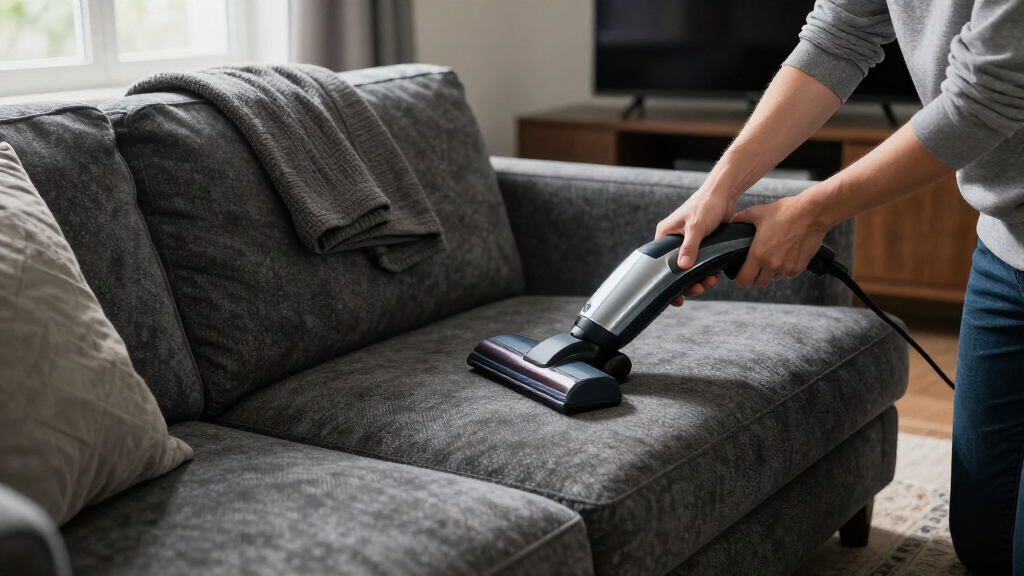
The guide describes a five-step routine attributed to Marla Mock, a cleaning expert and president of Molly Maid. It begins with brushing the sofa using a clean white towel or a stiff brush to loosen dried material. Mock then recommends sprinkling baking soda over the upholstery, leaving it for at least 20 minutes and up to an hour, and vacuuming it away with a brush attachment.
For remaining stains, Mock’s suggested mixture combines a teaspoon of dishwashing liquid, a tablespoon of white vinegar and a cup of warm water. She advises adding a teaspoon of baking soda in a spray bottle, then quickly closing it because the ingredients react. The solution should be sprayed onto a white cloth, not directly onto the sofa, and used to dab stains gently. The guide also describes wiping the whole sofa with the solution as an option, but its advice does not replace checking whether the upholstery is suitable for water-based cleaning.
After cleaning, the sofa should be left to air-dry, and people should avoid sitting on it for a few hours or until it is fully dry. For cushions, cleaning expert Tanu Grewal recommends brushing first and spot-treating with as little water as possible. Removable covers may be machine-washable, but the care label should determine whether laundering is allowed and whether washing must be done by hand.
Fabric Labels Shape Sofa Care
Sofa cleaning advice can affect both the appearance and condition of upholstery. Using a cleaner that is unsuitable for a fabric may cause damage, while excess moisture can leave cushions damp. The guide’s emphasis on labels gives readers a practical first check before trying a recipe or putting covers in a washing machine.
The recommendations also distinguish between routine upkeep and a deeper clean. The guide reports that cleaning expert Elizabeth Shields suggests deep-cleaning a sofa once a season, while people with removable covers may need to do so only twice a year. These are expert recommendations, not a universal schedule: how often a sofa needs cleaning can depend on its use, fabric and household conditions.
Care Advice From Cleaning Experts
The source is a Livingetc advice report, not a product test or independent study. It compiles recommendations from cleaning professionals, including Mock, Shields, Grewal and Rocky Vuong, founder of Neatbrite. Their advice covers a basic cleaning routine, cushions, removable covers and the meaning of common upholstery-care codes.
As presented in the guide, a tag marked W or WS permits water-based upholstery cleaners; S or SW indicates solvent cleaners are suitable; and X means vacuuming and light brushing only. These codes are meant to guide care, but owners should follow the specific manufacturer’s instructions for their sofa. The supplied source text ends partway through its advice on washing covers, so it does not provide the full set of laundering recommendations.
““Next up, sprinkle the entire couch with baking soda, and let it sit for at least 20 minutes, up to an hour.””
— Marla Mock, cleaning expert and president of Molly Maid, as quoted by Livingetc
Cleaning Limits Depend on Fabric
The guide does not establish that its baking soda and vinegar mixture is safe for every sofa. Fabric type, finish and manufacturer instructions vary, and the source does not give a complete compatibility chart or testing protocol for the suggested solution. Readers should check the care label and test any permitted cleaner on a small, inconspicuous area before treating a visible stain.
The source material also does not specify how the reported cleaning frequencies were determined, or provide evidence that the suggested routine removes particular allergens, bugs or odors. Its cover-washing section is incomplete in the supplied text, so detailed machine settings and drying instructions cannot be confirmed from the material available.
Check Labels Before Cleaning
For sofa owners, the next step is to read the upholstery and cushion labels before choosing a cleaning method. Confirm whether the material permits water-based products, solvent cleaners or only vacuuming and brushing. If covers can be washed, follow the manufacturer’s laundering directions rather than assuming they are machine-safe.
After any approved spot treatment, use minimal moisture and allow the sofa to dry fully before using it again. Livingetc’s guide offers general expert recommendations, but it does not report a new cleaning product, formal test result or follow-up study. The practical outcome depends on the sofa’s specific care instructions and condition.
Key Questions
How often should a sofa be deep-cleaned?
Livingetc quotes cleaning expert Elizabeth Shields recommending a seasonal deep clean. She says sofas with removable covers may need deep cleaning twice a year. The suitable schedule can vary with use and fabric.
Can I use water to clean my sofa?
Check the care label first. In the guide’s explanation, W or WS permits water-based upholstery cleaners, while an X code calls for vacuuming and light brushing only. Follow the sofa manufacturer’s instructions.
What does the guide recommend for spot-treating a stain?
Marla Mock recommends applying the suggested cleaning solution to a white cloth and gently dabbing the stain. Use only if the fabric’s care instructions allow the ingredients, and test in an inconspicuous area first.
Can sofa covers go in the washing machine?
Not always. The guide advises checking the manufacturer’s laundering instructions on the cover label to find out whether machine washing is allowed or hand washing is required.
How long should a sofa dry after cleaning?
The guide says to air-dry the sofa and avoid sitting on it for a few hours or until it is completely dry. Drying time will depend on the amount of moisture and the material.
Source: rss
Evergreen bestsellers Picks
bestsellers
As an affiliate, we earn on qualifying purchases.