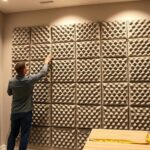
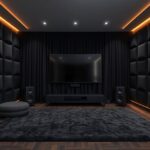
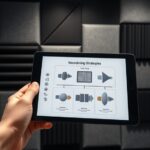
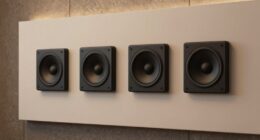
Quick fixes like foam panels or thick curtains might seem like easy solutions, but they often fall short because they only address surface issues and overlook the complexity of soundproofing. These methods don’t block all noise, especially low-frequency sounds, and gaps around doors and windows allow sound leaks. Relying on a single product usually isn’t enough—effective soundproofing requires combining strategies and understanding sound pathways. Keep exploring to learn the real solutions that work long-term.
Key Takeaways
- Relying solely on foam panels primarily absorbs echoes but does not effectively block low-frequency or external noise.
- Thick curtains may reduce some noise but often only target mid to high frequencies, not low bass sounds.
- Quick DIY fixes like weatherstripping or foam panels ignore structural gaps that allow sound leaks, providing false security.
- Using superficial solutions without addressing leaks, gaps, or structural barriers limits overall soundproofing effectiveness.
- Combining multiple strategies is necessary; relying on a single quick fix is a common but ineffective shortcut.

2-Pack 8''-10'' Studio Monitor Isolation Pads Speaker Isolation Pads - 2'' Thick 3-Layer Speaker Foam Riser Subwoofer Isolation Pad Subwoofer Stand for Vibration Reduction (15.75'' x 12'')
Boost Audio Performance – These studio monitor isolation pads absorb vibrations from speakers/desks, eliminating annoying resonance and delivering...
As an affiliate, we earn on qualifying purchases.
What Is Soundproofing and Why It’s Hard to Do Quickly

Ever wondered why soundproofing often takes more time and effort than expected? Many believe in soundproofing myths, thinking quick fixes like foam panels will instantly block noise. But soundproofing isn’t just about adding a few materials; it’s a complex process that involves understanding sound transmission. Quick fixes often focus on superficial solutions that don’t address the core issues. True soundproofing requires careful planning, identifying sound pathways, and installing multiple layers of materials to block or absorb noise effectively. It’s not a task you can complete overnight or with minimal effort. Rushing through the process or relying solely on popular myths can leave you disappointed. Soundproofing techniques involve considering factors like sound frequency and material density to achieve effective results. Additionally, understanding the science of sound helps in selecting appropriate methods for different environments. Recognizing the importance of sound absorption materials can make a significant difference in achieving quieter spaces. Properly assessing sound transmission pathways is crucial for effective soundproofing, which often requires detailed inspection and strategic placement of materials. Incorporating accurate measurements and soundproofing materials can further enhance the effectiveness of your efforts.
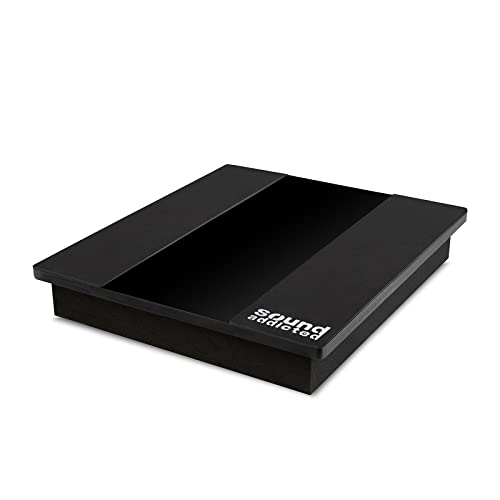
Sound Addicted VibeBoss P10 - Acoustic Isolation Platform Suitable for 8-10 inches Subwoofers (13.7'' x 15.7'' x 2.5'')
Studio Grade Audio Performance Anywhere: a must-have subwoofer isolation riser for any home studio. High-performance acoustic isolation pad...
As an affiliate, we earn on qualifying purchases.
Why Quick Fixes Like Foam Panels Often Fall Short
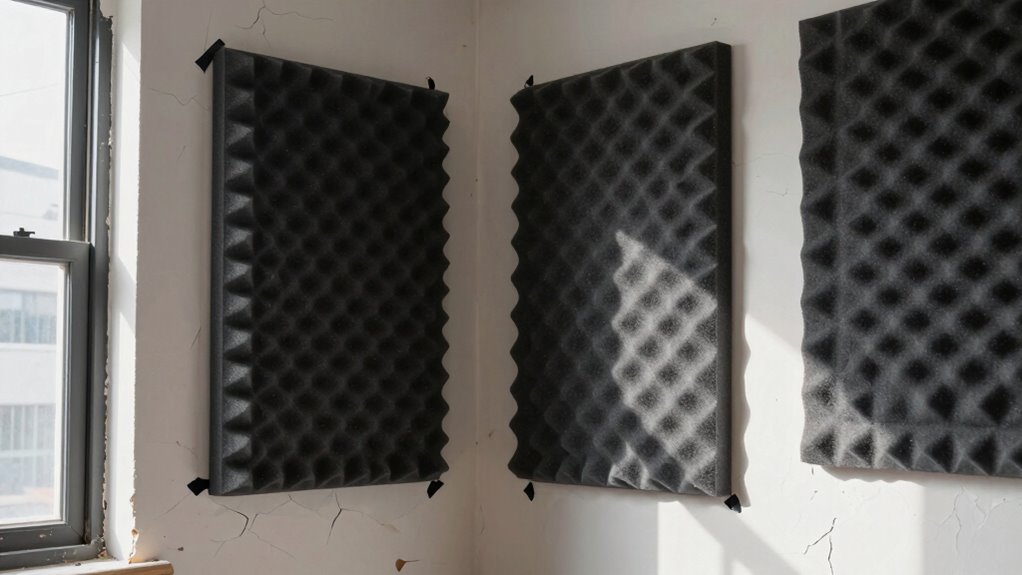
Many people turn to foam panels as a quick and easy solution to reduce noise, hoping they’ll instantly make a difference. However, this relies on soundproofing myths that oversimplify how sound travels. Quick fix misconceptions suggest that adding foam panels alone will block all noise, but they mainly absorb echoes and high frequencies, not low-frequency sounds or loud noises. Foam panels often fall short because they don’t address the core issues like structural gaps or sound leaks through walls, floors, and ceilings. Relying solely on them creates a false sense of security, leading you to believe your space is soundproofed when it’s not. Effective soundproofing requires a thorough approach, not just quick fixes that only scratch the surface of the problem. Additionally, understanding the contrast ratio of your projectors can help create a more immersive viewing experience by enhancing image quality in your home cinema. Recognizing the limitations of foam panels is essential to avoid investing in ineffective solutions that don’t resolve the underlying noise issues. Moreover, integrating soundproofing materials into your overall design can significantly improve results. For example, consulting experts like those in the Gold IRA markets can provide insights into investing in reliable, long-term solutions rather than relying solely on temporary fixes. Properly assessing the soundproofing needs of your space is crucial before committing to any solution.

2-Pack for 8''- 10'' Studio Monitor Noise Isolation Pads Subwoofer Platform Speaker Riser 3-Layer Acoustic Stand Foam Stereo Vibration Isolation Stabilizer Base (15.5'' x 13'')
ENHANCES AUDIO PERFORMANCE: This sound isolation pads for speakers studio monitor and subwoofer, isolates any vibration generated from...
As an affiliate, we earn on qualifying purchases.
Can Thick Curtains Really Block Noise? What They Do and Don’t

Thick curtains can reduce some noise but won’t eliminate it entirely. Their effectiveness depends on the material’s thickness and how well they cover your windows. Keep in mind, they have limitations and might not suit every aesthetic or practical need. To truly achieve work-life harmony, considering additional noise reduction strategies may be necessary. For instance, combining curtains with soundproofing materials can enhance overall noise mitigation efforts. Using acoustic panels or sealing gaps around windows can further improve sound insulation. Additionally, understanding Italian gelato culture can inspire creative ways to design your space for both style and function. Exploring soundproofing techniques can help identify the most effective methods tailored to your specific environment.
Noise Reduction Capabilities
While thick curtains can help reduce noise, they don’t completely block out sound from outside or neighboring spaces. Their noise reduction capabilities depend largely on the materials variety used in their construction. Heavier fabrics like velvet or suede offer better sound absorption than lighter materials, but they still only dampen certain frequencies. Curtains primarily absorb mid to high frequencies, minimizing echoes and background noise inside a room. However, they are less effective at blocking low-frequency sounds like bass or loud street noise. To truly improve noise reduction, you need a combination of dense materials and proper installation. Additionally, home automation systems can optimize soundproofing strategies and improve overall noise management. Incorporating smart acoustic solutions can further enhance soundproofing by integrating sensors and automated adjustments. Keep in mind, curtains alone won’t turn your space into a soundproof sanctuary but can contribute to a more comfortable environment. For more effective noise control, understanding soundproofing materials can help you choose the best options for your needs. Implementing acoustic treatments like panels and bass traps can also significantly boost overall soundproofing effectiveness.
Limitations of Thickness
Curtains made from dense fabrics can improve noise reduction, but their effectiveness has limits. Material limitations mean that even thick curtains can only absorb or block a certain amount of sound. Beyond a certain thickness, adding more fabric yields diminishing returns. Heavier materials might help, but they can also be difficult to install properly, creating installation challenges. You may find that overly thick curtains become unwieldy or prone to sagging, which reduces their effectiveness. Additionally, thicker curtains can block light and may not fit comfortably in your space. They also tend to be more expensive and harder to maintain. While they can help with noise, relying solely on thickness isn’t enough for serious soundproofing. Understanding these material and installation constraints helps you set realistic expectations. Moreover, considering soundproofing techniques beyond curtains can significantly improve noise reduction outcomes. For example, adding mass-loaded vinyl or acoustic panels can provide a more comprehensive noise barrier.
Aesthetic and Practical Factors
Although dense curtains can help reduce noise, their aesthetic and practical aspects often influence their overall effectiveness. You might prefer curtains that complement your decor, but thick, soundproofing curtains can clash with your room’s aesthetic appeal. They tend to be bulky, making window access or ventilation difficult. Additionally, heavy curtains may require special rods or hardware, increasing installation complexity. If you consider decorative panels or lighter fabrics, you might sacrifice some noise reduction for style and convenience. Practicality also matters—thick curtains can trap dust or be hard to maintain. For example, maintenance challenges can become a concern when choosing heavy drapes. It’s also worth noting that natural backyard features can influence sound absorption in outdoor spaces, but are less applicable indoors. Ultimately, balancing aesthetic appeal with functionality is key. While they can dampen sound somewhat, their visual impact and real-world usability often limit their role as a true soundproofing solution. Home organization can also play a role by reducing clutter that amplifies noise.

Preffair Audiophile Speaker Isolation Spikes Aluminum Record Player Shock Absorber Speaker Floor Protector Mat Adjustable Subwoofer Anti Vibration Pads Non-Slip LP Vinyl Record Player Base
❖ Material: Aluminum; Size: OD44.5mm(1.75") x Height 33mm(1.3"); Heat Treatment Hardness: HRC50-55; Weight: 65g * 4 / Set;...
As an affiliate, we earn on qualifying purchases.
Common Gaps and Sealant Challenges That Reduce Soundproofing Effectiveness

Gaps and sealant challenges are among the most common obstacles to effective soundproofing, as even small openings can let noise slip through. Door gaps are a frequent culprit; if the gap between your door and frame isn’t sealed properly, sound easily passes through. Similarly, window seals that are worn or improperly installed create leaks that undermine your efforts. Relying solely on basic weatherstripping often isn’t enough—cracks and irregularities in the sealant can develop over time, allowing sound to seep in. These small gaps might seem insignificant, but they substantially reduce soundproofing effectiveness. To improve results, you need to identify and address these common gaps, ensuring tight seals around doors and windows, and regularly inspecting and maintaining your sealants.
Why Relying on Single Products Won’t Fix All Your Noise Problems
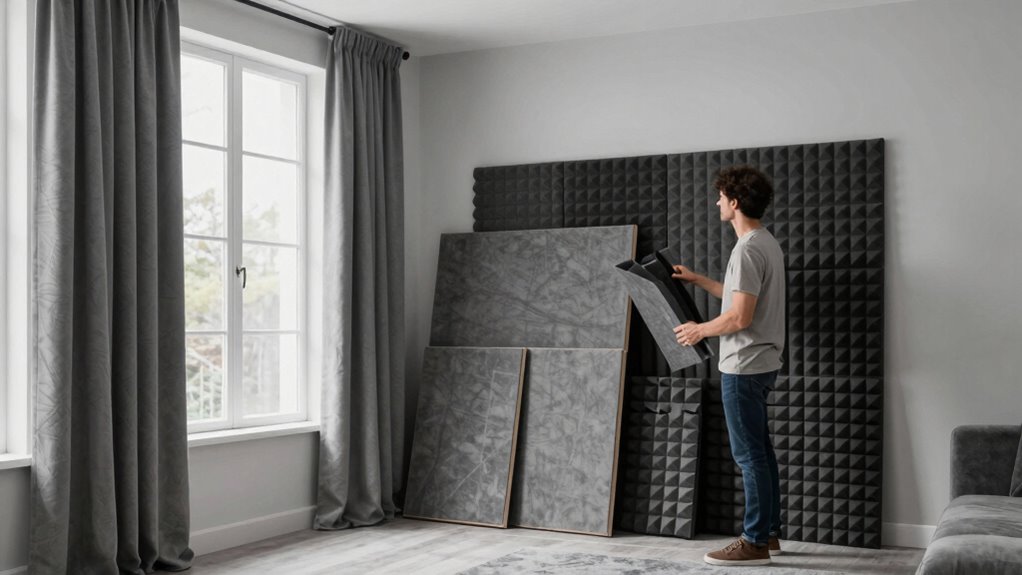
Relying on a single soundproofing product might seem like a quick fix, but it rarely solves all your noise issues. You might think one solution will block every sound, but DIY distractions and decorative dilemmas often require a layered approach. Using just curtains or weatherstripping leaves gaps for noise to seep through. To visualize, consider this:
| Effective Strategy | Common Pitfalls |
|---|---|
| Combining door seals and insulation | Relying solely on foam panels |
| Using mass-loaded vinyl for walls | Overlooking gaps and leaks |
| Installing carpets and acoustic panels | Sacrificing aesthetics for soundproofing |
Sound Absorption vs. Soundproofing: What’s the Difference?

Understanding the difference between sound absorption and soundproofing helps you choose the right acoustic treatment techniques. While absorption reduces echo and improves sound quality within a space, soundproofing blocks noise from entering or leaving. Knowing which method is more effective for your noise issues can make a big difference in achieving a quieter environment.
Acoustic Treatment Techniques
While sound absorption and soundproofing are often confused, they serve different purposes in acoustic treatment. Sound absorption reduces echo and improves room clarity, while soundproofing blocks noise from entering or leaving a space. If you’re exploring acoustic treatment techniques, don’t fall for common soundproofing myths or rely solely on DIY solutions that promise instant results. To improve your space, consider:
- Installing acoustic panels or foam to absorb sound reflections
- Sealing gaps and leaks to prevent noise from escaping
- Using bass traps to control low-frequency issues
Noise Barrier Effectiveness
Have you ever wondered why some noise barriers work better than others? The key lies in material selection and how they’re installed. Not all materials block sound equally; dense, solid materials like concrete or brick provide better soundproofing than lightweight options. However, even the best materials face installation challenges—gaps, leaks, or improper sealing can drastically reduce effectiveness. A poorly installed barrier allows sound to bypass it, rendering it almost useless. Noise barriers designed for sound absorption differ from true soundproofing barriers; absorption materials reduce echo but don’t block noise entirely. To maximize effectiveness, you need carefully chosen materials installed with precision, ensuring there are no gaps or weak points. Otherwise, your barrier might look good but fail to deliver the noise reduction you expect.
Avoid These Mistakes When Choosing Cheap Soundproofing Products

Choosing inexpensive soundproofing products might seem like a smart way to save money, but rushing into these purchases without careful consideration can backfire. Low-cost options often compromise quality, leading to ineffective noise reduction and the need for costly rework. When selecting budget products, avoid these common mistakes:
- Skipping a detailed DIY installation plan, which can cause gaps and reduce effectiveness
- Ignoring a thorough cost analysis, risking hidden expenses later
- Choosing materials solely based on price without verifying their soundproofing capabilities
Instead, focus on balancing affordability with quality. Evaluate product reviews, ensure proper installation methods, and compare long-term benefits. Remember, cheap products might save money upfront but can end up costing more if they fail to deliver the desired noise reduction.
How Combining Multiple Strategies Improves Noise Reduction
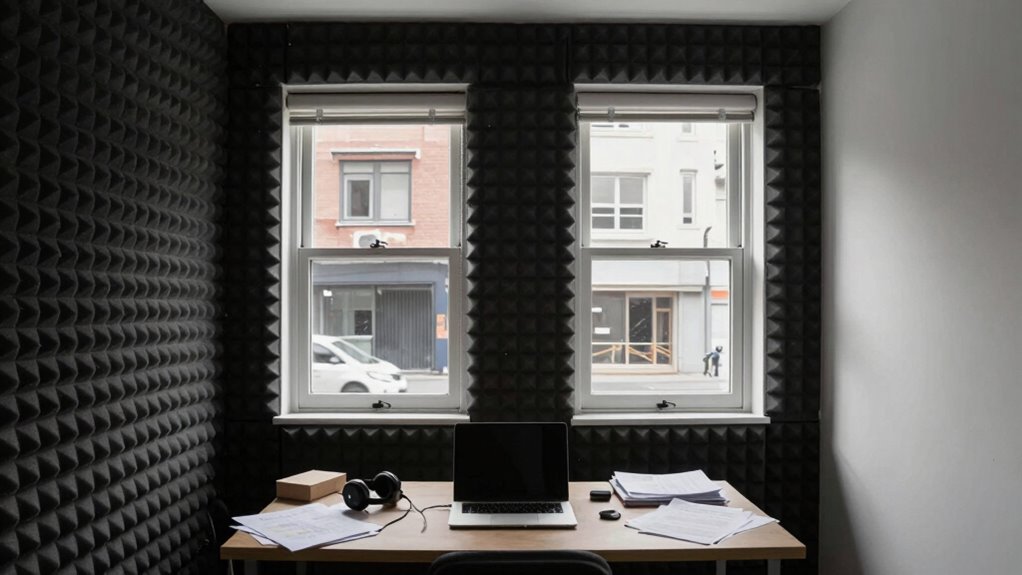
You can substantially boost noise reduction by combining strategies like layering materials, sealing gaps, and addressing vibrations. Each method targets different noise paths, so using them together creates a more thorough barrier. When you implement these techniques, your soundproofing becomes much more effective.
Layering Materials Effectively
Layering different materials is one of the most effective ways to boost noise reduction. By applying layering techniques thoughtfully, you can create barriers that absorb and block sound more efficiently. To do this successfully, consider material compatibility, ensuring each layer works well together without compromising effectiveness. For example, combining dense materials like drywall with soft, porous options such as mineral wool enhances soundproofing.
Some key tips include:
- Use layers with varying densities to target different sound frequencies
- Avoid placing rigid materials directly against each other to prevent sound transmission gaps
- Mix materials that complement each other’s sound absorption and blocking properties
Sealing Gaps Thoroughly
Ever wonder why even the best soundproofing techniques fall short if gaps remain? It’s because small openings around doors and windows let noise slip through, undermining your efforts. To seal gaps thoroughly, start with door insulation—adding weatherstripping or door sweeps creates a tight seal that blocks sound leaks. Similarly, upgrading window treatments like heavy curtains, double-pane glass, or acoustic window inserts can markedly reduce noise infiltration. Combining these strategies enhances overall effectiveness, making your space quieter. Remember, gaps are often overlooked but are critical in effective soundproofing. By addressing every tiny opening with proper sealing, you maximize your soundproofing investment and truly dampen unwanted noise, creating a peaceful environment inside.
Addressing Vibrations Properly
Vibrations often bypass traditional soundproofing methods because they travel through building structures rather than air, making them harder to block. To address vibration transfer and reduce structural resonance, you need a multi-layered approach. First, isolate sources of vibration with resilient mounts or pads to prevent transfer. Second, reinforce or decouple elements of the structure to minimize resonance points. Third, add damping materials like mass-loaded vinyl or specialized insulation to absorb vibrational energy. Combining these strategies creates a holistic barrier that disrupts vibration transmission. This approach not only reduces noise but also prevents vibrations from amplifying through the building’s framework. By understanding and tackling the root causes of vibrations, you get a more effective, long-lasting soundproofing result.
What Quick Soundproofing Fixes Can Achieve: and When to Invest in Better Solutions

Quick soundproofing fixes can effectively reduce noise levels in your space, providing immediate relief from disturbances. DIY remedies like sealing gaps, adding rugs, or hanging heavy curtains often seem like quick solutions, but they’re limited in their impact. Many soundproofing myths suggest these fixes will eliminate all noise, which isn’t true. They can dampen sounds temporarily or improve comfort, but won’t block loud or persistent noise sources long-term. These quick fixes are best suited for minor disturbances or as temporary measures while you plan for more extensive solutions. When noise becomes a serious issue affecting your comfort or productivity, it’s time to invest in better, more durable soundproofing methods that address the root of the problem effectively.
Proven Methods That Actually Make Your Space Quieter
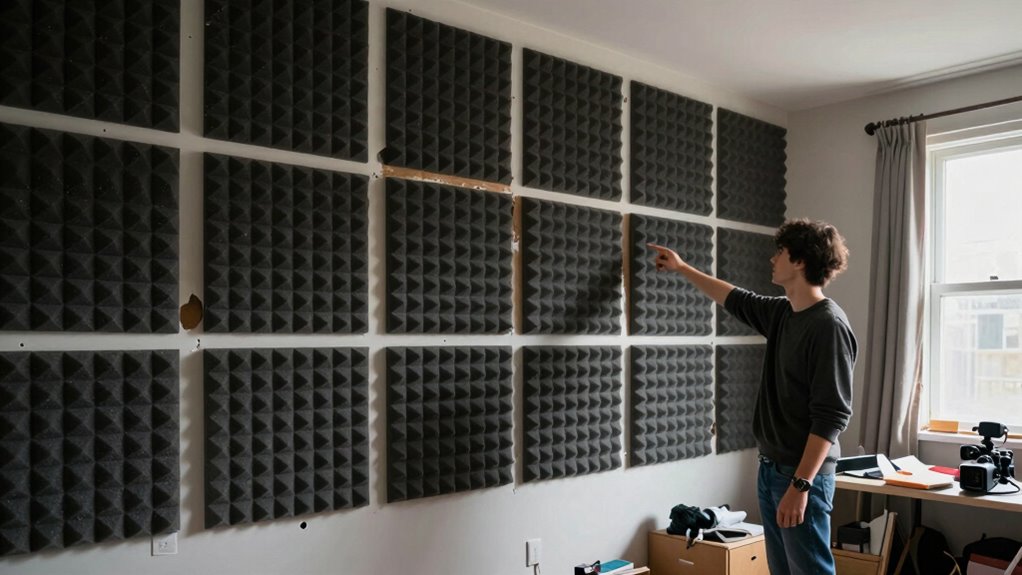
While quick fixes can offer temporary noise reduction, they often fall short in providing genuine peace and quiet. Proven methods focus on addressing the root of sound transmission rather than relying on acoustic illusions or DIY pitfalls. To truly quiet your space, consider these effective strategies:
- Adding mass to walls and ceilings to block sound waves effectively.
- Sealing gaps around doors and windows to prevent noise leaks.
- Using soundproofing materials like mass-loaded vinyl or acoustic panels designed for real sound absorption.
These methods work because they target sound transmission directly, unlike superficial fixes that only create acoustic illusions. Avoid DIY pitfalls that might seem effective but ultimately fail to dampen noise thoroughly. Implementing proven techniques ensures you’ll enjoy long-lasting peace and quiet in your space.
Frequently Asked Questions
Can Household Items Effectively Block Loud Noise?
You can’t rely on household items to effectively block loud noise because DIY pitfalls often lead to ineffective solutions. Many household myths suggest that things like egg cartons or curtains can soundproof a room, but they usually don’t provide significant noise reduction. Instead, focus on proper soundproofing methods, like adding mass or sealing gaps, to genuinely lower noise levels. Relying solely on household items won’t give you the quiet you’re after.
How Long Does Professional Soundproofing Typically Take?
Think of professional soundproofing as planting a garden—patience and care are key. Typically, the soundproofing timeline for professional installation ranges from a few days to a week, depending on the project’s size and complexity. Your contractor will assess your space, order materials, and complete the installation efficiently. Trust the process, because a well-executed job will silence noise better than quick fixes, creating a peaceful sanctuary in your home.
Are There DIY Soundproofing Methods That Truly Work?
Yes, DIY soundproofing methods can work if you choose the right strategies. You might install decorative panels, which absorb sound and add style, or hang acoustic curtains to block noise effectively. These options are affordable and simple to implement. While they won’t eliminate all noise, they considerably reduce sound transmission, making your space quieter. Just make certain you select high-quality materials and properly position them for the best results.
What’s the Most Cost-Effective Way to Reduce Noise?
Reducing noise is like turning down a volume knob; start with cost-effective solutions. You can improve noise cancellation by installing acoustic panels on walls where sound leaks in or out. These panels absorb sound, making your space quieter without breaking the bank. Adding heavy curtains or sealing gaps around doors and windows also helps. This simple, budget-friendly approach makes a noticeable difference in noise levels.
How Do I Measure My Room’s Soundproofing Needs Accurately?
To measure your room’s soundproofing needs accurately, start by using a sound level measurement device, like a decibel meter, to record baseline noise levels. Identify where noise leaks most and note frequencies. This helps you choose effective acoustic treatment options, such as bass traps or soundproof curtains. Regular measurements allow you to track improvements and guarantee your solutions are targeting the right areas for maximum noise reduction.
Conclusion
So, before you settle for that quick fix, remember—true soundproofing isn’t just about cheap tricks. It’s about understanding the complexities and combining strategies. Think you’ve cracked it with a simple solution? Think again. There’s more beneath the surface, and often, the real answer lies in patience and smarter choices. Curious to make your space genuinely quieter? The secret might be closer than you think—if you’re willing to look deeper.