Native resolution is the actual number of pixels a display or sensor contains, ensuring images are sharp and detailed without scaling. Digital resolution, however, can be adjusted through resizing or resampling, offering more flexibility but risking loss of clarity if enlarged beyond native limits. Keeping images at native resolution preserves quality and color accuracy, especially in professional work. To understand how these concepts impact your images and displays, explore further.
Key Takeaways
- Native resolution is the fixed pixel count of a display or sensor, representing the original image detail.
- Digital resolution is flexible and involves how many pixels are used after resizing or processing images.
- Enlarging images beyond their native resolution can cause blurriness due to pixel interpolation.
- Maintaining native resolution preserves image sharpness, detail, and color accuracy.
- Proper understanding ensures optimal workflow, accurate output, and high-quality visual results across devices.
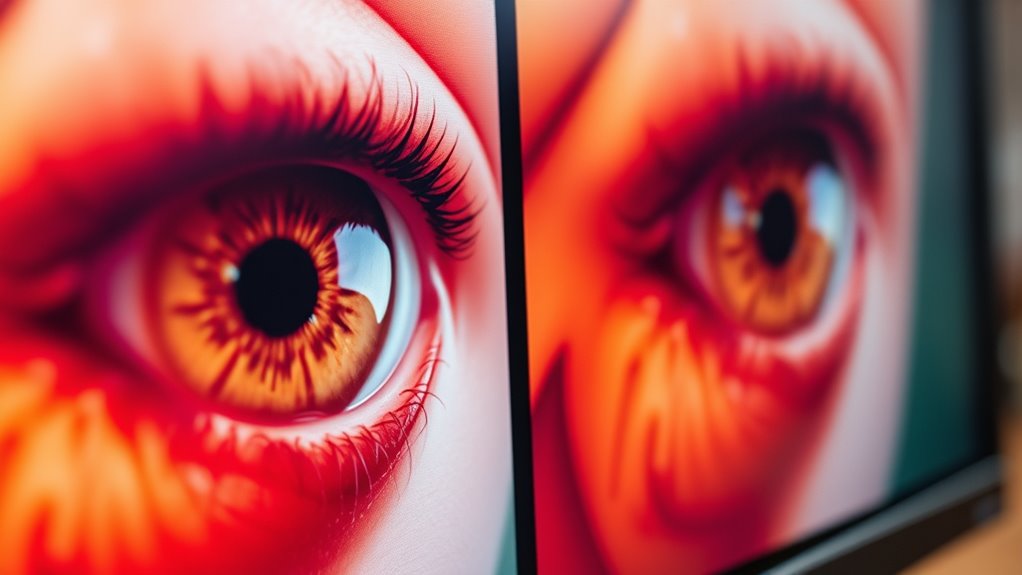
When working with digital images, understanding the difference between native and digital resolution is essential for achieving the best quality. Native resolution refers to the actual number of pixels a display or image sensor contains, which directly affects how sharp and detailed your images appear. If your goal is to produce images with high image sharpness, knowing the native resolution helps you avoid unnecessary scaling that can blur details or introduce artifacts. Digital resolution, on the other hand, involves how many pixels you effectively display or print after processing or resizing. It’s a more flexible concept that depends on your device capabilities or output requirements.
If you try to enlarge an image beyond its native resolution, you risk losing image sharpness because the software has to interpolate new pixels. This process can make images look blurry or pixelated, reducing the overall clarity. Conversely, if you stick to the native resolution, you preserve the original detail captured by your camera or display, ensuring your images remain crisp and clear. Additionally, maintaining the native resolution can considerably impact color accuracy. When you resize or resample images, colors can shift or become less true to life, especially if interpolation algorithms are involved. Staying close to the native resolution helps keep colors vibrant and accurate, which is essential for professional work like printing or detailed editing.
Using native resolution also benefits workflows focused on precise color grading and fine detail work. When your image’s resolution aligns with your display or print device, you can see the true color nuances and sharpness without distortion. This accuracy is indispensable for photographers, designers, and anyone who needs reliable visual fidelity. It’s worth noting that digital resolution plays a role when preparing images for different outputs. For example, a low-resolution image might look fine on a screen but will appear pixelated when printed large. Conversely, working with high native resolution images gives you more flexibility to adapt them for various formats while maintaining quality.
Furthermore, understanding the importance of native resolution is crucial for optimizing your workflow and ensuring consistency across devices and outputs.
1500 ANSI Official Licensed Google TV Smart Projector, HAPPRUN 4K Full HD Home Theater with Auto Focus, Dolby Sound, Wi-Fi Bluetooth, Built-in Apps, Compatible with Phone & PC, Indoor & Outdoor Use
[ Built-in Officially Licensed Google TV ]-Enjoy the reliability of an officially certified Google TV projector. Stream Netflix,...
As an affiliate, we earn on qualifying purchases.
Frequently Asked Questions
How Does Resolution Impact Gaming Performance?
Resolution directly impacts gaming performance by affecting image clarity and system load. Higher resolutions demand more from your GPU, which can lower frame rates. Display scaling helps maintain visual quality at different resolutions, while a higher refresh rate offers smoother gameplay. Balancing these factors means choosing a resolution your system can handle comfortably, ensuring ideal performance without sacrificing visual quality or responsiveness.
Can Digital Resolution Be Increased Without Hardware Changes?
Imagine stretching a tiny, detailed painting to fill a vast wall. You can increase digital resolution without hardware changes through software scaling, which uses pixel interpolation to fill in gaps. This process smooths images but can soften details. So, yes, you can boost digital resolution, but it’s like enlarging that painting—details may blur without new, dedicated hardware.
What’s the Difference Between Resolution and Image Quality?
Resolution refers to the number of pixels in an image, affecting pixel density, while image quality encompasses overall clarity, color accuracy, and detail. Higher resolution increases pixel density, making images sharper, but doesn’t guarantee better color accuracy or depth. You should consider both factors when evaluating images, as resolution alone doesn’t determine how good they look; quality depends on how well colors are reproduced and details are preserved.
How Do Native and Digital Resolution Affect Video Editing?
You might think resolution isn’t vital, but it deeply impacts your editing. Native resolution ensures color accuracy and sharpness, making your footage look authentic. Digital resolution, however, can introduce compression artifacts, subtly degrading quality if you scale or manipulate footage. Pay attention to these differences, or risk your final project feeling off. The choice affects every detail—making or breaking your vision—so don’t overlook its significance in shaping your masterpiece.
Are Higher Resolutions Always Better for Everyday Use?
Higher resolutions aren’t always better for everyday use. If your screen size is small, the extra detail may not be noticeable, and it can even slow down your device. Also, consider color accuracy; higher resolutions don’t automatically imply better color. You should balance resolution with other factors like screen size and color accuracy to ensure a comfortable viewing experience. Ultimately, choose what suits your daily tasks and preferences best.

Official Licensed Google TV Smart Projector, HAPPRUN 4K UHD Home Theater with Dolby Sound, Wi-Fi & Bluetooth, Built-in Streaming Apps, Compatible with Games Consoles & Smartphone, Indoor & Outdoor Use
[ Built-in Official Licensed Google TV ] - Without additional equipment, the smart projector can directly access Netflix,...
As an affiliate, we earn on qualifying purchases.
Conclusion
Now that you know the difference between native and digital resolution, you’re practically a resolution guru! Imagine your screen transforming into a high-definition masterpiece, crystal clear enough to see every pixel like never before. Don’t settle for blurry images or pixelation — your eyes deserve the absolute best. Mastering these concepts means you’ll never be fooled by low-quality displays again. Get ready to see the digital world in jaw-dropping, mind-blowing clarity!
![Projector with 5G WiFi and Bluetooth, Native 1080P Projector[Projector Screen Included], Full HD 18000LM Movie Projector, 100" Display Home Theater, Compatible with Phone/Laptop/TV Stick](https://m.media-amazon.com/images/I/51tJ+dTl5qL._SL500_.jpg)
Projector with 5G WiFi and Bluetooth, Native 1080P Projector[Projector Screen Included], Full HD 18000LM Movie Projector, 100" Display Home Theater, Compatible with Phone/Laptop/TV Stick
【2.4G/5G Dual-Band Wifi & Bluetooth Connection】 Roconia projector supports screen mirroring on iOS, Android and Windows devices without...
As an affiliate, we earn on qualifying purchases.

BenQ W4100i 4K HDR Smart Home Theater Projector, 3200 Lumens, 100% DCI-P3, Rec.709, Factory-Calibrated, Android TV with Netflix, 4-Way Lens Shift, HDR10+ & HLG Support, LED Long Lifespan
PROJECTOR-OPTIMIZED TRUE 4K UHD and HDR: HDR-PRO technology exclusive Local Contrast Enhancer and Tone Mapping for perfect details...
As an affiliate, we earn on qualifying purchases.