LCD, DLP, and LCoS projectors each use different technologies that impact image quality, brightness, and color accuracy. LCD projectors provide bright, vibrant images well-suited for well-lit spaces but can show a screen door effect. DLP projectors offer sharp images with high contrast and deep blacks, making them popular for home theaters. LCoS combines benefits of both, delivering smooth, high-quality visuals with minimal artifacts. To discover which suits your needs best, explore their key differences further.
Listen free for 30 days with Audible
Thousands of audiobooks and originals — cancel anytime.
As an affiliate, we earn on qualifying purchases.
Key Takeaways
- LCD projectors use three panels for red, green, and blue, offering high brightness and vibrant colors.
- DLP projectors utilize tiny mirrors and often feature a spinning color wheel for sharp images and better contrast.
- LCoS combines LCD and DLP tech, delivering smooth images, high contrast, and minimal artifacts, ideal for professional use.
- LCDs excel in bright environments with vivid colors, while DLPs provide deeper blacks and high contrast for home theaters.
- LCoS offers superior image quality with minimal screen door effects, making it suitable for high-end presentations and home cinema setups.
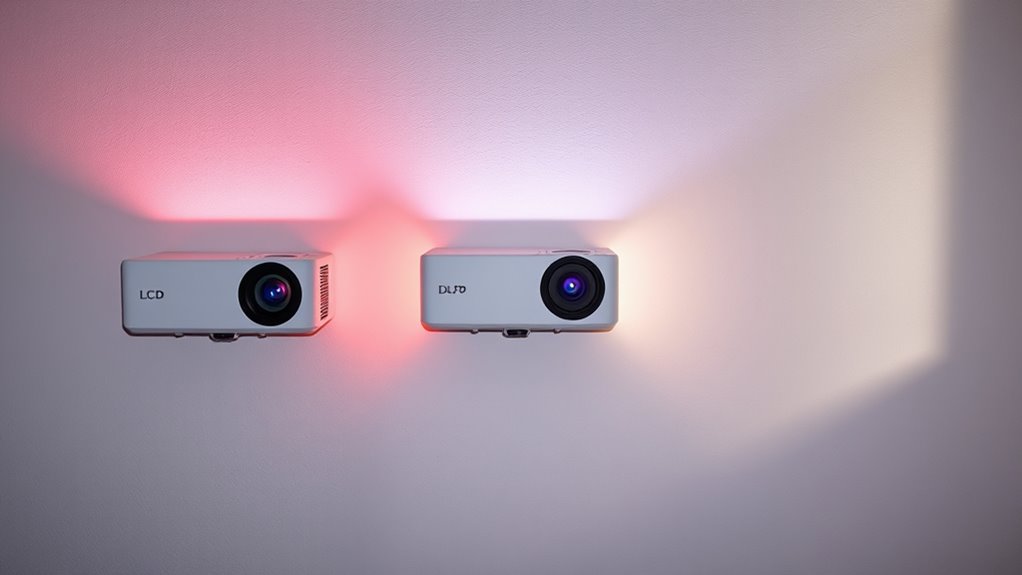
When choosing a projector, understanding the differences between LCD, DLP, and LCoS technologies is essential. Each type offers unique advantages and challenges, especially when it comes to projection brightness and color accuracy. Your decision should hinge on how you’ll use the projector and which features matter most to you.
LCD projectors use three separate LCD panels—one for red, green, and blue. Because of this design, they typically produce higher projection brightness, making them ideal for well-lit rooms or large venues. The bright images mean you won’t need to dim your lights as much, ensuring your presentations or movies are visible and vibrant. However, when it comes to color accuracy, LCD projectors excel because they tend to produce more vivid, true-to-life colors. Their color reproduction is often more consistent across different brightness levels, giving you a richer visual experience. That said, LCDs can sometimes suffer from a phenomenon called “screen door effect,” where you might notice a grid pattern due to the pixel structure, especially in high-resolution models.
LCD projectors offer bright images and vivid, true-to-life colors ideal for large, well-lit spaces.
DLP projectors, on the other hand, rely on tiny mirrors on a chip to reflect light through a spinning color wheel or separate color panels. They are known for their sharp images and fast response times, making them popular for home theaters and gaming. In terms of projection brightness, DLP models can deliver high brightness levels, but their performance varies depending on the quality of the light source and the design. When it comes to color accuracy, DLP projectors tend to produce more contrast and deeper blacks, which enhances perceived color richness. However, some DLP models might exhibit color shading or “rainbow effects” in fast-moving scenes, which can distract viewers sensitive to these artifacts.
LCoS (Liquid Crystal on Silicon) combines elements of LCD and DLP. It uses reflective liquid crystal technology, offering excellent image quality, high contrast ratios, and smoother color gradations. When considering projection brightness, LCoS projectors may not reach the extremes of LCD or DLP models but still provide sufficient brightness for most indoor settings. Their real strength lies in color accuracy, delivering nuanced, natural colors with minimal artifacts. This makes LCoS particularly suitable for professional presentations, home cinemas, or any situation where image fidelity matters most.
Ultimately, your choice depends on balancing projection brightness and color accuracy with your specific needs. If you prioritize a bright, vibrant display in a well-lit environment, LCD is often the best choice. For sharp images with high contrast and deeper blacks, DLP might be preferable. If you want the smoothest, most accurate colors with high contrast, then LCoS could be the ideal option.
Frequently Asked Questions
Which Projector Type Offers the Best Color Accuracy?
You’ll find that LCoS projectors typically offer the best color accuracy, thanks to their wider color gamut and smoother image. They excel at reproducing vibrant, true-to-life colors. Proper calibration techniques can further enhance this accuracy, ensuring consistent, precise images. While LCDs also perform well, especially with color, DLPs may struggle with color accuracy due to their narrower color gamut. So, for the best color fidelity, LCoS is your top choice.
How Energy-Efficient Are LCD, DLP, and LCOS Projectors?
You’ll find that LCD projectors tend to use more power due to their backlit panels, making their power consumption higher overall. DLP projectors usually consume less energy, which is great for saving on electricity. LCoS projectors often fall in between. Also, consider standby power; many models keep some energy draw even when off, so look for projectors with low standby power to maximize energy efficiency and reduce your electricity bills.
Are There Maintenance Differences Among the Three Projector Types?
You’ll find that maintenance requirements vary among these projector types. LCD projectors need regular filter cleaning and lamp replacements, while DLP models generally require less upkeep but might need occasional dust removal. LCoS projectors demand careful handling of delicate components, impacting longevity considerations. Overall, DLP projectors tend to have lower maintenance needs, making them more convenient for long-term use. Regular upkeep ensures peak performance and prolongs each projector’s lifespan.
Which Projector Type Is Most Suitable for Portable Use?
You’ll find DLP projectors most suitable for portable use because they’re lightweight and compact, making them easy to carry around. Their battery life tends to be decent, allowing you to project for longer periods without needing a power outlet. With their small size and lower weight, DLP projectors are ideal for on-the-go presentations or entertainment, giving you convenience and flexibility wherever you need to project.
How Do Projector Prices Compare Across LCD, DLP, and LCOS?
You’ll find that LCD projectors often offer budget options, making them ideal if you’re on a tight budget, while DLP projectors tend to be more expensive but deliver smoother images. LCoS projectors usually come at a higher price point, but provide superior image quality. Brand availability influences prices too; popular brands may cost more, but they also offer better reliability. Compare options based on your budget and desired performance to find the best fit.
Conclusion
Knowing the differences between LCD, DLP, and LCoS projectors helps you choose the right one for your needs. Whether you prioritize vibrant colors, smooth motion, or sharp detail, understanding these technologies guides your decision. By comparing brightness, contrast, and price, you can make a smarter choice. So, consider your environment, your budget, and your preferences — and pick a projector that delivers clarity, consistency, and confidence every time you project.
Flea & tick season Picks
flea and tick prevention
As an affiliate, we earn on qualifying purchases.