
To guarantee accurate color measurements with a colorimeter, you should regularly calibrate it using the manufacturer’s standards, keeping it clean and free of dust. Hold the device steadily against surfaces and avoid changing angles during measurements. Consistent ambient lighting also helps improve reliability. Regular calibration prevents measurement drift and maintains precision, which is critical for projects like color matching and quality control. If you’re ready to learn more, you’ll find useful tips to optimize your technique and results.
Key Takeaways
- Regularly calibrate the colorimeter using manufacturer-recommended standards to maintain measurement accuracy.
- Keep the device clean and free of smudges or dust to ensure precise readings.
- Follow proper measurement techniques, such as holding the device steadily and maintaining consistent ambient lighting.
- Recalibrate frequently to prevent measurement drift caused by environmental factors or device aging.
- Use calibrated standards and consistent procedures to ensure color matching accuracy across projects.

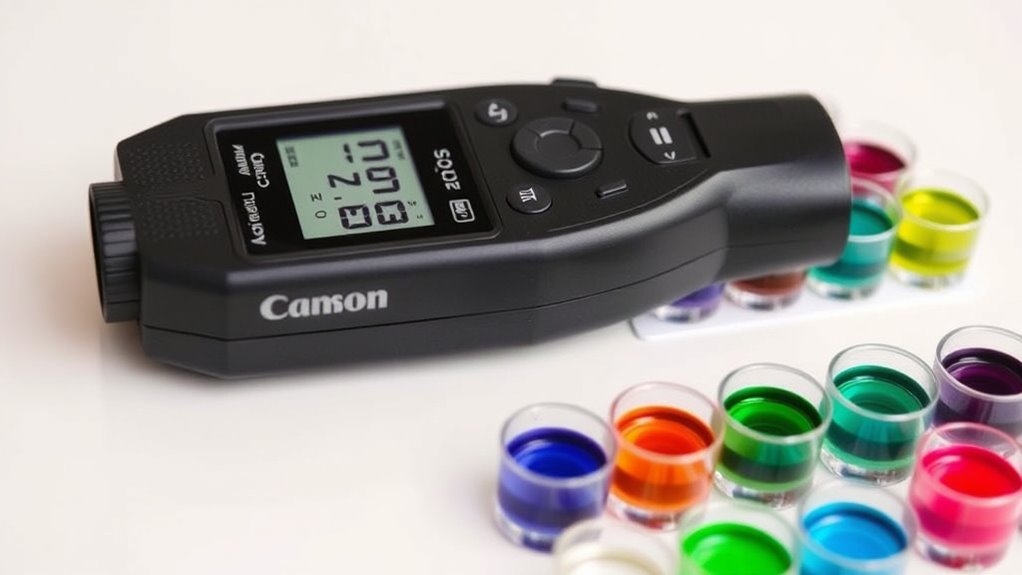
To achieve precise color measurements, using a colorimeter tool is essential. When you’re working on projects that demand accurate color matching, relying solely on visual assessment can lead to inconsistencies. A colorimeter provides an objective, reliable way to quantify colors, ensuring your results are consistent across different devices, lighting conditions, and materials. The key to maximizing this tool’s effectiveness lies in understanding proper calibration procedures. Regular calibration helps your colorimeter maintain accuracy by adjusting it to a known standard, preventing drift over time. Without proper calibration, your measurements may become unreliable, leading to color mismatches and potential setbacks in your workflow.
Getting started with calibration procedures involves a few straightforward steps. First, always use the manufacturer-recommended calibration standard, which is usually provided with the device or available through trusted suppliers. Before taking any measurements, ensure your colorimeter is clean and free of smudges or dust, as these can affect accuracy. Place the device on the calibration standard and follow the instructions specific to your model. This process typically involves pressing a calibration button or entering a calibration mode, after which the device compares its readings to the known standard and adjusts accordingly. Performing calibration at regular intervals—daily or weekly depending on usage—helps maintain measurement consistency.
Always use the manufacturer’s calibration standard and keep your device clean for accurate color measurements.
When you’re attempting color matching, calibration is your first step. Accurate calibration ensures that the readings you obtain truly reflect the color you’re measuring, rather than being skewed by device inaccuracies. Once calibrated, you can confidently compare your sample colors to standard references or digital files. This is especially important in industries like printing, manufacturing, or design, where even slight deviations can compromise quality. Remember, calibration isn’t a one-time task; environmental factors like temperature and humidity can influence your device’s performance, so periodic recalibration is necessary to keep measurements precise. Additionally, understanding the drift in device accuracy over time emphasizes the importance of regular calibration routines.
In addition to calibration, pay attention to proper measurement techniques. Hold the colorimeter steadily against the surface, avoid changing angles, and ensure consistent lighting conditions, as ambient light can interfere with readings. By combining proper calibration procedures with meticulous measurement techniques, you ensure that your color matching efforts are accurate and reproducible. Ultimately, investing time in calibration and understanding your device’s requirements will save you from costly errors, improve quality, and streamline your workflow. Whether you’re matching colors for branding, quality control, or creative projects, these practices will help you achieve reliable, professional results every time.
Frequently Asked Questions
Can Colorimeters Measure Colors in Very Low Light Conditions?
Colorimeters struggle with low light challenges, making it difficult to measure colors accurately in dim conditions. You might find that their sensors can’t detect enough light, leading to unreliable readings. To improve accuracy, you should use calibration techniques like adjusting the light source or increasing exposure time. However, for very low light environments, specialized instruments like spectrophotometers may be more effective to guarantee precise color measurements.
How Do Environmental Factors Affect Colorimeter Readings?
Environmental factors, like ambient light effects, can markedly impact your colorimeter readings. These effects may introduce errors and reduce calibration accuracy, so it’s essential to control lighting conditions during measurements. You should calibrate your device regularly and conduct tests in consistent environments to minimize variability. By managing ambient light effects, you ensure your colorimeter provides precise, reliable data, improving overall measurement accuracy.
Are Colorimeter Tools Suitable for Outdoor Color Measurements?
You might think a colorimeter is perfect for outdoor measurements, but surprise—it’s not! Light interference from sunlight and environmental factors quickly disrupt color consistency, making readings unreliable. For accurate outdoor color measurements, specialized instruments designed to handle varying light conditions are better. So, unless you enjoy chasing inconsistent results and questioning your tools, stick to controlled environments for precise color analysis.
What Is the Typical Lifespan of a Colorimeter Device?
You can expect a colorimeter device to last about 3 to 5 years with proper care. Regular device calibration is essential to maintain accuracy, and it helps extend the lifespan. Battery life varies by model but typically lasts several months between charges or replacements. To maximize your device’s longevity, keep it calibrated, store it properly, and monitor battery health regularly. Proper maintenance guarantees accurate readings over its lifespan.
Can Colorimeters Differentiate Between Subtle Color Shades?
Think of a colorimeter as a fine-tuned eye for color differences—you’ll find it highly relevant for subtle color shades. I once used one to match paint samples, and it detected tiny hue variations our eyes missed. With advanced color differentiation capabilities, it assesses relevance in quality control, ensuring precise color matches. So, yes, your device can distinguish subtle shades, making it an invaluable tool for detailed color analysis.
Conclusion
By harnessing colorimeter tools, you unveil a world where precision paints a clearer picture. Think of these devices as your guiding compass through a sea of hues, steering you toward unwavering accuracy. With every measurement, you weave a tapestry of trust and consistency, transforming chaos into clarity. Embrace these tools, and watch your work become a symphony of exactness, where every color sings in perfect harmony, elevating your craft to new heights of excellence.