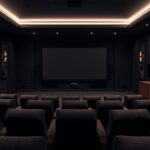
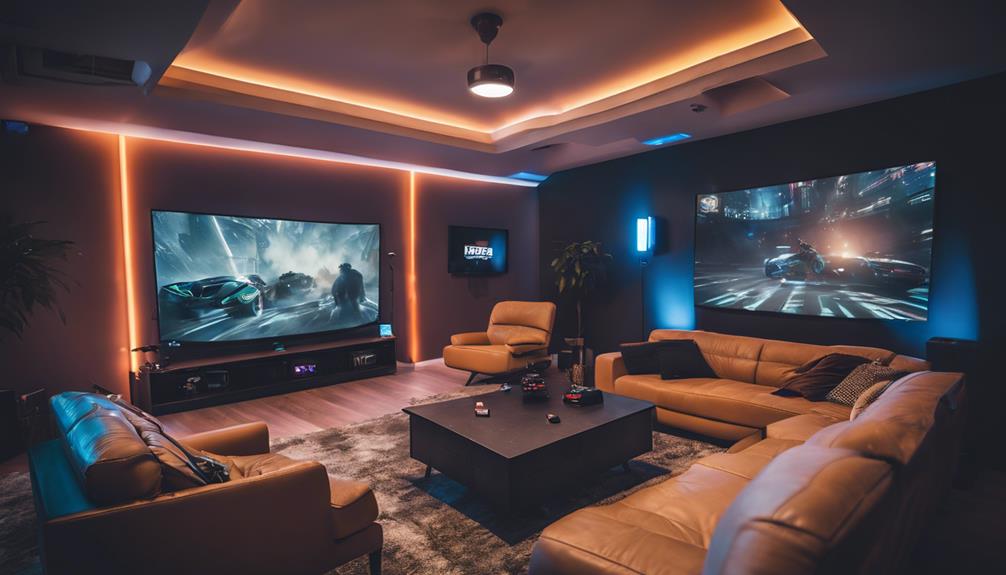
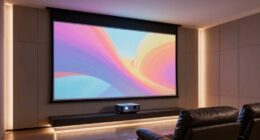
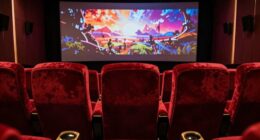
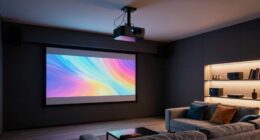
Combining living spaces with media rooms creates a versatile environment that balances immersive cinema experiences with everyday comfort. Use acoustic treatments, smart lighting, and flexible furniture to zone areas effectively. Incorporate soundproofing to keep noise contained and design layouts that support both relaxation and entertainment. Integrating technology and storage solutions helps keep the space organized and functional. Keep exploring to discover how these tips can transform your space into a seamless, multifunctional haven.
Key Takeaways
- Use furniture and layout to define and separate media zones from living areas for flexibility.
- Incorporate soundproofing techniques to minimize noise transfer and create a comfortable environment.
- Integrate lighting control systems for adaptable ambiance suited to both entertainment and relaxation.
- Utilize versatile furniture and storage solutions to maximize space functionality and organization.
- Design the space flow carefully to balance entertainment needs with everyday comfort and practicality.

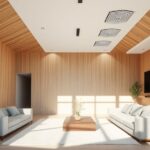
Combining media rooms with living spaces has become an increasingly popular way to create versatile, multifunctional areas in your home. This approach allows you to enjoy a home theater experience without sacrificing the comfort and practicality of everyday living. To make this work seamlessly, you need to focus on soundproofing techniques that prevent noise from disrupting conversations or other household activities. Installing acoustic panels, sealing gaps around doors and windows, and using heavy curtains can absorb sound and keep your media room quiet. These methods help you enjoy immersive movies or gaming sessions without disturbing the rest of your household or neighbors. Additionally, understanding the upfitting process can help ensure your media room is integrated smoothly into your home’s infrastructure for optimal performance.
Soundproofing techniques ensure your media room stays quiet and immersive without disturbing the rest of your home.
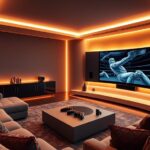
Lighting control systems are equally essential in creating the perfect environment. With smart lighting, you can easily adjust the ambiance for movie nights, parties, or casual lounging. Dimmable LED lights, motorized shades, and remote-controlled light switches give you the flexibility to set the right mood at any time. When combined with a dedicated media zone, lighting control systems ensure you can switch effortlessly between bright, task-oriented lighting and softer, cinematic lighting, enhancing your viewing experience. Integrating these systems with your home’s automation allows you to customize scenes—such as dimming lights and closing shades at the press of a button—adding convenience and sophistication.
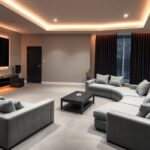
In designing a multifunctional media room, consider how the space flows into your living area. Use furniture and layout to delineate zones clearly, so the media space doesn’t dominate or detract from the main living area. A sectional sofa can define a cozy media viewing nook while still maintaining openness. Incorporate storage for media equipment, gaming consoles, and accessories to keep the space organized and clutter-free. When choosing soundproofing techniques, also think about the floors—floating floors or rugs can help reduce sound transmission and improve acoustics, making your media experience more immersive.
Additionally, versatile furniture pieces that can serve multiple functions—such as ottomans with storage or fold-away tables—maximize your space. This way, your media room can transform easily from a casual entertainment zone into a more formal living area when needed. Keep in mind that technology integration is key; wireless speakers, smart remotes, and streaming devices streamline your setup and make adjustments simple. Overall, combining media rooms with living spaces allows you to craft an environment that’s both entertaining and comfortable, providing a seamless blend of cinema magic and everyday practicality.

ViewSonic LS740W 5500 Lumens WXGA Laser Projector with 1.3X Optical Zoom, H/V Keystrone, 360 Degrees Projection for Auditorium, Conference Room, and Education
High Brightness Laser Projector: WXGA (1280x800p) resolution with a 1.2-1.5 throw ratio and 5,500 ANSI lumens for clear,...
As an affiliate, we earn on qualifying purchases.
Frequently Asked Questions
How Can I Acoustically Isolate My Media Room From Other Living Areas?
To acoustically isolate your media room, you should implement soundproofing techniques like adding heavy insulation and sealing gaps around doors and windows. Incorporate acoustic treatments such as bass traps and diffusers to absorb sound within the room. Using mass-loaded vinyl or acoustic panels can profoundly reduce sound transmission, ensuring your media experiences stay contained and undisturbed by other living areas.
What Are the Best Lighting Options for Multipurpose Media Rooms?
Did you know that good lighting can boost your media room’s ambiance by up to 50%? For your space, use a mix of ambient lighting to create a cozy atmosphere and task lighting for activities like gaming or reading. Dimmable LED lights work best because they’re adjustable and energy-efficient. Incorporate wall sconces or recessed lighting to keep your room versatile and comfortable, perfect for movies or other activities.
How Do I Choose Furniture That Suits Both Living and Media Functions?
You should select furniture that offers decor versatility and furniture flexibility. Opt for modular sofas that can be rearranged easily for movie nights or social gatherings. Multi-functional pieces like storage ottomans or fold-away tables work well for both relaxing and entertaining. Choose neutral tones and sleek designs to blend seamlessly, ensuring your space remains functional and stylish whether you’re watching a film or hosting guests.
What Are Space-Saving Ideas for Small Combined Media and Living Rooms?
To save space in your small combined media and living room, opt for wall-mounted options like TVs and shelves to free up floor space. Incorporate multifunctional storage solutions such as ottomans with hidden compartments or fold-out tables that serve dual purposes. Use vertical storage to maximize wall space, and choose compact furniture that can be easily moved or tucked away. This approach keeps your room functional and uncluttered.
How Can I Incorporate Smart Technology Into My Multimedia Room Design?
You can incorporate smart technology into your multimedia room by installing voice control systems like Alexa or Google Assistant, allowing you to manage devices hands-free. Opt for smart integration with your existing entertainment setup, such as smart TVs, lighting, and thermostats, to create seamless control. Automate scenes for movie nights or gaming sessions, making your space more convenient and immersive without cluttering your design.

Denon AVR-X1700H 7.2 Channel AV Receiver - 80W/Channel, Advanced 8K HDMI Video w/eARC, Dolby Atmos, DTS:X, Built-in HEOS, Amazon Alexa Voice Control
HIGH-PERFORMANCE 7-CHANNEL AMPLIFIER WITH NEXT-GEN MOVIE IMMERSION - Enjoy Denon sound in movies, games, and music with full...
As an affiliate, we earn on qualifying purchases.
Conclusion
By merging living spaces with media rooms, you create a versatile hub that’s as adaptable as a chameleon. This seamless blend transforms your home into a vibrant, multi-functional sanctuary where relaxation and entertainment dance together effortlessly. With thoughtful design, you turn your space into a cozy retreat that feels like a personal cinema, yet always ready for spontaneous gatherings. Embrace this dual-purpose approach, and watch your home become a symphony of comfort and entertainment, perfectly in tune with your lifestyle.

NexiGo Aurora Pro MKII, 4K Tri-Color Laser UST Projector, 30000:1 Contrast Ratio, Dynamic Iris & Laser Dimming, 0.21:1 Throw Ratio, Dolby Vision & Atmos, HDR10+, 3D, 4.2ms ~ 8ms Low Latency (Renewed)
【Scene Adapt Engine】Enjoy higher-contrast visuals with our Scene Adapt Engine (SAE), the technology behind Dynamic Iris and Dynamic...
As an affiliate, we earn on qualifying purchases.
NexiGo Aurora Pro MKII, 4K Tri-Color Laser UST Projector, 30000:1 Contrast Ratio, Dynamic Iris & Laser Dimming, 0.21:1 Throw Ratio, Dolby Vision & Atmos, HDR10+, 3D, 4.2ms ~ 8ms Low Latency
【Scene Adapt Engine】Enjoy higher-contrast visuals with our Scene Adapt Engine (SAE), the technology behind Dynamic Iris and Dynamic...
As an affiliate, we earn on qualifying purchases.