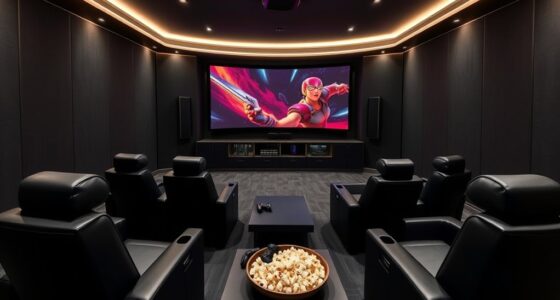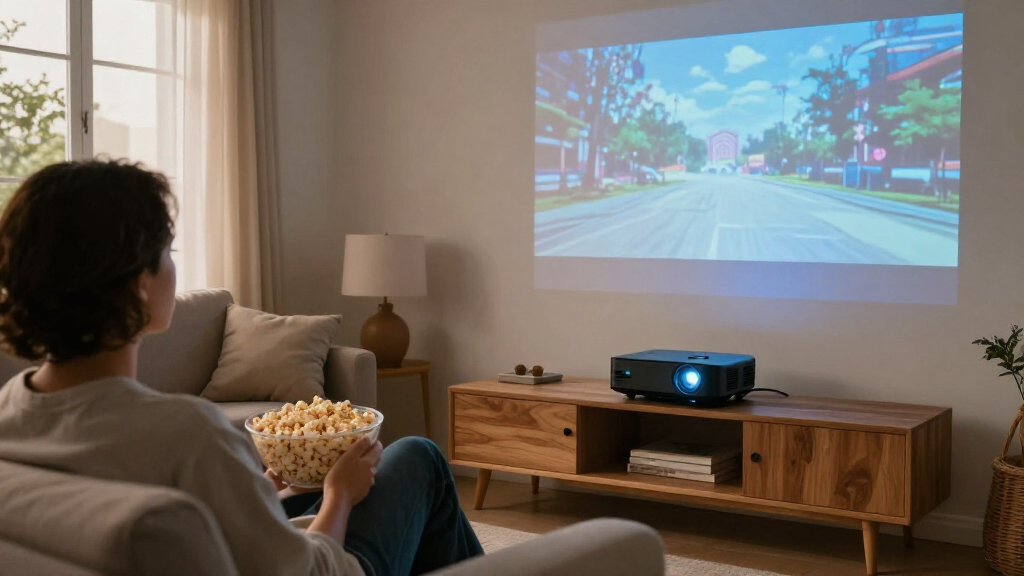

The BenQ TH671ST is a 1080p short-throw projector aimed at home entertainment and gaming, especially where a conventional projector would sit too far from the screen. Its strongest case is practical: it can make a 100-inch image from about five feet, with 3,000 ANSI lumens and low input lag. The tradeoffs are a modest built-in speaker and a lamp whose rated life depends heavily on operating mode. For a fixed room setup where responsive play and a large image matter more than smart features or built-in sound, it is a convincing mid-range choice; for a self-contained streaming setup or a premium 4K theater, it is a less natural fit.

Get business pricing on your home office setup
- Business-only prices and quantity discounts
- Tax-exempt purchasing
- Multiple users, one account, clear invoices

BenQ TH671ST 1080p Short-Throw Home Entertainment Projector
- ✔ Model: TH671ST
- ✔ Display technology: DLP
- ✔ Native resolution: 1920 × 1080
Why This Product Stands Out
The TH671ST stands out because its short throw addresses a common room constraint directly. With a 0.69–0.83 throw ratio, it can create a screen-sized image without needing a long, unobstructed run from the back of the room. A stated 100-inch image at about five feet makes it easier to fit projection into a den, apartment, or multipurpose room where furniture and foot traffic limit placement. That is a more concrete benefit than a long list of connectivity standards: the room may be able to use a large screen at all.
Within the 1080p home projector segment, the mix of 3,000 ANSI lumens and low input lag gives it wider use than a model chosen only for movie playback in a darkened room. It can serve gaming and video without asking the buyer to trade responsiveness for a big picture. Its >92% Rec. 709 coverage also points to color aimed at familiar HD video standards, although it does not make this a premium cinema projector or compensate for room lighting.
The category has moved toward smart portable models and more expensive 4K ultra-short-throw systems, and those alternatives change the buying calculation. A portable smart projector with Google TV makes more sense when streaming convenience and mobility come first. The JMGO O2S Ultra and Formovie Theater are more relevant to buyers pursuing 4K laser projection and a high-end theater installation. The BenQ instead occupies a practical Full HD middle ground: prioritize close placement, gaming response, and a large image, and its compromises are easier to accept.
Key Features and What They Mean
Native 1920 × 1080 resolution means the projector displays games, films, and sports in Full HD, so buyers can get a crisp, large picture without paying for native 4K. It suits typical living-room screen sizes and players whose priority is seeing the action clearly rather than resolving the finest detail. Although it accepts compatible input signals up to 1920 × 1200, it displays them at native 1080p; buyers sitting close to a very large screen are more likely to notice the missing 4K detail.
The 3,000 ANSI-lumen rating gives the TH671ST more flexibility for sports and casual viewing when a room is not completely dark. That helps households that want to watch without blacking out the room for every session. Brightness cannot prevent direct light from washing out the image, so buyers who often watch in daylight still benefit from controlling light or choosing another display.
The short-throw lens and 1.2× zoom let buyers place the projector closer to the screen than many conventional models and make small adjustments to image size within the lens range. This can free up space behind the seating and help avoid people casting shadows as they move around. The example of a 100-inch image from about five feet gives small-room owners a useful way to check whether it can fit their layout; measuring and aligning the unit carefully still matter, especially for a fixed installation.
Low input lag and gaming-focused refresh support are intended to make the picture respond more promptly to controller inputs. That can help players of action, racing, and competitive games feel more in control on a large screen. Casual players may care less about the difference, and the product information does not give a specific lag figure or list supported refresh rates, so buyers comparing exact gaming performance should confirm figures for their input and display mode.
Two HDMI inputs let buyers leave a console and another source, such as a streaming device, connected at once, reducing the need to swap cables between sessions. USB Type-A, VGA, audio connections, and RS232 can also help it work with older equipment or in a fixed setup. The connections give existing devices a useful place in the system, but there is no stated integrated streaming platform, so streaming requires a connected source. Its single 5W speaker can provide basic sound temporarily; viewers who want dialogue and game audio to carry across a room will benefit from adding a soundbar or speakers.
Performance and Real-World Use
In day-to-day use, the TH671ST’s strongest convenience is likely its short placement distance. A projector closer to the screen can leave more room behind the seating area and reduce shadows from people crossing the beam. The fixed-use setup still needs a clear path, a level mount or surface, and alignment with the screen. Its 2.7 kg weight is manageable when positioning, but it is not a battery-powered portable unit; power and connected sources remain part of the setup.
Picture performance should suit a typical Full HD gaming and movie setup, with brightness that allows some flexibility and color coverage above 92% of Rec. 709. As with other lamp-based projectors, the perceived image depends on screen size, wall or screen quality, and ambient light. The 10,000:1 stated contrast ratio is a specification, not a promise of deep blacks in a lit room. Buyers seeking a dedicated cinema look should plan for a darkened viewing space and compare actual room needs before choosing this model.
The main recurring practical concerns are audio and lamp use. The built-in speaker avoids needing another device for temporary playback, but it is unlikely to satisfy viewers who want clear, expansive sound across a room. Lamp life is listed from 4,000 to 15,000 hours by mode; the lower end can be a meaningful consideration for people who use the projector daily or prefer brighter modes. The three-year limited parts and labor coverage is a positive ownership detail, but it does not remove the need to understand the lamp’s eventual replacement cycle.
Who Should Buy This
The TH671ST makes the most sense for a console or PC gamer in a smaller room who wants a 100-inch-class image but cannot place a projector far behind the seating. It also suits households that split time between games, sports, and movies, have an HDMI source ready, and are willing to add a soundbar or speakers. Buyers who value Full HD clarity, close-range placement, and responsiveness more than native 4K or built-in streaming should find its priorities well matched to their setup.
Who Should Skip This
Skip it if the goal is a self-contained portable streaming device with built-in apps, wireless convenience, and audio that can carry a room. A portable smart projector with Google TV is a better direction for that use. Buyers building a premium 4K theater or wanting an ultra-short-throw laser system should compare the JMGO O2S Ultra or Formovie Theater instead. It is also a poor fit for someone who expects to watch every day in a bright room without controlling light, or who wants to avoid lamp-based upkeep.
Value for Money
The TH671ST’s value rests on getting short-throw Full HD projection and gaming responsiveness in one mid-range package. Those traits address real constraints and can make it more useful than a conventional projector that cannot be positioned properly in the room. The value weakens if the buyer must also purchase a sound system, streaming device, and screen while expecting a 4K theater experience. Its lamp life range adds a longer-term ownership cost that frequent users should weigh. It is a worthwhile choice when close placement and responsive gaming are the priorities; when smart features, portability, or laser 4K matter more, the alternatives better fit the brief.
BenQ TH671ST 1080p Short-Throw Home Entertainment Projector
The TH671ST stands out because its short throw addresses a common room constraint directly. With a 0.69–0.83 throw ratio , it can create a screen-sized image without needing a long, unobstructed run from the back of the room.
Pros:
- Large image from close range: A 100-inch picture from about five feet helps in smaller rooms and reduces the chance of people walking through the beam.
- Native 1080p resolution: Full HD gives games, films, and sports clear detail at typical living-room viewing sizes without paying for 4K projection.
- Bright 3,000-lumen output: The stated brightness offers flexibility for casual viewing when a room is not fully dark, though image quality still benefits from controlling ambient light.
- Gaming-friendly responsiveness: Low input lag and a gaming-focused refresh rate suit players who notice delay between a controller input and on-screen action.
- Useful connection options and coverage: Two HDMI inputs support multiple video sources, while the stated three-year limited parts and labor coverage adds reassurance for a fixed-use purchase.
Cons:
- Weak built-in sound: One 5W speaker is better treated as a fallback than as the audio system for movies, games, or a group.
- Ongoing lamp replacement: Rated lamp life ranges from 4,000 to 15,000 hours by mode, so frequent use in brighter settings may mean more upkeep.
- No stated integrated streaming platform: Buyers should plan to connect a streaming stick, console, or other HDMI source rather than expect a complete smart projector experience.
- 1080p is the ceiling for native detail: It does not deliver the fine detail of a native 4K projector, which matters more on very large screens or at close seating distances.
Best for: Gamers and home entertainment buyers who want a large 1080p image in a room with limited projector-to-screen distance.
Not ideal for: Buyers seeking a smart, portable all-in-one projector, strong built-in audio, or a premium 4K ultra-short-throw theater.
Bottom line: The BenQ TH671ST is worth buying for the right room and routine.
Frequently Asked Questions
Can the BenQ TH671ST make a 100-inch image in a small room?
Yes. The product information gives an example of a 100-inch image from about five feet. Check the room’s actual throw distance and screen dimensions before installation, since the lens range and placement determine the final image size.
Is the TH671ST suitable for gaming?
It is designed with low input lag and gaming-focused refresh support, making it a reasonable fit for players who want responsive controls on a large image. The supplied specifications do not state a precise lag measurement, so check mode-specific figures if you are comparing it with a gaming monitor or another projector.
Will the built-in speaker be enough?
The single 5W speaker can cover basic or temporary playback, but it is a limited choice for movies, group viewing, or immersive games. Plan for a separate soundbar or speaker system if sound quality matters.
How long does the projector lamp last?
Rated lamp life varies by operating mode from 4,000 to 15,000 hours. Buyers who use it often or favor brighter modes should factor lamp upkeep into the ownership decision.
Should I choose this over a 4K ultra-short-throw projector?
Choose the TH671ST when Full HD, gaming response, and a relatively accessible short-throw setup suit the budget and room. A 4K ultra-short-throw laser model is a better match when finer detail, a premium theater installation, and laser projection matter more than keeping the system in this segment.
Final Thoughts
The BenQ TH671ST is worth buying for the right room and routine. Choose it if a close-set projector needs to deliver a large 1080p picture for gaming and general entertainment, and you can supply external audio and a streaming source as needed. Its brightness and responsiveness give it a useful role beyond occasional dark-room films, while the short throw is its clearest advantage. Choose another model if native 4K, built-in smart streaming, robust onboard sound, or lamp-free ownership is central to the decision.
Halloween Picks

10ft Halloween Inflatable Archway – Pumpkin Skeleton Yard Décor

10 ft Halloween Inflatable Archway with Built-in LEDs

JOYIN 5-Foot Halloween Animatronic Drinking Skeleton
As an affiliate, we earn on qualifying purchases.