To understand HDMI 2.1 cables, you need to recognize their key features like higher bandwidth, support for 8K and 4K at high refresh rates, and immersive audio. Look for certification logos, compliance standards, and markings that verify their authenticity and performance. Genuine cables meet strict industry benchmarks, ensuring reliable connectivity and safety. If you’re curious about decoding labels, codes, and compliance details, there’s much more to explore for confident selections.

Get business pricing on your home office setup
- Business-only prices and quantity discounts
- Tax-exempt purchasing
- Multiple users, one account, clear invoices
Key Takeaways
- Understand HDMI 2.1 compliance standards, certification logos, and symbols that verify product authenticity and performance capabilities.
- Recognize industry labels indicating bandwidth, HDMI version, and certification levels like Ultra High Speed or Premium Certified.
- Learn how to verify genuine cables through packaging, serial numbers, QR codes, and trusted retailer sources.
- Be aware of common misconceptions and signals that may misrepresent a cable’s HDMI 2.1 support or quality.
- Know the importance of adherence to industry regulations and certification playbooks to ensure reliable, future-proof connectivity.
Understanding HDMI 2.1: Key Features and Benefits
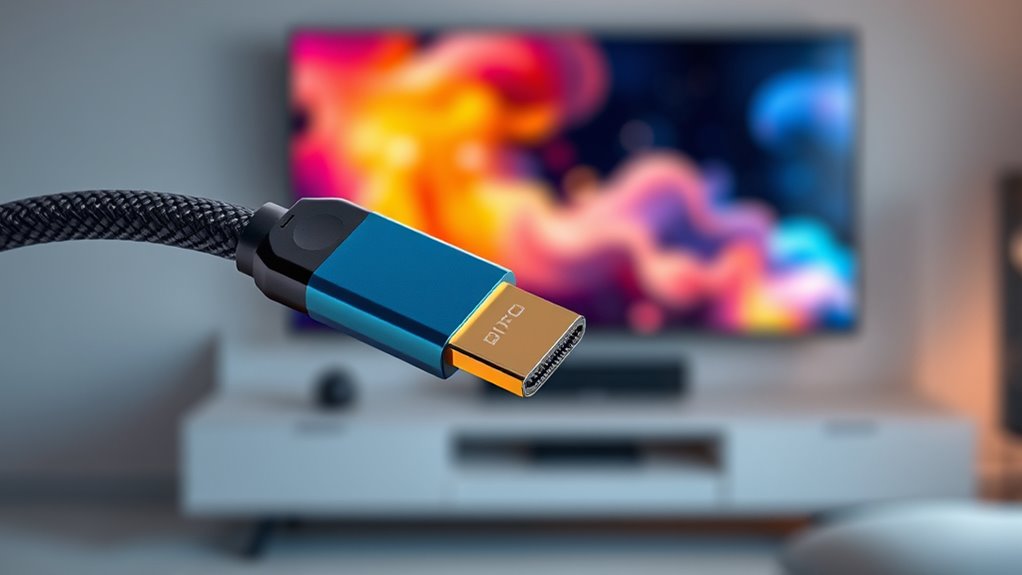
HDMI 2.1 introduces significant improvements that enhance your viewing and gaming experiences. One key feature is increased HDMI bandwidth, which allows for higher resolutions and faster refresh rates, delivering smoother visuals on your compatible devices. This means you can enjoy 4K at 120Hz or even 8K content with ease. Additionally, HDMI audio receives a boost with support for enhanced audio formats, providing richer, more immersive sound. The improved bandwidth also reduces latency, making gaming more responsive. You’ll notice sharper images, more vibrant colors, and better sound quality, all thanks to these advanced HDMI 2.1 features. These benefits guarantee your entertainment setup is future-proof, ready to handle the latest high-definition content with superior performance and clarity. Incorporating home entertainment elements like high-quality displays and sound systems further maximizes the potential of HDMI 2.1 technology. Staying informed about industry standards and compliance ensures you are leveraging the full capabilities of your equipment and avoiding compatibility issues. Leveraging strategy and mastery, consumers can optimize their setup for maximum performance and longevity. As the technology continues to evolve, staying informed about standards like HDMI 2.1 ensures you are prepared for upcoming innovations and capabilities. Moreover, understanding product compatibility helps in selecting the right cables that fully support the advanced features of HDMI 2.1.
Decoding HDMI Cable Labels and Markings
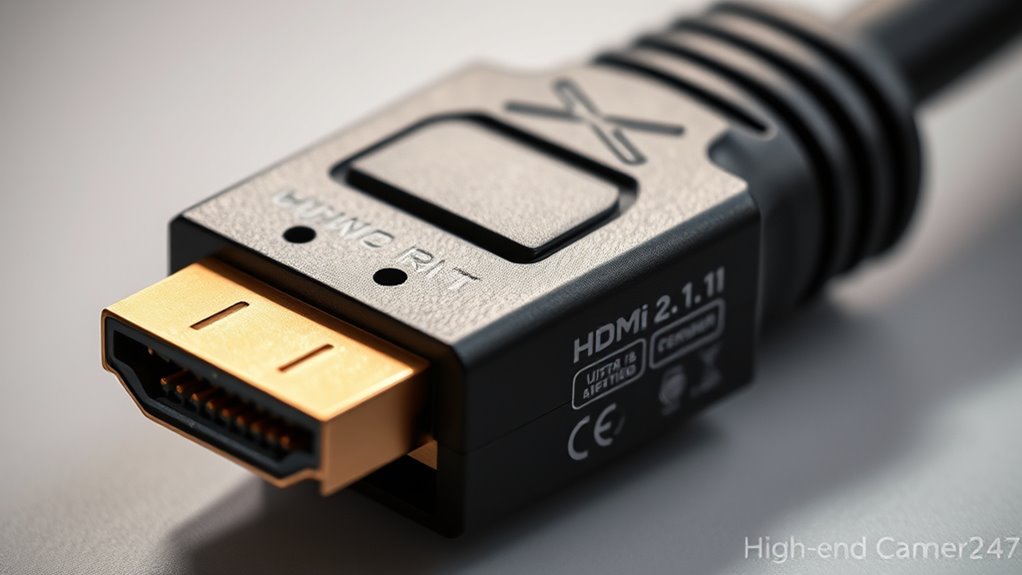
Understanding HDMI cable labels and markings helps you select the right cable for your setup. You’ll see various symbols and standards that indicate compatibility and quality. Recognizing certification indicators guarantees you’re getting a reliable, compliant product. Ensuring proper safety features in your HDMI cables can prevent issues like overheating or signal loss. Additionally, image quality attributes such as bandwidth and supported features are often displayed through specific markings on the cables. Being aware of performance standards can also help you assess the cable’s ability to handle high-resolution signals effectively. Recognizing relationship between the markings and the cable’s capabilities can further ensure you choose the optimal option for your needs. Familiarity with labeling standards can also assist in verifying that the cable meets industry benchmarks for performance and safety.
Labeling Standards Overview
Have you ever wondered what all those labels and markings on HDMI cables really mean? Labeling standards follow specific manufacturing standards to guarantee quality and compatibility. They also support branding strategies by highlighting certifications or features. These markings can indicate bandwidth, version, or compliance logos, helping you verify the cable’s performance.
| Label Type | Purpose |
|---|---|
| Certification Logos | Confirm adherence to standards like HDCP |
| Bandwidth Markings | Show supported data transfer speeds |
| Version Numbers | Indicate HDMI version compatibility |
Understanding these labels helps you select the right cable, ensuring excellent performance and compliance with industry standards. Clear labeling reduces confusion and guarantees you meet the necessary manufacturing standards.
Marking Symbols Meaning
Decoding HDMI cable labels and markings can seem confusing at first, but understanding these symbols is essential for verifying compatibility and performance. Marking symbols on HDMI cables provide quick insights into their capabilities, such as bandwidth, version, and supported features. Compliance labels indicate whether the cable meets industry standards and certification requirements, ensuring safety and reliability. Look for symbols like HDMI High Speed, Premium Certification, or Ultra High Speed, which signal the cable’s performance level. These markings help you determine if a cable supports features like 4K, 8K, or eARC. By familiarizing yourself with these marking symbols and compliance labels, you can confidently select the right HDMI cable for your setup, avoiding compatibility issues and ensuring ideal performance.
Compliance Certification Indicators
When evaluating HDMI cables, paying attention to compliance certification indicators is crucial, as they confirm the cable meets industry standards for safety and performance. These indicators often include symbols, logos, or codes that verify adherence to manufacturing standards. Some cables feature digital watermarking, which embeds authentication data within the cable’s markings to prevent counterfeits and ensure authenticity. Certification labels like HDMI Licensing Administrator’s logo or specific compliance marks indicate the cable has passed rigorous testing. Recognizing these indicators helps you determine if the cable supports the desired features, such as HDMI 2.1 bandwidth requirements. Always verify certification to guarantee your cable aligns with industry standards, providing reliable performance and compatibility while maintaining safety and digital watermarking integrity. Discover a free tool to instantly convert your text into various capitalization styles for clearer communication. Additionally, understanding compliance certification indicators can help prevent issues related to incompatible or substandard cables, ensuring optimal device functionality. Properly certified cables also contribute to safety standards, reducing potential risks of damage or malfunction. Furthermore, industry compliance plays a vital role in maintaining the integrity and reliability of your digital connections.
Compliance Standards and Certification Processes

To guarantee that HDMI 2.1 cables meet quality and performance standards, manufacturers must adhere to specific compliance standards and undergo certification processes. These standards ensure the cables support features like high bandwidth and advanced audio-visual capabilities while safeguarding digital rights by preventing unauthorized copying or distribution. Certification involves rigorous testing by authorized bodies, verifying that the cables meet the HDMI Licensing Administrator’s specifications. This process not only assures consumers of product reliability but also strengthens marketing strategies by highlighting verified compliance. When a cable is certified, it displays official logos, signaling trust and authenticity. As a result, you can confidently select HDMI 2.1 cables that adhere to industry standards, guaranteeing ideal performance and compliance with digital rights management requirements. Simple tips for ensuring product authenticity can help you make informed choices. Additionally, understanding the certification process can assist consumers in recognizing genuine products and avoiding counterfeit cables. Ensuring that manufacturers follow these compliance standards is essential for maintaining high-quality performance and reliable connectivity. Furthermore, adherence to industry regulations ensures long-term compatibility and safety of the cables. Staying informed about industry standards can also aid in future-proofing your device connections.
Recognizing Genuine HDMI 2.1 Cables: Tips and Tricks

Knowing how to identify genuine HDMI 2.1 cables helps guarantee you’re getting the performance and reliability promised by the certification process. Start by inspecting the retail packaging; authentic cables usually come in high-quality, well-sealed packaging with clear labeling, including certification logos. Check for details like cable durability features—robust connectors, reinforced shielding, and high-quality materials—indicating longevity and resistance to wear. Be wary of cheap or flimsy cables that feel brittle or poorly made. Always buy from reputable retailers or official stores to avoid counterfeits. Genuine HDMI 2.1 cables also often include serial numbers or QR codes you can verify with the manufacturer. These tips help ensure your cable meets the standards necessary for peak performance and durability. Additionally, reviewing diverse design options can help you select a cable that not only performs well but also matches your setup aesthetically. When choosing cables, consider Tuning standards to confirm they support all HDMI 2.1 features reliably. Moreover, understanding certification logos can assist in distinguishing genuine products from imitations.
Common Misconceptions and Myths About HDMI 2.1

Many people believe HDMI 2.1 cables can do more than they actually support, leading to confusion about speed limits and performance. You might also think that all HDMI cables are compatible with every device, but that’s not always true. Understanding the truth behind cable quality and capabilities helps you avoid common misconceptions and make better choices.
HDMI 2.1 Speed Limits
A common misconception about HDMI 2.1 cables is that they can always deliver the maximum speed and bandwidth advertised, but that’s not entirely accurate. Bandwidth limitations and signal degradation can prevent cables from reaching their full potential. You might think you’re getting the best performance, but factors like cable quality, length, and your device’s capabilities can slow things down.
- Bandwidth constraints can restrict data flow, especially over longer distances.
- Signal degradation may occur, reducing picture and sound quality.
- Real-world performance often falls short of theoretical maximums, impacting your viewing experience.
Understanding these limits helps set realistic expectations and ensures you choose cables that meet your needs without disappointment.
Compatibility Misunderstandings
While understanding the limitations of HDMI 2.1 cables is important, some common misconceptions about their compatibility can lead to confusion and disappointment. One myth is that all HDMI cables, regardless of type, are interchangeable; however, connector durability varies, and not all cables support the full features of HDMI 2.1. Many assume color coding indicates capability, but this isn’t always accurate, as manufacturers don’t standardize color schemes. Relying solely on visual cues can cause you to buy a cable that doesn’t meet your needs. To avoid compatibility issues, check specifications carefully and choose cables tested for HDMI 2.1 compliance. Remember, a well-made cable with proper connector durability guarantees longevity and consistent performance, rather than just relying on visual indicators like color coding.
Cable Quality Confusions
One common misconception about HDMI 2.1 cables is that their quality depends solely on brand names or price tags. However, many cables can have manufacturing flaws that compromise performance, regardless of cost. Counterfeit issues also flood the market, making it harder to trust a product’s authenticity. To avoid disappointment, consider these points:
- Not all expensive cables are free from manufacturing flaws or counterfeit issues.
- Cheaper options may still meet standards if they pass proper certification.
- Relying solely on brand reputation can lead you to overlook critical quality factors.
Choosing the Right HDMI 2.1 Cable for Your Setup
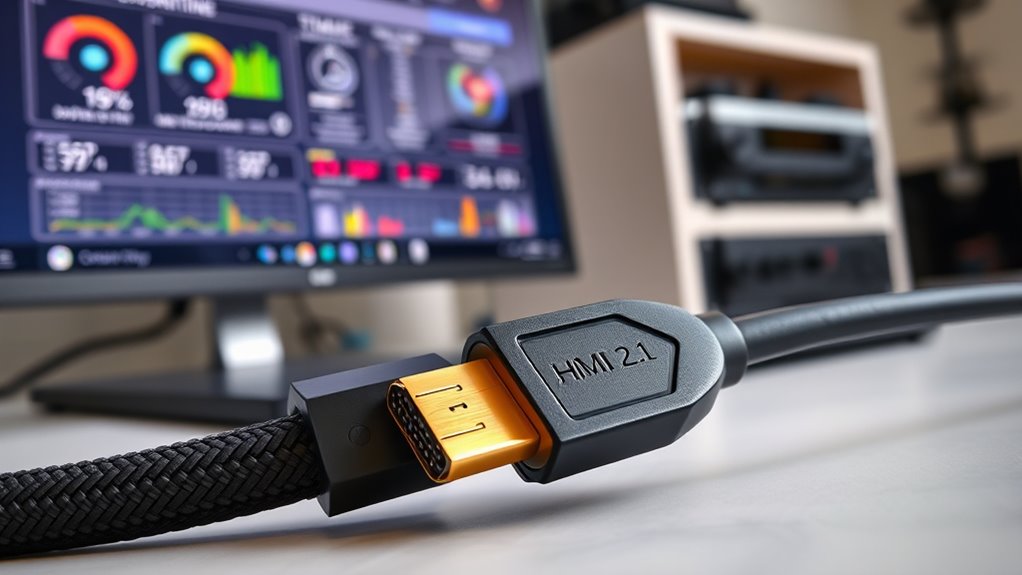
Choosing the right HDMI 2.1 cable for your setup can greatly influence your audio and video experience, so it’s vital to take into account your specific needs. If you require the highest bandwidth and minimal signal loss, consider a fiber optic HDMI cable, especially for long-distance runs. These cables provide superior performance and are immune to electromagnetic interference. For simpler setups or minimal cable clutter, wireless transmission options are increasingly viable, offering convenience without sacrificing quality. Make certain your devices support the cable type you choose, and check compatibility with HDMI 2.1 features like 8K resolution and high refresh rates. Picking the right cable involves balancing your setup’s demands, distance requirements, and budget, so evaluate these factors carefully to optimize your viewing experience.
Frequently Asked Questions
How Do HDMI 2.1 Cables Support Variable Refresh Rates?
HDMI 2.1 cables support variable refresh rates through adaptive synchronization, which allows your display to adjust its refresh rate in real-time. This technology enables frame rate matching between your device and monitor, reducing lag and screen tearing. By seamlessly syncing frames, HDMI 2.1 cables deliver smoother gameplay and video playback, providing a more immersive experience without stuttering or artifacts caused by inconsistent refresh rates.
What Are the Differences Between HDMI 2.1 and Earlier Versions?
Imagine upgrading from a bicycle to a sports car—that’s what HDMI 2.1 offers over earlier versions. It provides significant bandwidth improvements, supporting higher resolutions and faster refresh rates. You’ll also find backward compatibility, so your existing devices still work seamlessly. HDMI 2.1 enhances your experience with richer visuals and smoother gameplay, making it a substantial leap forward, all while remaining compatible with your older gear.
Can HDMI 2.1 Cables Transmit Audio and Video Simultaneously?
Yes, HDMI 2.1 cables transmit audio and video simultaneously, ensuring seamless audio synchronization and high-quality visuals. Their increased bandwidth capacity, up to 48Gbps, supports advanced features like 8K video and dynamic HDR while maintaining smooth audio. This means you get an integrated experience with crisp sound and stunning picture, all transmitted together without lag, making your entertainment setup more immersive and efficient.
Are There Specific HDMI 2.1 Cables Optimized for Gaming?
Sure, there are HDMI 2.1 cables labeled as “optimized for gaming,” but honestly, any high-quality HDMI 2.1 cable can boost your gaming performance if it meets the specs. The real trick is ensuring the cable supports the necessary bandwidth and features like VRR and low latency. So, don’t get caught up in the marketing hype—focus on the cable’s specs for true gaming optimization.
How Does Cable Length Affect HDMI 2.1 Signal Quality?
Cable length can impact HDMI 2.1 signal quality, especially over longer distances. As you extend the cable, signal degradation may occur, leading to reduced picture and sound quality. To prevent this, choose cables with good shielding that minimizes interference and guarantees stable transmission. Also, prioritize connector durability to maintain a secure connection over time. Shorter cables typically deliver the best performance, but high-quality, well-shielded long cables can still deliver excellent results.
Conclusion
Think of HDMI cables as the bridges connecting your devices’ worlds. Just like a sturdy bridge ensures smooth travel, genuine HDMI 2.1 cables guarantee your setup delivers top-quality audio and video. When you pick the right cable, you’re building a reliable link that transforms your viewing experience. So, don’t settle for shaky connections—choose compliance and authenticity to keep your entertainment flowing seamlessly. After all, a solid bridge makes all the difference.
Fall Picks
fall essentials
As an affiliate, we earn on qualifying purchases.