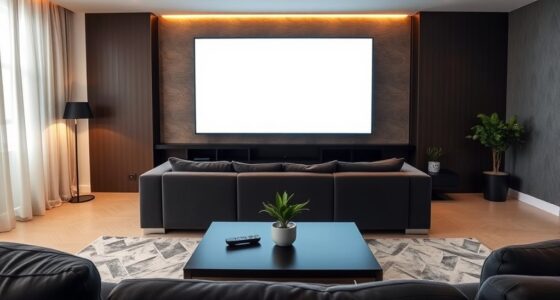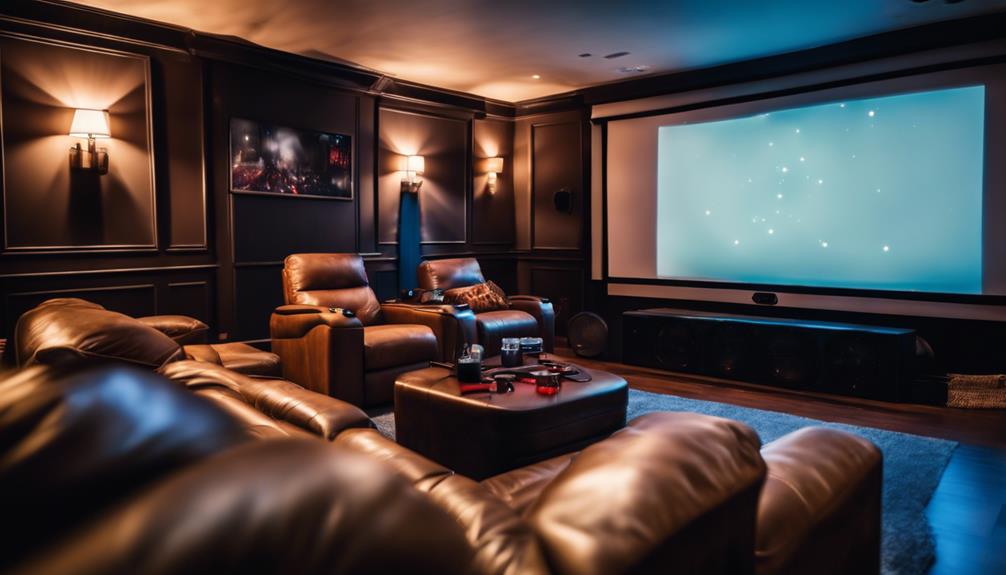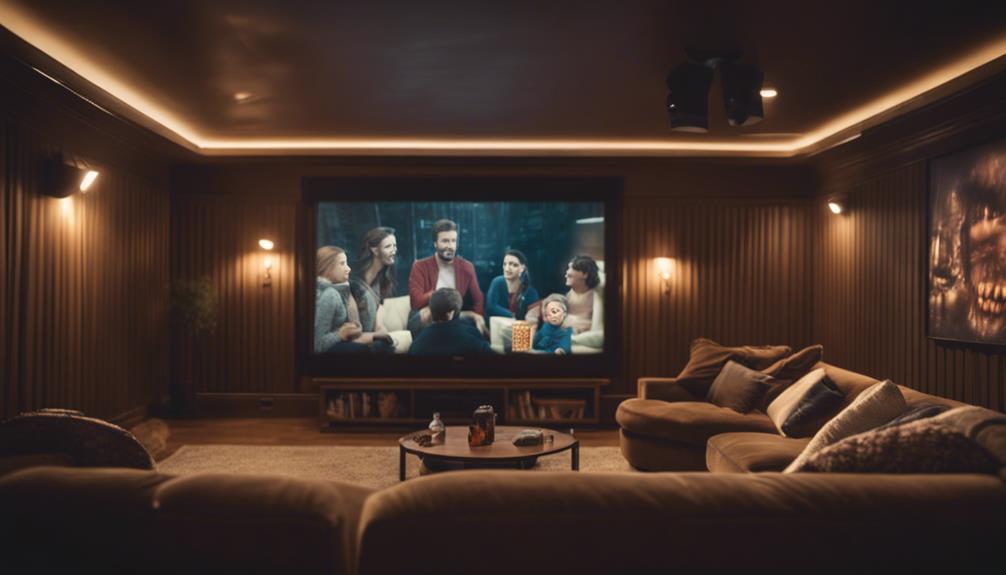
To design your home cinema, start with the room layout. Measure your space to maximize seating without cluttering sightlines, ideally keeping a distance of 1.5 to 2.5 times the screen size. For seating, consider comfortable options like recliners or sectional sofas that fit your style. Ergonomics matter, so choose seating with lumbar support and accessories like cup holders. Don't forget about acoustics; sound quality hinges on room dimensions and treatments like carpets and panels. Finally, finish with ambient lighting and cable management for a polished look. With the right choices, you'll elevate your viewing experience even further.

Get business pricing on your home office setup
- Business-only prices and quantity discounts
- Tax-exempt purchasing
- Multiple users, one account, clear invoices
Key Takeaways
- Measure your room dimensions to determine optimal seating capacity while maintaining clear sightlines and avoiding overcrowding.
- Consider tiered seating for larger spaces to enhance visibility for rear guests, with a riser height of 12-16 inches.
- Select ergonomic seating styles, such as recliners or sectional sofas, that offer lumbar support and fit your design aesthetic.
- Implement acoustic treatments like wall panels and carpets to improve sound quality and minimize reflections in your home cinema.
Importance of Theater Room Seating
The seating arrangement in your theater room plays a vital role in elevating your movie-watching experience by ensuring comfort and ideal screen visibility. When you invest in quality home theater seating, you prioritize ergonomics, allowing you to enjoy long viewing sessions without discomfort.
A well-thought-out seating layout considers sightlines, making sure every seat has a clear view of the screen, which is essential for maximizing enjoyment. In larger theater rooms, incorporating tiered seating can greatly enhance visibility, ensuring guests in the back rows can see the screen without obstruction. This approach creates an inclusive environment where everyone can fully engage with the film.
Additionally, choosing the right seating style—be it recliners, sectionals, or traditional theater seats—should align with your personal preferences and overall design aesthetic.
Think about your space and budget; the best seating arrangement not only looks good but also feels good. By carefully planning your home theater seating, you set the stage for memorable movie nights that everyone will enjoy, transforming your space into a true cinematic haven.
Room Layout Strategies

Creating an effective room layout for your home cinema guarantees everyone enjoys a perfect viewing experience while maximizing the available space.
Start by measuring your theater room's dimensions and shape to determine the best seating capacity. Avoid overcrowding, and guarantee clear sightlines to the screen. For larger spaces, consider incorporating tiered seating arrangements. A riser height of 12-16 inches for rear seating enhances visibility for all rows.
When planning your seating layout, aim for a perfect viewing distance of 1.5 to 2.5 times the screen size. This distance boosts the overall cinematic experience. Make certain to maintain at least 18-24 inches between rows, allowing for comfortable movement and access to exits, which minimizes obstructions in the viewing area.
Additionally, be mindful of architectural features and pathways in your room layout. Balancing aesthetics with functionality guarantees easy access and contributes to a seamless design.
Selecting Seating Styles

Choosing the right seating style can greatly enhance your home cinema experience and should align with your room layout and personal preferences. You have several seating styles to evaluate: recliners create a cozy atmosphere, theater-style seating offers an authentic cinema vibe, and sectional sofas are perfect for accommodating larger groups.
When making your choice, think about your room layout and dimensions. For instance, a standard straight row of three seats typically requires about 8 feet of space. Customization is also important; you can select from various upholstery fabrics and finishes to guarantee your seating complements the overall aesthetic of your home theater.
Don't forget about spacing—it's advisable to maintain a distance of 1.5 to 2.5 times the screen size between seats for ideal visibility and comfort. While you may be tempted to prioritize style, make certain the seating you choose also features ergonomic designs with built-in lumbar support and accessories like cup holders, as these elements enhance your viewing experience during long movie nights.
Ultimately, selecting the right seating styles will elevate your home cinema to a new level of enjoyment.
Comfort and Ergonomics

Comfort and ergonomics play an important role in guaranteeing you enjoy every moment of your home cinema experience.
When selecting your seating, prioritize designs that include built-in lumbar support. This feature enhances comfort during those long movie marathons and helps reduce the risk of back strain.
To achieve the best viewing experience, maintain a distance of 1.5 to 2.5 times the screen size from your seats. This distance guarantees ideal viewing angles while minimizing eye strain. Additionally, consider integrating accessories like cup holders, tray tables, and USB ports. These conveniences can greatly elevate usability, making your movie nights even more enjoyable.
Don't overlook the spacing between rows of seating; you should allow at least 18 to 24 inches for easy movement and comfort when getting in and out of your seats.
Finally, invest in high-quality materials with adequate padding. This choice is vital for maintaining long-lasting comfort and support during extended viewing periods.
Acoustic Considerations

When setting up your home cinema, room dimensions play an essential role in sound quality.
You'll want to take into account ideal ratios and integrate acoustic treatments to enhance clarity and minimize unwanted reflections.
Room Dimensions Impact Sound
To achieve ideal sound quality in your home cinema, the room dimensions must adhere to specific height-to-width-to-depth ratios that minimize sound reflections and enhance acoustics. Aim for a ratio between 1:1.6 and 1:2.4, steering clear of cubic shapes like 10x10x10 feet, as these can create standing waves and muddle sound clarity.
For a room with a 10-foot high ceiling, you should consider dimensions of at least 16 feet wide and 24 feet long. This design promotes better sound distribution and reduces echoes, allowing you to fully enjoy your audio experience.
When planning your home cinema, don't forget the importance of speaker placement. Evaluate room dimensions to verify your speakers are positioned for ideal sound dispersion and clarity. Proper placement helps avoid undesirable sound issues, allowing each note and dialogue to shine through.
Additionally, acoustic treatments like wall panels and carpets can greatly improve overall audio clarity. These elements work together with your room dimensions to create a cinematic experience that feels immersive and engaging. Prioritize these considerations to transform your space into a true home theater.
Acoustic Treatment Techniques
Achieving ideal sound quality in your home cinema also relies heavily on effective acoustic treatment techniques that minimize sound reflections and enhance audio clarity.
To create an immersive audio experience, consider implementing the following strategies:
- Install acoustic panels: Strategically place these on walls to considerably reduce echo and improve sound clarity.
- Utilize bass traps: Position these in corners to control low-frequency sounds, preventing undesirable resonance and enhancing bass performance.
- Add carpets or rugs: These can dampen floor reflections, contributing to a more balanced sound distribution.
- Use furniture wisely: Bookshelves and couches can help scatter sound waves, further improving acoustics.
Maintenance Tips
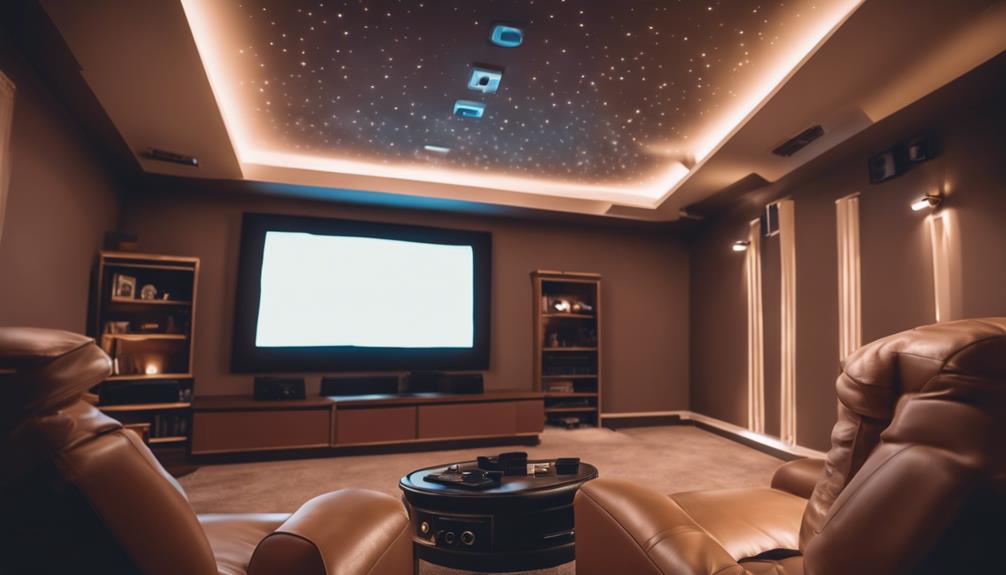
To keep your home cinema in top shape, establish a regular cleaning schedule for your seating.
Using protective covers can also shield your upholstery from wear and tear, extending its life.
Regular Cleaning Schedule
Establishing a regular cleaning schedule for your home cinema not only keeps it hygienic but also enhances the longevity of your seating and equipment. By committing to a weekly routine, you guarantee that your seating area remains comfortable and inviting for movie nights.
Here's a quick checklist to help you stay on track:
- Vacuum and dust the seating area weekly to eliminate dust and allergens.
- Address spills immediately using a gentle upholstery cleaner to avoid permanent stains.
- Inspect recliners for loose screws or worn-out mechanisms to maintain safety and functionality.
- Schedule deep cleaning every few months, focusing on thorough upholstery cleaning and checking for wear and tear.
Protective Covers Usage
Maintaining your home cinema's cleanliness can be made easier with the use of protective covers, which safeguard your seating from dust, spills, and stains while enhancing its longevity.
By investing in high-quality protective covers, you're not only protecting your furniture but also guaranteeing a more enjoyable viewing experience.
Choose covers made from breathable materials to allow for air circulation, preventing moisture buildup and mildew formation. Regular maintenance of these covers is essential; many are machine-washable, making it easy to keep them looking fresh and hygienic.
Opt for custom-fitted covers to guarantee a snug fit that prevents slipping, maintaining your seating's appearance during use. This attention to detail will reflect in the overall aesthetic of your home cinema.
Don't forget to inspect the covers regularly for any signs of wear or damage, and address these issues promptly to prolong their effectiveness.
Final Design Touches

Incorporating thoughtful final design touches can greatly elevate your home cinema experience, making it both visually stunning and acoustically superb. To achieve this, consider the following elements:
- Ambient light: Use dimmable LED lights or smart lighting systems to create a customizable atmosphere that enhances every movie night.
- Wall colors: Choose colors and materials that align with your design aesthetic while promoting sound absorption for clearer audio.
- Acoustic treatments: Install wall panels and bass traps to minimize sound reflections, ensuring a richer sound quality throughout the room.
- Cable management: Plan for effective cable management to keep your setup organized and clutter-free, allowing easy access to equipment.
Frequently Asked Questions
How to Turn Your Room Into a Movie Theater?
To turn your room into a movie theater, measure the space, choose a quality projector, arrange seating for comfort, add soundproofing, and control lighting. Create an immersive atmosphere that enhances your viewing experience.
How to Layout a Home Theater?
Picture a cozy cave of cinematic delight; to layout your home theater, measure your space, arrange seating for ideal viewing, elevate rear rows, center your screen, and keep pathways clear for a seamless experience.
How Far Should Seating Be From the Home Theater Screen?
For ideal viewing comfort, you should position your seating 1.5 to 2.5 times the screen's diagonal size away. For a 100-inch screen, that means about 12.5 to 21 feet for the best experience.
What Is the Golden Ratio for Home Theater?
Imagine your home theater as a symphony; the golden ratio, about 1:1.618, guides your room's dimensions for perfect harmony. This ratio enhances sound clarity and sightlines, creating a truly immersive cinematic experience you won't forget.
Conclusion
As you commence on this cinematic journey, think of your home theater as a cozy ship sailing through a sea of entertainment.
You've navigated through seating choices, room layouts, and acoustic waves.
Now, with each carefully chosen detail, you're crafting a haven where stories come alive, and laughter echoes.
So, hoist your sails, gather your crew, and let your home cinema be the lighthouse guiding you through countless adventures, all from the comfort of your own harbor.
Columbus Day / Indigenous Peoples' Day Picks
long weekend sales
As an affiliate, we earn on qualifying purchases.