
TL;DR
IKEA has unveiled the ‘Complexity Index,’ a new measurement tool designed to quantify the assembly complexity of its products. This initiative seeks to enhance customer satisfaction and streamline operations.
IKEA has introduced the ‘Complexity Index,’ a new metric that evaluates the assembly difficulty of its products. The company states this initiative aims to improve customer experience by providing clearer guidance and to optimize supply chain management. The launch marks a strategic shift toward transparency and efficiency in IKEA’s product offerings.
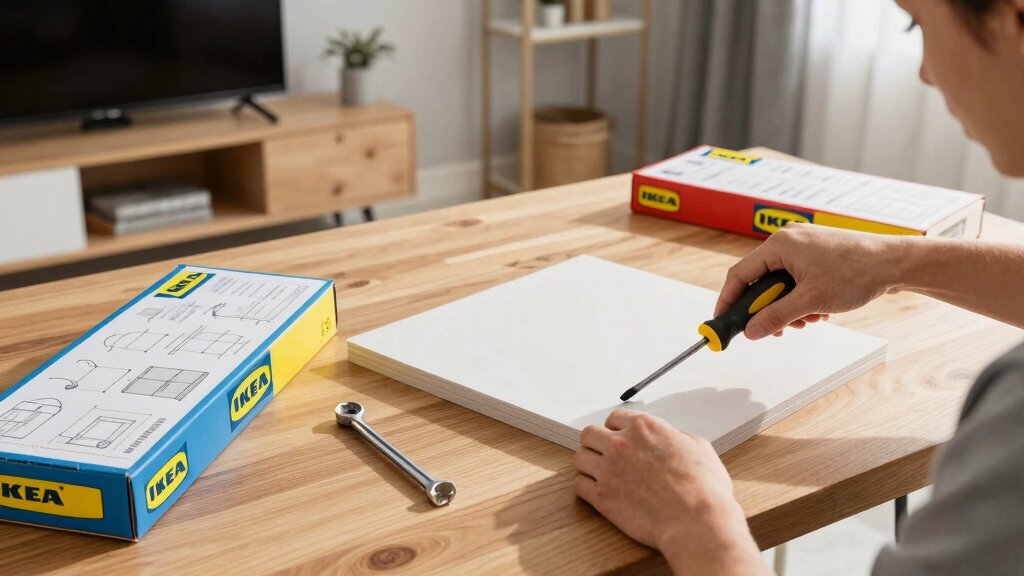
The ‘Complexity Index’ is a proprietary scoring system developed by IKEA, which rates products on a scale from 1 to 10 based on factors such as the number of parts, assembly steps, and required tools. The index is now being integrated into product descriptions on IKEA’s website and in-store displays. According to IKEA spokesperson Maria Svensson, the goal is to help customers choose products that match their skill level and time availability, potentially reducing assembly frustration.
Initial testing of the index involved a pilot program in select markets, where customer feedback indicated increased satisfaction with product information. IKEA also claims that the index can assist in supply chain planning by predicting assembly times and labor needs, thereby improving inventory management and delivery schedules.
While the ‘Complexity Index’ is a new development, IKEA has long been interested in improving the customer assembly experience, as evidenced by its assembly instructions and product design innovations. The company emphasizes that the index is meant to complement existing resources, not replace detailed instructions.
Implications for Customer Experience and Supply Chain Management
The introduction of the ‘Complexity Index’ could significantly impact how customers select and assemble IKEA products, potentially reducing frustration and returns. It also represents a move toward greater transparency in product design, which may influence industry standards. Additionally, by providing data on assembly complexity, IKEA aims to optimize its supply chain planning, potentially lowering costs and improving delivery timelines. This initiative reflects a broader trend of using data-driven metrics to enhance operational efficiency and customer satisfaction.
IKEA’s Efforts to Improve Assembly and Customer Satisfaction
For years, IKEA has faced criticism regarding the complexity of some products and the clarity of assembly instructions. The company has responded with various improvements, including simplified instructions and pre-assembled options. The ‘Complexity Index’ builds on these efforts by providing a quantifiable measure of assembly difficulty. Prior to this, IKEA experimented with augmented reality tools to assist customers, but the new index aims to offer a standardized, easily accessible metric across its product range.
The concept of measuring product complexity is not new; other retailers and manufacturers have employed similar metrics, but IKEA’s scale and focus on transparency mark a notable development in the furniture industry.
“The ‘Complexity Index’ helps our customers make informed choices based on how much effort they want to invest in assembly. It also allows us to better plan our supply chain and improve overall efficiency.”
— Maria Svensson, IKEA spokesperson
Details on Index Calculation and Customer Adoption
It is still unclear how precisely the ‘Complexity Index’ is calculated beyond initial descriptions, or how consistently it will be applied across all product lines. IKEA has not yet disclosed the full methodology, and the long-term customer response remains to be seen. Additionally, whether other retailers will adopt similar metrics is uncertain.
Expected Expansion and Industry Impact of the Index
IKEA plans to expand the use of the ‘Complexity Index’ to more products and markets over the coming months. The company will monitor customer feedback and operational data to refine the metric. Industry observers will be watching to see if competitors follow suit, potentially leading to broader transparency standards in furniture retailing.

Anker soundcore 2 Portable Bluetooth Speaker, Stereo Sound, IPX7
- Outdoor-Proof Speaker: Portable design with IPX7 waterproof...
- 24H Non-Stop Music: With Anker's world-renowned power management...
- Powerful Sound: The speaker features 12W power...
As an affiliate, we earn on qualifying purchases.
Key Questions
How is the ‘Complexity Index’ calculated?
IKEA has not publicly disclosed the detailed methodology, but it reportedly considers factors like the number of parts, assembly steps, and required tools to assign a difficulty score from 1 to 10.
Will the ‘Complexity Index’ affect product prices?
There is no official information suggesting that the index will directly influence pricing. However, it may impact product design and supply chain costs indirectly.
Can customers rely solely on the ‘Complexity Index’ when choosing products?
The index is intended as a supplementary guide alongside detailed instructions and customer reviews. IKEA recommends considering multiple factors when selecting products.
Is this a common practice in the furniture industry?
Measuring product complexity is relatively new in retail; some companies have used similar metrics internally, but IKEA’s public rollout is among the first to standardize and promote it widely.
Source: hn