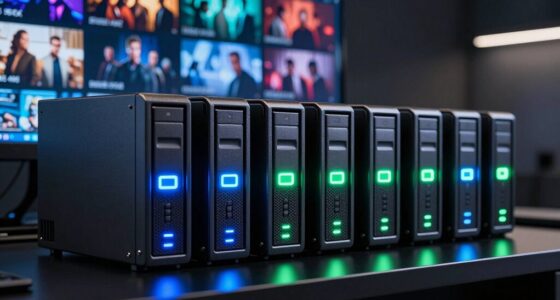
For most AV racks that need active voltage correction, the Furman P-1800 AR is my best overall pick, with its 15 amp capacity and regulated 120V output. The Eaton Tripp Lite LCR2400 stands out for higher-wattage setups, while the Panamax M5400-PM is another option for buyers seeking a more feature-rich system. The main tradeoff is between regulation capacity and rack space, outlet layout, and the needs of your connected equipment. Some products in this group condition or sequence power without offering the same active voltage regulation, so the model name alone is not enough to confirm a fit. Read on for the full breakdown and guidance on matching a unit to your equipment.

Get business pricing on your home office setup
- Business-only prices and quantity discounts
- Tax-exempt purchasing
- Multiple users, one account, clear invoices
Complete the kit


Key Takeaways
- The Furman P-1800 AR is the most balanced regulated pick: its 15 amp rating and stated 97–137V input range with 120V output make its correction role clear.
- The two Eaton 2400W models trade outlet count for layout: the LCR2400 lists 14 outlets, while the LC2400 lists six, so buyers should match the choice to their device count and plug access.
- The Furman P-2400 AR is the higher-capacity Furman alternative: its True RMS voltage regulation distinguishes it from the P-1800 AR, though buyers should confirm their load and installation needs.
- Not every conditioner in the roundup is a voltage regulator: the Furman AC-215A is compact and offers voltage protection, while the Pyle PCO875 emphasizes sequencing; verify the exact correction behavior before purchase.
- Display and premium features do not replace capacity checks: the Furman Elite-15 DM i adds digital volt and current meters, but a meter does not itself regulate voltage or increase the unit’s load rating.
| Furman P-1800 AR Advanced Level Voltage Regulator/Power Conditioner, 15 Amp, 97-137V Input to 120V Output |  | Best Overall | Input voltage range: 97–137V | Regulated output: 120V ±5V | Current capacity: 15A | VIEW ON AMAZON | See Our Full Breakdown |
| Eaton Tripp Lite LCR2400 Power Conditioner and Surge Protector, 2400W, 14 Outlets |  | Best for 20A Rack Systems | Power capacity: 2400W | Current capacity: 20A | Input voltage range: 89–147V | VIEW ON AMAZON | See Our Full Breakdown |
| Furman AC-215A Compact Power Conditioner with Auto-Resetting Voltage Protection, Black |  | Best Compact Pick | Current capacity: 10A | Protection technologies: SMP, LiFT, and EVS | Surge clamping voltage: 188V peak | VIEW ON AMAZON | See Our Full Breakdown |
| Eaton Tripp Lite LC2400 Power Conditioner and Surge Protector, 2400W, 6 Outlets |  | Best for Mixed Receptacle Needs | Power capacity: 2400W | Voltage: 120V | Outlets: 6: 4 NEMA 5-15R and 2 NEMA 5-20R | VIEW ON AMAZON | See Our Full Breakdown |
| Panamax M5400-PM Power Conditioner with Voltage Regulation |  | Best for Multi-Component Home Theater | Outlets: 11 | Isolated outlet banks: 5 | Voltage regulation: Yes; range not specified in supplied data | VIEW ON AMAZON | See Our Full Breakdown |
| Furman P-2400 AR Power Conditioner with True RMS Voltage Regulation |  | Best for High-Current Racks | Voltage regulation: True RMS, 120V ±5V | Input voltage: 97–137V | Capacity: 20A; 2400W maximum | VIEW ON AMAZON | See Our Full Breakdown |
| Pyle PCO875 10-Outlet Power Sequencer and Conditioner |  | Best for Basic Rack Convenience | Model: PCO875 | Outlets: 10 total: 8 rear, 2 always-on front | Power: 2000W | VIEW ON AMAZON | See Our Full Breakdown |
| Furman Elite-15 DM i 15A Power Conditioner with Digital Volt and Current Meters |  | Best for AV System Monitoring | Capacity: 15A | Outlets: 13 linear-filtered outlets | Meters: Digital voltage and current | VIEW ON AMAZON | See Our Full Breakdown |
| power conditioners with voltage regulation | Outlets |
|---|---|
| Furman P-1800 AR Advanced Leve | 9 total: 8 rear in two isolated banks and 1 front convenience outlet |
| Eaton Tripp Lite LCR2400 Power | 14 NEMA 5-15R |
| Furman AC-215A Compact Power C | — |
| Eaton Tripp Lite LC2400 Power | 6: 4 NEMA 5-15R and 2 NEMA 5-20R |
| Panamax M5400-PM Power Conditi | 11 |
| Furman P-2400 AR Power Conditi | 14 total: 12 rear, 2 front |
| Pyle PCO875 10-Outlet Power Se | 10 total: 8 rear, 2 always-on front |
| Furman Elite-15 DM i 15A Power | 13 linear-filtered outlets |
More Details on Our Top Picks
Furman P-1800 AR Advanced Level Voltage Regulator/Power Conditioner, 15 Amp, 97-137V Input to 120V Output
True RMS regulation and a stated 97–137V input range make the P-1800 AR a strong fit when voltage stability matters as much as surge and noise protection. It keeps output at 120V ±5V, while its digital meter lets owners see incoming voltage and current draw before a load becomes a problem. Compared with the Furman AC-215A, it offers more outlets, metering, and a wider stated regulation feature set; compared with the rack-focused Eaton Tripp Lite LCR2400, it has fewer outlets and a lower 15A capacity. Its nine outlets, isolated banks, and front USB charger suit a substantial AV or studio setup. The tradeoff is that high-current systems may outgrow its capacity, and extreme-voltage shutdown can interrupt connected equipment during severe line conditions.
Pros:- True RMS regulation maintains 120V ±5V across a 97–137V input range
- Digital voltmeter and ammeter show line voltage and current draw
- Nine outlets arranged in two isolated rear banks, plus a front convenience outlet
- Combines surge suppression, linear noise filtering, and extreme-voltage shutdown
Cons:- 15A capacity may not suit very high-current equipment
- Extreme-voltage shutdown can cut power during severe line conditions
- Optional BNC gooseneck lamp is not included
Best for: Home studios and AV systems with several sensitive components that need regulated 120V output and visible voltage and current readings.
Not ideal for: High-current installations that may exceed 15A, or buyers who need uninterrupted power through severe voltage events.
- Input voltage range:97–137V
- Regulated output:120V ±5V
- Current capacity:15A
- Regulation method:True RMS
- Outlets:9 total: 8 rear in two isolated banks and 1 front convenience outlet
- Protection:SMP, LiFT, EVS, surge suppression, linear noise filtering, and extreme-voltage shutdown
- Metering:Digital voltmeter and ammeter
- Other connections:Front USB charger and BNC connector for optional gooseneck lamp
Our verdict“Choose the P-1800 AR for a multi-component AV or studio setup where clear voltage regulation and front-panel monitoring matter more than a 20A capacity.”
Eaton Tripp Lite LCR2400 Power Conditioner and Surge Protector, 2400W, 14 Outlets
For a standard 19-inch rack with many connected components, the LCR2400’s 14 outlets and 20A capacity give it a practical advantage over the 15A Furman P-1800 AR. Its automatic voltage regulation works across an 89–147V input range, a broader stated range than the P-1800 AR’s 97–137V, and two isolated filter banks help separate equipment groups. The 12-foot cord can also make placement easier when a rack is not close to the wall outlet. That rack fit is also its main limitation: at 3U tall, it is a poor match for a shelf or compact entertainment cabinet. The Eaton LC2400 offers voltage correction in a less rack-specific format but has six outlets; this model favors outlet count and rack integration over a smaller footprint.
Pros:- 20A current capacity and 2400W power capacity
- 14 NEMA 5-15R outlets across two isolated filter banks
- Automatic voltage regulation for an 89–147V input range
- 12-foot cord supports flexible rack placement
Cons:- 3U rackmount form factor requires compatible rack space
- All 14 outlets are NEMA 5-15R, which may not suit equipment needing other receptacles
- Two-year warranty is shorter than the lifetime product warranty listed for the Panamax M5400-PM
Best for: Owners of standard 19-inch AV or equipment racks who need 20A capacity, broad input handling, and many outlets.
Not ideal for: Buyers with tabletop systems, small cabinets, or no 19-inch rack space, since this is a 3U rackmount unit.
- Power capacity:2400W
- Current capacity:20A
- Input voltage range:89–147V
- Regulated output:120V nominal
- Outlets:14 NEMA 5-15R
- Surge protection:1440 joules
- Filter banks:2 isolated
- Form factor and cord:3U, 19-inch rackmount; 12-foot cord
- Warranty:2 years
Our verdict“Pick the LCR2400 if your system lives in a 19-inch rack and needs more outlets and capacity than the 15A Furman P-1800 AR provides.”
Furman AC-215A Compact Power Conditioner with Auto-Resetting Voltage Protection, Black
The AC-215A is the space-saving choice for a TV, projector, or small audio setup that needs surge and noise protection plus a cutoff for dangerous voltage. Its auto-resetting Extreme Voltage Shutdown disconnects at 137V or higher and restores power when the line returns to a safe level. That is a useful safeguard, though it is not the same as continuous regulation to a stable 120V: buyers needing that should look to the Furman P-1800 AR or the Eaton LCR2400. At 1.75 × 5 × 8.5 inches and 3 pounds, the AC-215A can mount behind a display or in a rack without demanding the space of the 3U Eaton. Its 10A limit and compact feature set make it less suited to larger systems.
Pros:- Auto-resetting shutdown disconnects power at 137V or higher
- SMP surge protection and LiFT linear filtering
- Compact 3-pound chassis with TV, rack, or wall mounting options
- Circuit breaker included
Cons:- 10A capacity limits the number of high-draw devices
- Voltage shutdown does not provide continuous 120V regulation like the Furman P-1800 AR
- Compact design offers fewer outlets than the Eaton LCR2400’s 14
Best for: TV and projector owners, DJs, or home recordists seeking a compact, mountable power protector with automatic overvoltage shutdown.
Not ideal for: Buyers who need continuous voltage regulation, many outlets, or capacity beyond 10A.
- Current capacity:10A
- Protection technologies:SMP, LiFT, and EVS
- Surge clamping voltage:188V peak
- Surge withstand:Repeated 6000V surges
- Overvoltage shutdown:Auto-reset at 137V or higher
- Dimensions:1.75 × 5 × 8.5 inches
- Weight:3 pounds
- Mounting:TV mount, rack, or wall; brackets included
- Circuit breaker:Yes
Our verdict“Choose the AC-215A for a small mounted AV setup that needs compact surge and overvoltage protection, not full-time voltage regulation.”
Eaton Tripp Lite LC2400 Power Conditioner and Surge Protector, 2400W, 6 Outlets
The LC2400 suits buyers who need voltage correction and filtering but have equipment that benefits from both standard and 20A receptacles. Its four NEMA 5-15R and two NEMA 5-20R outlets distinguish it from the rackmount LCR2400, which offers 14 standard receptacles but no 5-20R outlets in the supplied data. Voltage correction boosts undervoltage by 9%, with a 19% boost for severe undervoltage, and reduces overvoltage by 10%; up to 80 dB of EMI/RFI filtering addresses line noise. Six outlets keep the setup focused, though the Panamax M5400-PM offers 11 for a more complex theater system. The LC2400 is a better fit for a smaller set of compatible loads than for buyers who need lots of connections.
Pros:- Four NEMA 5-15R outlets and two NEMA 5-20R outlets
- Specified 9% and 19% undervoltage boosts and 10% overvoltage reduction
- EMI/RFI filtering rated up to 80 dB
- Diagnostic LEDs indicate power and line status
Cons:- Six outlets offer less connection capacity than the LCR2400 or Panamax M5400-PM
- Six-foot cord may restrict placement compared with the LCR2400’s 12-foot cord
- Dimensions and weight are not provided in the supplied product data
Best for: AV or electronics owners with a few devices, including equipment that calls for NEMA 5-20R receptacles, who want specified voltage correction levels.
Not ideal for: Large home theaters or rack systems needing more than six outlets; buyers should also check device plug and current requirements before connecting.
- Power capacity:2400W
- Voltage:120V
- Outlets:6: 4 NEMA 5-15R and 2 NEMA 5-20R
- Plug and cord:NEMA 5-15P; 6 feet
- Surge suppression:1440 joules
- EMI/RFI filtering:Up to 80 dB
- Voltage correction:Boosts undervoltage by 9%, severe undervoltage by 19%, and reduces overvoltage by 10%
- Warranty:2 years
- Connected equipment insurance:$25,000
Our verdict“Choose the LC2400 when its mix of 5-15R and 5-20R outlets matches a small system and you want stated voltage correction levels.”
Panamax M5400-PM Power Conditioner with Voltage Regulation
For a home theater with several source components, the M5400-PM emphasizes outlet separation and AV-focused protection. Its 11 outlets are divided among five isolated banks, which can help limit noise transfer between connected components, while Automatic Voltage Monitoring and Protect or Disconnect address voltage changes. Compared with the Eaton LC2400, it has five more outlets and more isolated banks; the Eaton, by contrast, specifies its voltage correction percentages and 5-20R receptacles, details not given for the Panamax here. Its Level 5 noise filtration and Level 4 power cleaning add useful context for AV buyers, but the system may be more involved than a basic television setup needs. The supplied data also does not state a regulation range or current capacity, so buyers with demanding loads should check compatibility before choosing it.
Pros:- 11 outlets arranged across five isolated banks
- Automatic Voltage Monitoring with Protect or Disconnect technology
- Panamax Level 5 noise filtration and Level 4 power cleaning
- Lifetime product warranty and connected equipment protection policy
Cons:- Supplied product data does not state a voltage regulation range or current capacity
- AV-focused feature set may be unnecessary for basic equipment
- Power conditioning cannot resolve underlying electrical or wiring problems
Best for: Home theater owners with multiple AV components who want isolated outlet banks, voltage monitoring, and AV-oriented filtering.
Not ideal for: Buyers who need clearly specified input and output regulation ranges, known current capacity, or a simple protector for one or two devices.
- Outlets:11
- Isolated outlet banks:5
- Voltage regulation:Yes; range not specified in supplied data
- Noise filtration:Panamax Level 5
- Power cleaning:Level 4
- Protection technology:Automatic Voltage Monitoring (AVM), Protect or Disconnect
- Intended use:Home theater systems
- Warranty:Limited lifetime connected equipment protection policy; lifetime product warranty
Our verdict“Pick the M5400-PM for a multi-component home theater that benefits from outlet isolation and AV-focused monitoring, after confirming its electrical capacity suits your system.”
Furman P-2400 AR Power Conditioner with True RMS Voltage Regulation
The Furman P-2400 AR is the strongest fit here for a rack that needs active voltage correction as well as power conditioning. Its true RMS regulation holds output at 120V ±5V across a 97–137V input range, giving connected gear steadier power when the supply fluctuates. Compared with the Furman Elite-15 DM i, it offers higher 20A capacity and 14 outlets, while the Elite adds Telco and coaxial connections in a smaller, lower-capacity package. The tradeoff is substantial: at 44 pounds, this unit is difficult to mount, and its NEMA 20 plug requires a compatible circuit. It makes the most sense for a substantial studio or equipment rack, not a low-draw setup that mainly needs surge protection.
Pros:- Regulates a 97–137V input to 120V ±5V output
- 20A capacity and 14 outlets suit larger equipment racks
- SMP, LiFT, and EVS provide surge suppression, noise filtering, and extreme-voltage shutdown
- Front-panel voltage and current meters make supply conditions visible
Cons:- Its 44-pound weight makes installation and rack support more demanding
- The NEMA 20 plug requires a compatible outlet
- Its capacity and regulation features can be excessive for low-power systems
Best for: Studio and AV rack owners with a compatible 20A circuit, fluctuating input voltage, and several power-hungry components.
Not ideal for: Owners of portable or low-power setups, or anyone without a compatible NEMA 20 outlet and room for a heavy rack unit.
- Voltage regulation:True RMS, 120V ±5V
- Input voltage:97–137V
- Capacity:20A; 2400W maximum
- Outlets:14 total: 12 rear, 2 front
- Protection:SMP, LiFT, EVS; shutdown at 145V
- Plug and cord:NEMA 20 plug, 10 ft cord
- Weight:44 lb
- Dimensions:23 × 23.5 × 10.5 in
Our verdict“Choose the P-2400 AR for a high-current rack that needs active voltage regulation and has the circuit and mounting support to handle it.”
Pyle PCO875 10-Outlet Power Sequencer and Conditioner
The Pyle PCO875 is the lightest, simplest rack option in this group, with 10 outlets, a voltage display, and two always-on front outlets for devices that should stay powered independently. That convenience suits a modest audio or home-theater rack, but the product data lists surge and overload protection without specifying automatic voltage regulation. That distinction matters for this roundup: unlike the Furman P-2400 AR, the Pyle should not be chosen to correct unstable input voltage. Its 13A and 2000W limits also leave less headroom than the Furman’s 20A capacity. At 5.95 pounds and 1U tall, it is easier to fit and mount, but buyers needing documented voltage correction should look elsewhere.
Pros:- Ten outlets include two always-on front outlets
- Light 5.95-pound, 1U rack-mount design
- LCD voltage display provides a quick reading
- Built-in surge and overload protection
Cons:- The provided specifications do not describe active voltage regulation
- 13A and 2000W capacity are below the Furman P-2400 AR’s 20A and 2400W
- USB charging output is unspecified
Best for: Home-theater or small studio owners who want a light 1U rack unit, visible voltage readings, and always-on front outlets.
Not ideal for: Buyers who need specified voltage regulation to stabilize fluctuating mains power or need more than 13A/2000W capacity.
- Model:PCO875
- Outlets:10 total: 8 rear, 2 always-on front
- Power:2000W
- Current:13A
- Mounting:1U rack mount
- Protection:Surge and overload protection
- Display:LCD voltage display
- Dimensions and weight:18.9 × 8.3 × 1.9 in; 5.95 lb
Our verdict“Pick the PCO875 for a lightweight rack with basic protection and outlet convenience, but choose a regulator such as the Furman P-2400 AR if voltage correction is the priority.”
Furman Elite-15 DM i 15A Power Conditioner with Digital Volt and Current Meters
The Furman Elite-15 DM i is aimed at AV owners who want to monitor their system and protect its connections, rather than correct incoming voltage. Its digital voltage and current meters show what the system is drawing, while 13 linear-filtered outlets, SMP surge suppression, and EVS shutdown address noise and abnormal voltage events. The distinction is clear beside the Furman P-2400 AR: that model actively regulates input from 97–137V to a stable 120V, while the Elite-15 DM i’s listed features provide monitoring and protection without specified regulation. In return, the Elite offers Telco and coaxial connections plus 12V triggering for an integrated AV setup. Its 15A capacity and 14-pound chassis still call for dedicated shelf or rack space.
Pros:- Digital meters display voltage and current
- Thirteen linear-filtered outlets serve multiple components
- SMP surge suppression and EVS shutdown protect against electrical events
- 12V triggering and Telco and coaxial connections support integrated AV systems
Cons:- The listed features do not include active voltage regulation like the Furman P-2400 AR
- At 14 pounds, it needs sturdy shelf or rack support
- 15A capacity is lower than the P-2400 AR’s 20A
Best for: AV system owners who want metering, filtered outlets, and Telco or coaxial protection in a rack or shelf installation.
Not ideal for: Buyers whose main need is active voltage correction during sustained high or low input; the listed specifications do not describe regulation.
- Capacity:15A
- Outlets:13 linear-filtered outlets
- Meters:Digital voltage and current
- Surge protection:SMP non-sacrificial surge suppression
- Voltage protection:Extreme Voltage Shutdown (EVS)
- Noise filtration:LiFT linear noise filtration
- Connections:Telco In/Out; 3 pairs of coaxial connectors
- Remote control:12V triggering with bypass option
- Dimensions and weight:14.75 × 17 × 4 in; 14 lb
Our verdict“Choose the Elite-15 DM i for metering and connection protection in an AV rack, but choose an actively regulating model if voltage stabilization is essential.”

How We Picked
I ranked these options around the promise of power conditioning with voltage regulation. The first criteria were whether active regulation is identified, what capacity or input range is stated, and how clearly the product can be matched to a connected load. I then weighed outlet count and layout, rack or compact use, monitoring, and specialized functions such as sequencing. Those details affect whether a unit fits a real setup, but they do not substitute for voltage correction.
The Furman P-1800 AR leads because its stated input range and regulated output make its role easy to judge. The Eaton LCR2400 follows for buyers who need its 2400W rating and 14 outlets; the six-outlet LC2400 serves similar power needs with fewer connections. The remaining products rank by how well their stated function and capacity serve a defined buyer, with a distinction between active regulation, voltage protection, conditioning, and sequencing. Where a specification does not establish active regulation or a full correction range, I treat that as a limitation and recommend checking the manufacturer documentation before relying on it for unstable mains voltage.
Factors to Consider When Choosing Power Conditioners With Voltage Regulation
Choosing a conditioner starts with the voltage problem you need to solve and the total load you plan to connect. I would check the unit’s regulation details against the equipment manual before comparing convenience features.
Confirm That It Actively Regulates Voltage
Product names can blur the difference between surge protection, noise filtering, voltage protection, and active voltage regulation. These functions address different electrical conditions, and a label that says “conditioner” does not prove that the output voltage is corrected. Look for an explicit regulation method, input range, and expected output behavior in the manufacturer documentation. If your concern is frequent low or high mains voltage, protection that merely disconnects power may not meet your goal. Check whether the unit corrects voltage continuously, switches between taps, or shuts down outside a safe range. That detail will shape how connected equipment behaves during a fluctuation.
Size Capacity for the Whole Connected Load
Add the power demands of the devices you intend to plug in, using their manuals or labels rather than guessing from outlet count. Amps and watts describe related but different limits, and the rating can depend on input voltage and operating conditions. Leave room for devices with higher startup draw, such as amplifiers, instead of sizing to their quiet idle state. A unit that is overloaded may limit performance or trip, even if every device fits physically. Also check whether the manufacturer specifies a separate maximum for individual outlets or outlet banks. Capacity should be settled before convenience features enter the comparison.
Match Correction Range to Your Mains Conditions
A broad input range can help a regulator maintain its target output across more severe dips or rises, but only within the unit’s stated limits. Think about the conditions at the actual outlet where the equipment will run; a label describing a range is useful only if it covers those conditions. If voltage regularly falls below or rises above that range, the device may stop correcting or disconnect the load. Buyers should distinguish a regulated output target from a promise that every connected device receives perfectly constant voltage. For persistent electrical problems, a qualified electrician can help identify whether the cause is a circuit issue or a wider supply problem. Match the specification to the problem rather than treating a larger number as automatically better.
Plan Outlet Layout, Plug Size, and Rack Space
Count the equipment and inspect plug shapes before deciding how many outlets you need. Large wall adapters can block neighboring sockets, while a higher outlet count may still leave awkward spacing for bulky power cords. Rack units need adequate depth, ventilation, and room for cable bends; compact conditioners may suit a single component better than an entire rack. Separate outlet banks can also help organize equipment, but their labels and limits should be clear. Sketching the connections in advance can prevent buying a unit that has enough sockets on paper but not enough usable ones in practice.
Choose Monitoring and Sequencing for a Reason
Voltage or current meters make operating conditions easier to observe, but they are monitoring tools rather than regulation features. A display may help diagnose an overloaded rack or track changing supply voltage, yet it cannot correct either condition by itself. Power sequencing can start components in a chosen order, which may suit systems where startup behavior matters. It also adds setup requirements and does not establish that voltage is regulated. Pay for these functions when they address a real workflow or troubleshooting need. Otherwise, direct evidence of correction range and load capacity matters more.
Read the Protection and Installation Details
Check what the manufacturer says about surge protection, overload response, grounding, and what happens when voltage falls outside the regulation range. Those details explain whether equipment stays powered, gets disconnected, or requires a manual reset during an event. Confirm that the outlet is properly grounded and that the circuit can support the connected load; a conditioner cannot repair faulty building wiring. For a permanently installed or unusually demanding setup, installation advice from a qualified electrician may be appropriate. Keep the manual and note any indicator lights or maintenance instructions so you can recognize a fault. A clear shutdown behavior can matter as much as the normal operating mode.
Frequently Asked Questions
Do I need voltage regulation if my equipment already has surge protection?
Surge protection and voltage regulation address different conditions. A surge protector is designed to limit certain brief voltage spikes, while a regulator is intended to correct voltage within its specified operating range. If your supply is stable and your equipment already has suitable surge protection, active regulation may not add much for your situation. If you see frequent low or high voltage, check the regulator’s correction range and response behavior. Do not assume that a conditioner with surge protection also regulates voltage.
Can I connect a power amplifier and other AV equipment to the same regulator?
That depends on the regulator’s total capacity, the amplifier’s draw, and the combined load of every connected device. Use the equipment specifications and account for amplifier startup or high-output demand rather than counting only the number of outlets. Compare the total against the regulator’s stated amp or watt limit, including any limits for specific banks. A unit can have enough sockets but still be undersized for the load. If the calculations are unclear, ask the manufacturer or an electrician before connecting the full rack.
Is a higher watt rating always the better choice?
A higher rating can provide more headroom for demanding equipment, but it does not automatically mean better voltage correction or a better fit. You still need to check input range, regulated output, outlet layout, and installation requirements. A large unit may be unnecessary for a modest source-and-display setup, while a high-draw rack can exceed a smaller unit’s limits. Compare the capacity with your actual load and leave practical margin. Do not use wattage alone as a proxy for regulation quality.
Will a voltage regulator fix flickering lights or repeated breaker trips?
A regulator is not a substitute for diagnosing a circuit or wiring problem. Flickering lights or repeated trips may point to an overloaded circuit, loose connection, faulty equipment, or a supply issue that needs professional attention. A conditioner may disconnect its load when voltage leaves its operating range, but that does not repair the cause. Avoid placing more demand on a circuit that is already tripping. Have a qualified electrician inspect persistent symptoms.
How can I tell whether a compact conditioner provides actual regulation?
Check the product documentation for explicit voltage regulation, a stated input range, and the output behavior across that range. Phrases such as voltage protection can describe cutoff behavior rather than correction, and conditioning alone may refer to other electrical functions. If the specifications do not say how voltage is adjusted, ask the manufacturer before buying it for unstable mains power. This distinction matters especially for compact models, where the name and feature list may emphasize protection or filtering. Choose based on the documented function that matches your electrical concern.
Conclusion
For a clearly specified regulated output and a balanced rack use case, I recommend the Furman P-1800 AR as best overall. Buyers prioritizing outlet count and a 2400W rating should compare the Eaton LCR2400 with the six-outlet LC2400; the P-1800 AR is the simpler starting point for a buyer new to regulation because its stated range makes the core job easier to assess. For a more demanding setup, the Furman P-2400 AR is the premium Furman option to evaluate against the load and installation needs. The compact AC-215A suits buyers focused on voltage protection in a smaller setup, while the Pyle PCO875 is for those who need sequencing and conditioning functions. I would verify active regulation directly before choosing either for correction of unstable mains voltage.
Halloween Picks
halloween
As an affiliate, we earn on qualifying purchases.