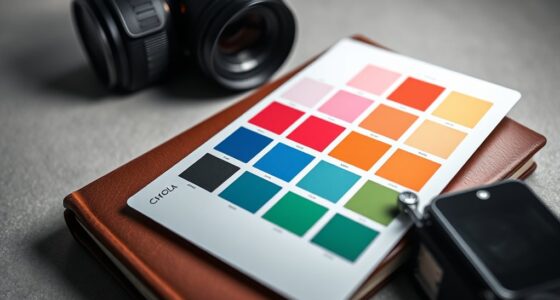
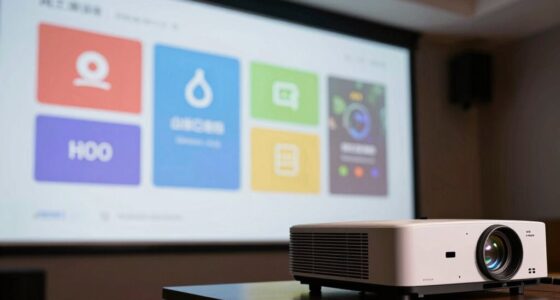
To adjust the contrast ratio for more depth, start by calibrating your display to establish a solid baseline. Increase contrast gradually, focusing on enhancing shadows and highlights to add dimension without losing detail. Keep ambient lighting in mind—brighter rooms may need higher contrast, while darker spaces benefit from softer settings. Small, incremental tweaks improve visual impact over time. If you want to discover more strategies for perfecting depth, keep exploring these adjustments further.
Key Takeaways
- Increase contrast gradually to deepen shadows and highlights, enhancing perceived depth without losing detail.
- Calibrate your display to ensure accurate contrast settings before making adjustments.
- Adjust contrast based on ambient lighting to optimize depth perception and reduce eye strain.
- Use small, incremental contrast changes to improve overall image depth and vibrancy over time.
- Remember that excessive contrast can cause detail loss; aim for a balanced setting that enhances depth naturally.
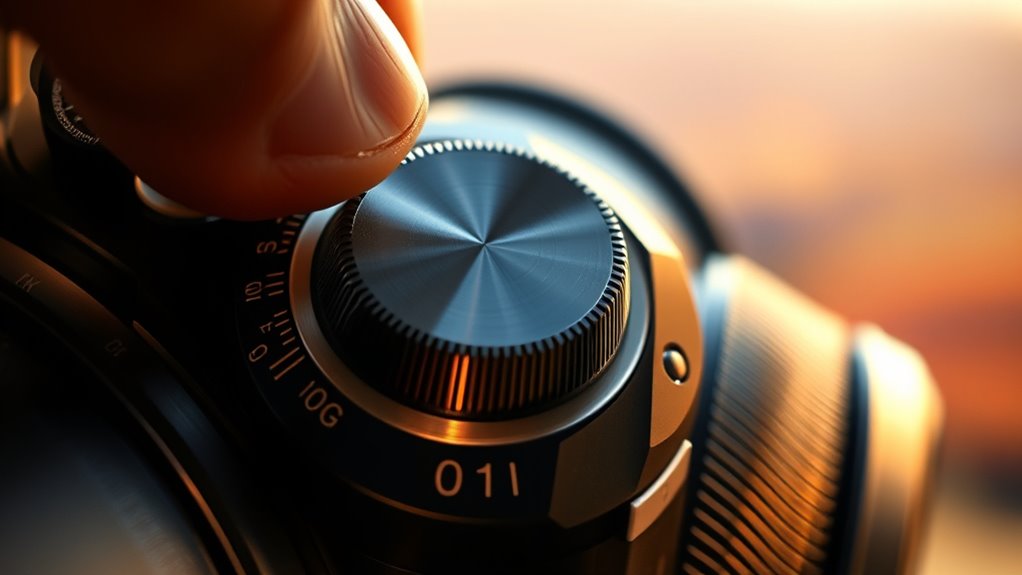
Have you ever wondered how to make your images or displays appear more vivid and balanced? One of the key factors influencing this is your ability to adjust the contrast ratio effectively. When you tweak contrast, you’re essentially controlling the difference between the darkest blacks and the brightest whites, which adds depth and dimension to your visuals. To do this well, understanding how contrast interacts with color perception is essential. Our brains interpret colors differently depending on the surrounding hues and brightness levels, so slight adjustments can dramatically improve the overall realism and impact of your display. Proper display calibration is crucial here because it ensures your screen reproduces colors and brightness levels accurately, providing a foundation for making meaningful contrast adjustments.
When you calibrate your display, you set a baseline that reflects true color perception under specific lighting conditions. This process involves adjusting settings like brightness, contrast, gamma, and color balance to match industry standards or personal preferences. Once calibrated, your display delivers consistent and accurate colors, making it easier to judge contrast adjustments. As you increase contrast, you’ll notice that images gain more depth—shadows become richer, highlights more vibrant—creating a more immersive experience. Conversely, reducing contrast can make scenes look flatter or washed out, which diminishes depth and visual interest. Striking the right balance is essential because too much contrast can cause loss of detail in bright or dark areas, while too little can make images appear dull or lifeless.
To enhance depth through contrast adjustments, consider the ambient lighting in your space. Bright environments may require higher contrast settings to maintain clarity, while darker rooms benefit from softer contrasts to prevent eye strain. Remember, the goal is to optimize contrast without sacrificing detail, which requires a good understanding of how your display’s contrast ratio influences perception. If you’re working on professional projects or simply want your media to look its best, investing time in proper display calibration pays off. It ensures that the contrast you set reflects true visual depth, making your images pop and look more three-dimensional. Keep in mind that small, incremental adjustments often yield better results than large, sweeping changes. Regular calibration and careful tuning allow you to maintain the desired depth and vibrancy, ultimately improving how you perceive and enjoy your visual content. Additionally, understanding the contrast ratio of your display helps in setting realistic expectations for image quality and depth.
![[Officially-Licensed App & Auto Focus]White Smart Mini Projector with WiFi and Bluetooth, XuanPad 4K Support Movie Projector, Portable Native 1080P Outdoor Projector with 360° Stand](https://m.media-amazon.com/images/I/51I8uy-U8bL._SL500_.jpg)
[Officially-Licensed App & Auto Focus]White Smart Mini Projector with WiFi and Bluetooth, XuanPad 4K Support Movie Projector, Portable Native 1080P Outdoor Projector with 360° Stand
- Exciting Moments Begin - The XuanPad mini projector...
- 4K Home Theater Master Pro- This XuanPad Ultra-thin...
- Go Along With Pocket Projector - The XuanPad...
As an affiliate, we earn on qualifying purchases.
Frequently Asked Questions
How Does Ambient Lighting Affect Contrast Ratio Adjustments?
Ambient lighting substantially influences contrast ratio adjustments because bright ambient light can wash out screen details, reducing perceived contrast. You should consider ambient light levels to optimize contrast; for instance, dimmer rooms help maintain deeper blacks and brighter whites. Additionally, glare reduction techniques, like anti-reflective coatings or positioning, prevent reflections that diminish contrast. By controlling ambient light and minimizing glare, you guarantee your display achieves the best possible contrast ratio for clarity and depth.
Can Adjusting Contrast Ratio Improve Color Accuracy?
Adjusting contrast ratio is like tuning a musical instrument; it can enhance your color accuracy if done correctly. When you tweak contrast, you’re fine-tuning your display’s settings, which directly impacts color calibration and your visual perception. Proper contrast adjustments make colors appear more vibrant and true to life, helping you see details clearly. So, yes, adjusting contrast ratio can markedly improve your overall color accuracy and viewing experience.
What Tools Are Best for Measuring Contrast Ratio Precisely?
You should use calibration tools and measurement devices to precisely measure contrast ratio. Look for tools like colorimeters or spectrophotometers, which offer accurate readings essential for fine-tuning displays. These devices help you evaluate contrast ratio effectively, guaranteeing your display meets desired standards. Investing in quality measurement devices ensures consistent results, making your adjustments more effective and dependable for achieving ideal depth and color accuracy.
How Does Contrast Ratio Impact Eye Strain During Prolonged Use?
If you ignore contrast ratio, your eyes might strain during long hours of screen time, causing discomfort and fatigue. Proper contrast enhances visual comfort by making text and images clearer, reducing the effort your eyes need to focus. It also improves display ergonomics, helping you maintain better posture and less eye fatigue. Prioritizing ideal contrast means your eyes stay relaxed, making prolonged use more comfortable and less tiring overall.
Are There Recommended Settings for Different Display Types?
You should use specific calibration techniques tailored to your display type for ideal contrast ratio. For LCDs, increase contrast gradually during display calibration to find a comfortable balance, while OLED screens may require slightly different settings to avoid burn-in. Always refer to manufacturer recommendations and use calibration tools to fine-tune your display. Proper display calibration ensures accurate contrast, reducing eye strain and improving your overall viewing experience.

Aurzen Roku TV D1R Smart Portable Outdoor Projector with WiFi and Bluetooth
- A Roku account and internet connection are required for activation (Creating an account is free). Note: Power Supply: 100-240V AC, 50/60Hz.
- America's #1 TV Streaming Platform, All Top Apps: With Roku as your entertainment...
- A Simple and Fast Home Screen: Enjoy a simple projector interface...
As an affiliate, we earn on qualifying purchases.
Conclusion
By adjusting your contrast ratio, you can critically enhance your depth perception and overall visual experience. Did you know that the human eye can distinguish over 10 million different colors? This highlights how essential proper contrast settings are to making images pop and details stand out. So, take a moment to tweak your contrast—you’ll be amazed at how much sharper and more immersive your viewing becomes, bringing your visuals to life with just a simple adjustment.

XHF 120 PCS Adhesive Cable Wire Clips Black, Outdoor Christmas Light Clips, Cable Management Wire Organizer Cord Holder for Under Desk, Car, Wall, TV PC Ethernet Cable
- High quality material:XHF Adhesive Cable Clips are manufactured...
- Widely used: USB Cable, Ethernet Cable, Outdoor...
- Size: Base 5/8" x 5/8", inner...
As an affiliate, we earn on qualifying purchases.

SOULWIT 50Pcs Self Adhesive Cable Management Clips - Black
- 🔷SUPER EASY TO USE: Stick to clean surface, open...
- 🔷PREMIUM MATERIAL: Made from eco-friendly Polyamide66 material,...
- 🔷STICKY IN MANY SURFACES: Works on all clean surfaces...
As an affiliate, we earn on qualifying purchases.