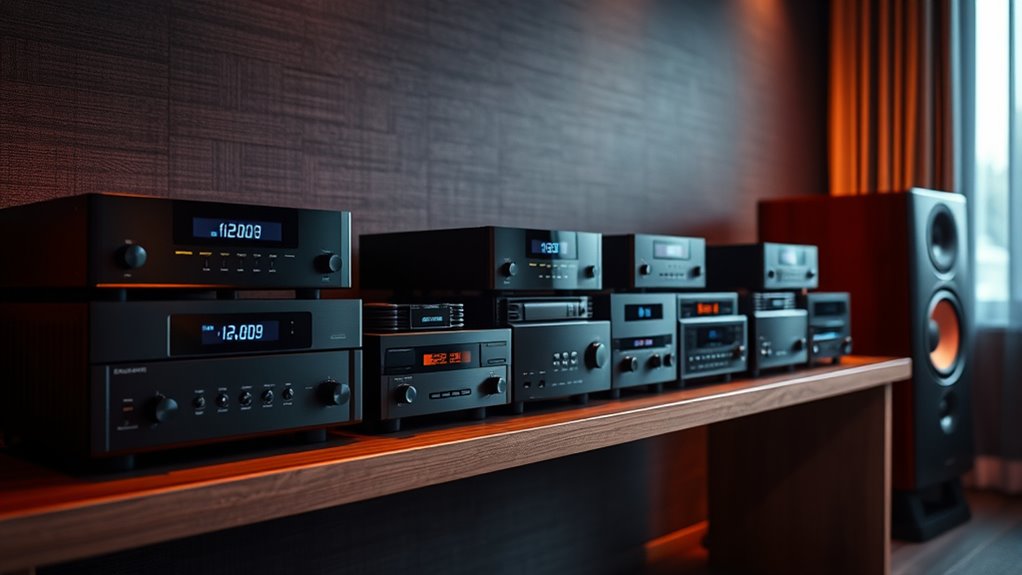

When exploring highticket streaming audio amplifiers, you’re entering a realm of high-performance audio with premium features. The Yamaha R-N600A stands out as the best overall choice thanks to its balanced sound, versatile connectivity, and reliable build. The NAD C 700 V2 offers a compelling blend of advanced streaming technology with BluOS, perfect for audiophiles seeking seamless integration. Meanwhile, the WiiM Ultra Hi-Res Music Streamer caters to those prioritizing high-resolution audio and touchscreen convenience. Readers often face tradeoffs between raw power, connectivity options, and ease of use—continue reading for a detailed breakdown of these top contenders and what sets them apart.

Get business pricing on your home office setup
- Business-only prices and quantity discounts
- Tax-exempt purchasing
- Multiple users, one account, clear invoices
Complete the kit



Key Takeaways
- The top amplifiers combine high-resolution audio support with extensive streaming platform compatibility, catering to audiophiles and casual listeners alike.
- Connectivity versatility—such as HDMI ARC, Bluetooth, and Wi-Fi—is a key differentiator for modern high-ticket amplifiers.
- Build quality and user interface features like touchscreens and app control significantly impact daily usability and long-term satisfaction.
- Premium price often correlates with advanced features like room calibration, multi-zone audio, and native integration with high-res DACs.
- Tradeoffs usually involve choosing between raw power, feature set, and ease of setup; high-end models tend to excel in specific areas rather than all-around.
| Yamaha R-N600A Network Receiver with Streaming, Phono Input and Built-in DAC, Black |  | Best Overall Streaming Amplifier for Versatility and High-Resolution Audio | Brand: Yamaha | Model: R-N600A | Color: Black | VIEW ON AMAZON | See Our Full Breakdown |
| OSD Audio Nero Stream XD2 Stereo Amplifier 150W x2, HDMI ARC, WiFi App Control, Bluetooth, USB DAC, Class D 2 Channel Home Audio Streaming Amp |  | Best Power and Multi-Input Flexibility for Home Audio Enthusiasts | Power Output: 150W x2 @ 8Ω | Speaker Compatibility: 8 to 4 Ohm | Connectivity: HDMI ARC, Optical, Coaxial, RCA, USB | VIEW ON AMAZON | See Our Full Breakdown |
| Marantz Model M1 Wireless Streaming Amplifier |  | Best Compact High-Resolution Streaming Amplifier with Multi-Room Support | Power Output: 100W per channel | Streaming Platform: HEOS | Hi-Res Audio Support: 24-bit/192kHz PCM, DSD | VIEW ON AMAZON | See Our Full Breakdown |
| Juke+ 6 Zone Audio Amplifier – 100 Watts per Channel, Multi-Room Streaming with AirPlay 2 and Spotify Connect |  | Best Multi-Zone Streaming Amplifier for Whole-Home Audio Control | Power Output: 100 Watts per channel | Zones: 6 | Connectivity: Wi-Fi, AirPlay 2, Spotify Connect | VIEW ON AMAZON | See Our Full Breakdown |
| NAD C 700 V2 Streaming Amplifier with BluOS |  | Best Premium Digital Hybrid Amplifier for High-Fidelity Streaming | Power Output: 2×80 watts | DAC: ESS Sabre ES9028 | Streaming Support: MQA, Tidal, BluOS | VIEW ON AMAZON | See Our Full Breakdown |
| WiiM Mini Wi-Fi Music Streamer with AirPlay 2 & Hi-Res Audio |  | Best for Simplified High-Resolution Streaming and Smart Home Integration | Connectivity: Wi-Fi, AirPlay 2, Alexa, Siri | Audio Quality: Up to 192kHz, 24-bit | Supported Services: Spotify, TIDAL, Amazon Music | VIEW ON AMAZON | See Our Full Breakdown |
| WiiM Amp Ultra Stereo Streaming Amplifier, HDMI ARC & RoomFit, Space Gray |  | Best for High-Fidelity Audiophile-Grade Home Amplification | Power Output: 100W | Distortion: -106 dB THD+N | Connectivity: Wi-Fi 6, Bluetooth 5.3 LE Audio, HDMI ARC | VIEW ON AMAZON | See Our Full Breakdown |
| WiiM Ultra Hi-Res Music Streamer with Touchscreen & ESS DAC |  | Best for Versatile High-Resolution Streaming with User-Friendly Interface | DAC: ESS ES9038 Q2M | Touchscreen: 3.5 inches | Connectivity: Wi-Fi 6, Bluetooth 5.3, USB, Optical, Coaxial, RCA, HDMI ARC, Phono input | VIEW ON AMAZON | See Our Full Breakdown |
| WiiM Pro Music Streamer to Upgrade Stereo with AirPlay 2 and Spotify Connect |  | Best for Multi-Protocol Streaming and Cross-Platform Compatibility | Streaming Protocols: AirPlay 2, Google Cast, Spotify Connect, TIDAL Connect | High-Res Audio: up to 24-bit/192 kHz | Outputs: Digital optical, Coax, Analog | VIEW ON AMAZON | See Our Full Breakdown |
| highticket streaming audio amplifier | Connectivity | Power Output |
|---|---|---|
| Yamaha R-N600A Network Receive | Bluetooth, Ethernet, Wi-Fi | — |
| OSD Audio Nero Stream XD2 Ster | HDMI ARC, Optical, Coaxial, RCA, USB | 150W x2 @ 8Ω |
| Marantz Model M1 Wireless Stre | AirPlay 2, Spotify Connect, Bluetooth, USB, Network | 100W per channel |
| Juke+ 6 Zone Audio Amplifier | Wi-Fi, AirPlay 2, Spotify Connect | 100 Watts per channel |
| NAD C 700 V2 Streaming Amplifi | Ethernet, Wi-Fi, HDMI-eARC | 2×80 watts |
| WiiM Mini Wi-Fi Music Streamer | Wi-Fi, AirPlay 2, Alexa, Siri | — |
| WiiM Amp Ultra Stereo Streamin | Wi-Fi 6, Bluetooth 5.3 LE Audio, HDMI ARC | 100W |
| WiiM Ultra Hi-Res Music Stream | Wi-Fi 6, Bluetooth 5.3, USB, Optical, Coaxial, RCA, HDMI ARC, Phono input | — |
| WiiM Pro Music Streamer to Upg | — | — |
More Details on Our Top Picks
Yamaha R-N600A Network Receiver with Streaming, Phono Input and Built-in DAC, Black
The Yamaha R-N600A stands out as the most comprehensive choice, combining high-resolution streaming with robust audio features. Its ESS SABRE ES9010K2M DAC ensures superior sound clarity, surpassing models like the Marantz M1 in pure audio quality. The dedicated phono input makes it ideal for vinyl enthusiasts, while the built-in MusicCast platform supports popular services like Spotify. Compared to the NAD C 700 V2, it offers more flexible connectivity without requiring elaborate setup, though it’s limited by only one HDMI port, which could restrict home theater use. This receiver suits those seeking a high-performance, all-in-one stereo solution with excellent digital and analog inputs.
Pros:- Supports native DSD 11.2 MHz and 384 kHz PCM for high-res audio
- Built-in ESS SABRE DAC delivers clear, detailed sound
- Includes dedicated phono input and optical connection for TV audio
- Versatile streaming via MusicCast, Bluetooth, Wi-Fi, and Ethernet
Cons:- Limited to a single HDMI port, which may restrict home theater setups
- Lacks a display for detailed source information
Best for: Audiophiles who want a versatile, high-resolution streaming receiver with vinyl support and multiple connectivity options
Not ideal for: Home theater enthusiasts who need multiple HDMI ports for extensive device integration
- Brand:Yamaha
- Model:R-N600A
- Color:Black
- DAC:ESS SABRE ES9010K2M
- Output Power:175 watts
- Connectivity:Bluetooth, Ethernet, Wi-Fi
- Streaming:MusicCast, Spotify
- Inputs:Phono, Optical, USB (front panel)
Our verdict“This receiver is best suited for those seeking a high-quality, all-in-one stereo system with extensive digital features.”
OSD Audio Nero Stream XD2 Stereo Amplifier 150W x2, HDMI ARC, WiFi App Control, Bluetooth, USB DAC, Class D 2 Channel Home Audio Streaming Amp
The OSD Nero Stream XD2 offers impressive power with 150W per channel, making it ideal for larger rooms or demanding speakers. Its support for HDMI ARC, Wi-Fi, Bluetooth, and USB DAC provides a broad range of connection options, surpassing the Marantz M1’s focus on compactness. The amplifier’s zone control and multi-input design make it a strong choice for multi-room setups, though its setup complexity could challenge less tech-savvy users. Unlike the NAD C 700 V2, it emphasizes raw power and multi-zone flexibility, but it does not include a dedicated streaming platform, relying instead on app control and external services. This model is perfect for users who prioritize volume and multi-zone control over integrated streaming services.
Pros:- Powerful 150W per channel output suitable for demanding speakers
- Supports multiple streaming services via app control, including Spotify and Tidal
- Multiple inputs including HDMI ARC, optical, and RCA for versatile integration
- Zone control allows multi-room audio management
Cons:- Setup can be complex for users unfamiliar with multi-zone systems
- Lacks built-in streaming platform or interface
Best for: Homeowners with large or multi-room systems needing high power and flexible input options
Not ideal for: Casual listeners or those seeking a simple, plug-and-play streaming amplifier
- Power Output:150W x2 @ 8Ω
- Speaker Compatibility:8 to 4 Ohm
- Connectivity:HDMI ARC, Optical, Coaxial, RCA, USB
- Wireless Support:WiFi, Bluetooth
- Streaming Services:Spotify Connect, Amazon Music, Tidal, AirPlay, DLNA
- Inputs:HDMI ARC, Optical, Coaxial, RCA, USB
Our verdict“This amplifier is well-suited for users wanting high power and multi-room flexibility, with less focus on simplified or integrated streaming.”
Marantz Model M1 Wireless Streaming Amplifier
The Marantz Model M1 excels for those seeking a compact, high-quality streaming solution. With 100W per channel and support for hi-res formats up to 24-bit/192kHz, it rivals larger amplifiers like the NAD C 700 V2 in sound quality but fits seamlessly into smaller spaces. Its support for HEOS, AirPlay 2, and Bluetooth ensures versatile wireless streaming, while HDMI eARC with Dolby Digital+ enhances TV audio. Compared to the Yamaha R-N600A, it offers a more refined, space-saving design with a focus on hi-res audio. However, it lacks a dedicated phono input, making it less suitable for vinyl collectors. Its multi-room capability works best within the HEOS ecosystem, limiting compatibility with non-Marantz setups. It’s ideal for those who want premium sound in a small package with multi-room features.
Pros:- High-quality 100W per channel amplification with low distortion
- Supports hi-res audio up to 24-bit/192kHz and DSD via HEOS
- HDMI eARC with Dolby Digital+ for improved TV sound
- Compact, elegant design with user-friendly controls
Cons:- No dedicated phono input for turntables
- Multi-room features require HEOS ecosystem
Best for: Audiophiles seeking a compact, high-performance streaming amplifier with multi-room capabilities
Not ideal for: Turntable enthusiasts who rely heavily on phono inputs or extensive analog connectivity
- Power Output:100W per channel
- Streaming Platform:HEOS
- Hi-Res Audio Support:24-bit/192kHz PCM, DSD
- Connectivity:AirPlay 2, Spotify Connect, Bluetooth, USB, Network
- Video Connection:HDMI eARC
- Audio Decoding:Dolby Digital+
Our verdict“This compact Marantz is a smart choice for those wanting high-res streaming in a small form factor with multi-room support.”
Juke+ 6 Zone Audio Amplifier – 100 Watts per Channel, Multi-Room Streaming with AirPlay 2 and Spotify Connect
The Juke+ 6 Zone Audio Amplifier is designed for multi-room systems, offering 6 zones with 100W per channel. Its support for AirPlay 2 and Spotify Connect makes it straightforward to stream to multiple areas simultaneously, surpassing single-zone amplifiers like the Marantz M1 for multi-room flexibility. The built-in equalizer and app control allow detailed sound customization, appealing to users managing multiple zones. However, its reliance on Wi-Fi means a stable network is essential, and setup may be daunting for those unfamiliar with multi-zone configurations. Unlike the Yamaha R-N600A, which focuses on high-res digital audio, Juke+ emphasizes multi-zone distribution, making it ideal for whole-home audio. If your goal is multi-room control over several spaces, this amplifier makes a compelling choice.
Pros:- Supports 6 zones with individual volume control
- Seamless streaming via AirPlay 2 and Spotify Connect
- App-based control with built-in equalizer for sound tuning
- Multiple input options for versatile integration
Cons:- Requires stable Wi-Fi network for full functionality
- Setup complexity may challenge less technical users
Best for: Homeowners wanting to control audio across multiple zones with easy app management
Not ideal for: Solo listening setups or users without a reliable Wi-Fi network
- Power Output:100 Watts per channel
- Zones:6
- Connectivity:Wi-Fi, AirPlay 2, Spotify Connect
- Inputs:RCA, Optical
- Outputs:Multiple speaker zones
- Control:Mobile app (iOS and Android)
Our verdict“This amplifier suits those seeking a flexible, multi-zone system with easy streaming control across different areas.”
NAD C 700 V2 Streaming Amplifier with BluOS
The NAD C 700 V2 offers a compelling combination of power and high-end digital features, making it ideal for audiophiles who want a premium streaming amplifier. Its 2×80 watts of continuous power, complemented by the advanced ESS Sabre ES9028 DAC, rivals the Yamaha R-N600A in audio clarity but with a more refined, high-fidelity focus. Its BluOS platform supports a wide range of streaming services, including Tidal and Qobuz, and features multi-room capabilities that go beyond the Marantz M1’s ecosystem. The setup can be complex for newcomers, and its high price reflects the premium build quality and features, but it delivers superior sound across digital sources. Compared with the Yamaha R-N600A, it emphasizes digital audio excellence and multi-room flexibility for dedicated audiophiles.
Pros:- Powerful 2×80 watts output with high-quality ESS Sabre DAC
- Supports high-resolution streaming including MQA, Tidal, and Qobuz
- BluOS multi-room platform for extensive ecosystem integration
- Includes HDMI-eARC for enhanced TV audio
Cons:- Setup complexity may deter less tech-savvy users
- Higher price point limits accessibility for budget-conscious buyers
Best for: Audiophiles who desire a high-performance, high-resolution streaming amplifier with multi-room and digital excellence
Not ideal for: Casual listeners seeking a simple, less expensive streaming solution or analog-focused users
- Power Output:2×80 watts
- DAC:ESS Sabre ES9028
- Streaming Support:MQA, Tidal, BluOS
- Connectivity:Ethernet, Wi-Fi, HDMI-eARC
- Display:5-inch color
- Additional:Supports Alexa and Siri
Our verdict“This amp appeals most to audiophiles demanding high-resolution digital audio and expansive multi-room capabilities.”
WiiM Mini Wi-Fi Music Streamer with AirPlay 2 & Hi-Res Audio
This compact device excels at transforming your existing stereo into a smart, AirPlay 2-enabled speaker with exceptional high-res audio up to 192kHz, 24-bit. Unlike the WiiM Ultra, which offers more extensive connectivity options, the WiiM Mini focuses solely on streaming and smart home compatibility, making setup straightforward for Apple and Alexa users. The tradeoff is its limited streaming protocol support—only AirPlay 2 and compatible voice assistants—so it won’t serve Android or Google Cast-centric environments well. This pick makes the most sense for users who prioritize ease of use, high-quality audio from Apple devices, and multiroom setup, without the need for advanced controls or extensive inputs.
Pros:- Delivers studio-quality high-res audio up to 192kHz, 24-bit
- Supports multiple streaming services and multiroom capabilities
- Compatible with Alexa and Siri for voice control
- Transforms existing stereo into a smart, AirPlay 2-enabled speaker
Cons:- Limited to receiving AirPlay streams; cannot transmit AirPlay to other speakers
- No support for Google Cast, restricting compatibility with Android devices
- Requires a Wi-Fi connection; no Ethernet option
Best for: Apple-centric households seeking an easy upgrade to high-res wireless audio via AirPlay 2
Not ideal for: Android users or those wanting Google Cast or more advanced multi-input options, as it lacks Google Cast support and broader connectivity
- Connectivity:Wi-Fi, AirPlay 2, Alexa, Siri
- Audio Quality:Up to 192kHz, 24-bit
- Supported Services:Spotify, TIDAL, Amazon Music
- Multiroom Streaming:Yes
- Compatibility:Apple devices, Alexa, HomePod, Echo
Our verdict“This device is ideal for Apple users seeking a simple, high-res wireless streaming upgrade for their existing stereo setup.”
WiiM Amp Ultra Stereo Streaming Amplifier, HDMI ARC & RoomFit, Space Gray
The WiiM Amp Ultra stands out for its combination of audiophile-grade components and versatile connectivity, including Wi-Fi 6, Bluetooth 5.3, and HDMI ARC, making it ideal for serious music listeners. Unlike the WiiM Mini, which focuses on streaming, this amp offers powerful 100W per channel output and advanced features like RoomFit room calibration, providing a tailored listening experience. However, it doesn’t support AirPlay, which might deter Apple users seeking seamless Apple ecosystem integration. This model is well-suited for those who prioritize sound quality and flexible connectivity over simple setup, but it may overwhelm users unfamiliar with high-end audio gear.
Pros:- High-quality ESS SABRE DAC ensures detailed, clear sound
- Multiple connectivity options including Wi-Fi 6, HDMI ARC, and Bluetooth 5.3
- Built-in RoomFit for personalized sound calibration
- Sleek touchscreen for easy control and settings adjustment
Cons:- No support for AirPlay, limiting Apple ecosystem compatibility
- Complex interface may challenge users new to high-end audio devices
- Higher price point compared to simpler streaming amps
Best for: Audiophiles wanting a high-performance, customizable stereo amplifier with advanced connectivity
Not ideal for: Casual listeners or Apple users who need AirPlay support, as it lacks this feature and may be too complex for beginners
- Power Output:100W
- Distortion:-106 dB THD+N
- Connectivity:Wi-Fi 6, Bluetooth 5.3 LE Audio, HDMI ARC
- Components:ESS SABRE DAC, dual TI TPA3255 amps, PFFB tech
- Display:3.5” glass-covered touchscreen
- Compatibility:Spotify, TIDAL, Qobuz, Amazon Music, Roon, Chromecast
Our verdict“This amplifier is best suited for dedicated audiophiles seeking premium sound with extensive customization options and modern connectivity, excluding Apple-specific streaming protocols.”
WiiM Ultra Hi-Res Music Streamer with Touchscreen & ESS DAC
The WiiM Ultra combines high-resolution audio support with a vibrant touchscreen interface, making it a versatile option for home audio enhancement. Capable of streaming up to 24-bit/192kHz, it rivals the performance of the WiiM Pro but offers a more approachable interface with a 3.5-inch touchscreen. Compared to the WiiM Mini, which is limited to AirPlay, the Ultra provides comprehensive connectivity options such as HDMI ARC, USB, optical, coaxial, and RCA, giving it a broader appeal for varied setups. However, it isn’t compatible with AirPlay, which could be a drawback for Apple-centric users. It’s a solid choice for those who want high-res audio with straightforward control and multi-input flexibility.
Pros:- Supports high-res audio up to 24-bit/192kHz with low distortion
- Multiple connectivity options including HDMI ARC, USB, optical, and coaxial
- Intuitive touchscreen interface simplifies navigation and setup
- Seamless multiroom integration with smart home systems
Cons:- No AirPlay support, limiting Apple ecosystem compatibility
- Requires app for full functionality, which can be complex for some users
- More expensive than basic streaming-only devices
Best for: Home audio enthusiasts seeking high-res streaming and multiple input options with easy control
Not ideal for: Apple users who rely solely on AirPlay, as this device does not support it and requires app-based control
- DAC:ESS ES9038 Q2M
- Touchscreen:3.5 inches
- Connectivity:Wi-Fi 6, Bluetooth 5.3, USB, Optical, Coaxial, RCA, HDMI ARC, Phono input
- Supported Audio Quality:up to 24-bit/192 kHz
- THD+N:-116dB
- SNR:121dB
Our verdict“Ideal for users who want high-resolution streaming combined with multiple inputs and a user-friendly touchscreen interface, aside from Apple-focused environments.”
WiiM Pro Music Streamer to Upgrade Stereo with AirPlay 2 and Spotify Connect
The WiiM Pro Plus offers comprehensive streaming support, including AirPlay 2, Google Cast, and Spotify Connect, making it highly versatile. Compared with the WiiM Mini and Ultra, which have more limited protocols, the Pro Plus enables seamless multi-platform streaming, appealing to households with mixed device ecosystems. It supports high-res audio up to 24-bit/192kHz, with outputs for digital optical, coax, and analog connections, providing flexibility for various stereo setups. Its downside lies in its inability to transmit AirPlay streams to other AirPlay speakers, and full functionality depends on compatible smart devices. This device is perfect for users who want broad compatibility across multiple platforms and voice assistants, at the cost of some ecosystem restrictions.
Pros:- Supports high-resolution audio up to 24-bit/192kHz
- Compatible with multiple streaming services and protocols including AirPlay 2, Google Cast, and Spotify Connect
- Multiroom support for versatile home audio setup
- Voice control integration with Alexa, Google, and Siri
Cons:- Cannot transmit AirPlay streams to other AirPlay speakers
- Dependent on compatible smart devices for full experience
- Limited to receiving streams; no direct speaker transmission
Best for: Multi-platform households needing a flexible streaming upgrade compatible with iOS, Android, and smart speakers
Not ideal for: Apple-only users seeking AirPlay-only solutions or those who want full AirPlay stream transmission capabilities
- Streaming Protocols:AirPlay 2, Google Cast, Spotify Connect, TIDAL Connect
- High-Res Audio:up to 24-bit/192 kHz
- Outputs:Digital optical, Coax, Analog
- Multiroom Support:Yes
- Voice Control:Alexa, Google Assistant, Siri
- Compatibility:iOS, Mac, Android, Amazon Alexa, Google Home, Apple TV
Our verdict“This streamer is suited for households with diverse device ecosystems needing broad compatibility and multi-protocol support for home audio expansion.”
How We Picked
I evaluated these streaming audio amplifiers based on their performance, connectivity options, build quality, ease of use, and feature set. Priority was given to products offering high-resolution audio support, reliable streaming platform integration, and user-friendly interfaces. Price was a consideration, but only insofar as it reflected the quality and feature richness for high-end models. The ranking reflects a balance between versatility, sound fidelity, and long-term usability, aiming to recommend options suitable for various audiophile needs and home setups.Factors to Consider When Choosing Highticket Streaming Audio Amplifiers
Choosing a highticket streaming audio amplifier involves balancing several factors that affect both sound quality and usability. It’s not just about wattage or brand reputation—consider how well the device integrates with your existing system, the streaming platforms it supports, and the features that will make daily use seamless. Making the right choice requires understanding what features are essential for your listening habits and how much you’re willing to invest in future-proofing your setup.Sound Quality and DAC Support
High-end amplifiers should deliver exceptional sound clarity, dynamic range, and low distortion. Look for models with high-quality DACs, as they directly influence audio fidelity, especially when streaming high-resolution files. Consider your source material—if you listen to Hi-Res Audio, ensure the amplifier supports formats like DSD, MQA, or PCM at 24-bit/192kHz or higher. Remember, the most expensive unit isn’t always the best if it doesn’t match your specific audio needs or source equipment.
Connectivity and Platform Compatibility
Modern streaming amplifiers should support a range of connectivity options—Wi-Fi, Bluetooth, HDMI ARC, and Ethernet are key. Compatibility with popular streaming platforms such as Spotify Connect, Apple AirPlay 2, and Bluetooth ensures your setup remains flexible. Beware of models that lock you into proprietary ecosystems or lack support for your preferred services. Versatile connectivity means easier integration with other home tech and future upgrades.
Ease of Use and User Interface
High-ticket models often feature dedicated apps, touchscreens, and intuitive interfaces, which significantly improve daily operation. Consider whether setup is straightforward and if the app provides robust control over streaming, volume, and room calibration. A complicated interface or unstable app can diminish the premium experience you’re paying for, so prioritize models with positive user reviews on usability and stability.
Build Quality and Design
Since these are premium devices, build quality is a key factor—metal chassis, quality components, and thoughtful design impact durability and aesthetic integration. High-end amplifiers should also have proper ventilation and cable management to ensure long-term reliability. The visual design matters if the unit will be part of a visible media setup, so choose a model that complements your decor while offering robustness.
Price and Long-Term Value
While high-ticket amplifiers tend to come with a hefty price tag, consider what features justify the investment. Look for models that offer future-proofing through software updates, multi-zone capabilities, or native high-res audio support. Avoid overspending on features you don’t need, but recognize that paying more often means better build quality, more reliable streaming, and enhanced sound performance—key for a premium setup.
Frequently Asked Questions
Can I upgrade my existing speakers with a high-end streaming amplifier?
Absolutely. Many high-ticket streaming amplifiers are designed to be compatible with a wide range of speakers, allowing you to upgrade your sound system without replacing your existing speakers. Make sure to check the amplifier’s power output and impedance compatibility to match your speakers’ specifications. Proper matching ensures optimal performance and longevity of your audio setup.
Is high-resolution audio support necessary in a streaming amplifier?
High-resolution audio support is valuable if you listen to Hi-Res files and want the best possible sound fidelity. It ensures the amplifier can handle formats like DSD, MQA, and high-bitrate PCM files, preserving audio detail. However, if your source material is mostly compressed streaming services or MP3 files, this feature may have less impact on your listening experience, making it less critical in some cases.
How important is Wi-Fi stability for a streaming amplifier?
Wi-Fi stability is crucial because it directly affects continuous streaming without interruptions. A high-end amplifier with reliable Wi-Fi hardware and dual-band support will provide smoother playback, especially for high-res streams. Unstable connections can cause dropouts or delays, which diminish the premium experience these amplifiers aim to deliver. Consider models with Ethernet ports or dual-band Wi-Fi for better stability.
Should I prioritize power output or features in a high-ticket amplifier?
Power output is important if you have large or demanding speakers, but for most home environments, features such as streaming platform support, user interface, and build quality tend to be more impactful on daily satisfaction. High-end models often strike a balance, offering enough power for typical listening rooms while emphasizing connectivity, sound quality, and usability. Decide based on your speaker needs and how you plan to use the system.
Are multi-zone capabilities worth the extra cost?
Multi-zone capabilities allow you to control multiple areas of your home independently, which can be a significant convenience if you want synchronized or separate audio in different rooms. While they add to the cost, they also increase versatility and future-proof your setup. If multi-room audio isn’t a priority now, you might opt for a simpler model, but consider future expansion plans when choosing your amplifier.
Conclusion
For most users seeking a balanced blend of sound quality, ease of use, and future-proof features, the Yamaha R-N600A offers excellent value and reliable performance as the best overall choice. Audiophiles prioritizing native high-res support and multi-zone control might prefer the NAD C 700 V2 for its advanced features. Those with a focus on high-resolution playback and touchscreen convenience will find the WiiM Ultra Hi-Res Music Streamer a fitting premium option. Beginners or casual listeners should consider models with simpler interfaces, while dedicated audiophiles or tech enthusiasts will benefit from investing in models with the most versatile connectivity and audio fidelity. Your ideal pick depends on your specific listening habits and setup ambitions.