Active Noise Cancellation (ANC) works by using microphones inside your headphones or earbuds to pick up external sounds. The system then creates anti-noise signals that are the mirror image and opposite phase of the ambient noise. When these anti-noise waves meet the external sounds, they interfere destructively, reducing unwanted noise. This process helps you enjoy a quieter listening experience with fewer distractions. To understand how all these elements work together seamlessly, keep exploring the details behind ANC technology.
Key Takeaways
- Active Noise Cancellation (ANC) uses microphones to detect external sounds and generate anti-noise signals to cancel them out.
- ANC relies on sound wave interference, where anti-noise waves destructively combine with ambient noise, reducing overall sound levels.
- Microphone placement is crucial for accurately sensing environmental noise and ensuring effective noise cancellation.
- Advanced ANC systems analyze ambient sounds in real time and produce anti-noise signals within milliseconds for seamless operation.
- The technology is especially effective at canceling low-frequency noises like engine hums and background chatter.
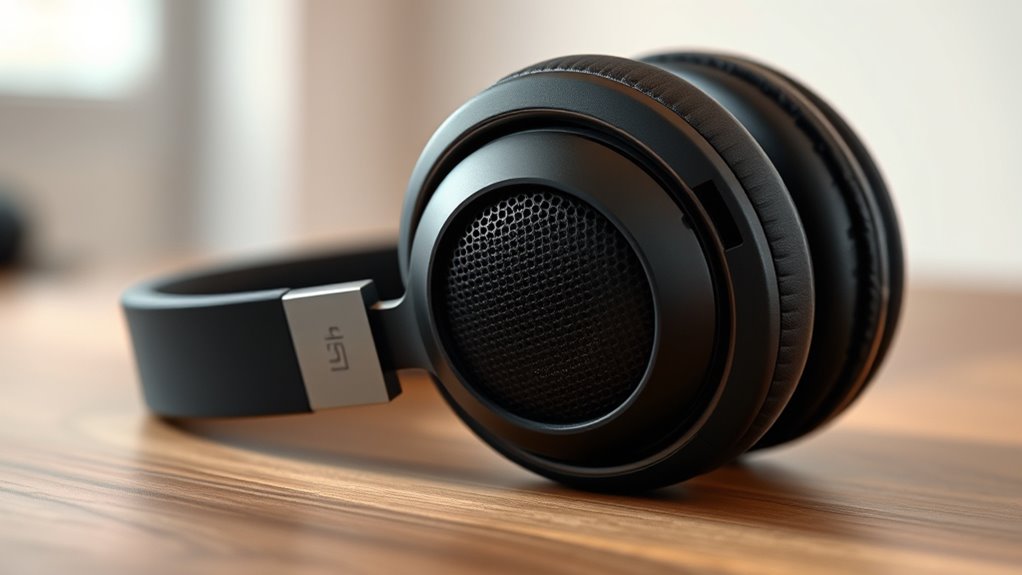
Active Noise Cancellation (ANC) is a revolutionary technology that actively reduces unwanted ambient sounds, allowing you to focus or enjoy your music without distraction. It works by creating sound waves that effectively cancel out external noise, making your listening experience more immersive and less interrupted. To understand how ANC accomplishes this, it’s essential to grasp the concept of noise wave interference. When external sounds reach your headphones or earbuds, they generate sound waves that are the mirror image—opposite in phase—of the incoming noise. When these opposing waves meet, they interfere with each other, resulting in destructive interference that diminishes the overall sound. This process is the core principle behind noise cancellation, where the goal is to produce anti-noise signals that neutralize ambient sounds.
ANC reduces ambient noise by generating anti-noise sound waves that cancel out external sounds through destructive interference.
A pivotal factor that influences the effectiveness of ANC is microphone placement. Modern noise-canceling devices use multiple tiny microphones embedded in the ear cups or earbuds to pick up environmental sounds. These microphones continuously monitor the ambient noise, capturing the sound waves as they arrive. The device’s internal circuitry then analyzes these signals in real time and generates an anti-noise waveform that is the inverse of the detected sound. Proper microphone placement is vital because it determines how accurately the device senses external noise. If microphones are poorly positioned or obstructed, they may pick up distorted or incomplete sound data, reducing the efficiency of noise cancellation. Manufacturers carefully design microphone placement to optimize the collection of ambient sound while minimizing the influence of internal sounds, such as the device’s own electronics or the user’s voice.
Additionally, advances in robotics and sensor technology are contributing to more sophisticated ANC systems, improving their adaptability to dynamic environments. Once the microphones detect the incoming noise, the ANC circuitry rapidly processes this information and produces the anti-noise signal. This anti-noise is then played through the headphones’ speakers in perfect synchronization with the external sound wave, but inverted in phase. When the two waves meet, noise wave interference occurs, and the unwanted sounds are markedly reduced. This entire process happens within milliseconds, making ANC extremely effective at canceling consistent, low-frequency noises like engine hums, air conditioning, or chatter in a crowded room.
In essence, noise wave interference and strategic microphone placement work together to create a seamless noise-canceling experience. The microphones serve as the eyes and ears of the system, ensuring it accurately perceives the environment, while the anti-noise signals actively neutralize the unwanted sounds. This synergy allows you to enjoy your music or focus on tasks without the distraction of background noise, making ANC a powerful tool for modern audio devices.

SOULWIT 50Pcs Self Adhesive Cable Management Clips - Black
🔷SUPER EASY TO USE: Stick to clean surface, open tab, insert multiple cables, close the tab, enjoy the...
As an affiliate, we earn on qualifying purchases.
Frequently Asked Questions
Can ANC Eliminate All Types of Noise?
Active Noise Cancellation can’t eliminate all types of noise. You’ll find it struggles with soundproofing challenges like sudden loud noises or irregular environmental noise types, such as sirens or construction sounds. While ANC effectively reduces consistent background sounds like engine hums or airflow, it’s less effective against unpredictable or high-frequency noises. To fully block noise, you might need additional soundproofing measures alongside ANC for the best results.
How Does ANC Affect Audio Quality?
Think of ANC like a filter that clarifies your audio experience. It usually improves sound quality by reducing background noise, letting you focus on your music or calls. However, in some cases, ANC can introduce slight sound distortion, like a gentle ripple on still water, which might slightly affect audio clarity. Overall, most users find that ANC enhances their listening, making sounds richer and more immersive.
Is ANC Effective in Loud Environments?
Yes, ANC is effective in loud environments. It enhances noise reduction, allowing you to focus on your audio without distractions. The technology actively cancels out ambient noise, improving sound clarity even amid chaos. You’ll notice a significant difference in quieter sound quality, making your listening experience more enjoyable. Whether you’re on a busy street or a noisy plane, ANC helps you hear your music or calls clearly, no matter how loud the surroundings.
Do All Headphones Have Active Noise Cancellation?
Many headphones don’t feature active noise cancellation (ANC), so you might miss out on maximum noise-muffling magic. While some models boast durable designs, not all are built equally for longevity. Different noise cancellation types—like passive and active—offer varied advantages. If you’re craving consistent clarity and comfort, look for headphones with solid durability and effective ANC, ensuring you get the best balance of noise reduction and durability for your needs.
How Does ANC Impact Battery Life?
Active Noise Cancellation impacts your headphone’s battery life by increasing power consumption. When ANC is active, your headphones use extra energy to power microphones and processing technology that cancel out ambient noise. This means you’ll notice quicker battery drain compared to non-ANC headphones. To conserve battery, you might turn ANC off when not needed, which reduces power consumption and extends your listening time.

XHF 120 PCS Adhesive Cable Wire Clips Black, Outdoor Christmas Light Clips, Cable Management Wire Organizer Cord Holder for Under Desk, Car, Wall, TV PC Ethernet Cable
High quality material:XHF Adhesive Cable Clips are manufactured from Strong Adhesive and PA66 nylon
As an affiliate, we earn on qualifying purchases.
Conclusion
Now that you understand how active noise cancellation works, imagine stepping into a peaceful oasis amid a noisy city. It’s like having a personal shield that blocks out chaos, wrapping you in a bubble of calm. With this tech, every commute or busy moment becomes a serene escape, turning messy noise into a gentle whisper. So, next time you put on those headphones, know you’re stepping into your own quiet refuge—your sound sanctuary.

120PCS XHF Adhesive Cable Wire Clips White, Cable Staples Outdoor Cable Management Wire Organizer Cord Holder for Under Desk, Car, Wall, TV PC Ethernet Cable
High quality material:XHF Adhesive Cable Clips are manufactured from Strong Adhesive and PA66 nylon
As an affiliate, we earn on qualifying purchases.
![Smart 4K Projector [Google TV Stick Built-in & 360° Stand] with WiFi 6, Bluetooth 5.3, HDR10, 30W Hi-Fi, AI Auto Focus, Outdoor Portable Short Throw Movie Projector for Home Theater Bedroom Ceiling](https://m.media-amazon.com/images/I/41zno6cZMFL._SL500_.jpg)
Smart 4K Projector [Google TV Stick Built-in & 360° Stand] with WiFi 6, Bluetooth 5.3, HDR10, 30W Hi-Fi, AI Auto Focus, Outdoor Portable Short Throw Movie Projector for Home Theater Bedroom Ceiling
[Google TV Built-in | 10,000+ Apps | Voice Control] The smart projector with wifi and bluetooth features Google...
As an affiliate, we earn on qualifying purchases.