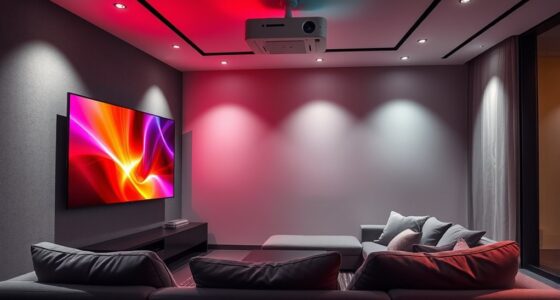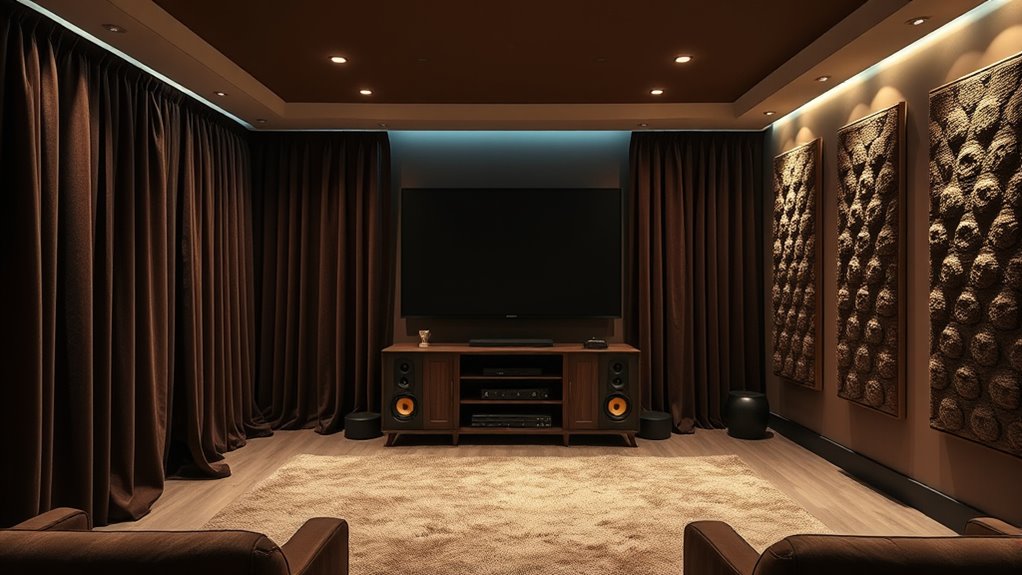
To improve your home theater’s acoustics, focus on controlling sound reflections and external noise. Use soft materials like carpets, curtains, and acoustic panels to absorb sound waves, while sealing gaps around doors and windows to block outside noise. Proper speaker placement—at ear level and aimed at the listening area—ensures clear audio. Combining these techniques creates a balanced, immersive experience you’ll enjoy more as you explore further tips.
Listen free for 30 days with Audible
Thousands of audiobooks and originals — cancel anytime.
As an affiliate, we earn on qualifying purchases.
Key Takeaways
- Optimize room acoustics by minimizing sound reflections and echoes with sound-absorbing materials.
- Properly position speakers at ear level and aim them directly at the listening area.
- Seal gaps around doors and windows to prevent external noise interference.
- Incorporate soft furnishings and acoustic panels to dampen reflections and enhance sound clarity.
- Use bass traps and strategic placement to manage low-frequency sound issues for balanced audio.
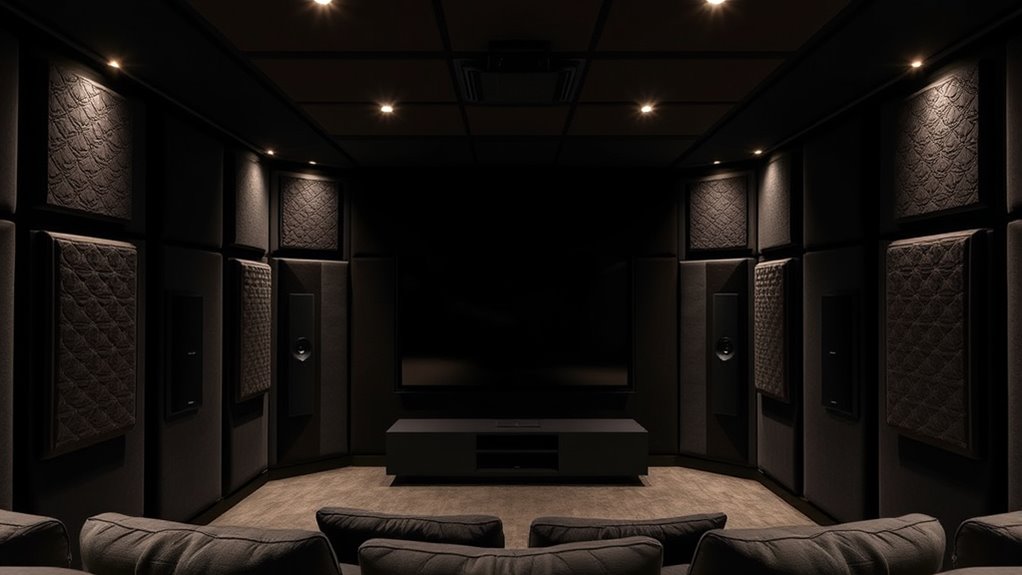
Creating the perfect home theater experience depends heavily on good room acoustics. You want your sound to be clear, immersive, and free from distractions, and that starts with understanding how to optimize your space. One of the most important aspects is soundproofing techniques, which prevent external noise from invading your theater and keep your audio from disturbing other areas of your home. Effective soundproofing involves sealing gaps around doors and windows, adding mass to walls with insulation or specialized panels, and using rugs or carpets to absorb sound reflections. These measures help create a controlled environment where sound quality remains consistent and immersive.
Equally critical is how you position your speakers within the room. Proper speaker placement ensures balanced sound distribution and minimizes acoustic issues like echo or dead spots. Typically, you want your main speakers—such as your front left, center, and right—to be placed at ear level when seated. The front speakers should be aimed directly at the listening area, with the center speaker aligned with the screen for clear dialogue. Surround speakers should be positioned slightly behind and to the sides of the seating area, angled inward to envelop you in sound. Avoid placing speakers directly against walls or in corners, as this can cause sound distortion or excessive bass buildup. Instead, experiment with placement to achieve a natural, spacious soundstage.
Remember that room acoustics aren’t just about where you put things but also how the room’s surfaces interact with sound. Hard surfaces like glass or bare walls reflect sound waves, creating echoes that muddle audio clarity. To counteract this, incorporate sound-absorbing materials such as acoustic panels, curtains, or soft furnishings. These help dampen reflections and improve clarity. Additionally, using bass traps in corners can control low-frequency issues, providing a richer, more balanced sound. Incorporating soundproofing techniques can significantly enhance your overall listening experience by reducing unwanted noise interference.
Ultimately, creating a great home theater environment involves a combination of soundproofing techniques and strategic speaker placement. By sealing leaks and adding sound-absorbing elements, you create a quiet, controlled space. Properly positioning your speakers ensures that sound travels evenly and naturally, providing an immersive experience. When both elements work together, you’ll notice a significant difference in audio quality, making every movie or game feel more real and engaging. Focus on these fundamentals, and you’ll build a room that not only looks great but sounds incredible too.
Frequently Asked Questions
How Does Room Size Affect Sound Quality?
Room size markedly impacts sound quality because larger rooms have greater volume, which influences sound dispersion and reverberation. If your space is too small, sound waves bounce excessively, causing muddiness. Conversely, a larger room helps distribute sound more evenly, reducing echo and improving clarity. You should consider room volume and how sound disperses within it to optimize acoustics, ensuring a balanced and immersive home theater experience.
What Materials Best Absorb Sound in a Home Theater?
Did you know that acoustic foam tiles can absorb up to 80% of unwanted sound reflections? You should prioritize materials like acoustic foam tiles and soundproof curtains to improve your home theater’s sound quality. Acoustic foam tiles are excellent for controlling echoes and reverberations, while soundproof curtains help block external noise. Combining these materials creates a more immersive experience, ensuring clear dialogue and balanced sound throughout your space.
How Can I Reduce Echo Without Professional Help?
To reduce echo without professional help, try DIY soundproofing by adding soft furnishings like rugs, curtains, and cushions. You can also install acoustic panels yourself; they’re easy to mount and markedly improve sound absorption. Strategically place these panels on walls or ceilings to dampen reflections and minimize echo. These simple steps make a noticeable difference, creating a clearer, more immersive home theater experience without the need for expert intervention.
What’s the Ideal Speaker Placement for Optimal Acoustics?
Imagine your listening area as the stage, and speaker positioning as the spotlight. You want your speakers to form an equilateral triangle with your seating, ensuring they’re angled toward you. Place the front speakers at ear level, equidistant from the listening spot, and avoid walls that can cause reflections. This setup creates a balanced soundstage, immersing you in clear, crisp audio for your home theater experience.
How Do Furniture and Decor Influence Sound Reflection?
Furniture arrangement and decorative elements substantially influence sound reflection in your home theater. Soft furniture like couches and curtains absorb sound, reducing echo and improving clarity. Hard surfaces and decorative elements, such as artwork or glass, reflect sound waves, which can cause unwanted reverberations. Strategically placing furniture and decor helps control reflections, creating a balanced acoustic environment that enhances your listening experience and minimizes distractions.
Conclusion
By understanding the basics of room acoustics, you can create a space that immerses you in every sound, enhances every note, and elevates every scene. You can control echoes, improve clarity, and optimize your listening experience. You can design a home theater that transforms your entertainment, that brings movies to life, and music to your soul. With the right knowledge, you turn your room into a sanctuary of sound, a haven of harmony, and a home of unforgettable experiences.
Flea & tick season Picks
flea and tick prevention
As an affiliate, we earn on qualifying purchases.